What is Authentic Neapolitan Pizza?
There's pizza, and then there's authentic Neapolitan pizza—the gold standard that sets every other style apart. With its soft, airy crust, perfectly charred edges, and simple yet bold flavors, this Italian masterpiece has captivated food lovers for generations.
But what makes Neapolitan pizza truly authentic? Let's break down the traditions, techniques, and strict rules behind this iconic dish.
What Makes a Neapolitan Pizza "Authentic"?
Not every thin-crust pizza can claim the title of authentic Neapolitan pizza.
The designation "Verace Pizza Napoletana" (True Neapolitan Pizza) is a protected status carefully regulated by the AVPN (Associazione Verace Pizza Napoletana) to preserve centuries-old traditions.
This is a strict certification that ensures every pizza meets exacting standards instead of just some marketing label.
The Two Official Types
Under these guidelines, only two classic types qualify as authentic: Marinara (tomato, garlic, oregano, and olive oil) and Margherita (tomato, mozzarella, basil, and olive oil).
While variations exist today, these remain the foundation.
The Sacred Four-Ingredient Rule
The dough itself follows a sacred formula: only water, salt, yeast, and flour are permitted. That's it. No olive oil, no sugar, no butter, and certainly no dough conditioners. This simplicity forces bakers to rely entirely on technique, fermentation timing, and proper handling to achieve that signature texture.
When you bite into authentic Neapolitan pizza, you're tasting a tradition that refuses shortcuts.
Authentic Neapolitan Dough: Ingredients, Hydration, and What's Not Allowed
Dough
The soul of any Neapolitan pizza lies in its dough, and the rules here are uncompromising. Authentic Neapolitan dough contains exactly four ingredients: water, salt, yeast, and flour—typically Type 00 flour or Type 0 flour, both finely milled Italian wheat varieties that create the ideal gluten structure.
Hydration
Hydration levels typically range from 55% to 60%, meaning the dough is relatively low in water compared to other styles like focaccia or ciabatta. This lower hydration creates a dough that's elastic and easy to stretch by hand, yet firm enough to support a thin center without tearing.
Fermentation
The fermentation process is equally critical. Traditional methods call for a slow, cold fermentation lasting anywhere from 8 to 24 hours, allowing natural enzymes to develop complex flavors and improve digestibility.
What's Allowed vs. What's Forbidden
| Allowed Ingredients | Strictly Forbidden |
| Water | Olive oil |
| Salt | Sugar |
| Yeast (fresh or dry) | Butter or any fats |
| Type 00 or Type 0 flour | Milk or dairy |
| Dough conditioners | |
| Commercial additives |
What you'll never find in authentic Neapolitan dough: olive oil, sugar, milk, butter, or any fat.
These ingredients would alter the texture and flavor profile, taking the pizza out of traditional territory. The strict adherence to water, salt, yeast, and flour isn't about being difficult—it's about honoring a method that's been perfected over centuries. When dough is made this simply, every step in the process matters, from kneading to proofing to shaping.

Hand-Stretched Only: Why Rolling Pins Change the Crust
One of the most distinctive features of authentic Neapolitan pizza is how it's shaped. Mechanical presses, rolling pins, and any other dough-flattening tools are strictly forbidden. Instead, the dough must be stretched entirely by hand using a specific technique that pushes air from the center toward the edges.
The Importance of Cornicione
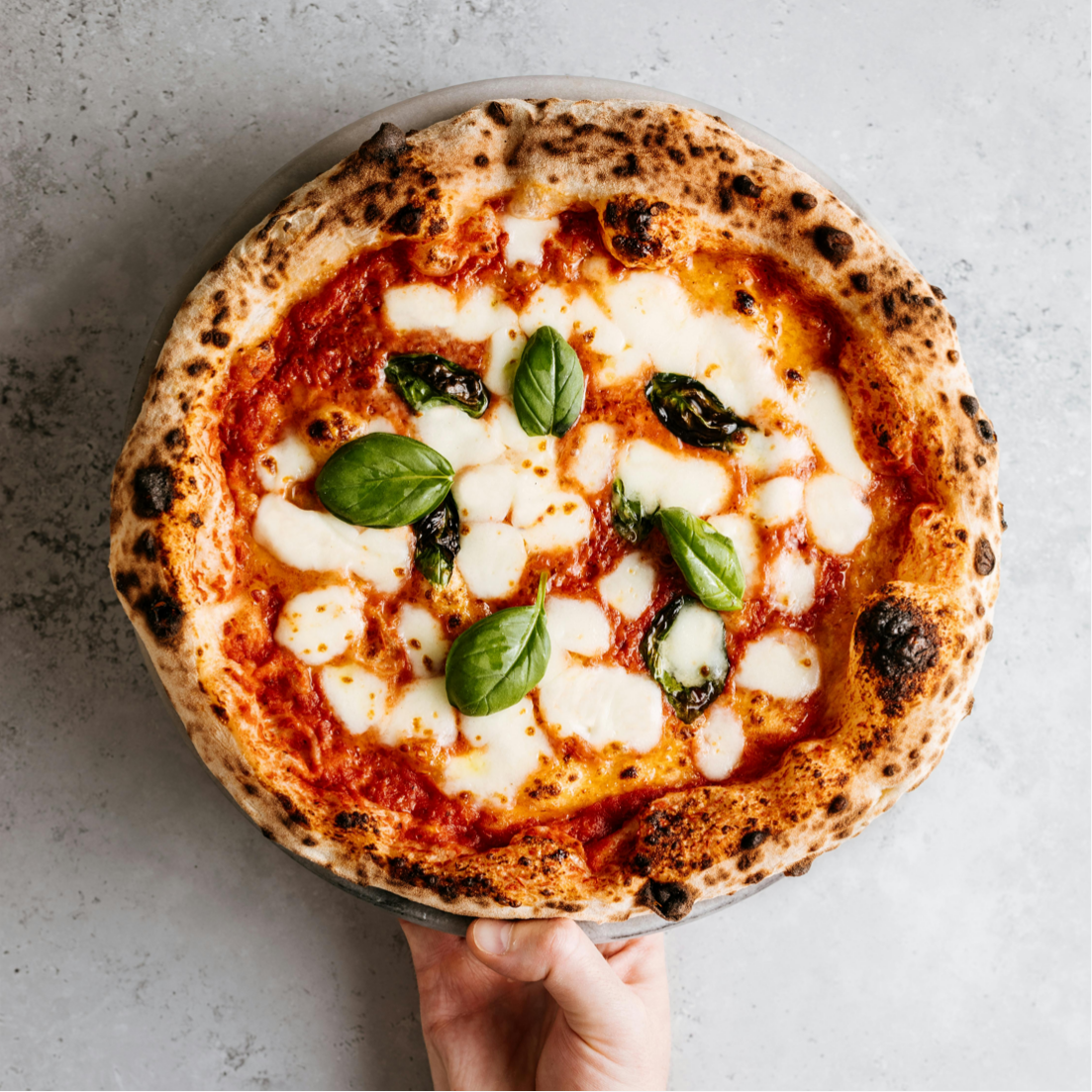
This method creates the iconic cornicione—the puffy, raised rim that encircles the pizza.
According to AVPN standards, the cornicione should measure between 1 to 2 centimeters in height.
This isn't just for looks. The hand-stretching technique preserves the air bubbles formed during fermentation, resulting in a light, airy crust that's soft and slightly chewy, never dense or cracker-like.
Why Rolling Pins Ruin Everything
When you use a rolling pin or mechanical press, you flatten out those precious air pockets, compressing the dough and creating a uniformly thin, flat crust. That might work for other pizza styles, but it completely misses the point of Neapolitan pizza.
The proper hand-stretching motion ensures the center stays thin (about 3 mm) while the edges remain thick and pillowy. The result? A pizza that's foldable, elastic, and incredibly satisfying to eat—soft in the middle with a delightfully charred, blistered cornicione that adds texture and flavor contrast.
Oven Temperature and Bake Time: The 60–90 Second Rule
Temperature is everything when it comes to authentic Neapolitan pizza. Traditional guidelines emphasize cooking in a wood-fired oven to achieve the characteristic smoky aroma and intense heat that define this style. The oven must reach extreme temperatures between 800°F to 905°F (430°C to 485°C), with some ovens even hotter.
Lightning-Fast Cooking Time
At these scorching temperatures, a pizza bakes in just 60 to 90 seconds. This rapid cooking creates a unique texture: the crust develops a slight char and distinctive leopard spotting on the bottom while the interior remains soft and tender.
The toppings barely have time to overcook, keeping fresh mozzarella creamy and basil vibrant.
Wood-Fired vs. Gas: What the Standards Say
It's worth noting that while wood-fired ovens are strongly emphasized in AVPN standards for their ability to impart authentic flavor and maintain consistent high heat, there are some approved pathways and regional variations that may permit gas or hybrid ovens under specific certification conditions.
However, the wood-fired method remains the traditional and most widely recognized standard for achieving that genuine Neapolitan character.
For home cooks, this extreme heat is nearly impossible to replicate in a standard kitchen oven, which typically maxes out around 500°F (260°C). That's where specialized outdoor pizza ovens come into play, bridging the gap between traditional pizzerias and backyard cooking.

Can You Make Authentic Neapolitan Pizza at Home?
The short answer: yes, but you'll need the right equipment. Standard home ovens simply cannot reach the 800°F to 905°F (430°C to 485°C) required for authentic Neapolitan pizza. Without that intense heat, you'll end up with a pizza that's still delicious but lacks the signature soft texture, charred cornicione, and rapid bake time that define the style.
Why Outdoor Pizza Ovens Matter
This is where specialized outdoor pizza ovens make all the difference. Modern wood pellet pizza ovens are designed to replicate the intense wood-fired environment of traditional Neapolitan ovens, reaching temperatures well above what conventional ovens can achieve.
These portable units bring pizzeria-quality results to your backyard, allowing you to experience authentic flavors without needing a full-scale brick oven.
What to Look for in a Home Pizza Oven
When choosing a home pizza oven, consider your cooking needs. Key features to prioritize include:
- Rapid preheating: Look for ovens that reach 662°F (350°C) in 18–20 minutes or less
- High maximum temperature: Minimum 800°F+ (430°C) for authentic results
- Consistent heat retention: Maintains temperature throughout multiple pizzas
- Fuel flexibility: Wood pellets for traditional flavor, with options for gas or electric
- Portability: Compact, foldable designs for easy storage and outdoor versatility
- Size options: 12-inch models for couples, 16-inch models for families and entertaining
Smaller 12-inch models offer excellent portability and efficiency for solo cooks or couples, while larger 16-inch options accommodate bigger pizzas and are ideal for family gatherings or entertaining guests.
Mastering the Learning Curve
With the right outdoor pizza oven, you can master the art of Neapolitan pizza at home. The learning curve involves practicing dough handling, perfecting your stretch technique, and getting comfortable with quick rotations during baking—but the results are absolutely worth it.
There's something deeply satisfying about pulling a perfectly blistered, wood-fired pizza from your own backyard oven, knowing you've honored a tradition that goes back centuries.

Ready to Bring Authentic Neapolitan Pizza to Your Backyard?
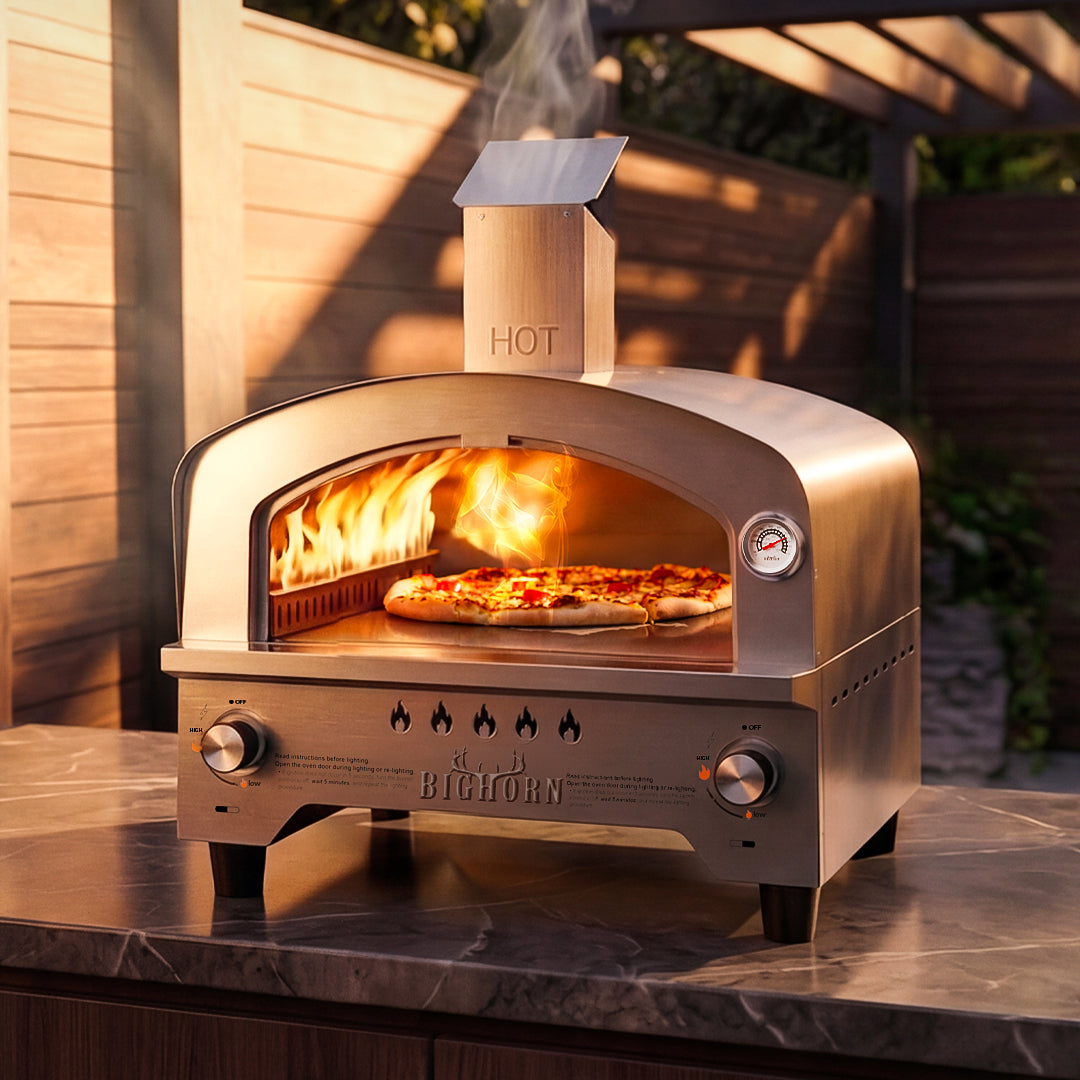
Big Horn Outdoors® wood pellet pizza ovens are designed to deliver pizzeria-quality results at home.
The Big Horn Outdoors® 12" Pizza Oven reaches up to 887°F (475°C) in just 18–20 minutes, cooking perfect Neapolitan-style pizzas in 60–90 seconds. Compact, portable, and built with premium stainless steel, it's the ideal choice for anyone serious about authentic wood-fired flavor.
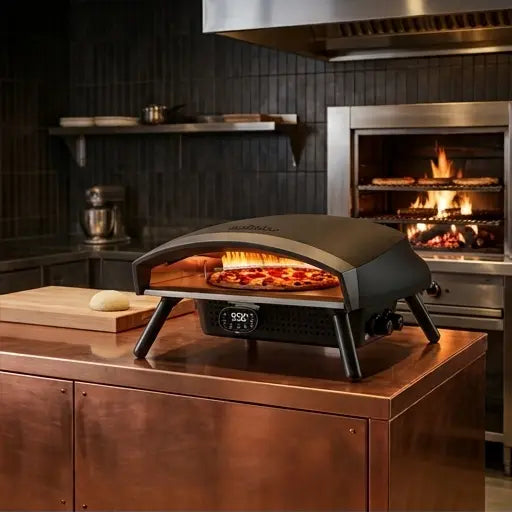
For larger gatherings, the Big Horn Outdoors® 16" Pizza Oven offers expanded capacity and professional-grade performance. Both models combine traditional wood-fired cooking with modern convenience—bringing the taste of Naples straight to your outdoor kitchen.
FAQs
Q1: What's the difference between Neapolitan pizza and regular pizza?
Authentic Neapolitan pizza follows strict AVPN guidelines, using only water, salt, yeast, and flour for the dough with no added fats or sugars. It's hand-stretched (never rolled), baked in a wood-fired oven at 800°F+ for 60–90 seconds, and features a soft, foldable crust with a puffy 1–2 cm cornicione. Regular pizza allows more flexibility in ingredients, cooking methods, and crust styles, often resulting in crispier, less delicate textures.
Q2: Can I use a gas oven instead of wood-fired for Neapolitan pizza?
Traditional AVPN standards emphasize wood-fired ovens for authentic Neapolitan pizza due to the smoky flavor and consistent high heat they provide. While some certification pathways may permit gas or hybrid ovens under specific conditions, wood-fired remains the gold standard. For home cooks, wood pellet ovens offer an accessible way to achieve genuine wood-fired flavor without installing a full brick oven.
Q3: Why can't I add olive oil to Neapolitan pizza dough?
Authentic Neapolitan dough contains only water, salt, yeast, and flour. Adding olive oil or any fat changes the dough's texture and flavor, making it richer and denser rather than light and elastic. The AVPN forbids fats to preserve the traditional character and ensure the dough develops properly through fermentation and hand-stretching techniques.
Q4: What does "cornicione" mean, and why is it important?
Cornicione is the puffy, raised edge of a Neapolitan pizza, measuring 1–2 cm in height. It forms when dough is hand-stretched, pushing air bubbles toward the edges while keeping the center thin. This technique creates a light, airy rim that contrasts beautifully with the soft, foldable center. The cornicione is a visual and textural hallmark of properly made Neapolitan pizza—rolling pins flatten these air pockets, destroying this essential feature.
More to Read
 Big Horn Outdoors® Expands Retail Presence with New Experience at Piedmont Outfitters
Big Horn Outdoors® is excited to announce a new retail destination for outdoor cooking enthusiasts. Customers can now experience the brand's popula...
Big Horn Outdoors® Expands Retail Presence with New Experience at Piedmont Outfitters
Big Horn Outdoors® is excited to announce a new retail destination for outdoor cooking enthusiasts. Customers can now experience the brand's popula...
 As Seen on NBC Daytime: Big Horn Outdoors® Pizza Oven and Infrared Steak Grill Featured on National Television
Featured on NBC Daytime, the 12-Inch Multi-Fuel Pizza Oven and 16-Inch Infrared Steak Grill demonstrate how Big Horn Outdoors® helps make high-qual...
As Seen on NBC Daytime: Big Horn Outdoors® Pizza Oven and Infrared Steak Grill Featured on National Television
Featured on NBC Daytime, the 12-Inch Multi-Fuel Pizza Oven and 16-Inch Infrared Steak Grill demonstrate how Big Horn Outdoors® helps make high-qual...
 How to Make a Smash Burger on an Infrared Grill
Standard grills ruin beef by losing flavor. Use a cast iron plate on an infrared grill to lock in moisture and make the perfect smash burger crispy...
How to Make a Smash Burger on an Infrared Grill
Standard grills ruin beef by losing flavor. Use a cast iron plate on an infrared grill to lock in moisture and make the perfect smash burger crispy...