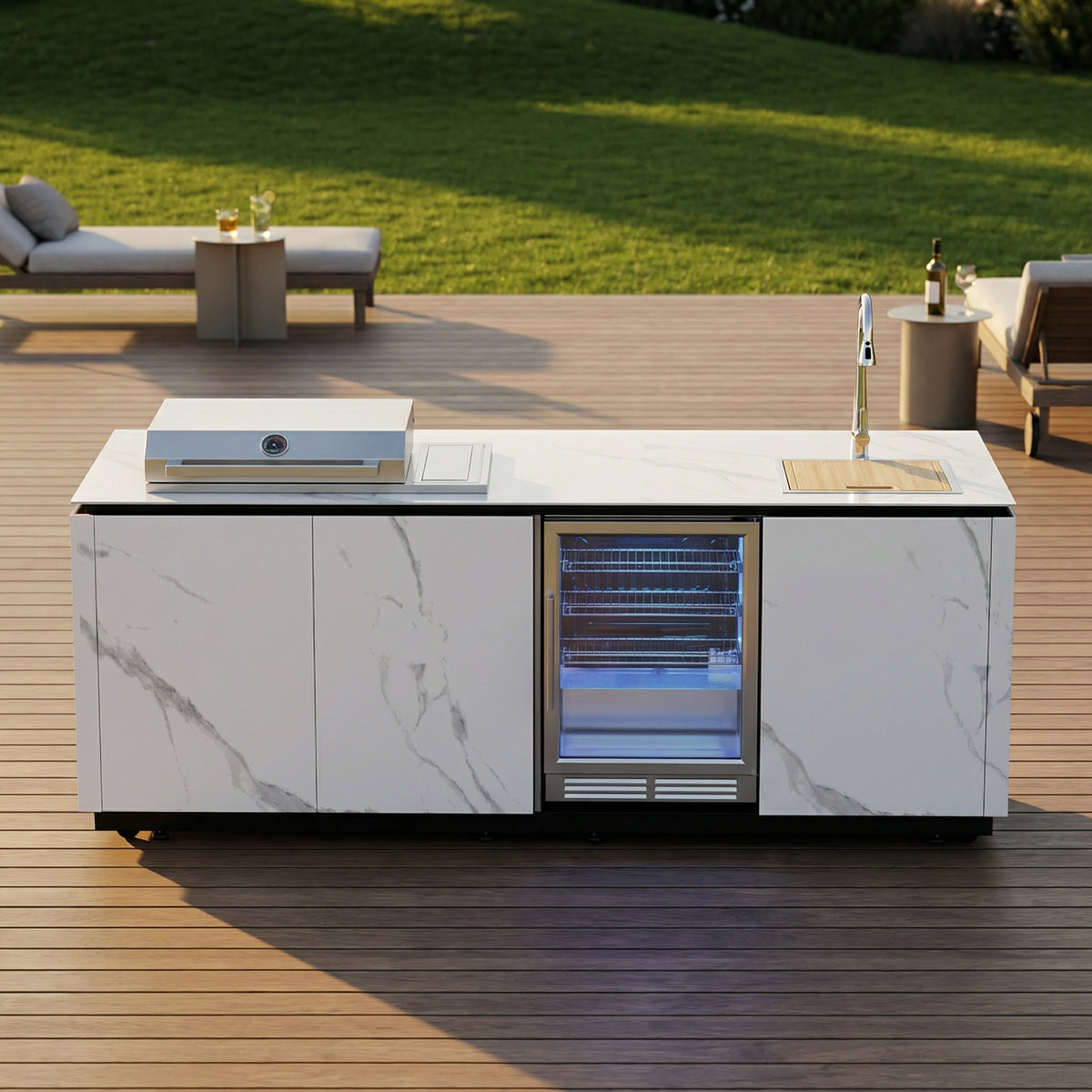
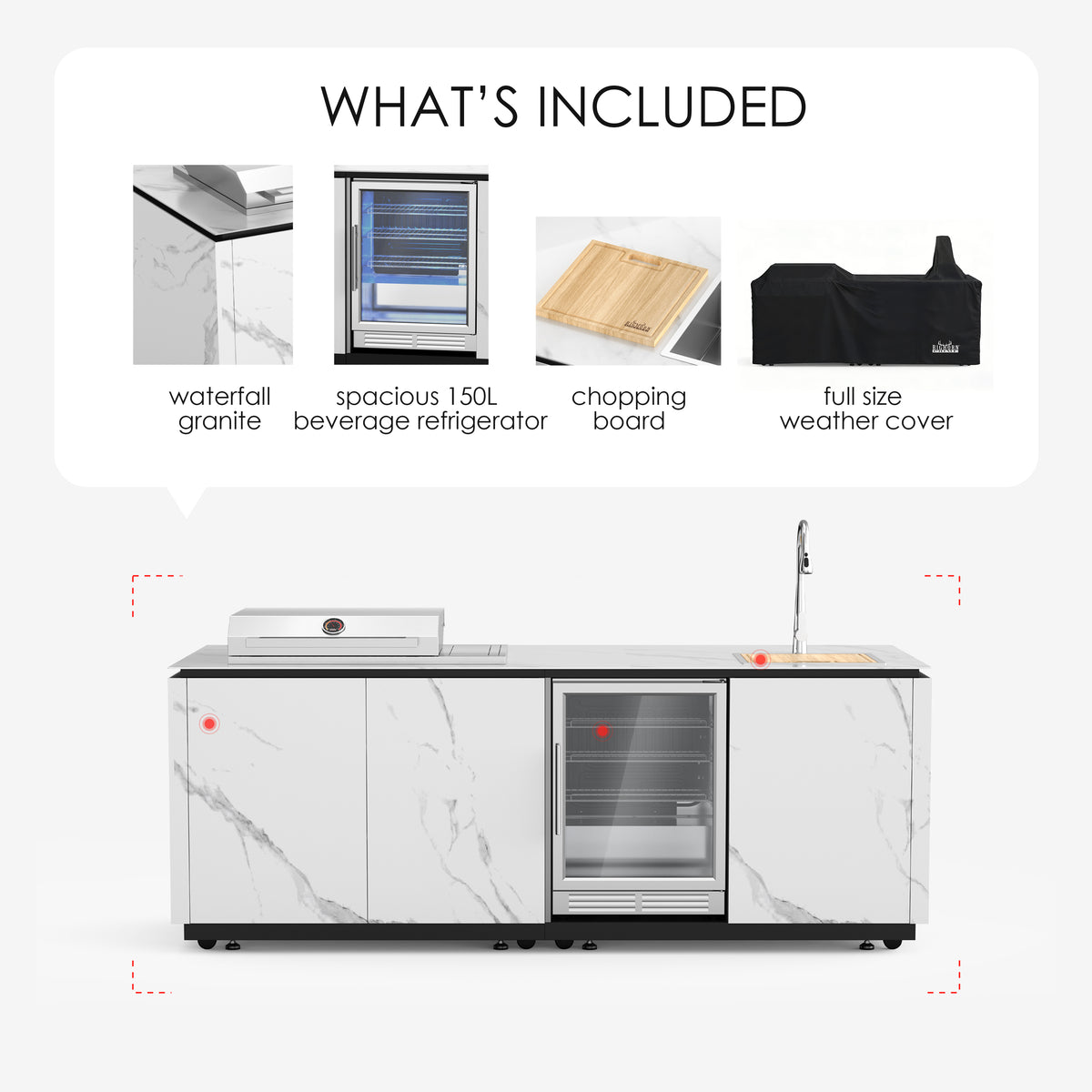
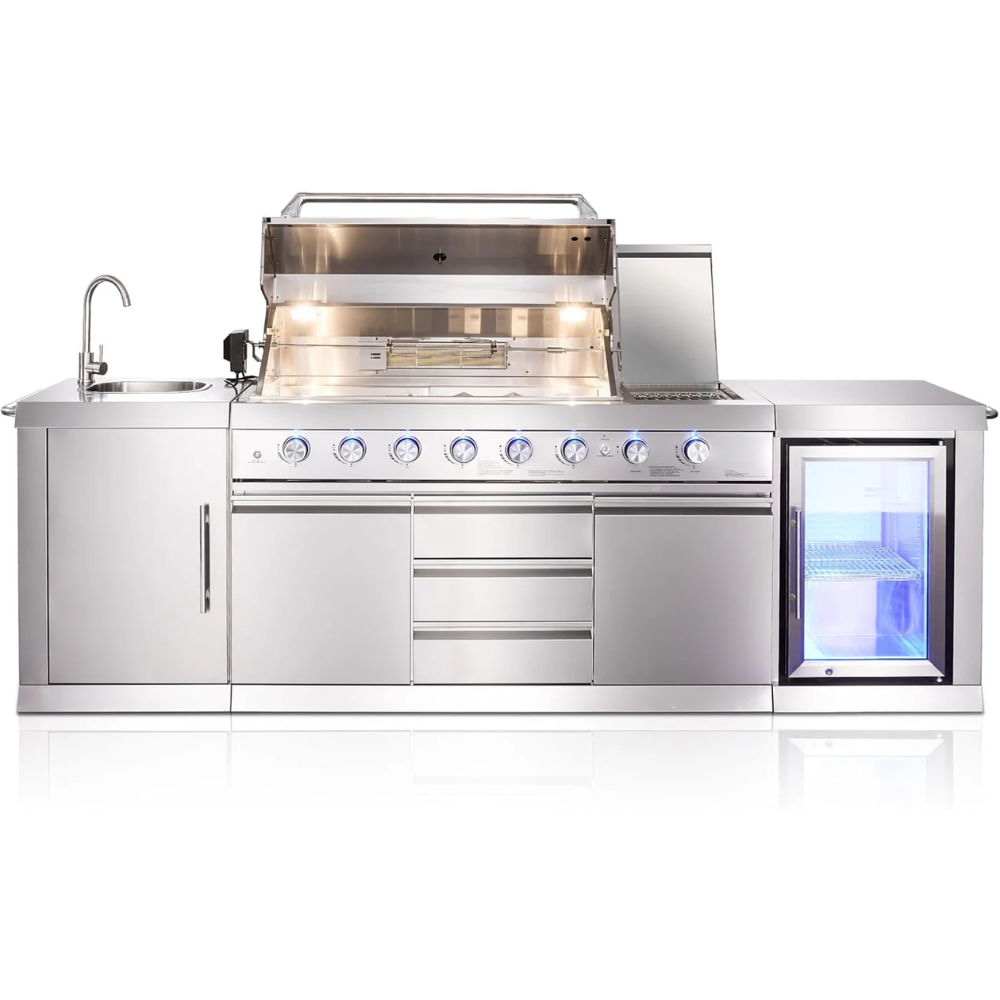
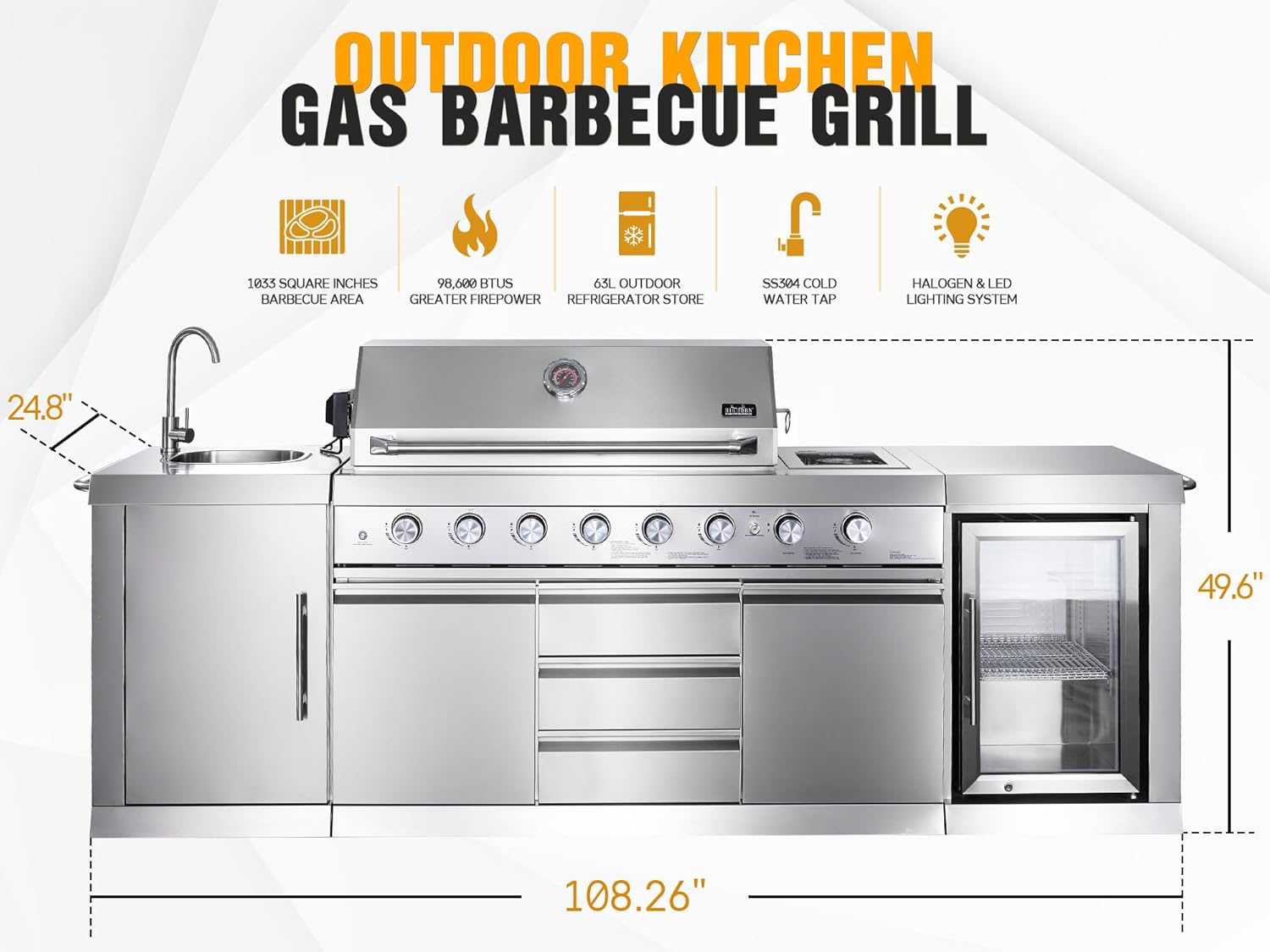
How to Plan Cooking, Utilities and Guest Flow Before Installation
Premium outdoor equipment works best when it is treated as part of
the landscape rather than placed as an isolated appliance. The site
should support safe heat clearances, food preparation, utilities,
serving, seating and movement between each zone.
Map the Outdoor Kitchen Workflow
A practical layout follows the order in which food moves: cold
storage, washing, preparation, cooking and serving. Positioning these
functions logically reduces unnecessary walking and keeps guests
away from hot surfaces and open doors.
- Keep a clear path between the house and outdoor kitchen.
- Leave room to open grill lids, refrigerators and storage doors.
- Place serving space outside the active heat zone.
- Separate guest seating from smoke and grease-producing equipment.
Plan Utilities Before the Equipment Arrives
Refrigeration, lighting, rotisserie motors, sinks and gas appliances
introduce different connection requirements. Confirm voltage,
outdoor-rated electrical protection, water supply, drainage and fuel
specifications from the exact manuals before construction begins.
Installation reminder: Electrical, plumbing and
fuel work may require licensed professionals and local permits.
Plan shutoffs and service access so components remain reachable
after installation.
Prepare the Surface and Delivery Route
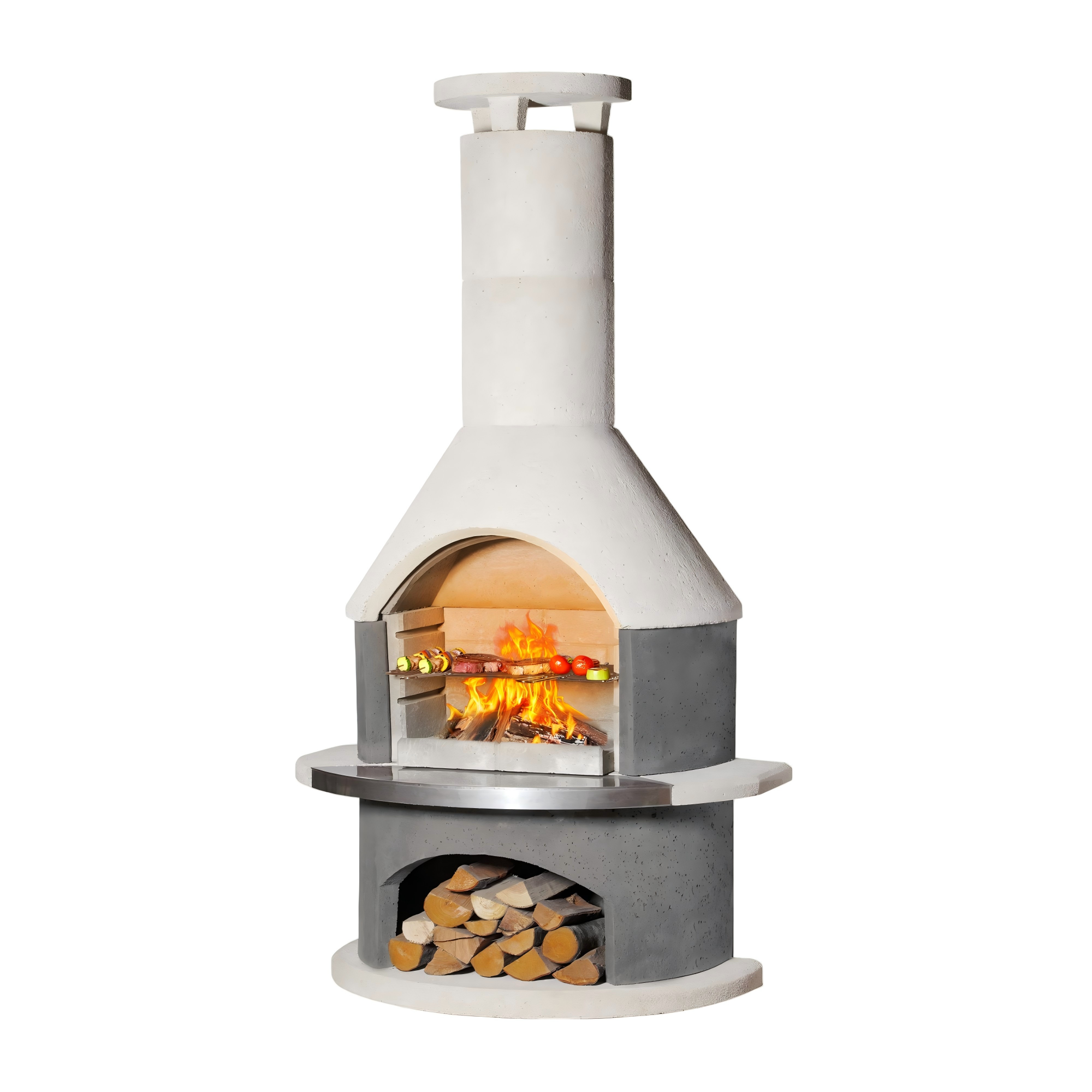
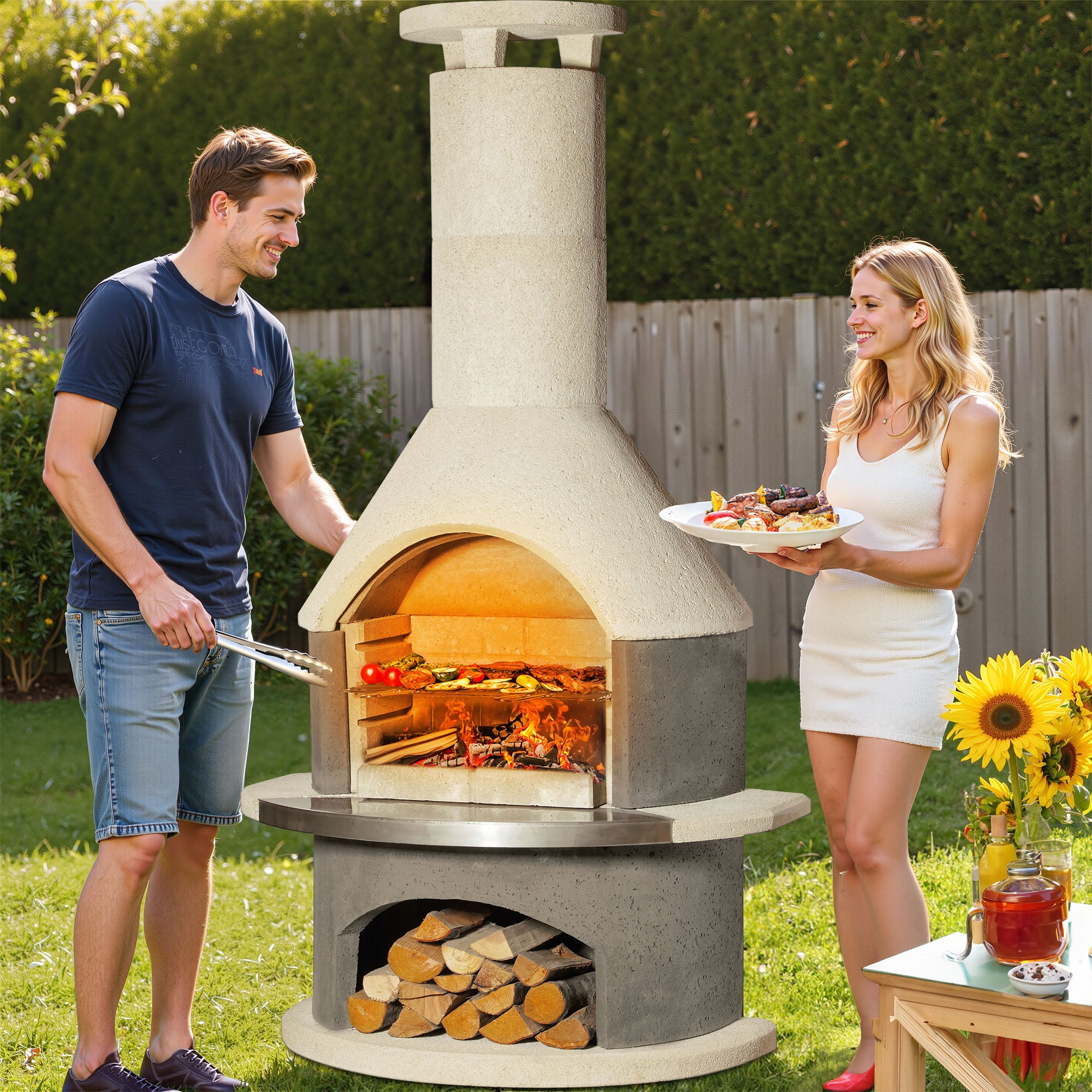
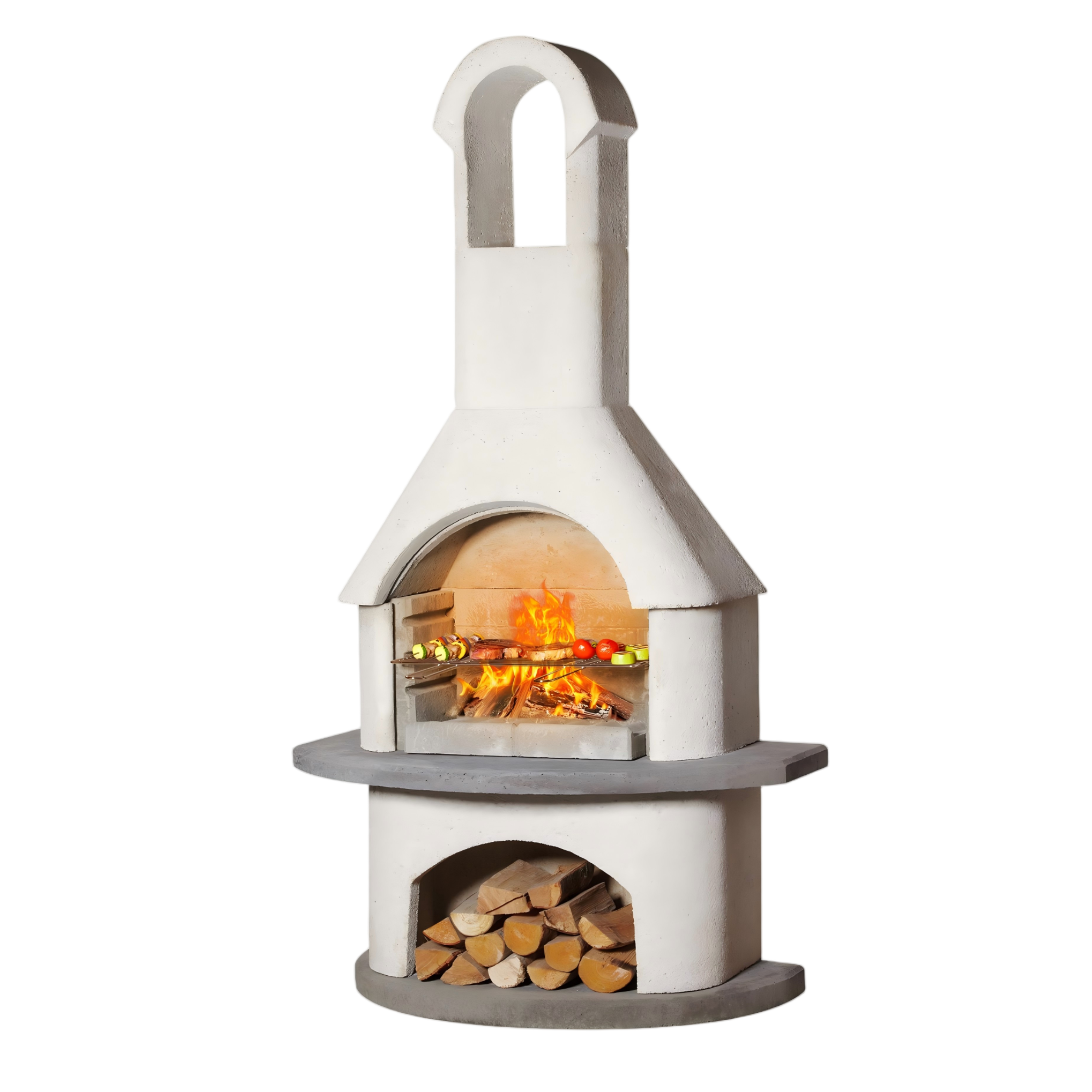
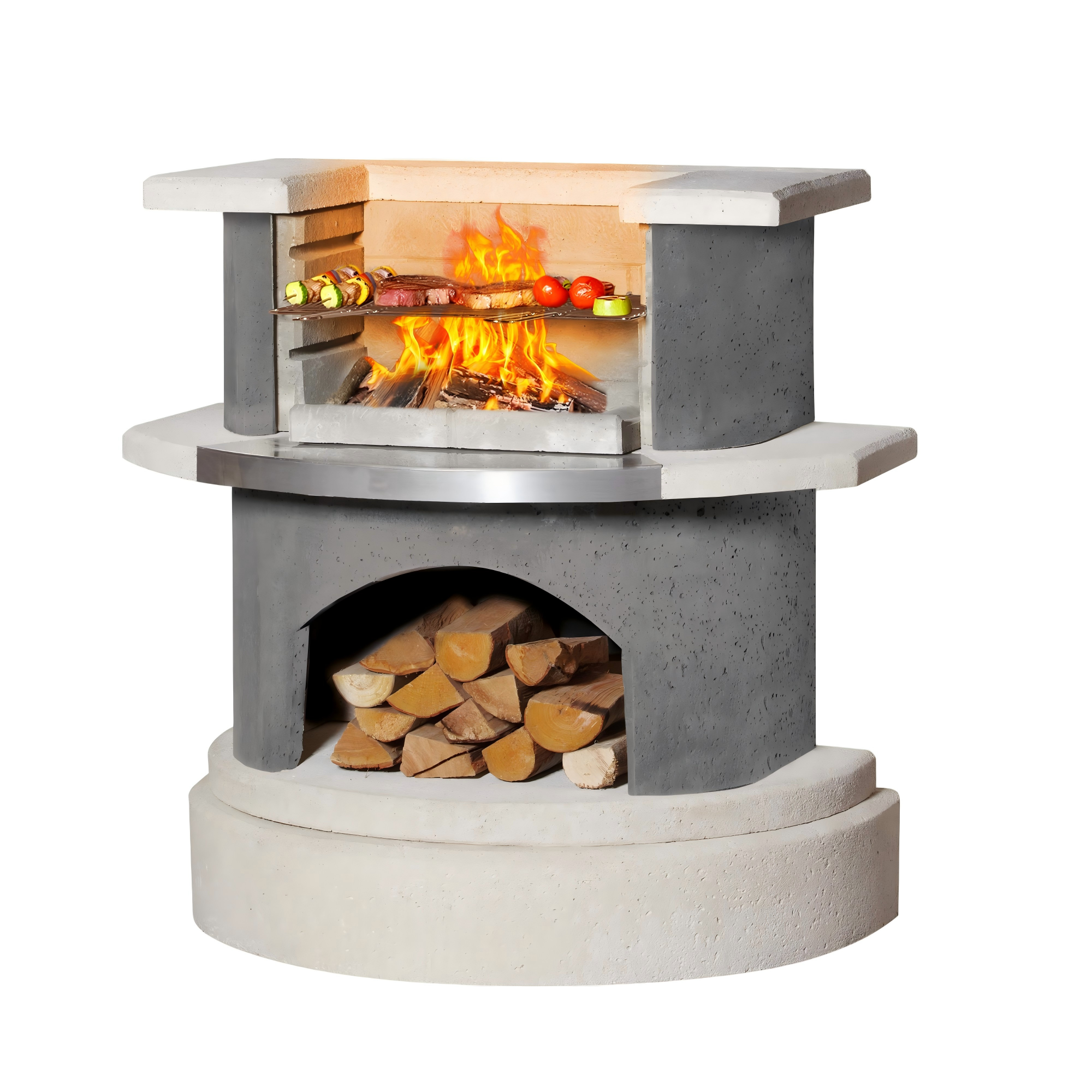
Large islands and masonry-style fireplaces need a stable, level
surface with adequate load capacity. Check driveway access, gates,
stairs, corners and overhead obstacles. The route must accommodate
both the packaged product and the equipment needed to move it.
- Verify packaged dimensions and weight.
- Measure every doorway, gate and turning point.
- Confirm the finished surface is level and load-bearing.
- Locate utilities before positioning the product.
- Protect paving and landscaping during delivery.
- Keep installation and service clearances accessible.
Create Safe Heat and Ventilation Zones
Gas grills, wood fires and chimneys have different clearance and
ventilation needs. Follow the manual and local code for the exact
appliance. Do not place combustion equipment where smoke, carbon
monoxide, sparks or radiant heat can collect under a roof or reach
doors, windows and combustible finishes.
Choose Materials for the Intended Environment
Stainless steel supports an integrated, professional kitchen
appearance and requires routine cleaning to manage grease and
environmental deposits. Concrete creates architectural mass and
needs an appropriate base. Corten steel intentionally develops a
patina and should be positioned with early weathering runoff in mind.
- Use manufacturer-approved cleaners on finished surfaces.
- Remove salt, grease and acidic residue rather than leaving it in place.
- Keep drainage routes clear around permanent equipment.
- Use covers only after appliances are clean, dry and fully cool.
Design for Daytime Cooking and Evening Gathering
Task lighting should illuminate controls, food and walkways without
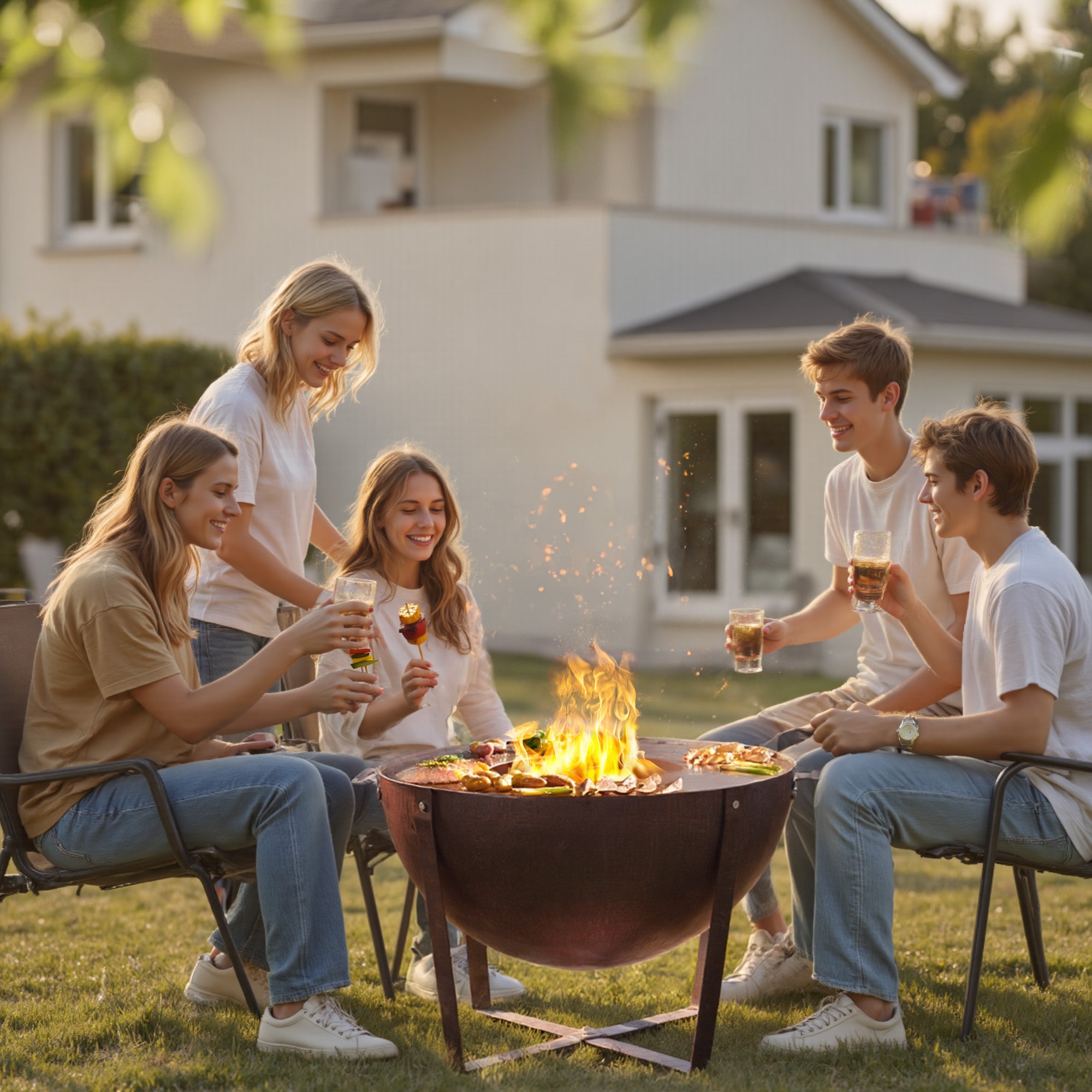
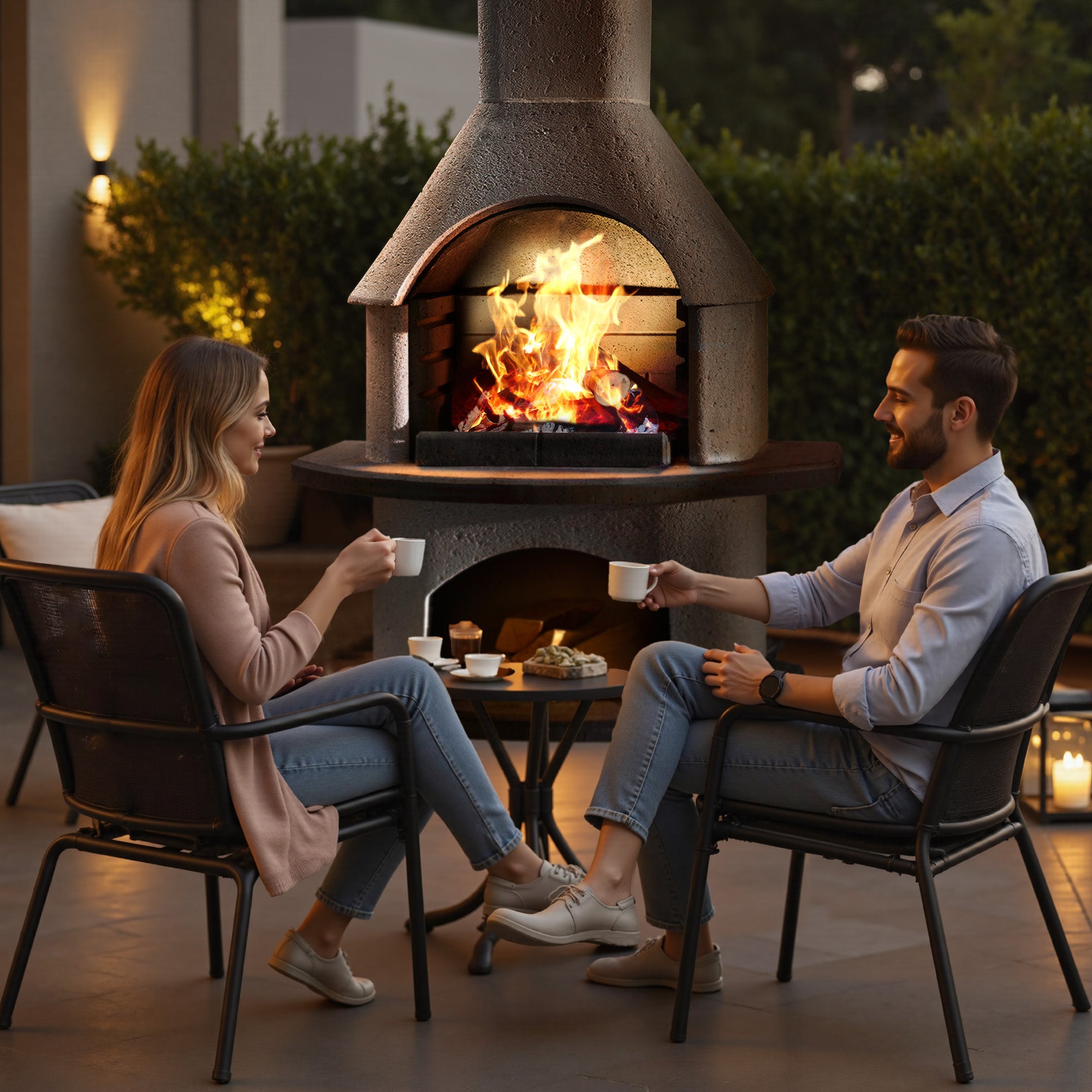
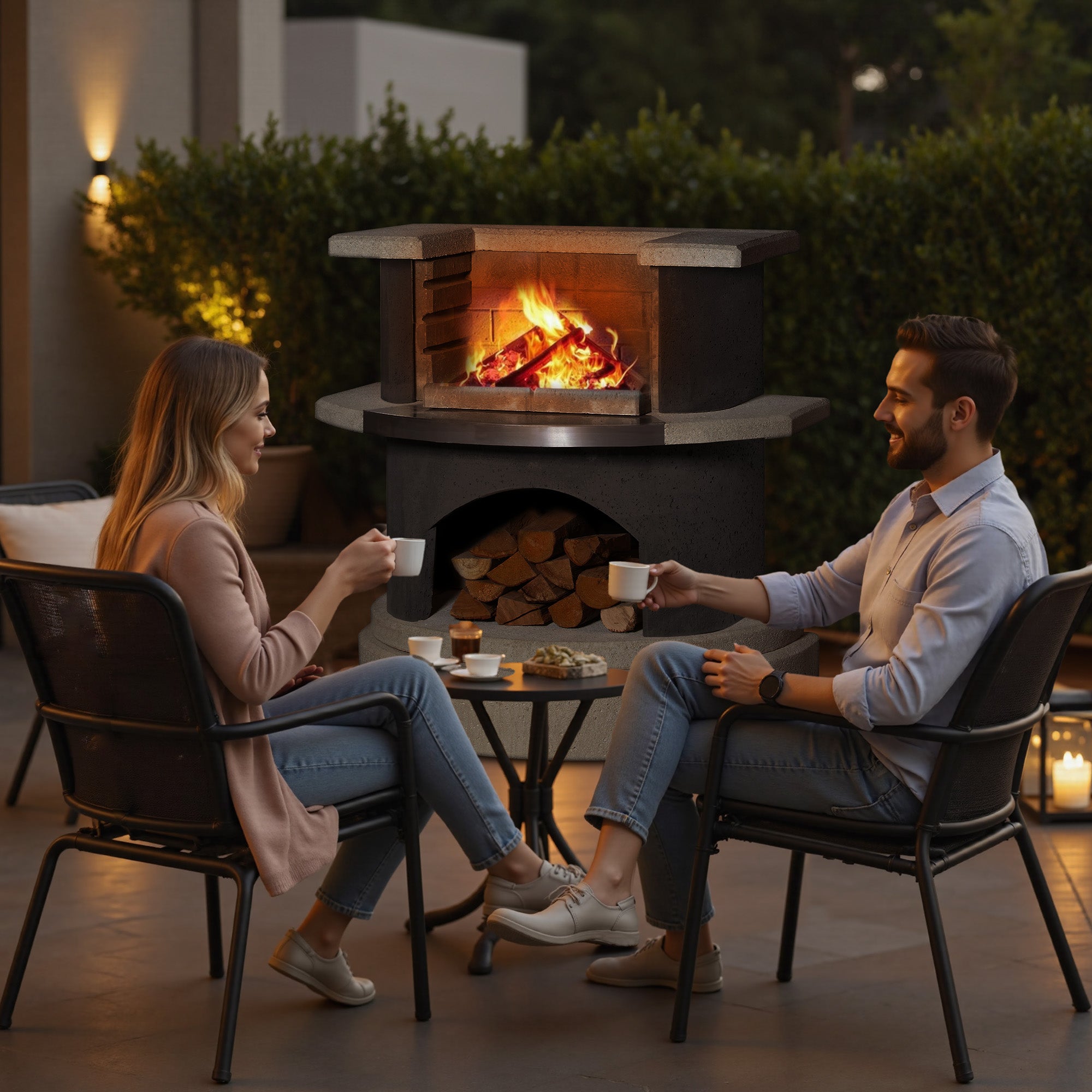
shining directly into seated guests' eyes. A fireplace or fire pit
can anchor a separate conversation area, but seating must remain
outside the product's required heat and spark clearances.
Build a Seasonal Maintenance Routine
Inspect burners, grease management, electrical cords, refrigerator
ventilation, sink drainage, fire grates and chimney paths at the
intervals specified by each manual. Remove ashes only when cold and
keep service records for complex installed equipment.
After severe weather: Check that covers, vents,
drains, connections and appliance positions remain secure before
lighting any burner or wood fire.
Specialty Equipment for a Complete Prime Setup
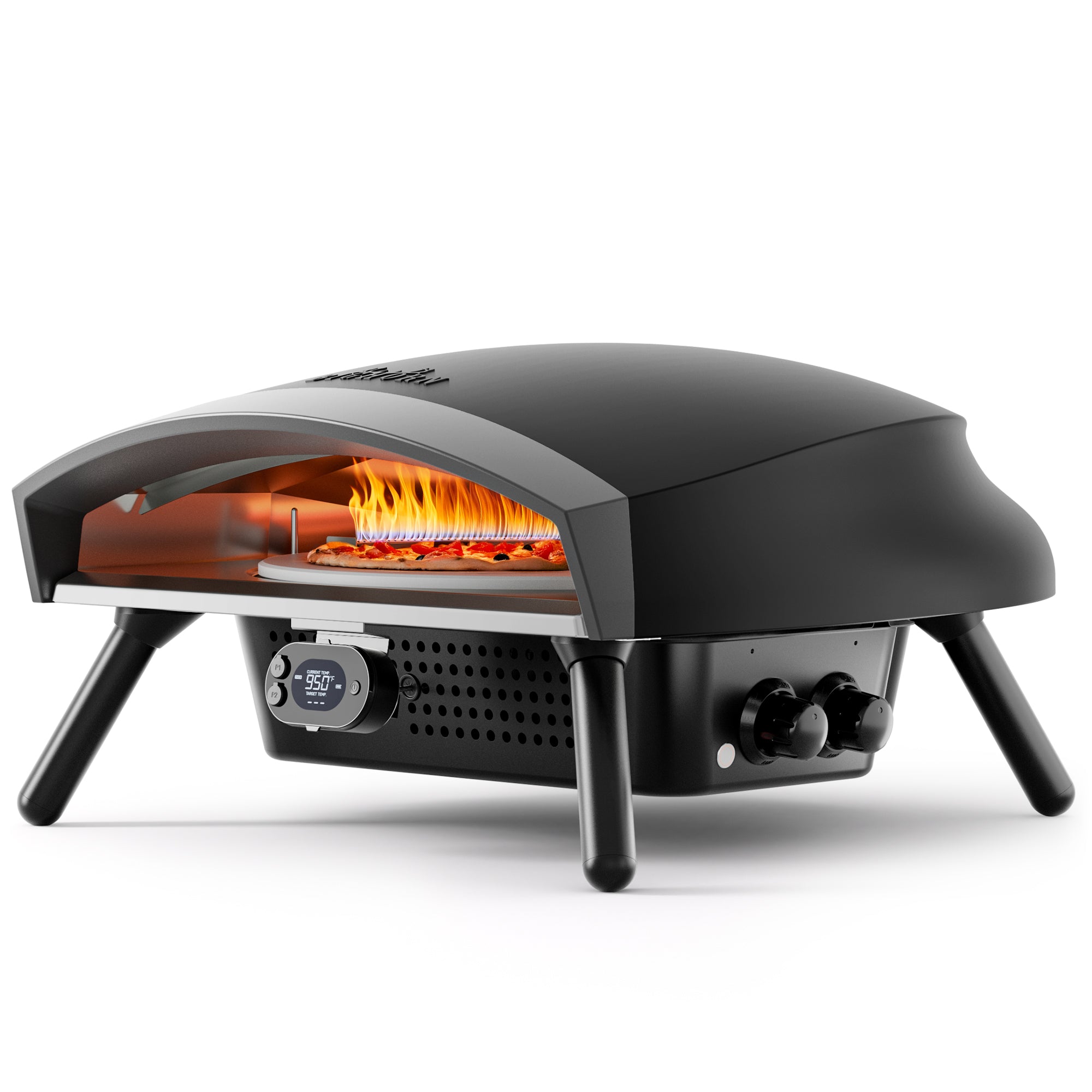
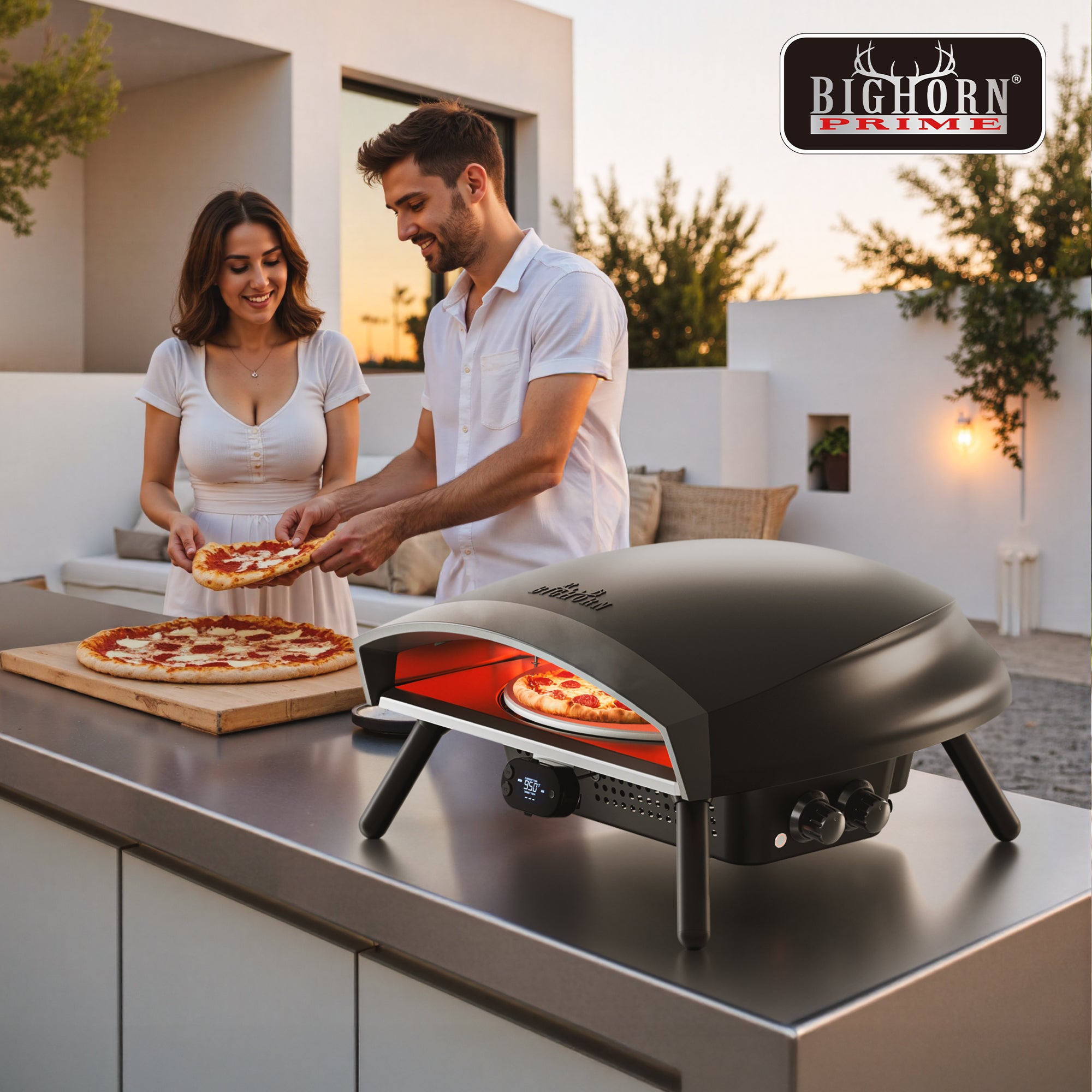
16-Inch Auto-Rotating Pizza Oven
Add a dedicated high-heat pizza station with a rotating stone
and digital temperature display to an outdoor entertainment
layout.
View the Prime Pizza Oven
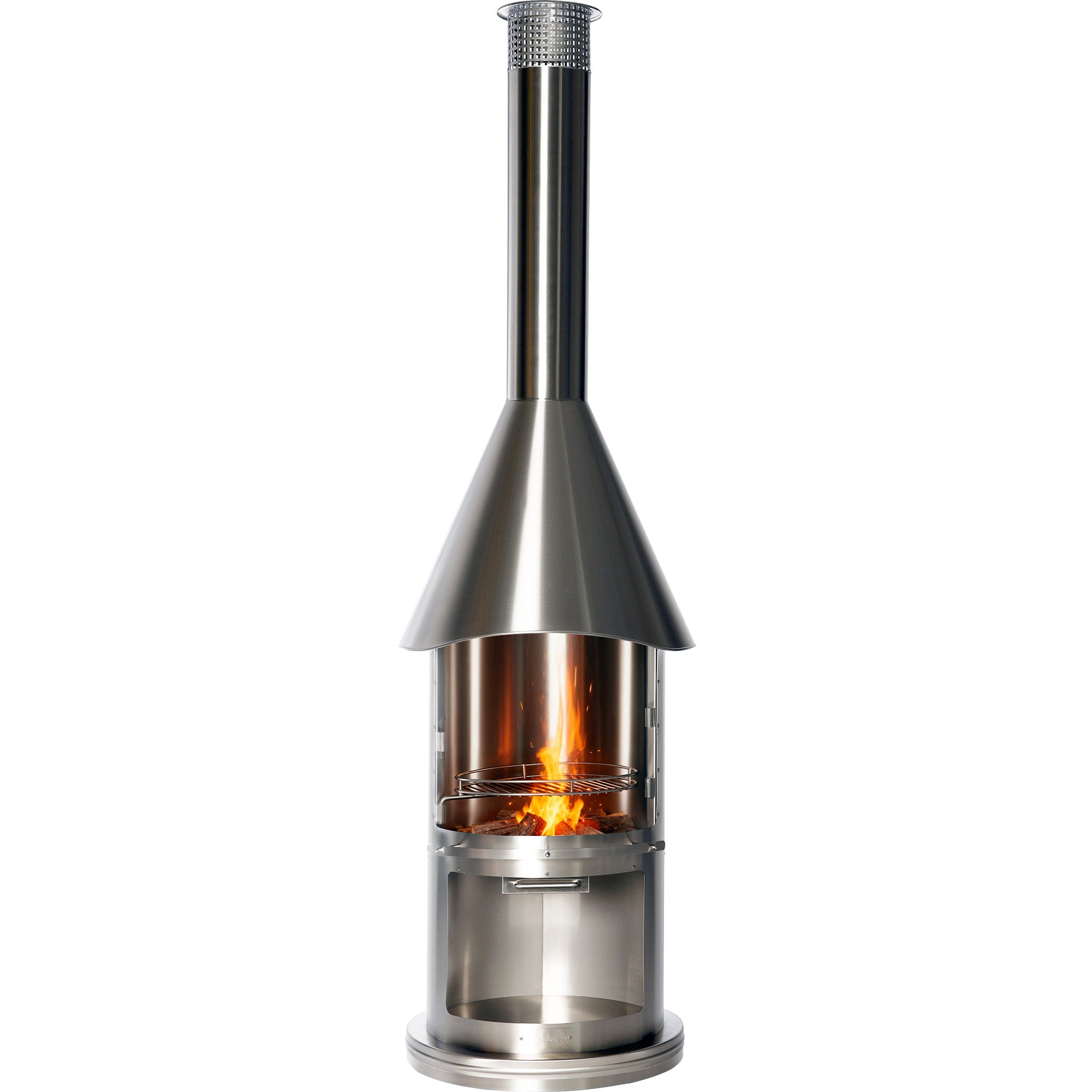
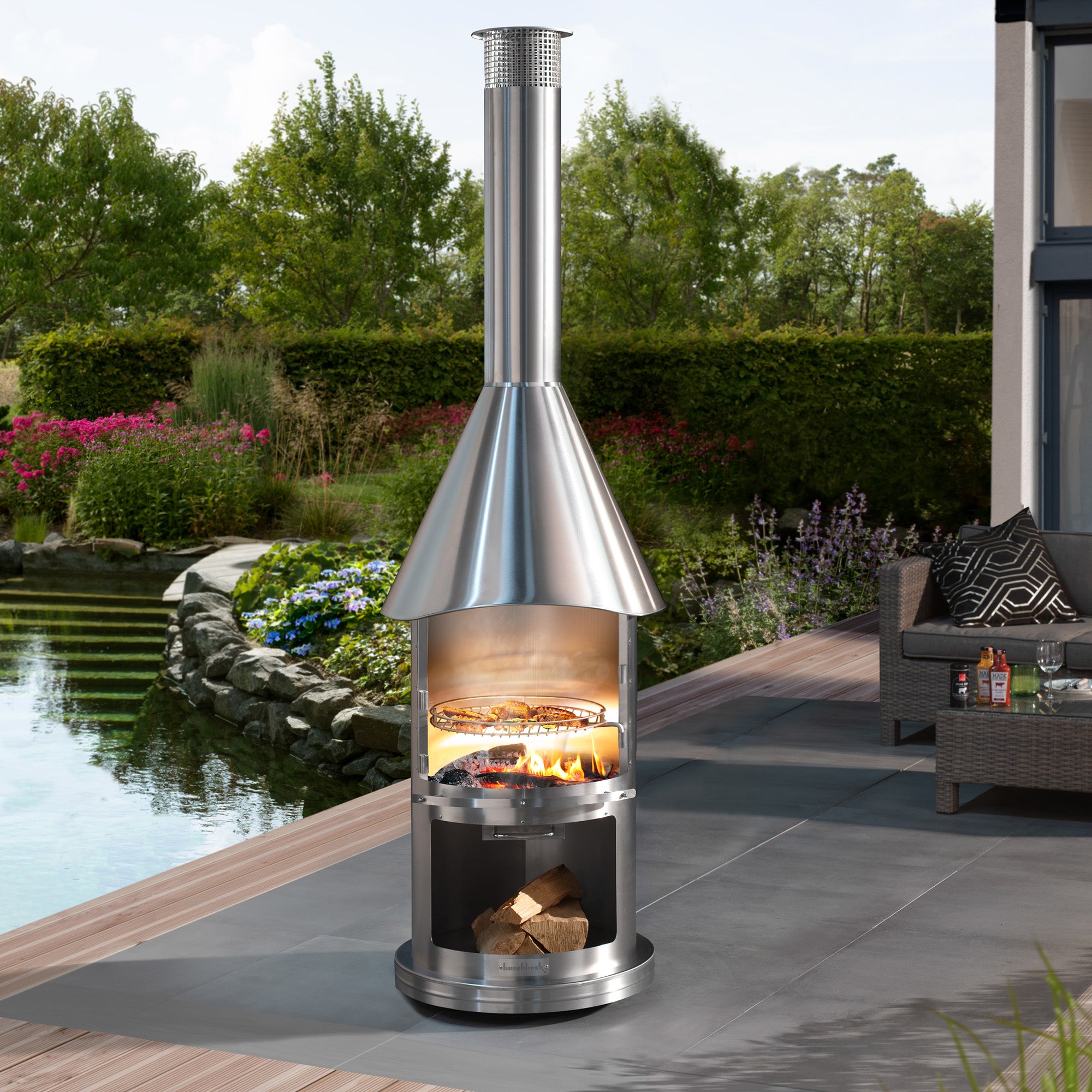
90.6-Inch Twin-Walled Chimenea
Explore a tall 304 stainless steel wood-burning centerpiece with
refractory inner construction, a spark screen and adjustable
grilling rack.
View the Chimenea
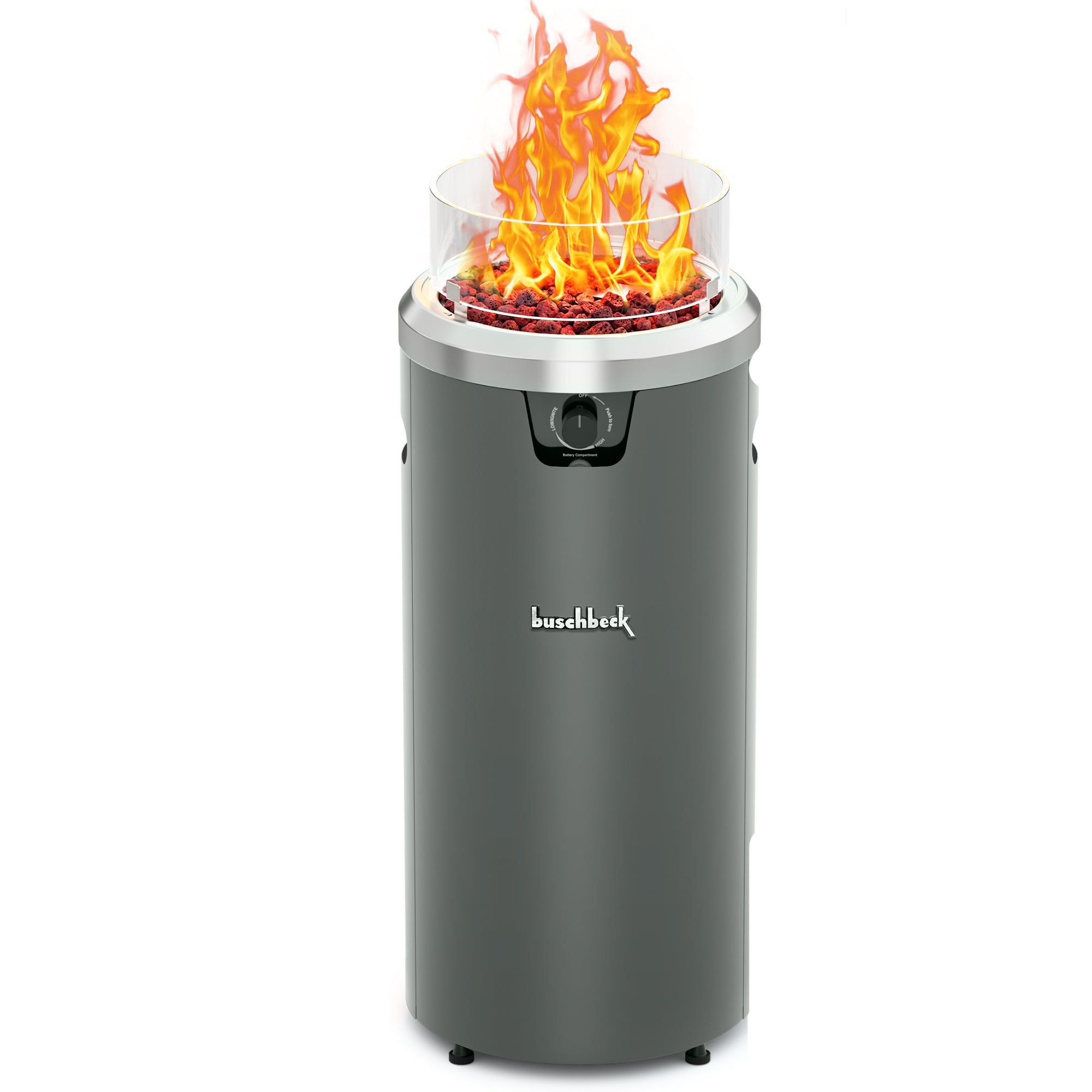
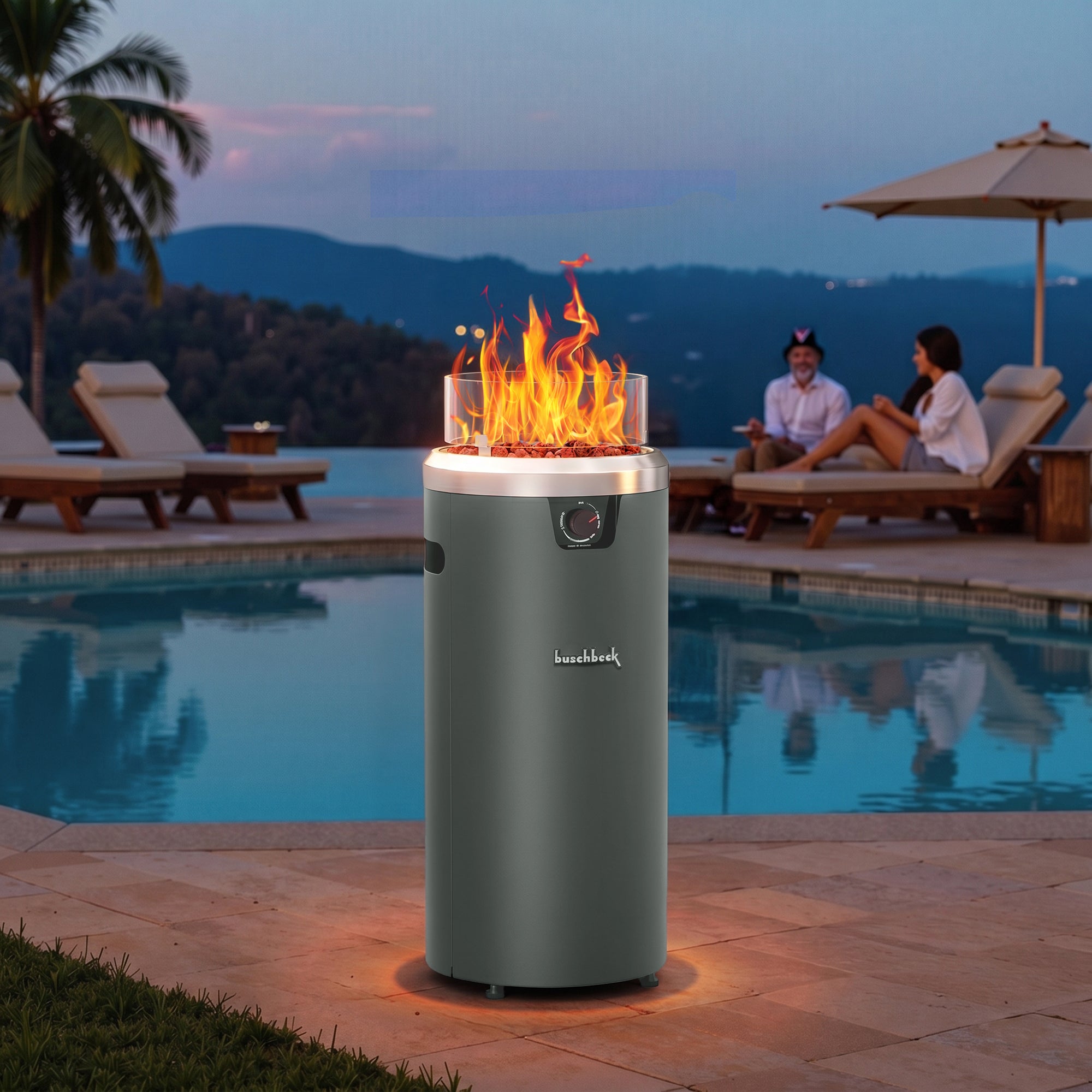
Column Propane Fire Pit
Consider a compact gas fire feature when ambience and flexible
seating matter more than a large live-fire cooking surface.
View the Column Fire Pit
Turn Individual Products Into One Cohesive Space
Establish the footprint, utilities, circulation and safety zones
first. Then choose a primary cooking station and add live-fire or
specialty equipment only where it improves the way the space will
actually be used.