Camping Stove

Filters

Sort by:

2 products

Save $20.00
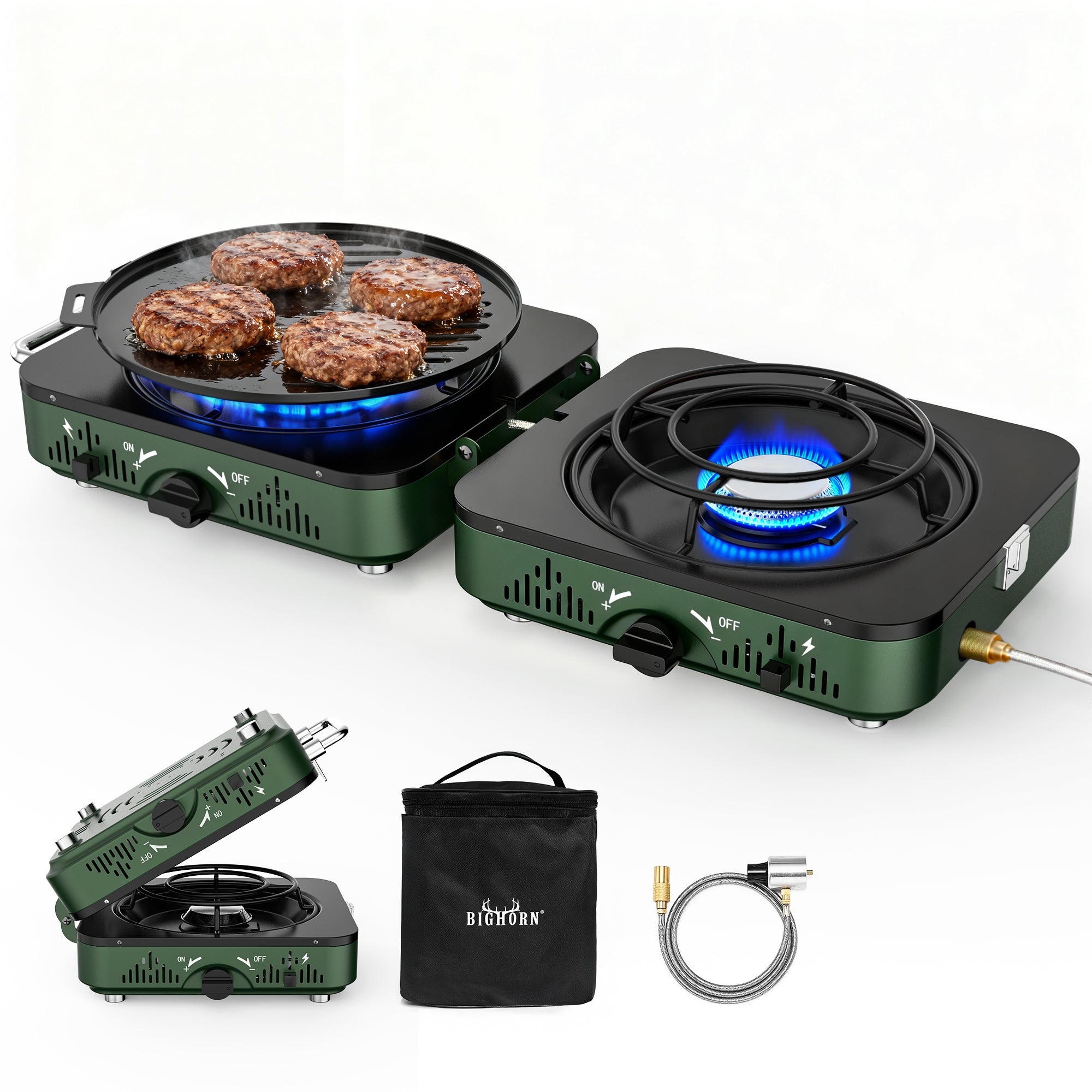
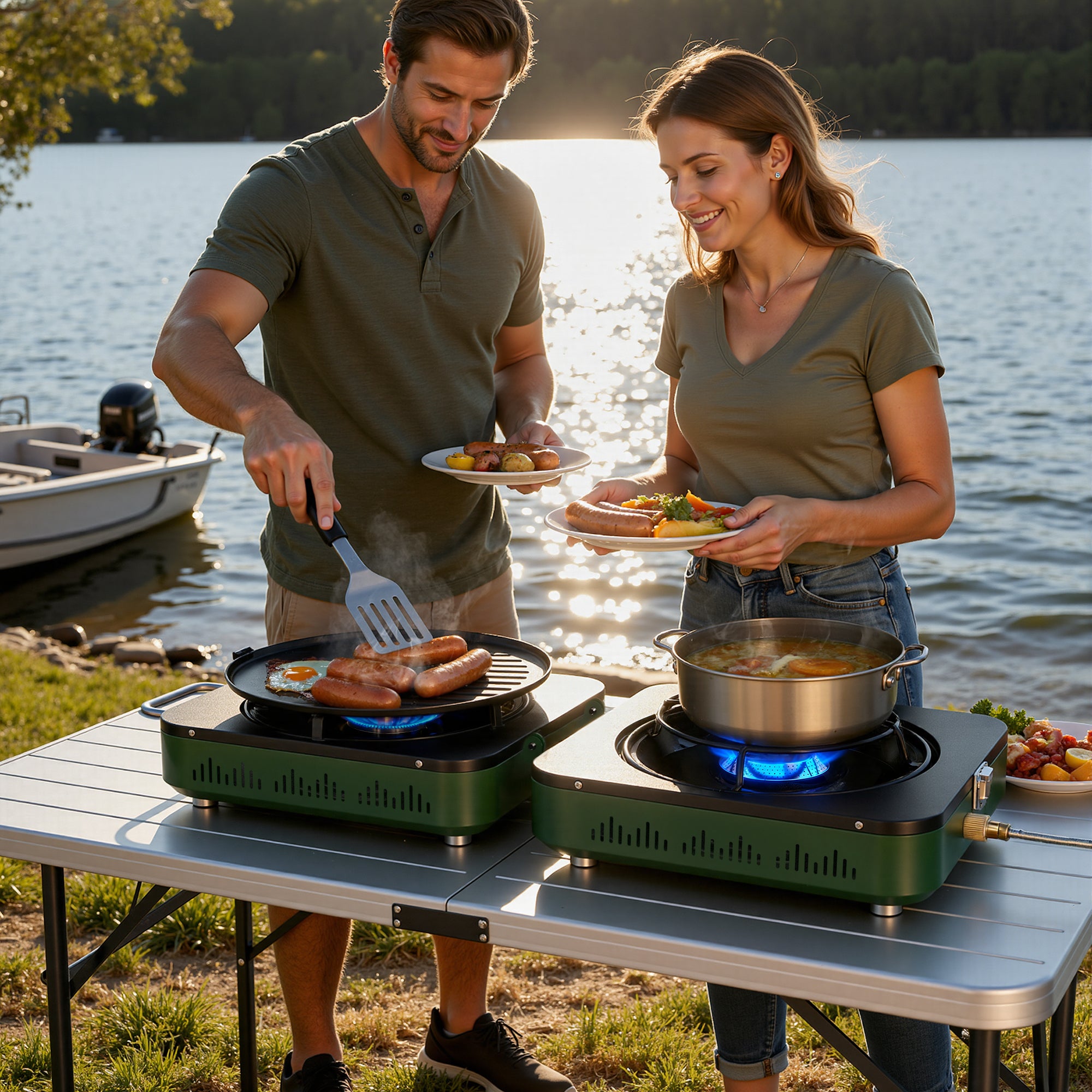
Portable 2 Burner Propane Camping StovePortable 2 Burner Propane Camping Stove
Sale price$99.99 USD Regular price$119.99 USD
4.7
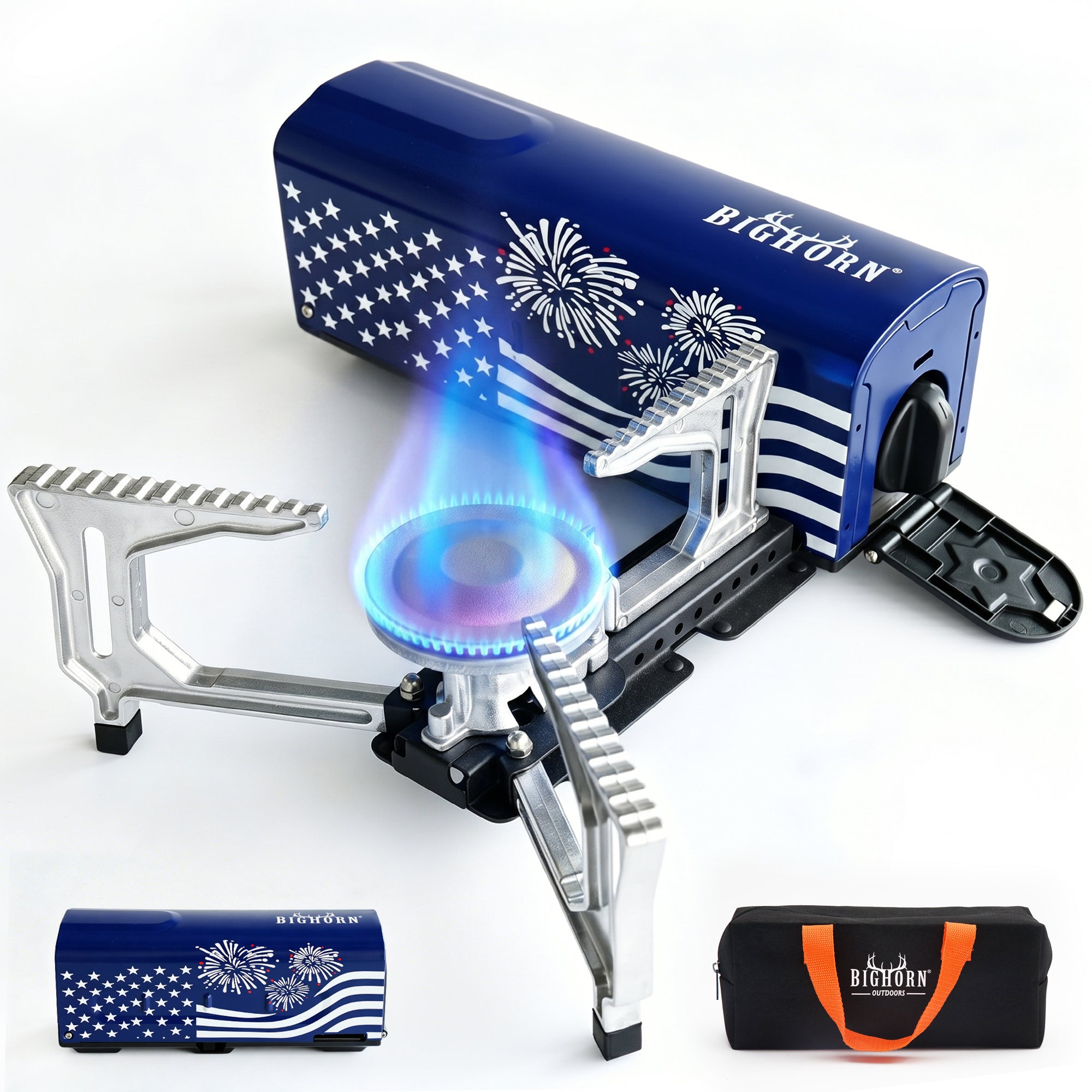
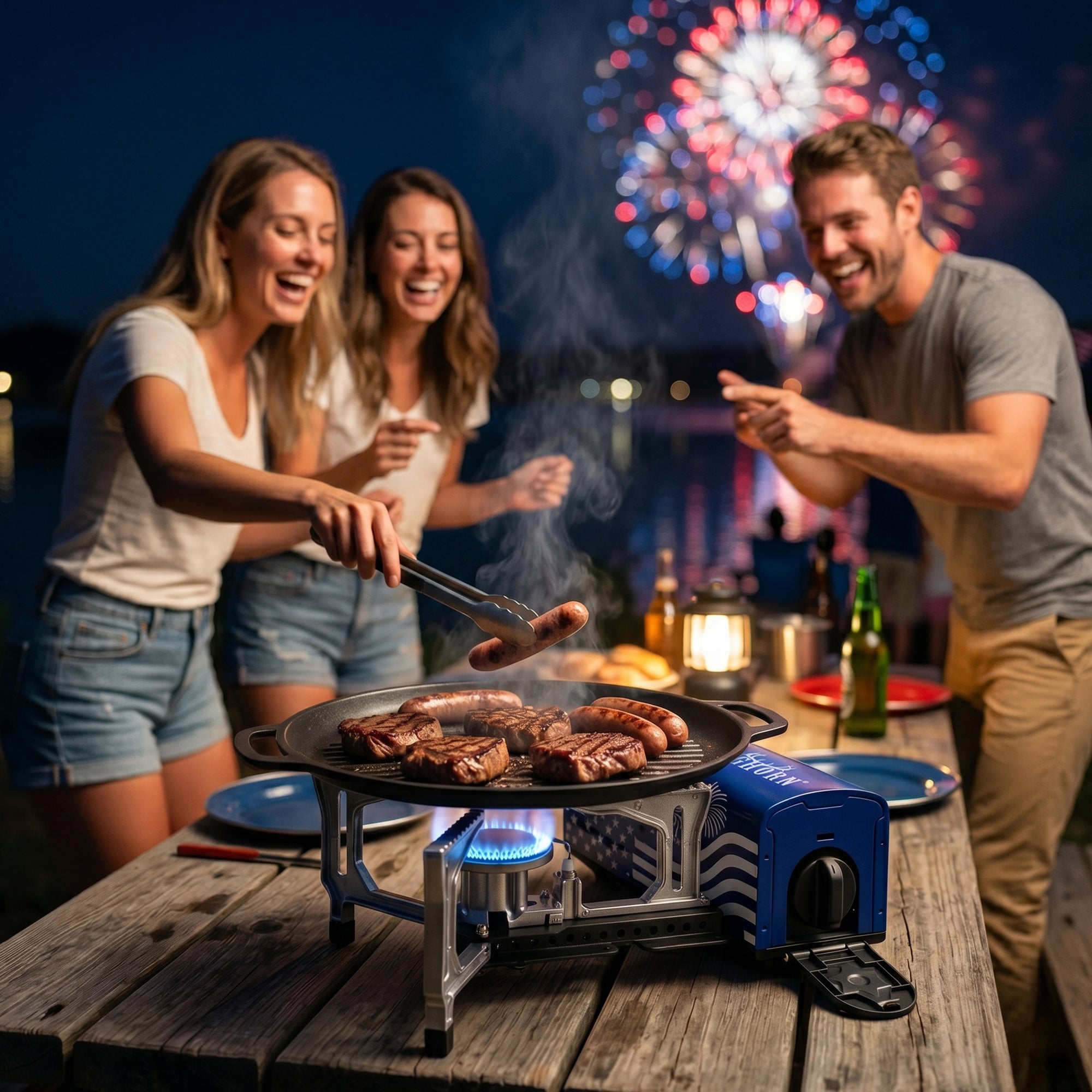
Butane Camping Stove, Portable Folding Gas Burner for CampingButane Camping Stove, Portable Folding Gas Burner for Camping
Color

24 Months Warranty

Only valid on bighornoutdoor.com purchases

30-Days Return Guarantee

Enjoy seamless 30-day returns

Free Shipping

Free Shipping on All U.S. Orders

Secure Payment

All payments processed securely

Choose a Camping Stove for Meals Away From Home

A portable camping stove creates a controlled outdoor cooking station when a fire ring is unavailable, inconvenient or restricted. The right setup depends on how many people you cook for, whether you need one or two cooking zones, the cookware you carry and the space available in your vehicle or camp kit.

Big Horn Outdoors offers a two-burner propane stove with an integrated reversible griddle and a compact folding butane burner for pots and pans. Both are designed for outdoor use, but they serve different camping styles.

Portable 2 Burner Propane Camping Stove

Two independently useful cooking areas and a removable reversible griddle support larger breakfasts, mixed meals and group camping. The stove delivers up to 17,000 BTU, uses piezo ignition and folds into a handled case weighing approximately 5.5 pounds.

View the 2 Burner Stove

Portable Folding Butane Camping Stove

The single-burner butane model folds into a compact bucket-style body for storage and expands to support a suitable pot or pan. It offers one-touch ignition, adjustable flame control and a 7,500 BTU output for compact camps, picnics and simple outdoor meals.

View the Folding Stove

Compare Big Horn Outdoors Portable Camping Stoves

Compare cooking surface, packability and meal complexity before deciding which stove belongs in your outdoor cooking kit.

Feature 2 Burner Propane Stove Folding Butane Stove
Best for Car camping, families and multi-item meals Compact kits, picnics and simple one-pan meals
Cooking layout Two-burner format with reversible griddle Single burner with pot and pan support
Maximum listed output 17,000 BTU 7,500 BTU / 2,200W
Ignition Piezo push-button ignition One-touch ignition
Packable design Foldable case with handle and latch Compact folding bucket-style body
Primary advantage More cooking area and meal flexibility Smaller packed footprint and straightforward setup

Which Portable Stove Fits Your Camping Style?

  • Choose the two-burner stove when you want to cook breakfast components together, prepare food for several people or use both textured and smooth griddle surfaces.
  • Choose the folding single burner when packed size, easy transport and heating one pot or pan at a time are the main priorities.
  • Check fuel availability before departure and carry only the canister type and connection specified for your stove.
  • Match cookware to the support surface so the pan remains stable and does not extend beyond the limits stated in the product manual.

Frequently Asked Questions About Camping Stoves

Is a one-burner or two-burner camping stove better?

A single burner is easier to pack and works well for boiling, reheating and one-pan meals. A two-burner layout is better for groups or meals that require two temperatures or cooking surfaces at the same time.

Can a portable gas camping stove be used indoors?

Treat these as outdoor cooking appliances. Do not use them inside a tent, vehicle, camper, garage or other enclosed space. Combustion can produce carbon monoxide, and nearby materials can create a serious fire hazard.

What cookware can I use on a camping stove?

Use stable, heat-safe cookware that fits within the support and weight limits in the stove manual. Center the cookware over the burner and avoid oversized pans that can trap heat around the fuel canister or make the stove unstable.

Can I cook with a camping stove when it is windy?

Use the stove only within the weather limits stated in its manual. Position it on level ground in a naturally sheltered, open area, but never surround the stove or fuel canister with a tight windscreen that could trap heat.

How much camping-stove fuel should I bring?

Estimate the number of meals, burner time, number of people and expected weather, then add a reasonable reserve. Actual consumption changes with flame level, wind, temperature, cookware and the amount of water or food being heated.

How should a portable camping stove be stored?

Turn off the stove, disconnect fuel according to the manual and let all parts cool. Remove grease and food residue, keep the burner dry and store the stove separately from fuel in a ventilated location away from heat and ignition sources.

Build a Camping Kitchen Around Real Meal Needs

Select two cooking zones for group meals or a compact single burner for lighter trips. Then match the stove with approved fuel, stable cookware and a safe outdoor location before leaving home.

Know More About Planning a Portable Camp Kitchen ↓ Show less ↑

How to Build a Safer, More Efficient Outdoor Cooking Setup

A reliable camp kitchen depends on more than burner output. Stove placement, menu design, cookware, fuel reserves and cleanup all affect how quickly a group can prepare food without turning the cooking area into a cluttered or unsafe part of camp.

Start With the Meal Plan

Write down each hot meal before packing. A one-pot dinner, coffee and boiling water require a different setup from a full breakfast with eggs, meat and side dishes. The number of simultaneous cooking tasks determines whether a compact burner or a larger two-zone station is more practical.

  • Pre-measure ingredients to reduce preparation at camp.
  • Group meals by shared cookware and similar heat levels.
  • Choose foods that fit the burner count available.
  • Carry a no-cook backup meal in case conditions change.

Select a Stable Outdoor Cooking Location

Use a firm, level, noncombustible surface in an open outdoor area. Keep the stove away from tents, vehicles, dry vegetation, overhanging material and busy walking paths. Orient the cooking area so pot handles do not project into traffic.

Ventilation reminder: Never move a burning stove into a tent, vehicle or enclosed shelter to escape wind or rain. Gas-burning equipment consumes oxygen and can create invisible, odorless carbon monoxide.

Plan Fuel by Burner Time, Not Only Trip Length

Two trips of the same length may use very different amounts of fuel. Consider the number of hot drinks, water-boiling sessions, long simmers and high-heat meals. Cold cookware, wind and low ambient temperatures can also increase consumption.

  1. List every planned use of the stove.
  2. Estimate minutes of low, medium and high flame.
  3. Check the stove manual and fuel-canister guidance.
  4. Add a reasonable reserve for delays or changed weather.
  5. Inspect connections and canisters before leaving home.

Use Wind Protection Without Trapping Heat

Wind can push the flame away from the cookware and increase fuel use. Start with natural shelter and the wind-management features built into the stove. Do not wrap an improvised shield tightly around the appliance, especially around a fuel canister, because reflected heat can raise component temperatures.

Match Cookware to the Burner

Wide, heavy cookware can make a small folding stove unstable, while very small cookware may not sit securely on a large support. Use the size and weight limits in the manual, center the pan and keep handles turned away from edges.

  • Use lids to shorten boiling and simmering time.
  • Bring heat-resistant gloves or a suitable pot holder.
  • Avoid empty preheating that can damage cookware.
  • Keep raw-food utensils separate from serving tools.

Organize Cooking, Serving and Fuel Zones

Create separate areas for the active stove, uncooked ingredients and finished food. Keep spare fuel outside the hot zone. A small wash station, trash container and clean utensil surface make it easier to prevent cross-contamination and pack out waste.

Cool, Clean and Pack the Stove

Shut off the fuel supply and follow the manual before disconnecting anything. Let the stove and griddle cool fully. Remove grease and food particles that could attract animals or block the burner, dry the components and inspect the connection before storage.

Before the next trip: Test ignition outdoors, verify that all required fittings are present and check that the fuel connection is clean and undamaged.

Outdoor Cooking Guides and Related Gear

Camping Grill Guide

Compare portable gas, charcoal and pellet cooking approaches by trip type, packability and meal style.

Read the Camping Guide

Portable Grills & Griddles

Explore larger outdoor cooking options when your campsite menu needs more grilling area or specialized high-heat equipment.

Explore Portable Grills

Outdoor Cooking Accessories

Browse tools and protective equipment that can help complete a portable cooking setup.

Explore Accessories

Pack the Cooking System, Not Just the Stove

A well-planned kit combines the right burner count with approved fuel, stable cookware, weather awareness and a safe cleanup plan. Organizing these elements before departure makes outdoor meals faster and more predictable.