
Improve heat retention in a compact pizza oven by fully preheating the stone, maintaining steady heat input, reducing wind exposure, and allowing recovery between pizzas. Check at least 3 stone locations before launching. Use doors only as instructed, and never block vents or add unapproved insulation to trap more heat.
By the Big Horn Outdoors Product Team
Published: October 24, 2026
Why Does a Compact Pizza Oven Lose Heat Quickly?
A compact pizza oven loses heat through 3 main routes: its exterior, its opening, and its exhaust. Pizza also draws stored energy from the baking stone, so a cooler cooking surface after a bake does not automatically indicate defective insulation.
Thermal mass is a material’s ability to absorb and store heat. A pizza stone provides thermal mass beneath the dough. Insulation serves a different purpose: it slows heat transfer out of the cooking chamber.
Compact ovens often prioritize manageable weight and faster setup rather than the substantial heat storage of a masonry oven. They generally depend on ongoing heat input during pizza cooking, not hours of retained heat after the fire stops.
Three heat-transfer mechanisms explain the baking process:
- Conduction transfers heat from the stone directly into the pizza base.
- Radiation transfers energy from flames, heating elements, and hot interior surfaces toward the pizza.
- Convection transfers heat through moving air and combustion gases.
A strong flame can brown toppings while an insufficiently heated stone leaves the base pale. That is a heat-balance problem, not necessarily poor overall heat retention. Diagnose the floor and upper cooking chamber separately before changing equipment.
How Long Should You Preheat a Compact Pizza Oven?
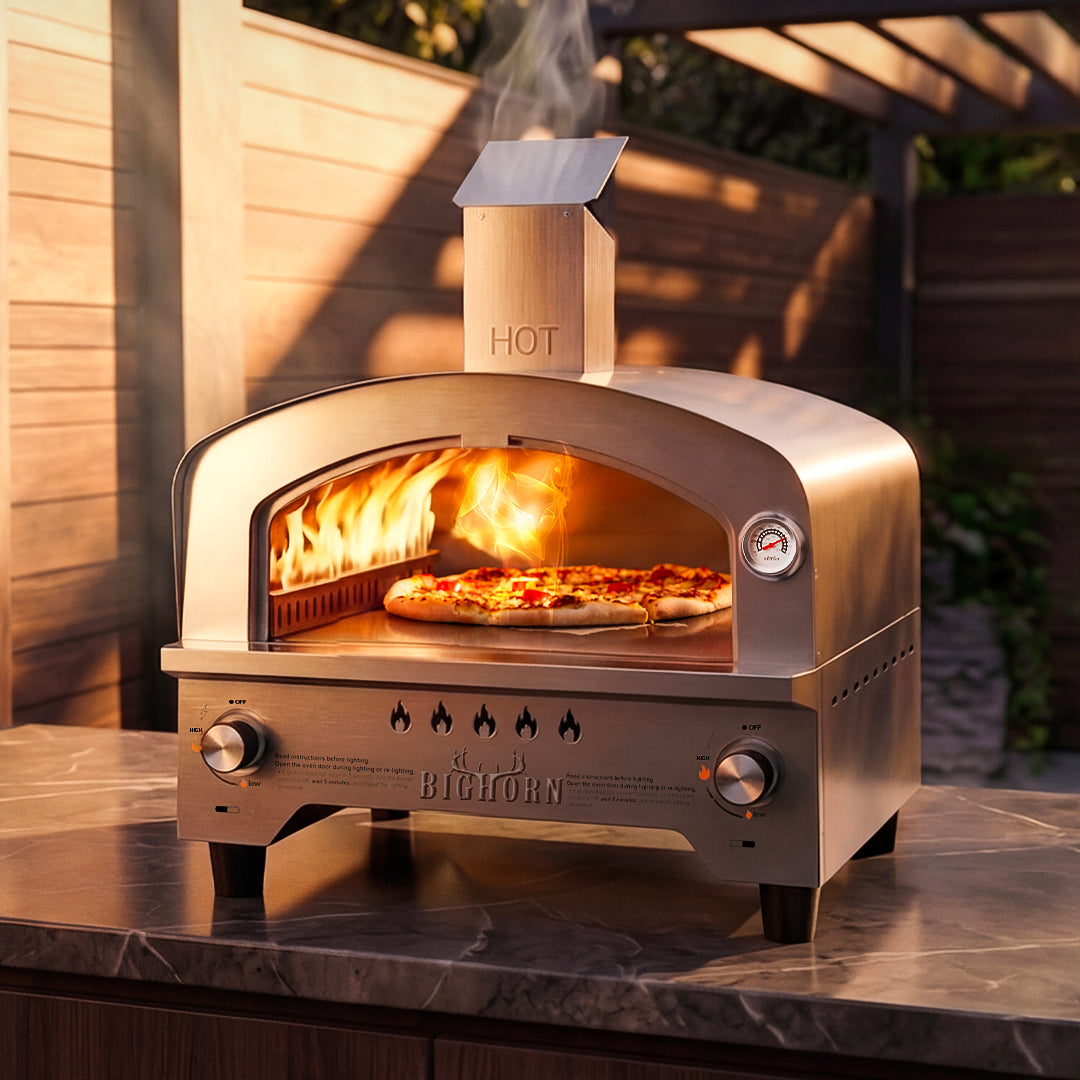
Preheat for the exact model’s recommended period, then verify stone readiness rather than relying on elapsed time alone. Big Horn Outdoors lists an 18–20-minute preheat for its 12-inch Wood Pellet Pizza Oven with separately sold gas-burner and electric-heater compatibility; its FAQ specifies approximately 662°F after 18 minutes.
Those figures are manufacturer-listed reference points, not a guarantee that every stone location reaches the same temperature in every operating mode or weather condition.
A heat soak means continuing the prescribed heating process long enough for the baking surface to store useful energy, rather than stopping when the chamber first feels hot.
For more reliable preheating:
- Install the dry stone before heating, following the manual.
- Assemble the chimney, fuel components, and other required parts correctly.
- Follow the specified ignition and preheat procedure.
- Check the intended launch area with a suitable surface thermometer.
- Continue heating if the stone remains below the temperature appropriate for your recipe.
Cold weather can extend warm-up. Moisture also complicates heating, but a wet stone should not simply receive a more aggressive fire. Follow the manufacturer’s drying guidance.
Maximum oven temperature is not the same as recommended stone temperature. Match the baking surface to the pizza style instead of chasing the highest advertised number.
Which Tools and Stone Choices Improve Heat Management?
An infrared thermometer and a correctly fitted baking stone are 2 useful starting points for heat management. The thermometer checks surface readiness, while the stone stores energy for the crust; neither compensates for insufficient fuel input or obstructed airflow.
An infrared thermometer measures surface temperature without contact. It does not measure chamber air temperature, the stone’s internal temperature, or food doneness.
Choose an instrument whose measurement range covers your operating temperatures. Follow its instructions for distance, measurement-spot size, and emissivity—the surface characteristic that affects infrared readings.
Measure the stone rather than shiny metal, flames, or heavy deposits of loose flour. Use the same locations and measuring distance each time so comparisons remain meaningful.
A thicker stone can store more energy when its material and area are otherwise comparable, but it also requires more energy to heat. It may add weight, reduce chamber clearance, or exceed the support system’s intended load.
Do not stack stones, add firebricks, or substitute baking steel unless the oven manufacturer approves that configuration. Steel transfers heat into dough differently and can change the balance between crust browning and topping doneness.
Before buying a replacement, confirm its dimensions, thickness, material, support requirements, and exact-model compatibility.
How Should You Manage Fuel Between Pizzas?
Maintain the approved heat source between pizzas and assess stone recovery before each launch. There is no universal 2-minute recovery rule: fuel output, stone construction, weather, and the previous pizza’s size all affect readiness.
Fuel choice changes how you manage heat, but a stronger heat source is not the same as better insulation. Use this comparison to identify the operating habit most relevant to your oven.
| Heat source | Practical heat-management priority | Important limitation |
|---|---|---|
| Wood pellets | Maintain combustion with dry, approved cooking pellets and prescribed loading | Overloading or ash restriction can disrupt airflow |
| Gas | Use the specified burner, regulator, fuel, and control settings | Increasing the flame can overbrown toppings |
| Electricity | Follow preheat, power-supply, and recovery instructions | An indicated setpoint does not prove uniform stone temperature |
For pellet cooking, avoid letting the fire repeatedly collapse and then adding excessive fuel to compensate. Follow the loading sequence and keep pellets protected from moisture.
For gas cooking, maintain the prescribed operating setting during recovery. If the burner goes out, follow the shutdown and relighting procedure rather than immediately attempting ignition again.
For electric cooking, let the heating system complete its recovery. Use only the power connection and any extension arrangement explicitly allowed by the manual.
The Big Horn Outdoors 12-inch Wood Pellet Pizza Oven identified above supports separately sold gas-burner and electric-heater accessories. That compatibility belongs to this exact product, not every similar-looking pellet oven. Convert only when shut down and fully cooled, following the approved procedure.
How Can You Reduce Heat Loss Without Blocking Airflow?
Reduce unnecessary heat loss through 2 operating choices: a suitable outdoor position and correct opening management. Do not seal an open-front oven or restrict combustion air to imitate the behavior of a closed baking chamber.
Wind can increase exterior cooling and disturb flames. Before lighting, choose a stable, level location with less direct wind exposure while preserving every required clearance and an open outdoor operating environment.
Do not move a lit or hot oven to escape changing weather. Shut it down as instructed if conditions become unsuitable.
Door guidance is model-specific. Some ovens use a door during preheating; others require an open cooking entrance, particularly in certain gas configurations. An improvised door can alter combustion, overheat components, or redirect flames.
Prepare dough, toppings, and tools before approaching the oven. Efficient launching and turning reduce avoidable interruptions without sacrificing observation.
Never drape a storage cover, towel, welding blanket, or loose ceramic-fiber insulation over an operating appliance. A material’s temperature rating alone does not establish that it is safe around that oven’s controls, fuel system, ventilation passages, or exhaust.
Factory-built portable ovens should retain their approved configuration unless the manufacturer expressly authorizes a modification.
Batch Planning and a Three-Point Temperature Log
A 3-point temperature log helps distinguish inadequate preheating from normal stone recovery. Record the front, center, and rear of the usable cooking area, then compare the same locations before and after similar pizzas.
Keep the measurements clear of flames and use consistent thermometer technique. A hotter rear area may reflect normal burner or fire placement, not a fault.
For a useful baseline, record:
- Preheat duration and weather conditions.
- Fuel type and operating setting.
- Stone temperatures before launch.
- Pizza diameter, dough thickness, and topping load.
- Stone temperatures after removal and before the next launch.
This is a home diagnostic record, not laboratory testing. Its purpose is to reveal patterns.
If the first pizza cooks well but later bases become progressively paler, the launch pace may exceed the oven’s recovery capacity. If every base is pale from the beginning, examine preheating, measurement, and recipe suitability first.
Pizza size matters because a larger base draws heat across more stone area. Heavy toppings also add a cooking load and can release moisture. Keep toppings moderate and drain wet ingredients rather than treating maximum burner output as the only solution.
For gatherings, serve pizzas sequentially and delay stretching the next one until the oven is nearly ready. This avoids leaving a topped pizza stuck on a peel while the stone reheats.
Safe Care and Exact-Model Purchase Checks
Before every session, check 3 things: a dry, sound stone; unobstructed approved airflow paths; and correctly assembled fuel or electrical components. Stop using the oven if you discover damage that could affect safe operation.
Remove cold ash and debris according to the manual. Ash buildup can restrict combustion, while heavy cooking residue makes temperature comparisons and clean launching harder.
Allow the oven and stone to cool naturally. Never pour water onto a hot stone to clean it or accelerate cooling; the sudden temperature change can cause thermal shock and cracking.
Cover the appliance only after it has completely cooled. If moisture reaches internal parts or insulation, obtain model-specific guidance rather than dismantling the shell or forcing a rapid high-temperature dry-out.
Fuel-burning outdoor ovens must remain outdoors in an open location, away from building openings and other hazards identified in the manual. A garage, tent, RV, or enclosed patio is not a safe heat-retention shelter. Carbon monoxide is an odorless, poisonous combustion gas.
When comparing ovens, look beyond peak temperature. Ask about approved fuel, usable cooking area, insulation construction, stone support, operating footprint, and replacement-part compatibility.
For portability, the current Big Horn Outdoors 12-inch accessory-compatible Wood Pellet Pizza Oven lists folding legs and a 24.9-pound weight. Those transport features do not establish its recovery time or eliminate the need for a stable cooking surface.
Choose pellets if you enjoy active fire management, gas if adjustable flame control suits your routine, or a purpose-designed electric model for an approved powered location. Electricity alone does not establish indoor suitability.
Big Horn Outdoors Expert Views
The Big Horn Outdoors Product Team’s practical guidance is to evaluate 3 variables separately: stone readiness, heat-source stability, and launch pace. These checks provide a clearer diagnosis than assuming every pale crust requires additional insulation.
“Treat the stone as an energy reserve, not simply a hot platform. Preheat it according to the model’s instructions, verify the launch area, and give it time to recover after cooking. If toppings brown before the base, investigate floor readiness before increasing flame intensity. Preserve the oven’s designed airflow, and use only accessories approved for the exact model.”
Your next cooking session
Start with the manual, a suitable infrared thermometer, and a simple temperature log. Correct preheating and batch timing before considering replacement parts.
For pellet ovens, prioritize dry approved fuel and consistent fire management. For gas ovens, prioritize stable flame control. For electric models, follow the prescribed preheat and recovery sequence. In every case, match pizza size and serving pace to the oven’s actual workflow.
The goal is consistency: adequate stored heat beneath the dough, balanced heat above it, and a safe setup that remains portable where the model supports it.
Frequently Asked Questions
These 4 answers address remaining accessory, measurement, and troubleshooting concerns. Follow the exact oven and accessory instructions whenever they differ from general cooking guidance.
Does a hot exterior mean my pizza oven has poor insulation?
Not necessarily. Exterior temperature depends on construction, location, operating conditions, and surface finish; it is not a standalone insulation test. Stop and seek support if you notice a new localized hot spot, deformation, exposed insulation, or other unusual change.
Can aluminum foil help my pizza oven retain heat?
Do not line vents, the oven floor, or combustion passages with foil unless expressly instructed. Foil is not a substitute for insulation, and incorrect placement can obstruct airflow or alter heating.
Can I use residual heat to bake bread after making pizza?
Only if the model’s instructions permit the food, cookware, and operating method. A lightweight portable oven should not be assumed to provide the long, stable retained-heat baking window associated with a masonry oven.
When should I contact Big Horn Outdoors about falling temperatures?
Contact support if performance deteriorates despite correct assembly, approved fuel, suitable weather, a clean airflow path, and proper preheating. Provide the exact model, operating mode, preheat duration, stone readings, and photographs of any damage rather than attempting an unapproved modification.
Explore more in the Pizza Oven Cooking Guides.