







Buying & Comparisons
A 16-inch gas pizza oven checklist should start with burners, stone, rotation claims, and ignition notes on the live listing, not with a remembered ad line. This is a features walk-through, not a size medal or a price sheet. Confirm every claim on the current page.
Burners and heat control
Start with the fuel path you can actually live with: a legal propane cylinder, a hose and regulator the manual names, and burner controls you can reach without guessing. Some 16-inch class listings describe a single main burner; some 15-inch listings describe a dual-burner layout with separate knobs. Those are different heat maps, and a class name is not proof that every 16-inch oven has two independently controlled burners.
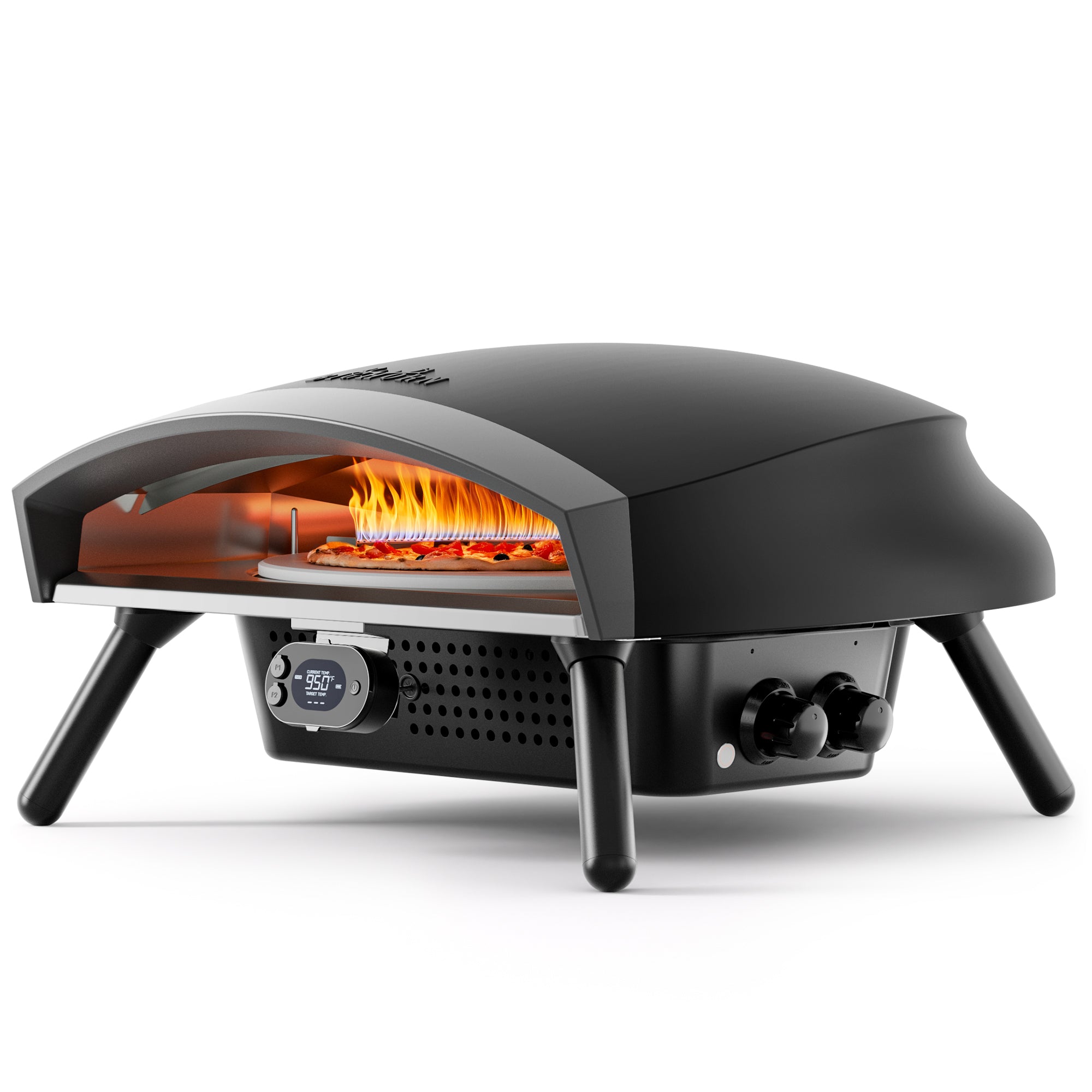
The current 16-inch gas outdoor pizza oven is the 16-inch example in this checklist. Confirm published output, weight, ignition, and stone notes on the live page. A cache may mention an output in the neighborhood of 29,000 BTU, or a packed weight around 42 pounds; treat those as claims to recheck, not as numbers to quote from memory. The current 15-inch dual-burner gas pizza oven is the dual-burner comparison path; the live URL uses a dural-burner spelling. Confirm its published output and cooking-area notes on that page, including any marketing heat or bake-time lines, and do not treat them as a timer.
A size-only comparison of smaller gas ovens already lives at 15-inch vs 12-inch gas pizza oven does size matter. Use that page for diameter questions. Use this page for the feature checklist on a 16-inch class gas oven, including whether dual burners even apply to the model in your cart.

Stone quality
The stone is the deck you will launch onto. Confirm whether a stone is included, what material the current listing names, how it sits, and whether it is a rotating deck or a fixed one. A food-grade ceramic note, if the page publishes one, is a material clue, not a promise that every pie will brown evenly. A cracked, wet, or poorly seated stone will undo a handsome burner story.
Measure the usable deck against the pies you already stretch. A 16-inch class name is not automatically a 16-inch pizza you can turn with clearance. If the listing also mentions a digital thermometer, treat that as a chamber or stone cue to confirm in the manual, not as a replacement for watching the pie.
Rotation options
Some 16-inch listings describe an auto-rotating stone. If that is the oven you mean, confirm the current wording, how the rotation is powered or engaged, and what the manual says about turning, stopping, or launching onto a moving deck. Marketing language such as hands-free baking or no manual turning is a claim to recheck, not a guarantee that you will never need to watch the rim. A rotating deck can still scorch a wet pie, and a fixed deck can still bake well if you turn with a peel.
If the listing you have opened does not mention rotation, do not assume the feature is hiding in the photo. Shop the feature you can confirm, or choose a dual-burner layout if even heat from two controls matters more to you than a moving stone. Browse the gas pizza oven collection and open the exact model, not a remembered bundle name.
Ignition safety
Confirm ignition type, any published shut-off or flameout language, and the leak-check sequence on the live manual. A setup and leak-check walk-through already lives at how to set up a gas pizza oven safely; this checklist will not redo that hose-and-regulator method. Use only the cylinder, hose, and regulator the current page names as compatible.
The oven stays fully outdoors. EPA carbon monoxide information is the reason you do not light a gas chamber in a garage with the door cracked. NFPA grilling safety, U.S. Fire Administration cooking-fire prevention, and Ready.gov home fire guidance still apply: an attended appliance, a clear area, and a cool-down before storage. National Weather Service wind safety is the official wind-safety overview; a gust can disturb a flame and a shallow preheat. If you add meat toppings, official temperatures still come from FDA safe food handling.
If the current listing mentions a safety certification, read the exact sentence on the page and in the manual. This article will not invent a certification number or treat a badge in a gallery image as a legal finding.
Cart compatibility
A cart or stand is compatible only if the live oven weight, the stone, the fuel, and a margin still sit under the cart's published load rating, and if the top is large enough and stable enough for the footprint you measured. Confirm both listings together. This article will not invent an oven weight, a cart rating, or a fit from a lifestyle photo. If no compatible stand is named on the current pages, do not assume a generic table will hold the oven in the wind.
Feature versus price, qualitatively
Price belongs on the live page, and this checklist will not invent one. Qualitatively, you are paying for a combination of deck size, burner control, any rotation feature, included stone and ignition, and the packed weight you will actually move. A cheaper oven that you cannot leak-check calmly is not a better value. A more featured oven that will not fit the patio is not a better value either. Compare two current listings side by side, and ignore a sale banner as a substitute for the feature list.
The table below is a shopping check, not a specification sheet and not a price card.
| Feature to confirm | What to look for on the live page |
|---|---|
| Burners and output | How many burners, how they are controlled, and any published BTU or kW figure to recheck |
| Stone | Whether it is included, the named material, and whether the deck is fixed or rotating |
| Rotation | Current wording only; do not assume auto-rotation or a no-turn guarantee |
| Ignition and shut-off | The live manual's lighting and leak-check sequence, plus any published safety notes |
| Stand or cart | Measured footprint and live load notes, not a photo of a patio table |
Open the 16-inch listing and, if dual burners are part of your question, the 15-inch dual-burner listing too. Write down stone, rotation, burner count, ignition, published output, and packed weight as the pages state them today. Then decide which of those features you will actually use on a weeknight. If rotation is the reason you came, confirm it is still on the 16-inch page. If two-zone burner control is the reason, confirm it is on the dual-burner page. Do not blend the two models into one imaginary oven.
Key takeaways
- Confirm burners, stone, rotation claims, and ignition on the live listing; a 16-inch class name does not automatically include dual burners or auto-rotation.
- Treat published BTU, weight, and bake-time lines as claims to recheck, not as guarantees.
- Keep the oven fully outdoors, and use the existing leak-check guide for hose and regulator work.
- This article will not invent a price, a certification number, or a cart fit.
Confirm features on the current 16-inch gas outdoor pizza oven listing, and compare the 15-inch dual-burner gas pizza oven only if two-zone burner control is the feature you actually want.
FAQ
Does every 16-inch gas pizza oven have auto-rotation and dual burners?
No. Confirm rotation language, burner count, and stone notes on the exact live listing. A 16-inch class name does not automatically include dual burners or a rotating deck, and a 15-inch dual-burner model is a different page.
Can I trust a published BTU or bake-time line?
Treat published output, weight, and bake-time claims as figures to recheck on the current page, not as a guaranteed timer or a remembered specification.
How should I check ignition and the gas path?
Use the leak-check and lighting sequence in the live manual, and keep the existing gas-oven setup guide nearby for hose and regulator detail. This checklist will not invent a soap-test recipe.
Will this article tell me which oven is the better value?
No. Price belongs on the live page. Compare current feature lists side by side, and do not treat a sale banner as a substitute for burners, stone, rotation, and ignition notes.
More to Read
Leftover Holiday Turkey on the Grill or in the Pizza Oven: Sandwiches, Tostadas and a White Pie
Give leftover turkey a second heat, not another roast: grill sandwiches or tostadas, or bake a white pie, after a safe leftover inventory the night...
Parrilla Taco Night: Carne, Salsas and Grate Space for a Crowd
Run taco night on a parrilla as a grate-space plan: carne, a second protein, a salsa station, and tortillas held soft, without one crowded fire.
Bone-In Lamb Leg or Shoulder on a Santa Maria or Gas Grill
Grill a bone-in lamb leg or shoulder as a roast: Santa Maria height or a gas two-zone fire, a USDA safety floor, and a probe that does not touch bone.
