
Wood Pellet Pizza Oven
The first ten cooks on a wood pellet pizza oven teach you more than a second blog post about “ideal temperature,” but only if you write a few honest notes. Memory will merge a windy night with a damp bag and a dough that was still cold. A one-page log keeps weather, fuel, start, stone cues, and the pie itself far enough apart that you can change one thing at a time.
This is a repeatability log, not a first-use burn-in primer. For the lighting and cooking sequence, use the step-by-step wood pellet pizza oven guide.
The short answer: ten short notes will teach you more than another temperature myth
Ten short notes will teach you more than another temperature myth. Record the weather, the pellet bag, start time, stone cues, and how the pie actually baked. Change only one variable at a time, and do not invent a factory ideal temperature you have not measured yourself.
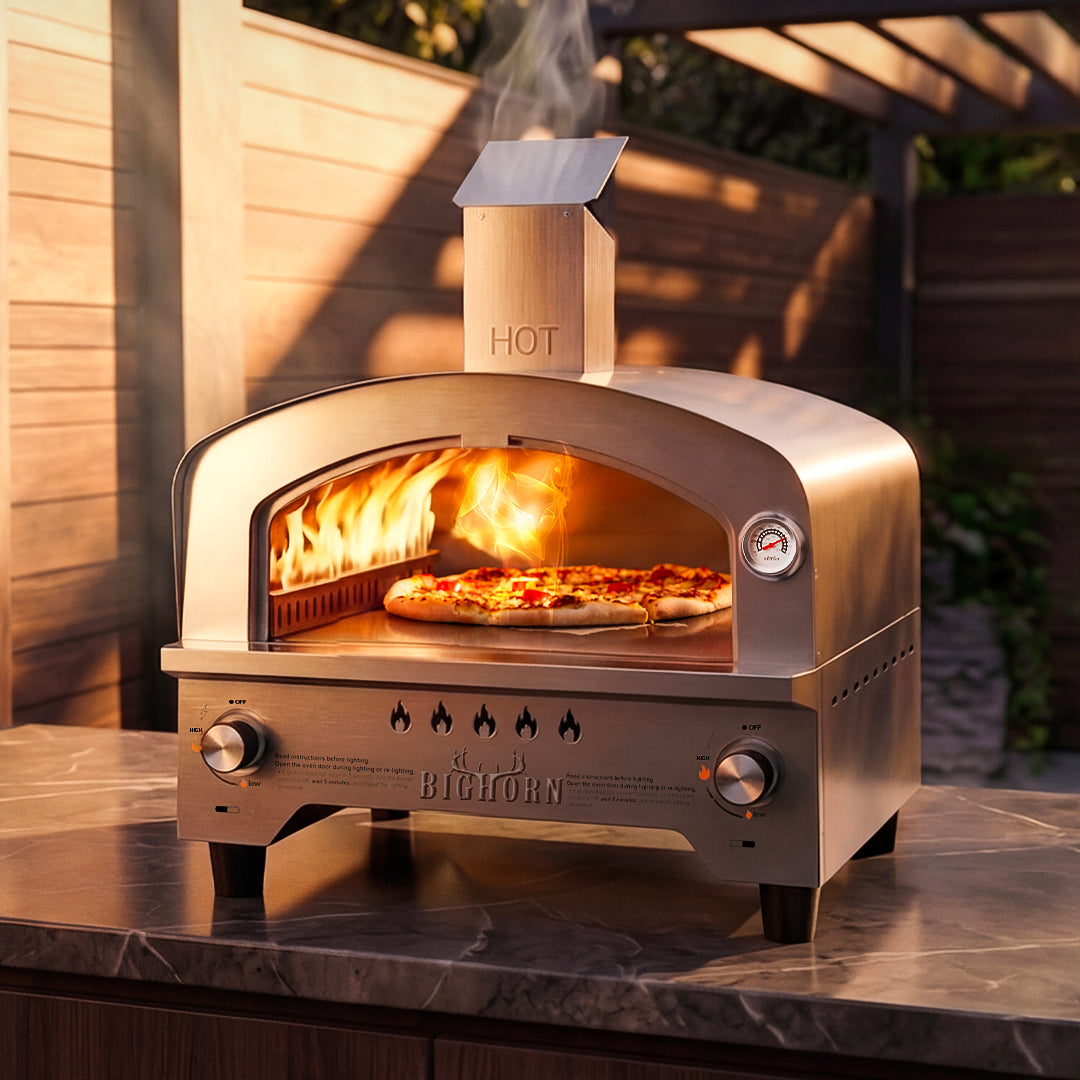
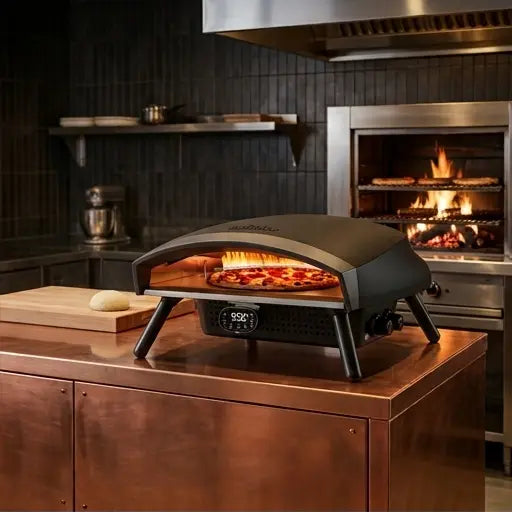
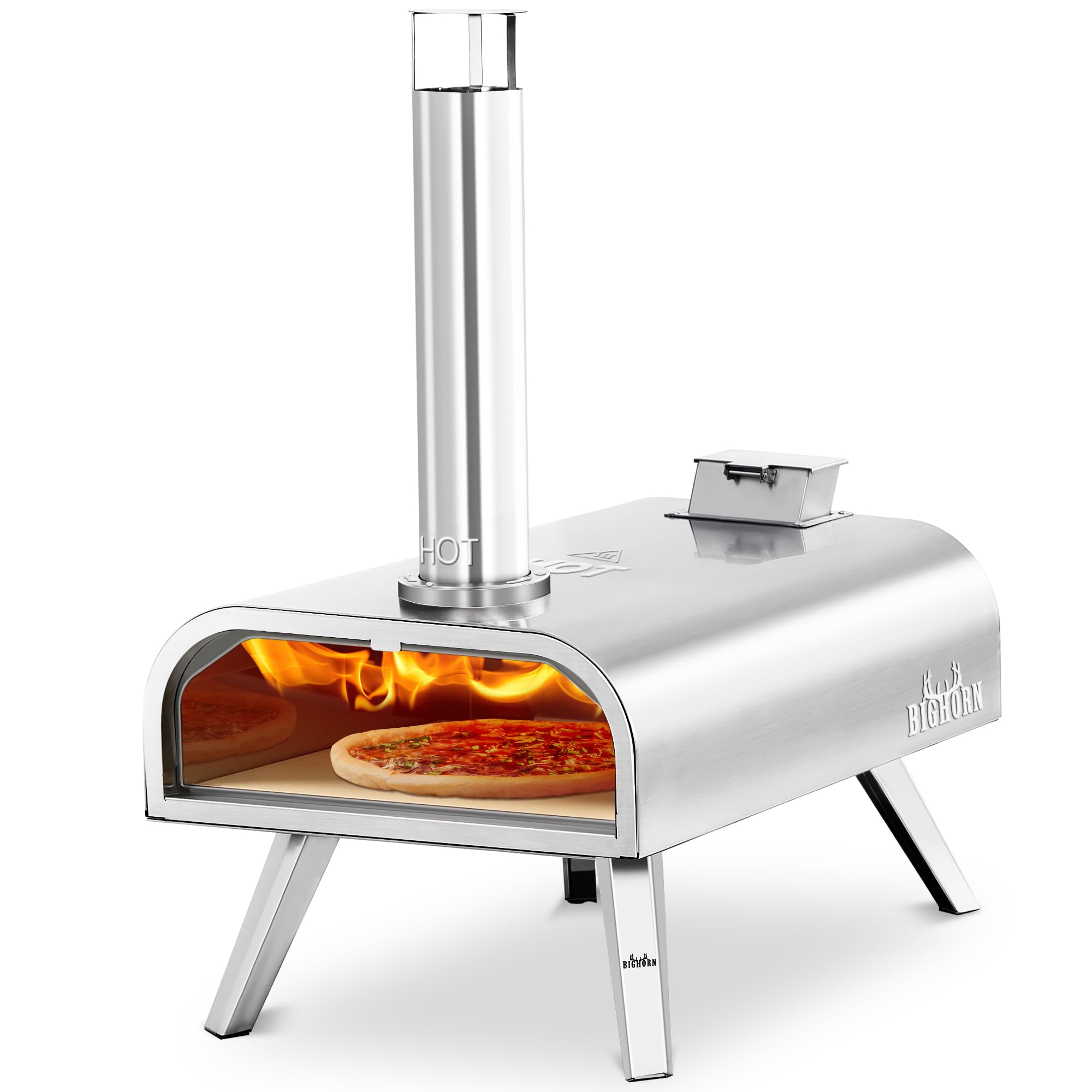
A 16-inch wood pellet pizza oven and a 12-inch portable wood pellet pizza oven will each have their own pattern. Log the cooker you actually use.
What to record: weather, bag, start time, stone cues and pie results
Write the date, the weather (wind, cold, rain), the bag or bin of pellets, when you started the fire, when you launched, what the stone seemed ready to do, and what the pie did — pale bottom, scorched rim, even color, a stuck launch. Add one line for dough (cold, tempered, wet, dry) and one line for anything you changed on purpose. You do not need a lab notebook. You need enough to tell two cooks apart next week.
A one-page log template you can copy
Copy these lines onto a card or a note in your phone: Date / Weather / Oven / Pellet bag / Start time / Launch time / Stone cue (ready / not quite / too fierce) / Pie result (bottom, top, launch) / Dough note / One change I made / One change I will try next time. Leave a space for leftovers or a second bake, because that heat is part of the cook too. Keep the card away from the flame.
A small table: useful fields versus fields that just create noise
| Useful to write down | Noise you can skip |
|---|---|
| Weather, bag name, start and launch, stone cue, pie result | A long essay after every cook that you will never reread |
| One planned change, and whether you actually made only that change | Changing dough, fuel, and fire size in the same night and calling it a test |
| A dome or stone number only if you measured it with a tool you trust | A copied “ideal temperature” from an ad or a forum, written as if it were yours |
How to read the log after cook five and cook ten
After five cooks, look for a repeated problem: pale bottoms on cold, windy nights; stuck launches when the dough was wet; a lazy fire after a particular bag. After ten, you should know your usual start-to-launch window well enough to plan a party without guessing. If the notes are a mess of mixed changes, the log has not failed — the experiment has. The site’s pellet pizza oven cooking guides and community pizza oven cooking tips can sit beside the log; they should not replace it.
Common failures: logging only a dome number and ignoring the fire’s behavior
A single temperature reading, especially one you did not take carefully, will hide a smoky start, a gust of wind, or a stone that was hot in the center and cool at the edge. Log the fire’s behavior: clean and steady, lazy and white, roaring at the mouth. Stay with the oven. NFPA grilling safety and U.S. Fire Administration cooking-fire prevention still apply while you are “just taking notes.”

When to change one variable at a time
If the bottom was pale, change one thing next time: a longer settle, a drier bag, or a slightly thinner pie — not all three. If the rim burned, do not also switch dough brands and pellet species in the same cook. The log only works when the next line can be compared to the last one.
How this log supports later party cooks
A party is a poor time to invent your start. Take the start that worked in the log, scale the fuel and the queue honestly, and leave room in the notes for refill timing. Maintenance still matters between those cooks; see how to maintain a wood pellet pizza oven so a dirty pot does not masquerade as a “new variable.”
What not to invent: factory “ideal temperatures” you have not measured
Do not write a catalog temperature into the log as if you had measured it. If your manual lists a cue, treat it as the manufacturer’s guidance for that model, not as a universal law. Confirm a current listing in the pellet pizza oven collection when you are still choosing a cooker, and then log the one you actually light.
Leftover pie from those ten cooks is still leftovers: USDA leftover guidance and FDA safe food handling say to refrigerate within two hours — one hour if it is over 90°F — and FoodSafety.gov lists 165°F for reheating. Keep the oven outdoors; EPA carbon monoxide guidance is the official reason this fire does not belong in a closed garage.
If you are learning a new pellet oven, confirm the current 16-inch wood pellet pizza oven listing, keep a one-page log for the first ten cooks, and change only one variable at a time.
FAQ
How to use a pizza oven?
Start with the model manual and the site’s step-by-step guide to using a wood pellet pizza oven. Then keep a short log of what you actually did and what the pie did. This page is about those notes, not a second first-use primer.
Can you use Ninja woodfire pellets in a pizza oven?
This page will not certify a brand or a bag it has not read. Use pellets your oven manual allows, read the bag for food-use wording, and log the bag name so you can tell whether a later cook changed because of fuel. If the manual is silent or cautious, do not assume a heating or gadget pellet is the same as pizza-oven fuel.
Is a pizza stone worth it for the oven?
In a pellet pizza oven the stone is usually part of the cooker. Your log should include stone cues — how it felt, whether the bottom browned, whether you launched onto a fully ready deck — not a debate about owning a stone. Indoor baking stones are a different tool.
How hot to cook pizza in a wood-fired oven?
There is no single number this page will invent as a factory ideal. Record the cues you can actually observe: fire behavior, how the stone baked the bottom, and how quickly the top colored. A logged pattern after ten cooks is more useful than a copied temperature slogan.
More to Read
Using the Height Crank Through One Asado: A Raise-and-Lower Timeline
Use a parrilla height crank through one asado: start high, lower for color, raise to hold, and refresh the fire when height alone cannot help.
Lighting a Parrilla From a Brasero or Fire Basket Instead of Under the Grate
Light an Argentine parrilla in a brasero or fire basket, then move ready coals under the grate so the starting fire does not sit under the meat.
Gift-Day Unboxing a Wood Pellet Pizza Oven: Parts Photos and a First-Burn Plan
Unbox a gift wood pellet pizza oven by photographing the parts, saving the manual, and planning a two-pie first burn — not a same-hour party.