Pellet pizza ovens earn their place when the choice is judged against gas and electric, not in isolation. They reach high heat on a portable footprint and add a smoke character that gas and electric cannot produce, but they ask for a 15–20 minute preheat, dry fuel storage, and ash handling. This guide weighs those fuel-specific differences directly against gas and electric so you can decide whether the flavor premium is worth the ritual for your kitchen.
What a pellet pizza oven does well
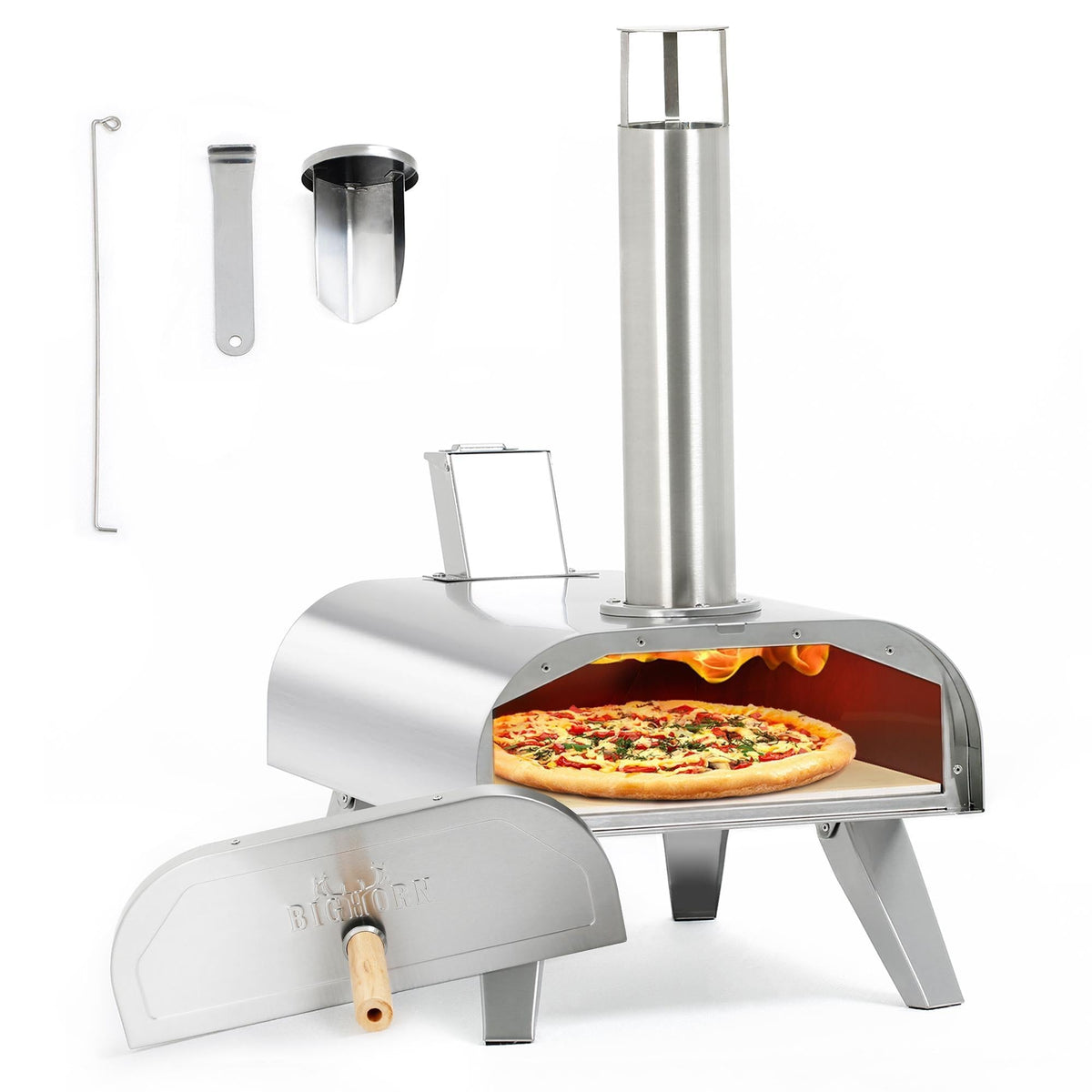
The pellet oven’s strength is wood-fired flavor in a practical format. It burns food-grade hardwood pellets that pack small and feed evenly, reaching about 887 °F on the 12-inch model — enough for the blistered crust that defines high-heat pizza. Because the fuel is uniform and dense, you get the smoke of a wood fire without the full log-tending ritual of a brick oven.
The honest trade-offs
- Preheat — 18–20 minutes to bake temperature; you plan around it.
- Fuel — pellets must stay dry and are an ongoing purchase.
- Maintenance — ash to empty, hopper to feed, pellets to manage.
- Portability — folding legs make it travel-friendly for camping and tailgates.
None of these is disqualifying, but they decide whether the oven fits your routine. A cook who wants dinner fast may find 20-minute preheats frustrating; a cook who enjoys the fire will see the wait as part of the session.

How pellet compares with gas and electric
Gas preheats in minutes and holds a dial temperature, and an electric can plug in anywhere — both win on convenience. Pellet wins on flavor and keeps a wood-fire character that neither produces. Your choice maps to the same question every fuel decision asks: do you trade convenience for flavor, or flavor for convenience?
Who should and should not buy one
Buy a pellet oven if you value smoke, enjoy a hands-on ritual, or want one portable oven for the patio and campsite. Skip it if you want push-button weeknight heat, cannot store dry pellets, or rarely have the patience for a 20-minute warm-up. A gas model is the better fit for those cases.
How much maintenance does a pellet oven need?
Routine maintenance is light but regular: feed the hopper, empty ash when cool, brush the stone without soap, and keep pellets dry. Damp pellets cause weak ignition and jams, so dry storage is the most important habit. Beyond that, care is quick.
Are pellets expensive to run?
Pellet cost is generally modest per session, and a bag lasts for several cooks depending on how hot you run and how many pizzas you make. It is usually comparable to or cheaper than propane for typical home use, and far less than restaurant pizza.
Can I use any wood pellet?
Use food-grade hardwood cooking pellets, kept dry. Avoid industrial heating pellets, which may contain softwoods or binders that produce off flavors and smoke. Quality fuel makes a real difference to the taste.
How long does a bag of pellets last?
A 20-pound bag of food-grade hardwood pellets typically supports several sessions, depending on how hot you run the oven and how many pizzas you bake. High, long cooks use more; quick single-pizza sessions are economical. Dry storage and a sealed container keep the bag usable for longer between cooks.
Can you use a pellet oven in cold weather?
Yes — cold air extends the preheat, so allow extra time and shelter the oven from wind. A dry stone and a steady pellet feed maintain the heat once the oven reaches temperature. Cold weather does not break the oven; it only changes the plan.
How does pellet compare with gas for everyday cooking?
Gas wins on speed and convenience: it climbs in minutes and holds a dial temperature with no fuel or ash to manage. Pellet wins on flavor and ritual. For everyday weekday cooking, gas is the easier tool; for a weekend wood-fired session, pellet is the more rewarding one. Decide by which session dominates your cooking, not by the one you wish you had more of.
How does pellet compare with electric?
Electric is the most convenient of all — plug in, no fuel, quiet operation — but it runs at a lower heat ceiling than pellet. Pellet reaches the high-temperature window that electric struggles to match and adds smoke flavor. If indoor-friendly convenience is the priority, electric fits; if high heat and flavor matter more, pellet does.
What is the real long-term cost of a pellet oven?
Beyond the purchase, the ongoing costs are food-grade pellets and occasional stone or part replacement. Pellets are a modest recurring expense and dry storage is simple. Compared with restaurant pizza or a frequent delivery habit, a pellet oven pays for itself quickly if you use it regularly — the value depends on how often it replaces bought pizza.
Can a pellet oven double as a grill?
A pellet pizza oven is not a full grill, but it can sear steaks, fish, and vegetables in the high-heat window and bake bread or flatbreads. It lacks a grate for direct grilling and the low-and-slow range of a smoker. For most owners it is a specialist: a quality pizza oven that also handles a few high-heat jobs, not a replacement for a grill.
How do you know if you will actually use it?
Look back at the last few months: if you already make pizza, cook outdoors regularly, or want to, a pellet oven fits; if cooking is occasional and fast is the priority, it may sit unused. The value scales with use, so match the purchase to the habit you already have, not the one you plan to start.
What should you store pellets in?
Store food-grade hardwood pellets in a sealed, dry container off the ground, away from rain and humidity. A plastic bin with a tight lid or a dry cabinet works well. Check pellets before use — if they show swelling or a damp smell, discard them rather than burning them, because moisture ruins ignition and can jam the feed.
Why do some pellet bakes come out pale and chewy?
A pale, chewy base almost always means the stone was not fully preheated before the launch. Pellets take 18–20 minutes to bring the stone to temperature, and launching early leaves a cold deck that cannot crisp the base. Preheat fully, confirm the stone with a thermometer, and the same recipe produces a properly set crust.
Pellet pizza oven FAQs
Are pellet ovens hard to use?
No — the technique is light and manage is simpler than a log fire, but the ritual is real: feed the hopper, preheat, empty ash. Most owners adapt within a few sessions.
Do pellets give the same flavor as wood logs?
Close — both are hardwood smoke. Pellets are more consistent and easier to feed than logs, which is part of their appeal over a traditional wood oven.
Can a pellet oven cook more than pizza?
Yes — steak, fish, vegetables, and bread all work in the high-heat window, which adds real versatility beyond pizza night.
To check the current specs and fuel options, review the 12-inch Big Horn pellet pizza oven product page.