







Camping & Portable
Water boils below 212°F at altitude, so a camp-stove pot can roll and still be cooler than you expect. Use official high-altitude and water-treatment guidance rather than a copied sea-level minute. This article will not invent a temperature at 5,000 feet. Use a lid, and keep the stove outdoors.
Why boil temperature drops
At higher elevation, air pressure is lower, and water boils at a lower temperature. A vigorous roll is still a boil, but it is not as hot as the boil you know from sea level. That is why some foods take longer to cook, and why a rolling pot is not, by itself, a complete water-treatment plan until you also follow official time guidance.
This article will not invent the boiling point at 5,000 feet. Use USDA high-altitude cooking guidance (govinfo), an official USDA high-altitude cooking document, for the elevation you are actually standing at. If that official page is unavailable when you read this, treat the boil as cooler than 212°F, confirm the number from a current official source, and do not copy a number from a forum.
The page on camping stove boil-time factors explains why one sea-level minute rarely transfers even at low elevation. This article adds the altitude piece: a lower boil temperature, a longer wait for many foods, and official water-treatment times that already change with height.
Lid and pot choice
A tight lid is the cheapest performance upgrade you can pack. It holds heat in the pot when the boil itself is cooler and the wind is trying to steal steam. Use a pot that matches the burner, not a wide skillet that dumps heat into the air. Start with cold or cool water you are actually treating or cooking, and keep the pot covered until you have a full roll.
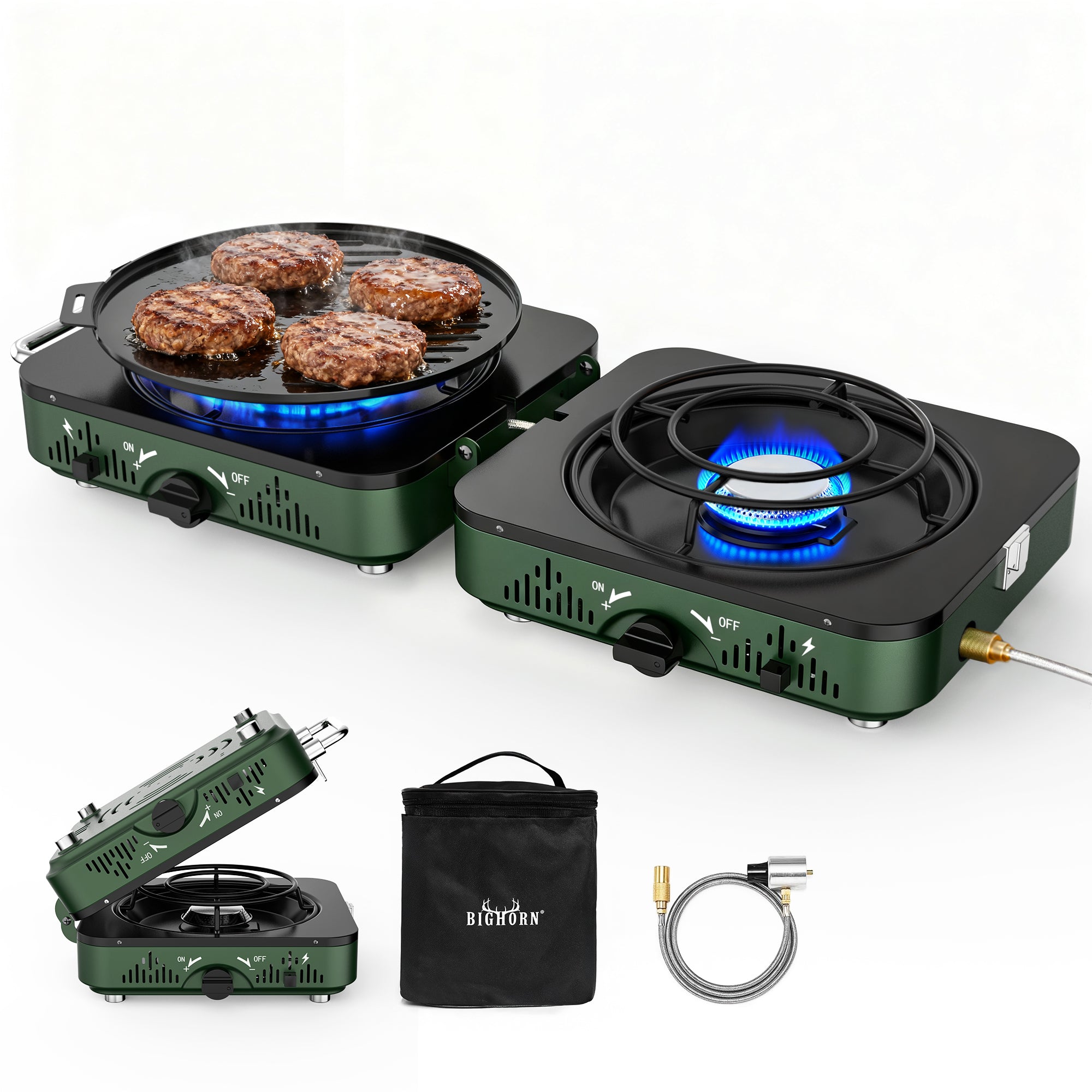
The current portable two-burner propane camping stove can run a larger covered pot with a little more patience than a compact single burner; the current folding butane camping stove can still boil a modest pot if the cartridge is willing and the lid is on. Confirm published output figures on the live pages; they are not a guaranteed alpine kettle time. Cold canisters and altitude can stack, which is why the camping stove for cold weather guide belongs in the same trip plan when mornings are near freezing.
National Weather Service winter safety and Ready.gov winter weather guidance help you brief the weather. They do not set a boil temperature, but they will remind you that wind, snow, and cold fuel all stretch a morning kitchen.
Fuel use, in qualitative terms
You will often burn more fuel to finish the same pot at altitude, because the water is slower to heat and many foods need more time in a cooler boil. That is a qualitative expectation, not a percentage this article will invent, and not a reason to run a stove in a tent to "save gas." Pack a margin of fuel, a lid, and a backup no-cook meal.
Butane can feel weaker on a cold alpine morning than propane. Choose fuel with that stack in mind, and keep spare cartridges or a cylinder within the maker's storage rules. Do not warm fuel with a second flame.
EPA carbon monoxide information is the reminder that a more enclosed "efficiency" shelter is the wrong kind of savings. The stove stays fully outdoors, even when the boil is slow.
Rehydration meals
Packaged camp meals that say "add boiling water and wait" assume you actually reached a boil and then held the official or package time. At altitude, that wait may need to be longer for food quality, and water safety is a separate official question. Follow the package for the food, and follow CDC guidance on making water safe for treating water you do not trust, including a rolling boil for one minute at lower elevations and three minutes at elevations above 6,500 feet, unless a current official page you have in hand says otherwise.
Do not invent a shorter "alpine shortcut." If you cannot boil, use another official treatment method those CDC materials describe, rather than a casual filter claim this article will not make. FDA safe food handling still applies if you are cooking meat or leftovers in the same pot; a high camp does not lower a safe food temperature.
Winter and altitude, stacked
A cold canister, wind, and a lower boil temperature can arrive together. Lid, wind screen that does not trap exhaust, extra fuel, and a slower clock are the honest stack. The camping stove collection is a shopping path only after those habits are in the plan.
The table below is a field checklist, not an official temperature chart.
| Before you trust the pot | What to confirm |
|---|---|
| Elevation | Your actual height, and an official high-altitude cooking or boiling-point source — not a number invented here |
| Water treatment | CDC rolling-boil times: 1 minute, or 3 minutes above 6,500 feet, from the current official page |
| Pot and lid | A covered pot sized to the burner, out of the direct gust |
| Fuel margin | Extra fuel for a slower kitchen, stored as the maker directs, stove fully outdoors |
A high-camp boil check
How do you boil water on a camp stove at altitude? Put a lid on a pot that fits the burner, use a stove you already know, and wait for a full rolling boil, then hold the official treatment time if safety is the goal. What can you use when camping? A propane two-burner, a folding butane unit, or another stove you can run outdoors, plus a vessel the maker intends for that flame. None of those tools replaces the official time and temperature sources.
If you came here only for a single number at 5,000 feet, the honest answer is to open the official chart. This page will not guess it.
Key takeaways
- Water boils below 212°F at altitude; a rolling pot is cooler than a sea-level boil.
- This article will not invent the temperature at 5,000 feet. Use the official USDA high-altitude cooking document or another official chart.
- For water treatment, follow current CDC guidance: a rolling boil for 1 minute, or 3 minutes above 6,500 feet.
- A lid, a fuel margin, and a fully outdoor stove matter more at height, especially when the morning is also cold.
For the sea-level timing problem, keep camping stove boil-time factors nearby, and confirm the current portable two-burner propane camping stove or folding butane camping stove listing if you need a reminder of the stove you are packing.
FAQ
At what temperature does water boil at 5,000 feet altitude?
This article will not invent that number. Water boils below 212°F at altitude, and the exact figure belongs on an official high-altitude chart such as the USDA high-altitude cooking document for the elevation you are actually at.
How long do you have to boil water to get rid of parasites?
Follow current CDC guidance on making water safe, not a copied camp shortcut. That official guidance describes a rolling boil for 1 minute, and 3 minutes at elevations above 6,500 feet, unless a current official page you have in hand says otherwise.
How do I boil water on a camp stove at altitude?
Use a covered pot that fits the burner, a stove you already know, and a full rolling boil, then hold any official treatment time if safety is the goal. Expect a slower pot than at sea level, and keep the stove fully outdoors.
What can I use to boil water when camping?
A propane two-burner, a folding butane stove, or another camp stove you can run outdoors, plus a pot intended for that flame. The tool does not replace official water-treatment times or an official boiling-point chart.
More to Read
Leftover Holiday Turkey on the Grill or in the Pizza Oven: Sandwiches, Tostadas and a White Pie
Give leftover turkey a second heat, not another roast: grill sandwiches or tostadas, or bake a white pie, after a safe leftover inventory the night...
Parrilla Taco Night: Carne, Salsas and Grate Space for a Crowd
Run taco night on a parrilla as a grate-space plan: carne, a second protein, a salsa station, and tortillas held soft, without one crowded fire.
Bone-In Lamb Leg or Shoulder on a Santa Maria or Gas Grill
Grill a bone-in lamb leg or shoulder as a roast: Santa Maria height or a gas two-zone fire, a USDA safety floor, and a probe that does not touch bone.
