
The short answer: choose propane for cold weather, high altitude and trips where fuel is easy to buy; choose butane for mild-weather trips where compact canisters and lower cost matter more. Both fuels run portable stoves well, but they behave differently as temperatures drop, and the stove you buy usually locks you into one fuel family. This guide compares the two across the criteria that actually matter outdoors — cold performance, canister availability, cost, safety and cooking behavior — and maps the trade-offs to the two stove styles Big Horn sells. If you are shopping for a specific model instead, the portable-stove best list applies these fuel facts to individual units; this page stays on the fuel decision.
Why the fuel choice matters for campers
Fuel is not an accessory decision; it is the decision. A stove designed for butane canisters will not accept a propane tank, and most propane stoves will not run on butane cartridges. Once you own a stove, you are committed to its fuel's availability and behavior, so the fuel question should come before the stove question. Campers who ignore this end up with a stove they cannot feed on the trips they actually take — a great stove with the wrong fuel for the season is worse than a modest stove with fuel you can buy everywhere.
Butane vs propane: side-by-side comparison
| Criterion | Propane | Butane |
|---|---|---|
| Cold-weather performance | Strong; vaporizes down to well below freezing | Weak near freezing; performance drops quickly |
| Canister types | Small disposable cylinders or refillable tanks | Light disposable cartridges |
| Availability (US/Canada) | Nearly universal | Common but varies by region and season |
| Typical stove style | Two-burner and larger portable stoves | Compact single-burner stoves |
| Storage footprint | Larger canisters and tanks | Small cartridges |
The table overstates nothing: cold performance is the decisive difference for most campers, and it is also the one that surprises people most, because it is invisible until the moment the stove refuses to hold a flame.
How the two fuels burn
Propane and butane are both liquefied petroleum gases, but their chemistry changes how they behave in a stove. Propane is stored under higher pressure and vaporizes readily in the cold, which is why it delivers steady flame through winter mornings. Butane is easier to liquefy and store, which is why cartridges can be lighter, but it stops vaporizing well as temperatures approach freezing. The practical difference shows up as pressure: a cold butane cartridge produces a weak, sputtering flame or none at all, while a propane cylinder keeps feeding the burner. Neither fuel burns "better" in the abstract — each simply has an operating range, and the range decides where it belongs.
Canister design follows the fuel's pressure. Propane cylinders use a threaded valve connection and hold the fuel under higher pressure; butane cartridges use a pierce-style or bayonet connection that is simpler and lighter. That means the stove and its fuel must match not just chemically but physically — a butane cartridge will not thread onto a propane stove, and forcing compatibility is how connections leak. Buy the fuel your stove specifies and keep spare canisters of that same type.
Cold weather: propane's advantage and butane's limits
Both fuels must vaporize before they burn, and vaporization depends on temperature. Propane boils at a temperature far below freezing, so it keeps vaporizing and feeding the burner in conditions where butane stops. Butane boils near freezing — roughly 31°F (−0.5°C) — which means on a cold morning, a pure-butane canister can lose pressure, sputter and go out entirely. Some butane cartridges use a butane-propane blend to push the usable range lower, but the blend is still not a substitute for propane in genuine cold.
High altitude works the same direction: lower air pressure and cold nights compound butane's weakness. If you camp in the mountains, in early spring or late fall, or anywhere the thermometer regularly visits freezing, treat propane as the default and butane as the mild-weather option.
Canisters, cost and availability
Propane is the easier fuel to buy across North America: small green cylinders and refillable tanks are stocked at hardware stores, gas stations, campground stores and most big-box retailers. Butane cartridges are common in camping and Asian grocery stores, but availability varies by region, and some rural areas stock them only in season. Cost follows the same pattern — butane cartridges are usually cheaper per stove session, while propane's convenience and cold performance carry a small premium.
Weight and footprint matter for how you travel. Butane cartridges are light and compact, which suits a small burner carried in a daypack or an emergency kit. Propane cylinders and tanks are bulkier, which is why propane stoves tend to be two-burner units that travel in the trunk rather than the backpack.


Safety basics for both fuels
Both fuels deserve the same safety habits. Cook outdoors only, on a stable surface, away from tents, dry grass and anything flammable. Connect canisters and tanks according to the stove's instructions, and listen for hissing or smell for gas when you connect a new canister — if anything seems off, do not light the stove. Never change a canister or tank near an open flame, and store fuel out of the sun and away from heat sources. Dispose of spent canisters the way local rules require; do not puncture or burn them.
Butane stoves add one caution: because butane struggles in the cold, some users try to warm the canister. Never warm a fuel canister with a flame or a heater. If the stove sputters in the cold, that is the fuel telling you it is the wrong season for butane, not a problem to fix with a dangerous shortcut.
Transport and storage deserve the same care as use. Keep fuel canisters upright, out of direct sun and away from heat, and secure them in the vehicle so they cannot roll or puncture. Do not store canisters inside a hot car for long periods, and never leave a canister attached to a stove that is stored in a confined space. Check the seal and connection each time you attach a new canister, and when a canister is empty, dispose of it according to local rules — many areas accept them at household hazardous waste or recycling points rather than the regular trash.
Matching fuel to trip length and season
Match the fuel to the trip, then the stove to the fuel. For car camping, tailgating and base camps, propane's cold performance and easy refills make the two-burner propane stove the practical default. For a spare burner or a mild-weather trip where weight matters, a butane burner is the lighter, cheaper choice. For an emergency kit that might be used in any season, propane is the safer fuel, because the kit may sit in a cold car for months before it is needed.
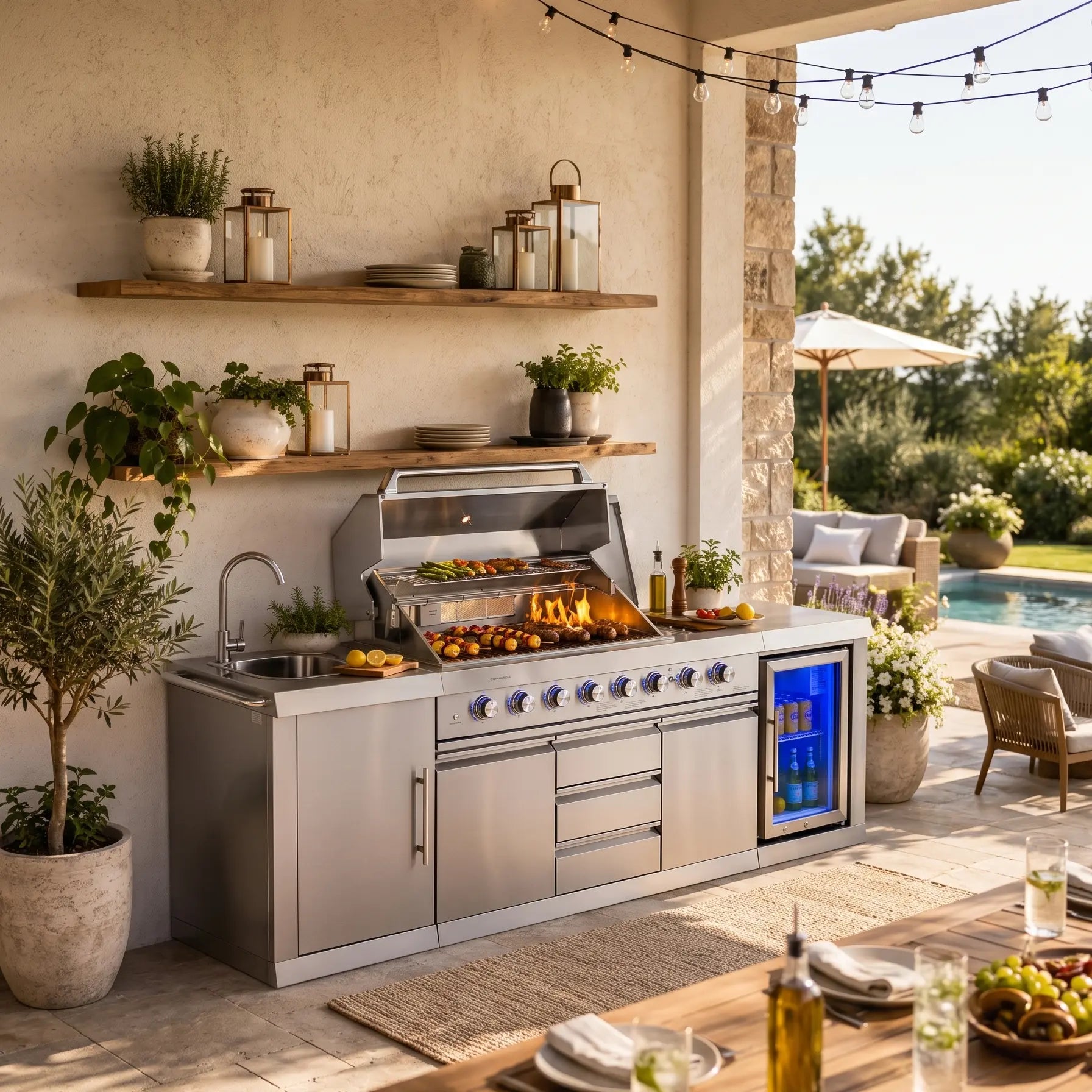
Big Horn's portable 2-burner propane camping stove covers the propane side of that logic, and the compact butane camping stove covers the butane side. Both live in the camping stove collection, where you can compare them side by side before you commit to a fuel family.
Before you choose, run a three-question check: what is the coldest temperature the stove will realistically face, how easy is it to buy the fuel near your usual sites, and how will the stove and its fuel travel? Write the answers down; they usually point to one fuel before you even look at stove features. If you still cannot decide, buy the stove whose fuel is easier to replace mid-trip — running out of fuel is the one failure that no stove design can prevent.
One more practical note: buy a little more fuel than you expect to use on the first trip and test the stove at home before you leave. A stove that has sat in storage can have dust in the burner or a stiff valve, and the driveway is a better place to discover that than a campsite at dusk. Light it, boil water, and confirm the flame adjusts smoothly from high to low. That ten-minute home test tells you more about your fuel and stove combination than any spec sheet, and it is the best first step whether you chose propane or butane.
The decision comes down to one honest question about your trips: will this stove ever be used when it is cold? If the answer is yes — even occasionally — choose propane. If all your cooking happens in mild weather and you value a small pack, butane is the efficient choice. Either way, buying the fuel first and the stove second keeps the two in sync.
Product details and prices in this guide were verified against official Big Horn Outdoors listings during the September 5, 2026 review; re-check prices and availability at checkout.
Explore more in the Camping Stove Guides.