
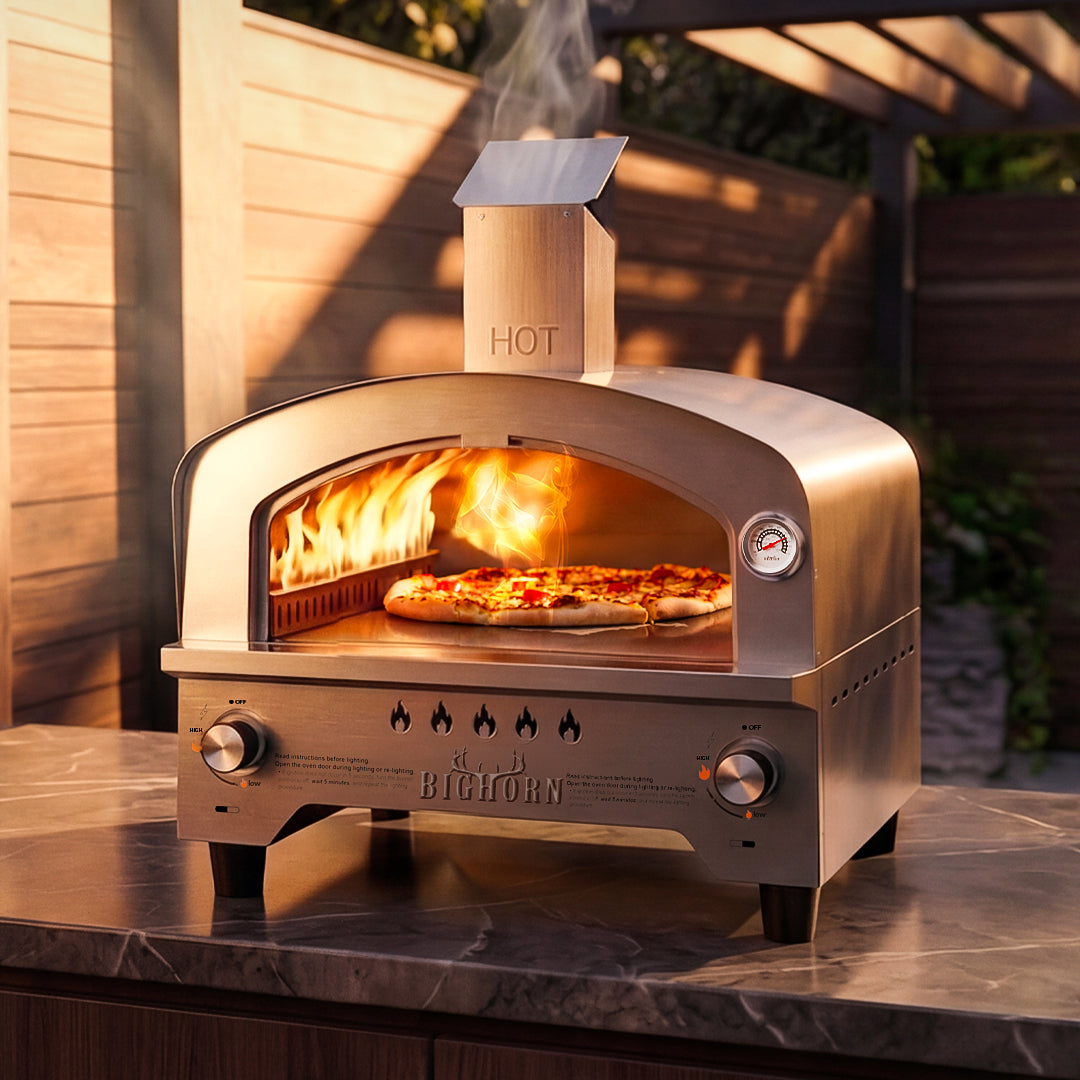



The secret to Neapolitan-style pizza dough is simple ingredients and a long fermentation: flour, water, salt, and yeast, rested so the dough develops flavor and strength — then baked at very high heat so a small amount of yeast in a little dough puffs into a puffy, blistered crust. For a high-heat pizza oven like a Big Horn 12-inch pellet model (about 887°F / 475°C), a dough at 60–65% hydration, bulk-fermented and then cold-fermented overnight, produces the correct open crumb and leopard-spotted rim. This recipe walks through the percentages, the steps, and the fixes for the common failures.
Baker’s-percentage measurements work on any scale; the recipes on this site assume standard home ingredients.
What makes this worth cooking
A Neapolitan-style pizza baked in a high-heat oven is different from a home-oven pizza: the dough puffs fast, the rim blisters, and the base stays crisp, all in a 60–90 second bake. The two things that deliver that result are a long, cold fermentation (which builds flavor and extensibility) and a very hot stone (which turns the dough’s water into steam instantly, puffing the rim before the crust sets). Neither alone is enough — the dough and the heat work together.
Understanding hydration before you decide
Hydration is the water weight as a percentage of the flour weight. For Neapolitan dough, 60–65% hydration is the practical zone: wet enough for a soft, open crumb, dry enough to handle and launch without sticking. Higher hydration makes a more open crumb but is harder to shape and launch; lower hydration is easier to handle but denser. Start at 62–65% and adjust in small steps. Salt at 2–3% of the flour weight adds flavor and strengthens the dough; yeast at a small percentage (roughly 0.1–0.5%, working by percent of flour) feeds the long ferment.
The essentials you need
- High-protein (bread or 00) flour. The structure for the crust.
- Water. At 60–65% of the flour weight.
- Salt. 2–3% of the flour weight.
- Yeast. A small amount; it grows during the long ferment.
- A hot, stable oven. Big Horn’s 12-inch pellet oven reaches about 887°F / 475°C.
Core recipe steps
Dough formula: 100% flour · 60–65% water · 2–3% salt · small yeast · bulk ferment 1–2 h room temp · cold ferment overnight · ~230–260 g dough per 12-inch pizza · bake 60–90 s at high heat.
Mix the flour, water, salt, and yeast until combined, then knead or rest-and-fold until the dough is smooth and elastic. Bulk ferment for 1–2 hours at room temperature, then divide into balls of about 230–260 g for a 12-inch pizza. Cold ferment the balls in the refrigerator overnight — this builds flavor and makes the dough easier to shape. On baking day, let the balls come to room temperature, shape by hand (no rolling pin), top lightly, and bake on the hot stone for 60–90 seconds, rotating once.
Variations and substitutions
For a slightly softer, puffier crust, raise hydration to 65–68%; for a firmer, easier-to-launch dough, drop toward 60%. If you cannot cold-ferment overnight, a same-day dough with a longer room-temperature rise works — it will be less flavorful but still bakes well. Use bread flour if 00 flour is not available; the crust will be a little chewier. Keep the toppings light so the dough bakes through quickly at high heat.
Serving and timing for a crowd
For a crowd, stage the dough balls ahead (they hold well in the refrigerator) and bake one pizza at a time, letting the stone recover about a minute between pies. A 12-inch ball baked at high heat feeds one pizza; plan roughly one pizza per 1–2 guests, with a light salad or appetizer alongside. The dough ferments and shapes ahead, so the party is about the oven rhythm, not the prep.
Common mistakes in this recipe
- Using too much yeast. A long ferment needs only a little; too much yields a dull, overproofed crumb.
- Overworking the dough. Shape by hand in short moves; a rolling pin presses out the air that makes the rim puff.
- Skipping the cold ferment. Overnight cold fermenting is where the flavor comes from.
- Over-topping. Heavy toppings weigh the dough down and slow the bake; keep it light.
- Launching on a cold stone. The dough needs a very hot stone to puff; preheat fully.
Pro tips for better flavor
- Respect the hydration. Water weight and fermentation time do the work; adjust one at a time.
- Cold-ferment for depth. The overnight chill produces the fermented flavor a high-heat bake needs.
- Keep toppings simple. Neapolitan pizza is dough-forward; let the crust lead.

See the oven and the recipes hub. 12-inch pellet pizza oven · signature dough recipe
FAQ
What is the secret to Neapolitan pizza dough?
The secret is simple ingredients plus a long, cold fermentation: a high-protein flour, 60–65% hydration, a small amount of yeast, and an overnight cold ferment to build flavor and extensibility. Baked at high heat, that dough puffs into a puffy, blistered rim and a crisp base in 60–90 seconds.
What is the 55 rule for pizza?
The “55 rule” is a loose shorthand for dough baking: it usually refers to a 55–65% hydration window or to times/temperatures that produce a balanced bake, and its exact meaning varies by recipe. For Neapolitan dough, the practical numbers are 60–65% hydration, a long cold ferment, and a 60–90 second bake at very high heat.
What is the best temperature to bake a Neapolitan pizza?
A Neapolitan pizza bakes best at a very hot stone — roughly 750°F to 900°F (400°C to 480°C). The Big Horn 12-inch pellet oven reaches about 887°F (475°C), which sits in the right window for a 60–90 second, leopard-spotted bake.
Is 500 degrees too hot for pizza?
500°F is a good temperature for a home oven and many standard pizzas, but it is not hot enough for a true Neapolitan bake — that style needs a much hotter stone (about 750°F to 900°F) to puff the rim in 60–90 seconds. A dedicated high-heat pizza oven reaches that range; a home oven does not.