
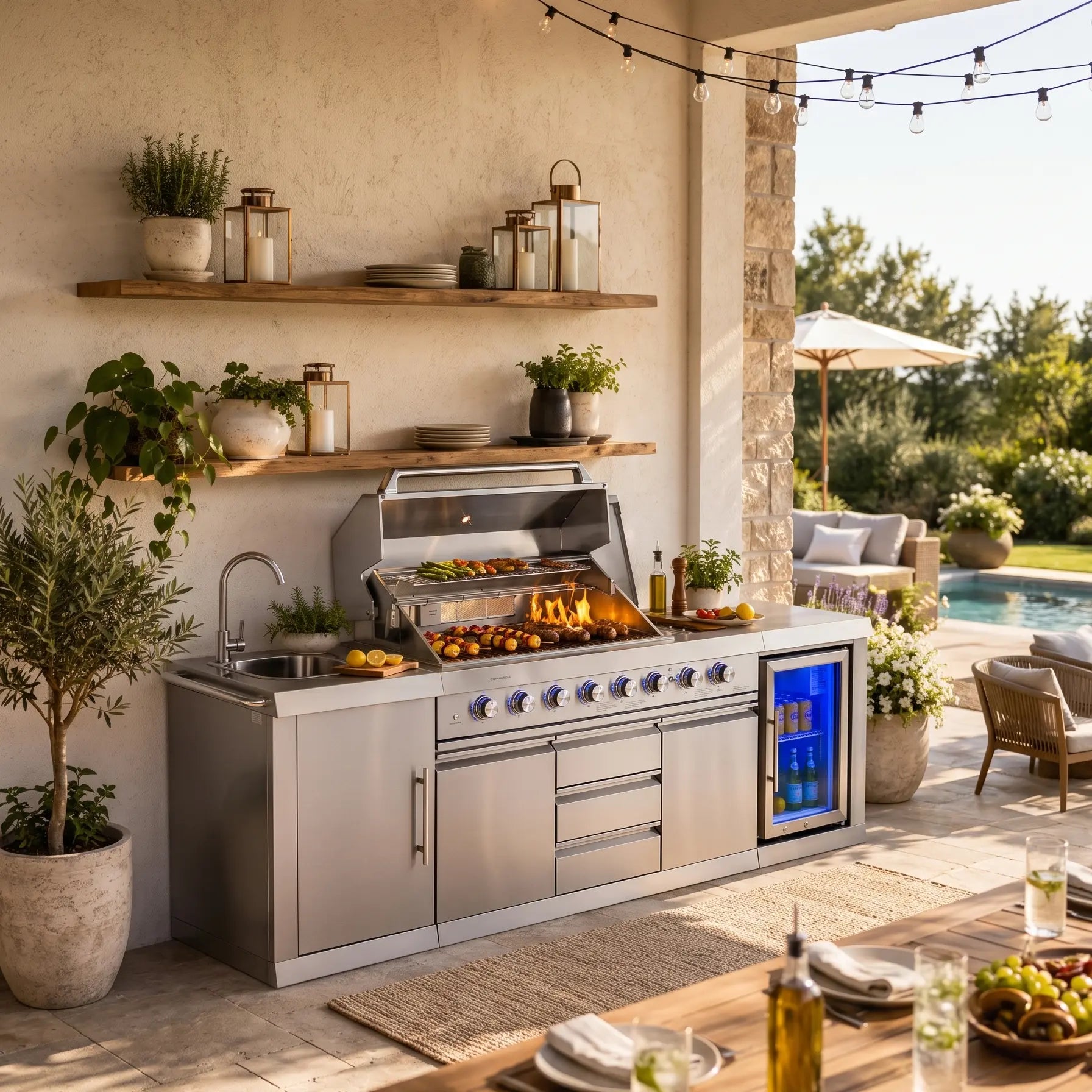
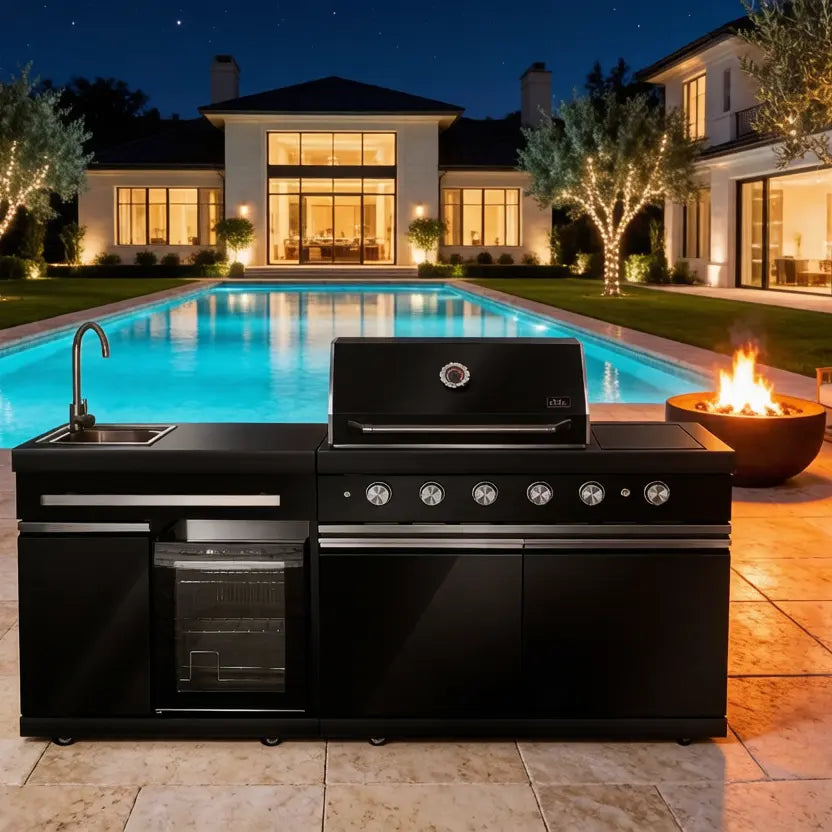
An outdoor kitchen island grill is a factory-built, freestanding cooking station that combines burners, counter space, storage, and often extras like an infrared side burner or rotisserie — delivering most of the built-in experience without a construction project. Choosing one that lasts means looking past the burner count: match the burners to your cooking, check the build and materials for the weather, and size the footprint to your patio. Big Horn’s lineup includes a stainless steel island grill and a 4+2 burner island, so the choice is about burner layout and fit, not a single “best” unit.
This is a brand-owned guide; Big Horn specifications are traceable to the official product listings.
What actually matters for this decision
- Burner count and layout. A four-burner island handles most households; six burners add a second true cooking zone; a side burner holds pots without using the main grate.
- Build and materials. Stainless steel resists weather and cleans easily; check the frame and internal structure, not just the front panels.
- Footprint. A freestanding island takes a permanent spot; measure the patio before you buy.
- Extras. Infrared side burners, rotisserie kits, counters and storage change what the island can do.
- Fuel setup. Confirm the propane connection and the island’s placement on a level, fire-safe surface.
Understanding BTU before you decide
BTU is the total heat input, and in an island it explains the capacity for multiple zones. A six-burner deluxe island totals tens of thousands of BTUs across its burners — Big Horn’s six-burner deluxe island totals 98,600 BTU — which gives the power for a hot direct zone, a low indirect zone, and an infrared side burner. The practical takeaway: total BTU sets how many zones you can run at once, but burner layout and independent control matter more than the raw number.
The key factors, ranked
| Factor | Why it matters | What to compare |
|---|---|---|
| Burner layout | Sets how you cook zones | Independent controls, side burner, infrared sear |
| Build and materials | Decides how it ages | Stainless body, frame, internal structure |
| BTU total | Capacity for zones | Total output across burners |
| Footprint | Fits the patio | Width, depth, counter space |
| Extras | Extends what it does | Rotisserie, side burner, storage |
Matching the choice to your situation
Match the island to the meals you cook most. A four-burner island handles direct heat for the main grate, a zone for sides, and room to move food off the flame. Six burners add a second true cooking zone — useful for cooks who run two proteins at once. A 4+2 burner island balances main-grate cooking with a dedicated side burner. If you host often or want a searing zone, look for an island with an infrared side burner or rotisserie kit, and size the footprint to the biggest group you feed on a normal weekend.
What the experts look for
Experienced buyers look past the burner count to the structure underneath: stainless materials, a solid frame, and internal shelving that take the same weather as the visible skin. They match total BTU to how many zones they actually run, and they write down the three meals they cook most and lay them out on the grate before choosing. A wide, even burner layout with independent control beats a higher BTU number crowded into a small footprint.
Common mistakes and how to avoid them
- Chasing the highest BTU. Total output matters less than burner layout and control; a lower BTU island with better zones serves you better.
- Buying too many burners. Extra burners waste fuel and counter space; match the count to the meals you cook.
- Ignoring the structure. The frame and shelves take the same weather as the skin; check the build, not just the front.
- Forgetting the footprint. An island is a permanent spot; measure the patio and the grill’s depth.
- Overlooking the fuel setup. Confirm the propane connection, level placement, and fire-safe surface before assembly.
Realistic expectations and results
An outdoor kitchen island grill delivers the built-in experience — multiple burners, counters, storage, and extras — in a factory-built freestanding unit that sits on a prepared spot. It is a permanent fixture: heavy, difficult to move, and built for the weather. Expect a capable cooking station that earns its patio footprint when the burner layout, build, and size match how you cook.
The takeaway in one paragraph
Choose an outdoor kitchen island grill by burner layout, build, and footprint rather than peak BTU: a four-burner island for most households, six burners for a second zone, and a 4+2 layout for a dedicated side burner, with stainless materials and a solid frame for the weather. Big Horn’s six-burner deluxe island (98,600 BTU) and 4+2 burner island cover the range. Match the island to the meals you cook most, and it becomes the permanent centerpiece of the yard.
See the outdoor kitchen islands and grill range. outdoor kitchen island collection · grills and griddles collection
FAQ
What is the best grill island for outdoor use?
The best grill island matches your cooking and patio: stainless steel for weather resistance, a burner layout that supports the meals you make, and a footprint that fits the space. For most households a four-burner island is enough; hosts may want six burners or a 4+2 layout with a side burner.
What is the best built-in grill for an outdoor kitchen?
The best built-in grill for an outdoor kitchen is rated for built-in installation, offers the burner layout and BTUs your menu needs, and is covered by the manufacturer’s trim or installation guidance. Big Horn’s deluxe island with 98,600 BTU and infrared side burner covers a range of menus.
Does KitchenAid still make outdoor grills?
KitchenAid’s outdoor grill line has varied over time, so the current availability should be checked against live listings. For a durable outdoor kitchen grill island, compare stainless builds and burner layouts across brands, including Big Horn’s island options, rather than relying on a single brand’s lineup.
What is the best outdoor grill for the money?
The best outdoor grill for the money is the one that fits your cooking and lasts: a stainless island with the burner layout you actually use beats a higher-priced unit with unused burners. Big Horn’s island grills and grill collections offer the value end of durable builds; compare specs, not just price.