

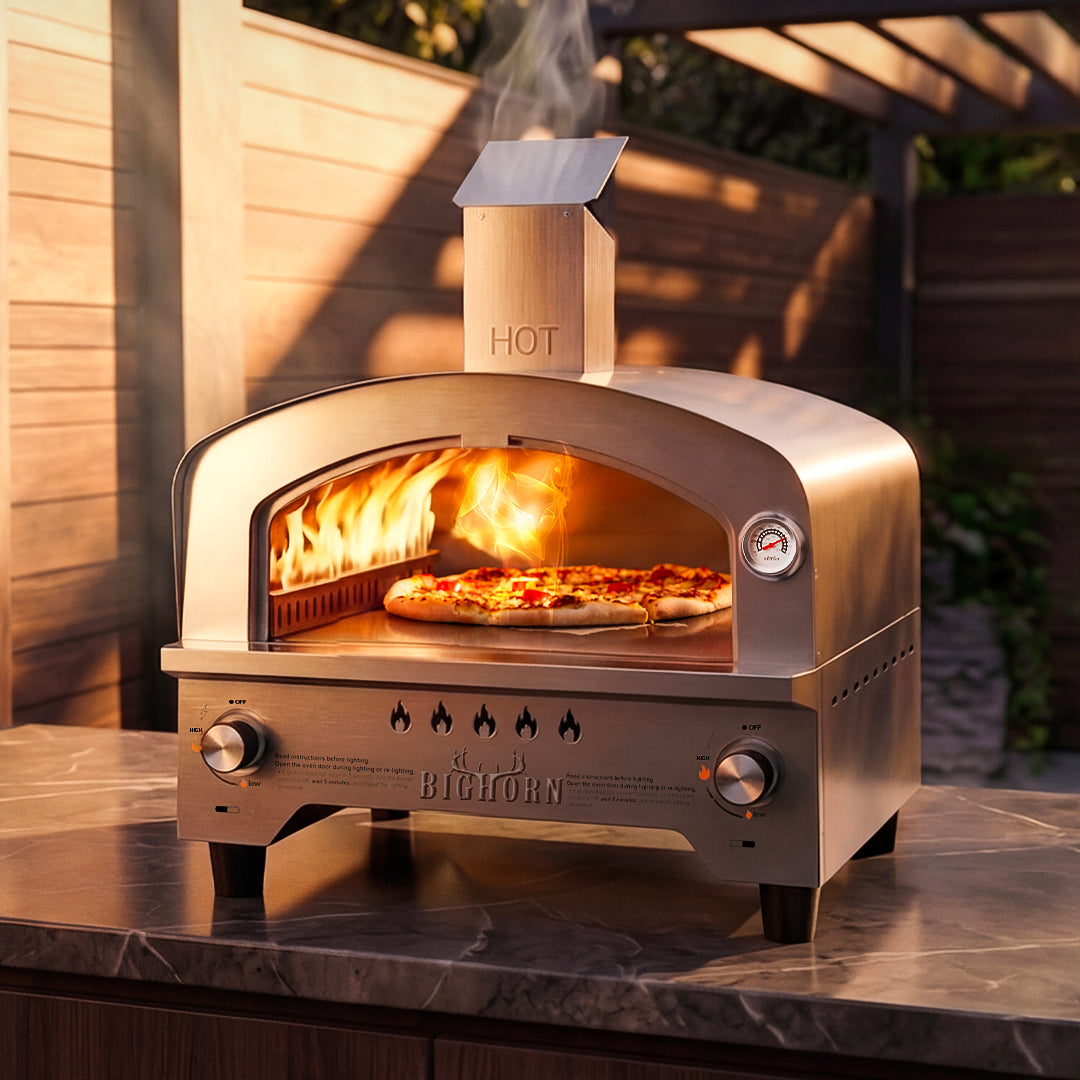
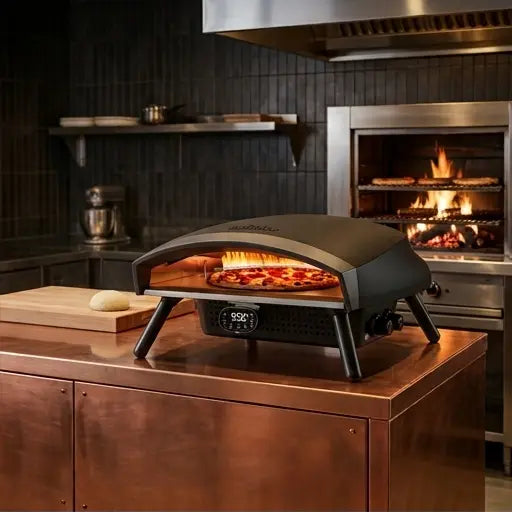

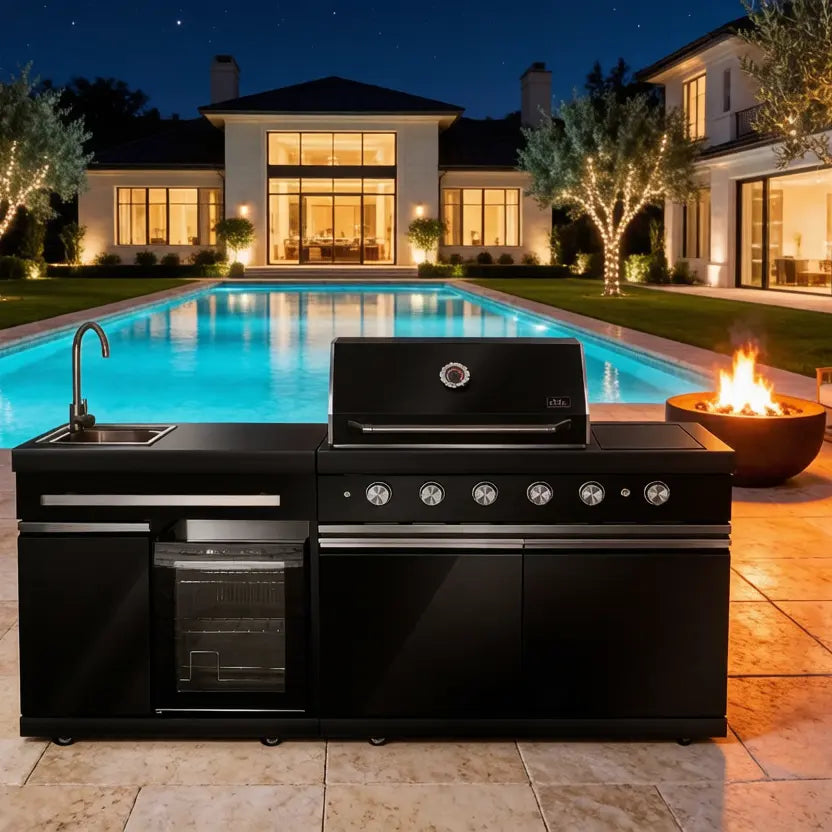
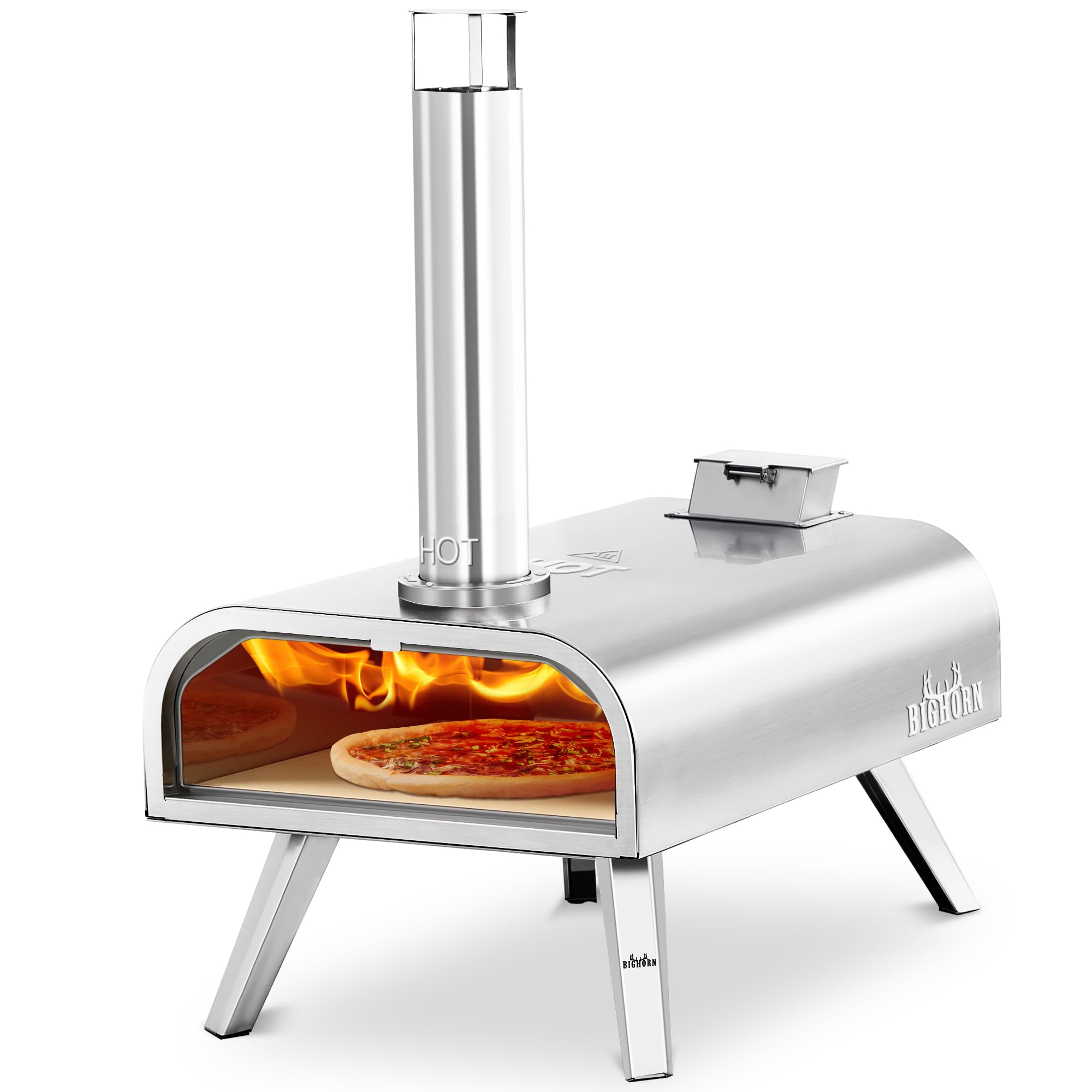
Wood Pellet Pizza Oven
A wood pellet pizza oven that sat through weeks of damp storage is not last month’s cooker until you inspect it. Pellets go soft, a stone can take on moisture, rust can show up on a grate, and a curious rodent may have visited the hopper. The useful restart is a two-minute inspection, a fuel decision, and a conservative fire — not a Friday-night launch that assumes everything is still fine.
This is a post-storage restart, not a generic first-use burn-in and not a mid-cook relight after a flameout. Use that flameout page when a running fire dies. Stay here for the weeks-idle case. The maintenance guide and the step-by-step use guide still apply after you have inspected the oven.
The short answer: inspect fuel, airflow and the pot before you treat it like last month’s fire
Inspect fuel, airflow and the pot before you treat the oven like last month’s fire. After weeks idle, check the pellets, rust, critters and a damp stone, then start a conservative fire — not a party launch. Replace fuel that smells musty or looks swollen before you light.
A 16-inch wood pellet pizza oven that spent a month in a shed deserves the same look-over as a 12-inch portable wood pellet pizza oven that rode out the rain under a thin cover.
A two-minute inspection after weeks idle
Look into the hopper, the pot, the air path, and the stone. Smell the pellets. Check for rust, nests, chewed bags, standing water, and a stone that feels cold and damp rather than merely unused. Look at hoses and connections if a gas-burner attachment is part of the setup. Two careful minutes will tell you whether you can light today or whether you should dry, clean, or replace something first.
Pellets, rust, critters and a damp stone
Pellets that are swollen, dusty, or musty should not be the first scoop of a restart. Rust on a grate or in the pot needs a cool, manual-approved clean, not a flammable spray. Signs of mice or insects mean you empty and clean before you cook food. A damp stone should be air-dried and then brought up gently with the cooker — do not park a fire under a soaking-wet stone and hope. If a stone already cracked in storage, use the cracked-stone guidance rather than lighting around a broken deck.
A small table: storage condition versus a first-start plan
| What you find | First-start plan | Do not |
|---|---|---|
| Dry pellets, a clean pot, a dry stone | A conservative fire, as if you were learning the oven again | A party-sized launch “to celebrate” |
| Soft or musty leftover fuel | Replace or thoroughly dry before lighting | Burn the old open bag “to use it up” |
| Rust, a nest, or a damp stone | Clean, dry, and delay the cook if needed | Light over a problem you have not fixed |
A conservative restart fire that is not a party launch
Once the oven is clean and the fuel is dry, light a modest fire and stay with it. You are proving airflow, looking for odd smoke, and bringing the stone up without a shock. The first cook after storage can be a simple pie or even just a controlled heat-up you do not rush. Invite people after the cooker has proven it is itself again.
Common failures: using the leftover open bag and ignoring a rusty grate
The leftover open bag is the most common shortcut, and it is how a restart turns into a lazy, smoky mess. A rusty grate ignored under a pizza is the other. Stay with the fire. NFPA grilling safety and U.S. Fire Administration cooking-fire prevention still apply after a break. Keep the oven outdoors; EPA carbon monoxide guidance is the official reason a shed is for storage, not for lighting.

Leak and hose checks if a gas-burner attachment is also in the shed
If your setup includes a gas burner or a hose that sat in the same damp shed, inspect it before you open a valve. Look for cracks, kinks, and a fitting that is no longer tight, and follow the attachment’s own booklet. CPSC gas-grill advice says not to use a gas grill in a garage, breezeway, carport, or porch. Propane Education & Research Council cylinder guidance and AmeriGas cylinder guidance are the right official checks for cylinders and connections. If anything looks wrong, do not “just try it.”
When you should dry or replace fuel before lighting
Replace fuel that is musty, moldy, collapsing, or mixed with nesting material. A slightly surface-damp scoop may be dryable in a safe, ventilated way, but a restart cook is the wrong moment to gamble. New, dry pellets from a bag you can read are cheaper than a ruined first fire and a smoky stone.
A log note so the next storage period is shorter on surprises
Write down how the oven was stored, what you found, and what you had to replace. Empty the hopper before the next long rest, store pellets sealed, and cover the cooker. Confirm a current listing in the pellet pizza oven collection if you are buying a unit you expect to leave between trips. If you later want a simple second bake once the restart fire is honest, the community burgers in a pizza oven note is a different cook, not a substitute for this inspection.
Leftovers after that first pie still follow USDA leftover guidance, FDA safe food handling, and FoodSafety.gov: refrigerate within two hours — one hour if it is over 90°F — and reheat to 165°F.
If a pellet oven has sat through damp weeks, confirm the current 16-inch wood pellet pizza oven listing, inspect fuel and the pot, and light a conservative fire rather than last month’s party start.
FAQ
Can I reheat pizza in a steam oven?
A steam oven is a different cooker, and a leftover reheat still needs a safe temperature. FoodSafety.gov lists 165°F for leftovers. This page is about restarting a pellet pizza oven after damp storage, not about steam-oven settings. Do not treat a stored pizza oven as a leftover plan until you have inspected and fired it safely.
Why are people getting rid of their pellet stoves?
That question is about home heating stoves, not about a backyard pellet pizza oven. This page will not invent a market reason people sell heating appliances. If your pizza oven sat unused, the useful work is an inspection and a conservative restart, not a conclusion about heating-stove ownership.
Do pellet stoves have a reset button?
Many heating pellet stoves have controls this pizza oven may not have. Do not hunt for a “reset button” this page cannot verify on your model. After storage, inspect fuel, airflow, and the pot, and follow the manual to light a conservative fire. If a gas attachment is on the cooker, check hoses before you use it.
How to heat up a wood fire pizza oven?
After weeks idle, do not copy last month’s party start. Inspect the oven, replace or dry suspect fuel, and use a conservative fire — the site’s step-by-step use guide and lighting logic still apply, just more carefully. A damp stone and a rusty grate are reasons to slow down, not to over-fire.
More to Read
Using the Height Crank Through One Asado: A Raise-and-Lower Timeline
Use a parrilla height crank through one asado: start high, lower for color, raise to hold, and refresh the fire when height alone cannot help.
Lighting a Parrilla From a Brasero or Fire Basket Instead of Under the Grate
Light an Argentine parrilla in a brasero or fire basket, then move ready coals under the grate so the starting fire does not sit under the meat.
Gift-Day Unboxing a Wood Pellet Pizza Oven: Parts Photos and a First-Burn Plan
Unbox a gift wood pellet pizza oven by photographing the parts, saving the manual, and planning a two-pie first burn — not a same-hour party.