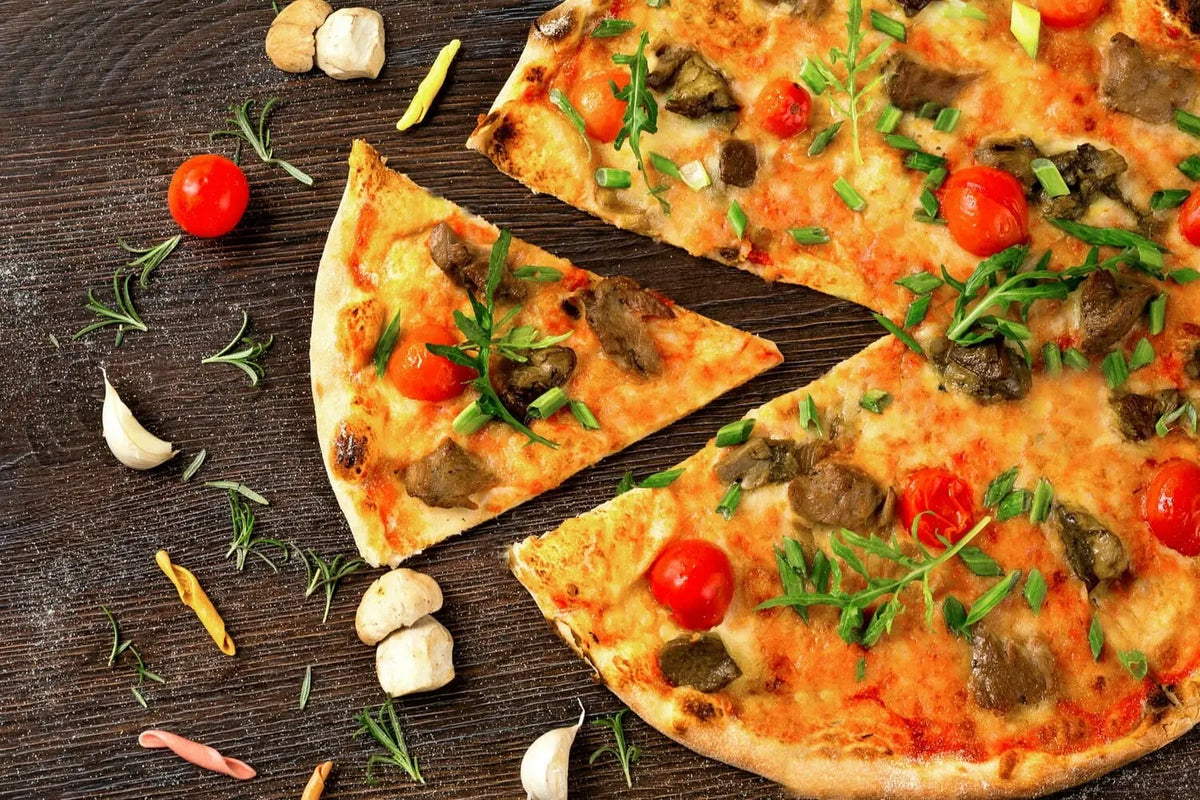
A restaurant-style pizza oven can create impressive heat, but heat alone does not create restaurant-style results. A professional-looking pizza arrives because dough, toppings, launching, turning, cutting, and serving happen in a controlled sequence. At home, the most common failure is not an oven that is too cool. It is a workstation that asks one person to stretch dough, watch a fast bake, refill fuel, find a clean board, and answer guests at the same moment.
Treat a four-pizza dinner as a small service. The goal is not to imitate a commercial kitchen or promise an identical crust. It is to produce four pizzas with consistent size and doneness while the cook remains in control. Once that system works, a capable oven can show what it does best.
Define the Style Before Choosing the Oven
“Restaurant-style” is not one specification. A thin, crisp pizza needs a different bake profile from a soft, airy, rapidly baked pizza. Pan pizza demands cookware and longer heat exposure. Decide which result you want and write it in observable terms: finished diameter, crust thickness, bottom color, rim texture, topping quantity, and preferred serving pace.
Then examine whether the oven supports that job. Useful questions include:
- Is the cooking surface large enough to turn the intended pizza?
- Can the cook see both the rim and the underside during the bake?
- Does the heat recover predictably between pizzas?
- Are the controls or fuel feed reachable without leaving the launch position?
- Can a pizza be removed to a clear board without crossing guests or raw ingredients?
- Does the manual permit the intended indoor or outdoor location?
A high maximum temperature may be relevant to one style, but it does not describe heat distribution, recovery, opening size, or ease of control. Evaluate the whole service loop.
Build the Dough Schedule Backward From Dinner
Dough is a production schedule. Choose a trusted formula appropriate for the oven and planned style, then work backward from the first launch. Record flour type, hydration, salt, yeast or starter, mixing time, fermentation temperature, ball weight, ball time, and final dough condition. Small changes in room temperature can alter readiness more than another minute of oven preheat.
Use a log like this:
| Batch | Mixed | Dough temperature | Divided/balled | Planned first bake | Actual condition at stretching |
|---|---|---|---|---|---|
| A | Tight / ready / overproofed |
For four pizzas, make at least one extra dough ball while learning. The spare is not an excuse for waste; it prevents one torn launch from ending dinner and gives you a test piece for floor heat. Keep dough covered so the surface does not form a skin. Separate balls with enough room to expand, and label any different formulas rather than relying on memory.
Do not choose hydration as a badge of expertise. Wetter dough may create a light rim in skilled hands, but it can also stick, stretch unevenly, and require more bench flour. Start with a dough you can shape and launch reliably. Increase hydration only after the service process is stable.
Set Up a One-Way Workstation
The workstation should move from dough to topping to oven to cutting without crossing back over itself. Raw ingredients stay away from cooked pizza and serving tools. The peel has a dedicated resting place. The cutter and final board remain clean until the first pizza emerges.
For an outdoor station, a practical order is:
- covered dough box and bench flour;
- stretching surface;
- chilled toppings in shallow containers;
- launch-peel position;
- oven and turning-tool zone;
- clean receiving board;
- cutting and serving area.
Keep cold ingredients at 40°F (4.4°C) or below until needed, and do not leave perishable food in the temperature danger zone for extended periods. The USDA’s general two-hour rule becomes one hour when ambient temperature is above 90°F (32.2°C). Put out small topping portions and refill from a cooler or refrigerator instead of exposing the full supply.
Prepare sauce, cheese, and toppings before preheating. Cut ingredients evenly so they finish together. Cook raw sausage or other ingredients that will not safely cook during a short pizza bake before they go on the pizza. A fast oven is not a substitute for safe preparation.
Give Each Person One Clear Role
A two-person team is often enough. One person stretches and tops; the other launches, turns, removes, and watches oven recovery. The oven operator should not walk away during an active bake. If there is only one cook, stretch the next dough after the current pizza has been removed and the oven is stable—not while a 60- to 120-second bake demands attention.
Use a spoken handoff:
- “Peel ready” means the launch peel is clean and dry.
- “Pizza loaded” starts the bake timer.
- “Board clear” confirms the receiving area is available.
- “Oven recovering” pauses the next topping step if needed.
The language may feel formal for dinner, but it prevents a topped dough from waiting on the peel while someone searches for a cutter. The longer a dressed pizza sits, the more moisture migrates into the dough and the greater the chance of sticking.
Run a Four-Pizza Service Clock
The first event begins before pizza one enters. Establish the oven baseline using the method recommended for the exact model. For a stone-deck oven, consistent infrared readings at marked locations can help track the surface trend; they do not measure internal food temperature or prove that every part of the chamber is equally hot.
| Event | Target time | Owner | Record |
|---|---|---|---|
| Preheat complete | 0:00 | Oven operator | Center/left/right floor trend and flame or control state |
| Pizza 1 launch | 0:02 | Oven operator | Launch quality and first-turn time |
| Pizza 1 served | 0:05 | Server | Bottom, rim, center, slice stability |
| Pizza 2 launch | When baseline recovers | Oven operator | Recovery interval, not just clock time |
| Pizzas 3–4 | Repeat | Team | One adjustment at most per pizza |
Do not promise a fixed interval before you know the oven. Fuel-fired models may need a small refill and a clean flame; electric models may cycle elements; a thick stone can recover differently from a thin surface. Log the evidence and set a realistic pace. Guests prefer a properly baked pizza every few minutes to four rushed pizzas with alternating raw and burned centers.
Use a Quality Log Instead of Chasing Perfection
Score four parts immediately after cutting:
| Attribute | What to observe | Likely variable to test next |
|---|---|---|
| Bottom | Pale, spotted, evenly brown, bitter black | Floor heat, loose flour, bake duration |
| Rim | Pale, expanded, scorched on one side | Top heat, flame direction, turning timing |
| Center | Set, wet, torn, overloaded | Topping moisture and weight, dough thickness |
| Service | Clean launch, controlled turns, hot serving | Workstation and recovery interval |
Change only one variable in the next pizza. If the base burns while the top is pale, reduce loose launch flour and investigate floor-to-top heat balance; simply shortening the bake may leave the top less finished. If one side chars, turn earlier or more frequently while checking whether the oven’s hot zone is normal for its design. If the center is wet, measure topping quantities and drain high-moisture ingredients before increasing heat.
Photographs taken under similar light can make comparisons more objective. Keep the best settings with the dough formula and ambient conditions. A repeatable record is more useful than a one-night “perfect” pizza that cannot be recreated.
Control the Peel and the Launch
Many restaurant-style failures happen before the dough enters the oven. A wooden or perforated launching peel and a smaller turning peel have different jobs. Use only tools that fit the chamber and are permitted around the heat source. Keep the launch peel dry and free from hardened dough.
Stretch on the bench, move the base to the peel, add a restrained topping load, then perform a small shake test. If one area sticks, lift that edge and correct it before approaching the oven. Do not repeatedly throw flour beneath a fully topped pizza; excess can burn and turn bitter. If the pizza cannot slide freely, reset it rather than forcing a folded launch into a very hot chamber.
Stand where the launch can be completed in one smooth movement. Keep sleeves, hair, children, guests, and combustible items outside the operating zone. Rehearse with an empty peel while the oven is cold if the opening is unfamiliar.
Make Serving Part of the Design
Restaurant service does not end at the oven mouth. Give the pizza a clean board, a short settling moment if the style needs it, and a sharp cutter that will not drag toppings. Decide whether each pizza is shared immediately or held briefly. Most thin pizzas lose quality when stacked or covered tightly, so staggered serving is usually better than trying to present all four at once.
If guests will build their own pizzas, set a size and topping limit. Unlimited toppings slow the center, increase launch risk, and disrupt the service clock. Offer combinations that use prepared ingredients and similar bake behavior. The cook should retain authority to delay a launch until the oven has recovered.
A Compact Safety Note
Operate the exact oven only in its approved location with all required clearances, ventilation, connections, and guards. Establish a no-traffic zone around the oven and a clear receiving board before every launch. Keep perishable toppings chilled in small working batches, pre-cook ingredients that cannot safely finish during the pizza bake, and prevent raw-food tools from reaching cooked pizza. Never leave a rapid bake unattended or reach into the chamber with an undersized tool. Follow the manual for shutdown; let the stone, metal, fuel, ash, and accessories become fully cold before cleaning, covering, moving, or storing the oven.
Frequently Asked Questions
Do I need an oven that reaches an advertised 900°F for restaurant-style pizza?
Not for every restaurant style. Match the oven to the crust and bake profile you want. Heat balance, floor recovery, turning space, and control matter alongside maximum temperature. Verify model-specific claims with the current manual and product documentation.
How many pizzas can one person make for a group?
That depends on shaping speed, bake time, and recovery. One person can run a controlled four-pizza service by completing one pizza before shaping the next. For a larger group, separate dough/topping and oven roles, and establish the actual interval from test bakes.
Why does my pizza stick even though I use flour?
Common causes include wet dough, a damp or dirty peel, a topped pizza waiting too long, a hole leaking sauce, or insufficient release at one edge. Use a quick shake test and a restrained topping load. More loose flour is not always the answer because it can burn.
Should every pizza use the same bake time?
No. Pizza thickness, topping moisture, dough temperature, and oven recovery can change the bake. Use visual doneness and a logged baseline, while turning safely and consistently. A timer is a prompt, not proof that the center and crust are finished.
The Professional Result Is Repeatability
Restaurant-style pizza at home comes from a defined target and a calm service loop: prepared dough, measured toppings, a one-way workstation, clear roles, a clean launch, active turning, and recovery before the next bake. An oven contributes heat, but the workflow turns that heat into four consistent pizzas. Build the system first, record the results, and then adjust one variable at a time. That is how an impressive first pizza becomes a dinner you can confidently repeat.