







Grill Cooking Expansion
Smash burgers on infrared or on a griddle plate need a short smash, a hot surface, and cheese that can hold. This is a timing and cheese guide, not a redo of the infrared smash method. Cook ground beef to official temperature, and do not treat a 5-6-7 rule as official.
Why a plate changes the smash
A smash burger wants wide contact with a hot, flat surface. A bare infrared emitter can sear, but it does not always give the same thin, even contact as a plate. A reversible cast-iron griddle or grill plate, preheated on the grill, is often the easier smash tool because the meat meets a flat face. Confirm the current 6-inch reversible cast-iron griddle and grill plate listing, including size options and care notes; do not treat an image filename as a measured specification.
The current 16-inch portable infrared steak grill is the infrared example in this guide. Confirm published sizes and marketing temperatures on the live page; they are not a guaranteed smash clock. Browse the grills and griddles collection if you are still choosing a plate or a grill format. A detailed infrared smash method already lives at how do you make a smash burger on an infrared grill; use that page for the step-by-step, and use this one for the plate-versus-infrared timing and cheese questions.

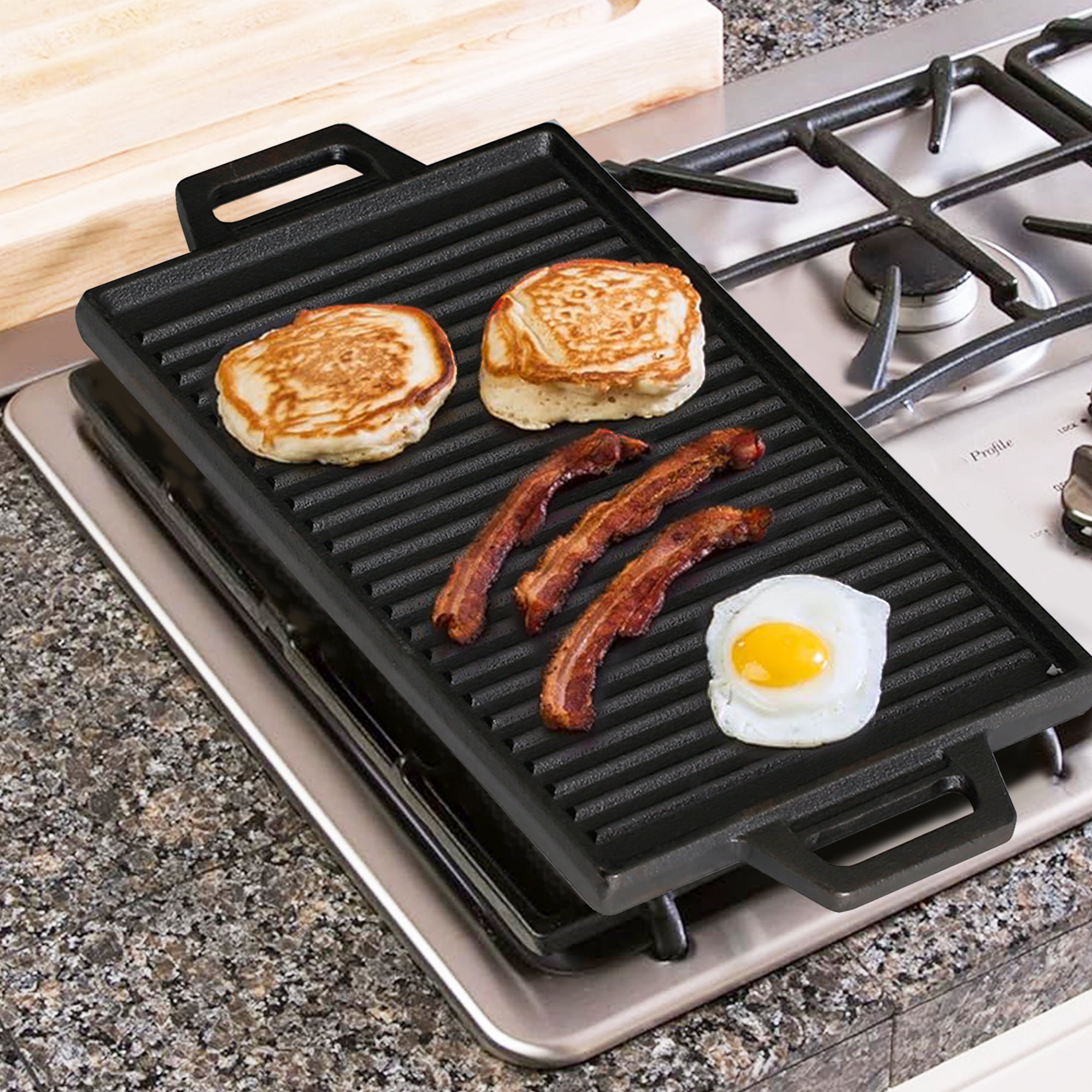
Smash timing without a folklore clock
Smash early, while the patty is still cold enough to spread, and then leave it alone long enough for a crust to form. A second fidgety press will tear the crust and squeeze out juice without helping the cheese later. This article will not invent a universal second-count for the smash or the flip. Watch the edges and the crust, then flip once when the patty will release.
People ask for a grill temperature for smash burgers. There is no single official smash setpoint in this guide. Preheat the plate or the grill until the surface is honestly hot, work in small batches, and finish by temperature, not by a copied number from a social post. Wind will cool a shallow plate faster than a deep kettle will, and National Weather Service wind safety is the official wind-safety overview, not a smash timer.
Cheese, bun, and batch rhythm
Cheese belongs on the patty after the flip, once there is a crust to hold it, and it needs a short lid or a cover only if you want a faster melt. A cold, wet slice on a pale patty will slide, and a huge stack of cheese will not make a thin smash taste finished. Toast the bun on a cooler edge of the plate or in a short pass so the bread is ready when the patty is ready. Official leftover and handling habits still apply once the burgers are built; do not leave a tray of cooked patties in the sun.
Work in batches you can watch. A plate that is crowded with six loose smashes will steam more than it crusts. Keep raw patties cold until they hit the surface, and keep a clean board for cooked food.
Infrared versus a flat plate
Direct infrared can still cook a burger, but smash contact is harder without a plate, and fat can flare or smoke more than you expect. If you cook on the grill without a plate, use a patty style that matches the grate or the rack you actually have, and do not force a paper-thin smash onto a surface that cannot support it. If you use a plate, preheat the plate on the grill, then smash on the plate, not on a cold disk you just set down.
Can you cook burgers on an infrared grill? Yes, with care, preferably with a preheated plate for smash work, and always to official doneness. This is not a claim that every infrared model includes a plate; confirm accessories on the live listing.
The table below is a tool check, not a recipe card and not a temperature guarantee.
| Tool | What it is good at | What to watch |
|---|---|---|
| Infrared grill alone | A hard sear on a patty that can sit on the rack or grate you have | Less even smash contact; fat, wind, and a marketing heat headline are not a timer |
| Preheated cast-iron plate | Thin, even smash contact and a calmer cheese melt | Preheat the plate itself; confirm the live size option before you assume a 6-inch plate feeds a crowd |
| Small batches | Crust instead of steam | A crowded plate hides pale spots and makes official temperature checks harder |
Official doneness, not a 5-6-7 rule
Ground beef should reach 160°F on a thermometer, from FDA safe food handling and FDA food safety in your kitchen. That official temperature is the doneness line this article will use. A "5-6-7" shorthand you may see online is not official FDA guidance, and this page will not treat it as a guaranteed weight, minute, or temperature rule. Weights, grill heat, and patty thickness vary too much for a catchy three-number promise.
Poultry sausage or a chicken smash, if you go that way, wants 165°F. A cheese topping does not change those numbers. NFPA grilling safety and U.S. Fire Administration cooking-fire prevention still apply around the grill: stay with the appliance, keep a clear area, and keep the grill fully outdoors. Ready.gov food guidance is the leftover and food-storage reminder once the platter leaves the plate.
A first smash batch
Preheat the grill, then preheat the plate. Portion modest balls, smash once, wait for release, flip, add cheese, and check 160°F. Toast buns in the gaps between patties, and build burgers as they finish rather than parking them on a cooling tray for a long hold. If the first patty looks pale, give the plate more preheat instead of pressing harder.
Key takeaways
- A preheated flat plate usually makes a more honest smash than bare infrared alone; confirm the live plate listing.
- Smash once, then wait for crust and release; this article will not invent a second-count.
- Cook ground beef to 160°F, and do not treat a 5-6-7 rule as official guidance.
- Work in small batches, and keep the grill outdoors.
Confirm the current 16-inch portable infrared steak grill and reversible cast-iron griddle and grill plate listings, and keep how do you make a smash burger on an infrared grill nearby for the step-by-step method this page does not redo.
FAQ
What grill temperature should I use for smash burgers?
This article will not invent a single official smash setpoint. Preheat the plate or the grill until the surface is honestly hot, work in small batches, and finish ground beef to 160°F on a thermometer.
What is the 5-6-7 rule for smash burgers?
It is a catchy shorthand you may see online, not official FDA guidance. This page will not treat it as a guaranteed weight, minute, or temperature rule. Cook ground beef to 160°F, and watch the crust rather than a three-number promise.
Can you cook burgers on an infrared grill?
Yes, with care, preferably on a preheated flat plate if you want a thin smash, and always to official doneness. Confirm whether a plate is included or sold separately on the live listing.
What is an infrared gas grill?
It is a grill that cooks with intense radiant heat, often with the lid open. For a full definition, use the existing infrared explainers; this page is about smash timing, cheese, and the plate.
More to Read
Leftover Holiday Turkey on the Grill or in the Pizza Oven: Sandwiches, Tostadas and a White Pie
Give leftover turkey a second heat, not another roast: grill sandwiches or tostadas, or bake a white pie, after a safe leftover inventory the night...
Parrilla Taco Night: Carne, Salsas and Grate Space for a Crowd
Run taco night on a parrilla as a grate-space plan: carne, a second protein, a salsa station, and tortillas held soft, without one crowded fire.
Bone-In Lamb Leg or Shoulder on a Santa Maria or Gas Grill
Grill a bone-in lamb leg or shoulder as a roast: Santa Maria height or a gas two-zone fire, a USDA safety floor, and a probe that does not touch bone.
