

A portable infrared grill is easy to park on a cart, and just as easy to damage if you rush the shutdown. The emitter, the grate, and any stone will not thank you for a still-hot pack-up, a bouncing truck bed, or a cylinder shoved into a garage “just for the night.” Cool the cooker, disconnect the fuel, and store the cylinder outdoors and upright. Then decide whether the grill body lives on a cart, in a truck, or in an RV bay.
This is a storage and transport checklist, not a cover-measuring guide. Fit still matters, but the first mistakes are heat, fuel, and crushing the burner.
The short answer: cool, disconnect, and keep the emitter from being crushed or soaked
Cool the portable infrared grill completely, shut it down, and disconnect the cylinder before you store or move it. Keep the emitter from being crushed or soaked, and store the tank outdoors, upright, and secured. A cart is an outdoor stand; a truck or RV bay is not a place to hide a propane cylinder.
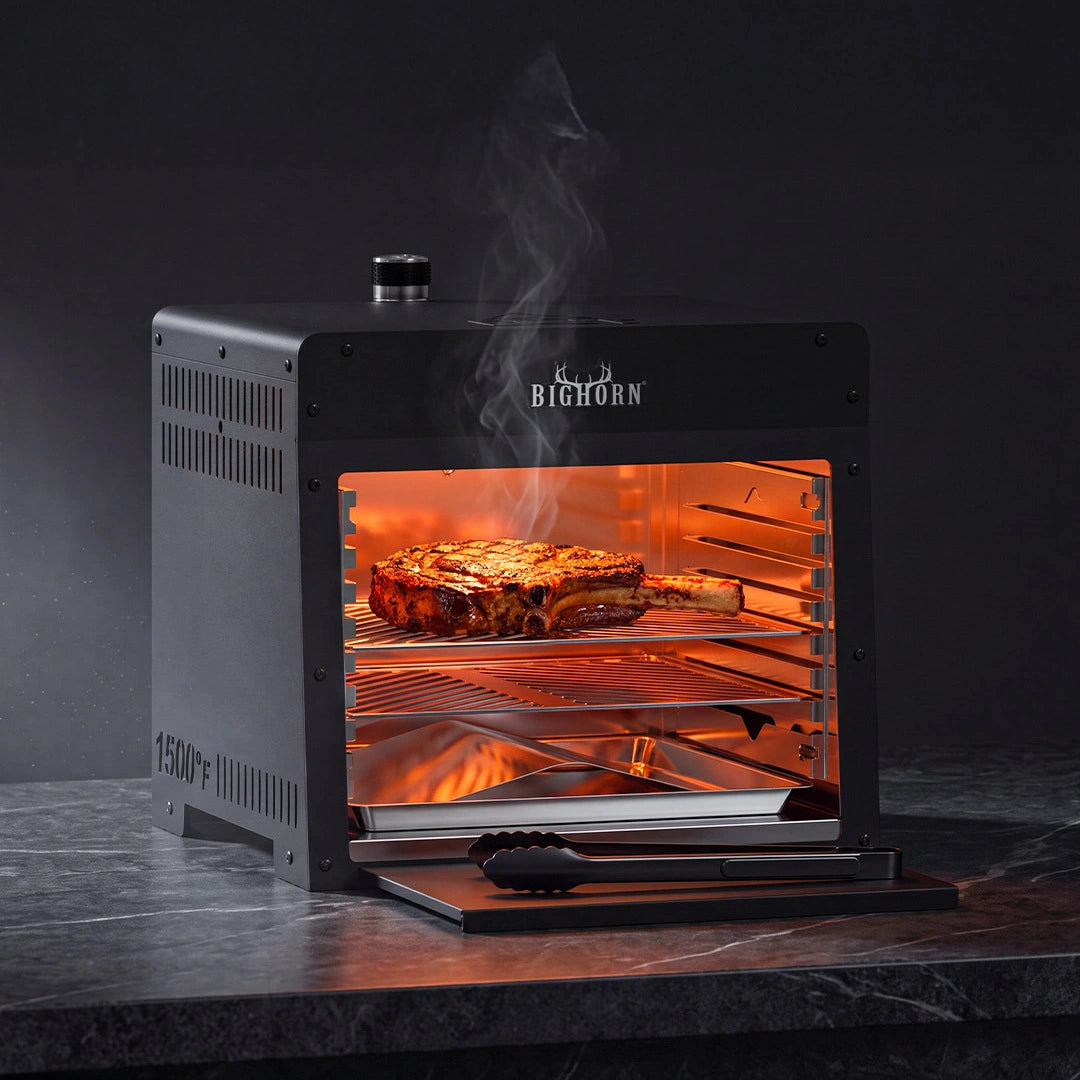
The current 16-inch 1500°F portable infrared steak grill with a pizza stone is a compact propane cooker. Confirm its size and included parts on the listing, and pack those parts so a stone or lid cannot land on the burner screen.
Cart storage versus a truck or RV bay: vibration, dust and fuel
A cart keeps the grill at cooking height, with a chance of a cover and less lifting. It also lives outdoors, which is where the cylinder must stay. A truck bed or an RV bay adds vibration, loose cargo, road dust, and the temptation to throw the tank in last. Those are different risks. Vibration can bend a screen, chip a stone, or loosen a fitting. Dust cakes on a greasy emitter. Fuel does not belong in a closed cabin, a hot trunk, or a stuffed bay “because it is raining.”
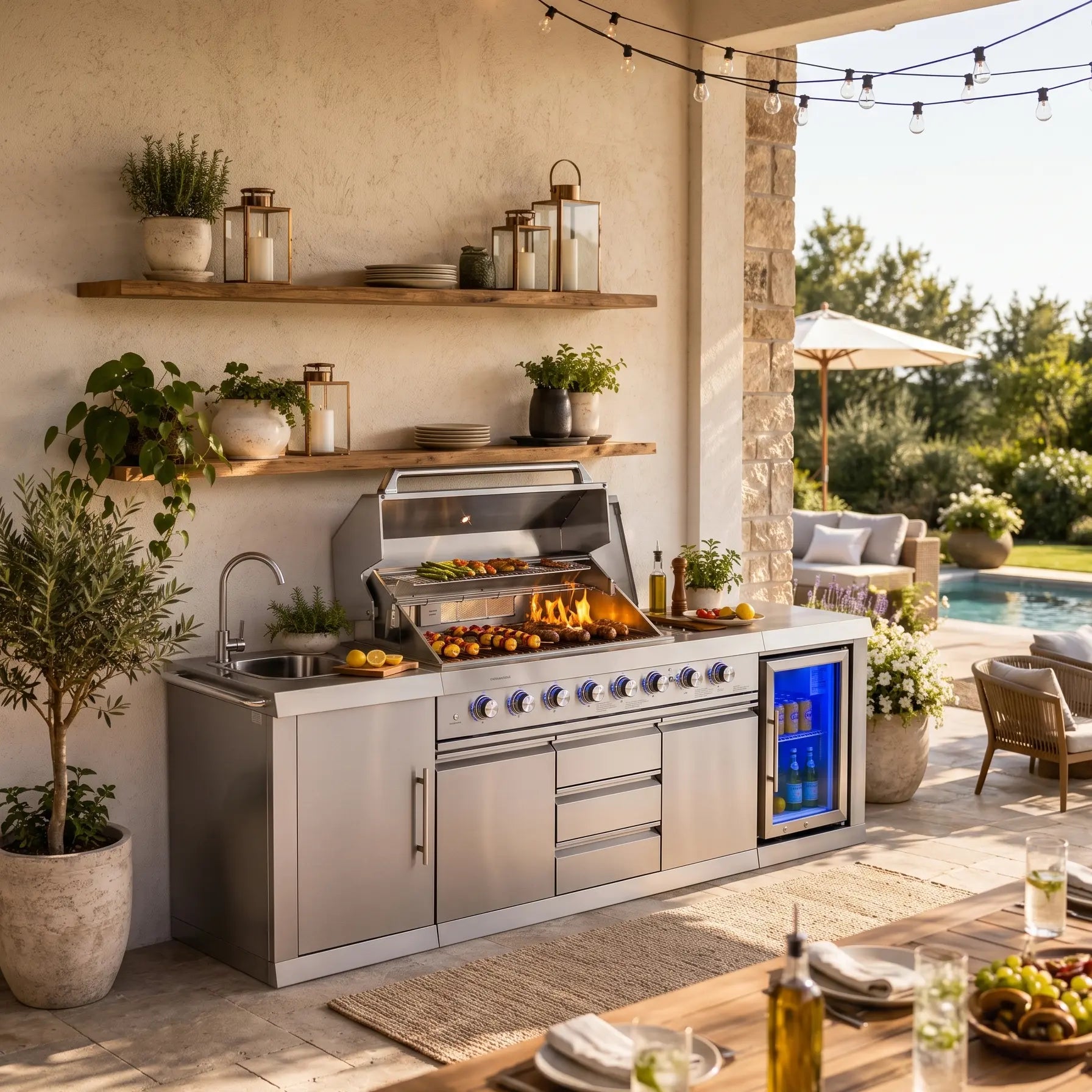
A stainless-steel outdoor grill cart and pizza oven table can make the grill easier to roll and store as a unit, as long as the cart is level, the wheels lock, and the cylinder remains upright and outdoors. It is not an indoor cabinet.

A disconnect and leak-check habit worth repeating after every move
After a cook, turn the burner controls off, then close the cylinder valve. When the grill is cool, disconnect the hose if you are storing or transporting the cooker, and cap the fittings if you have caps. When you reconnect, do it outdoors, with the burner knobs off, and leak-check the connections.
NFPA grilling safety describes a simple soapy-solution test: apply the solution along the hose, regulator, and burner connections with the cylinder open, and close the cylinder immediately if you see bubbles. AmeriGas cylinder safety adds that you should not use matches or lighters to look for a leak, and that a spare cylinder should not be stored near the grill.
A small table: storage place versus a cover, a strap and a tank rule
| Where the grill will sit | Cover and strap | Tank rule |
|---|---|---|
| On a cart, outdoors | Cover only after the cooker is cool; lock the wheels; keep the path clear | Cylinder stays outdoors, upright, secured, away from ignition and heat |
| In a truck bed | Strap the grill so it cannot slide; pad the emitter and any stone; cover against dust if it is cool | Transport the cylinder upright and secured; do not leave it in a hot, closed vehicle |
| In an RV bay or similar compartment | The grill body only, once it is cool, with parts packed so they cannot crush the screen | Do not treat a closed bay as a propane locker unless the vehicle’s own rules and local rules clearly allow that use — default to outdoor, upright storage |
PERC's portable-cylinder guide is explicit: never use or store a cylinder in an enclosed area such as a basement, garage, shed, or tent; keep it upright so it will not fall, shift, or roll; and after transport, remove it from the vehicle immediately rather than leaving it in the cabin or trunk.
What should not ride loose: stones, lids and grease trays
A pizza stone, a lid, and a grease tray should not bounce around next to the burner. Pack the stone so it cannot crack and cannot land on the screen. Empty the grease tray after it is cool enough to handle; a tray full of fat is a mess in a truck and a fire problem in the wrong place. If the grate or a heat shield can shift, strap or wrap it so it does not hammer the emitter.
Common failures: a bent screen, a leftover propane smell and a wet burner
A bent screen usually means the grill was stacked under other cargo or closed on a part that was not seated. A leftover propane smell is a reason to stop, move away from ignition sources, and inspect connections — not a reason to light the cooker “to burn it off.” A wet burner often means rain, a cover over a still-hot grill that then condensed, or a wash that soaked a part that should stay dry. Let it dry fully, inspect, and leak-check before the next lighting.
CPSC gas-grill advice says not to use a grill in a garage, breezeway, carport, or porch, and never to store a spare container under or near the grill or indoors. Transport cylinders upright and secured. U.S. Fire Administration cooking-fire prevention is the same basic idea: do not improvise a tight, enclosed cooking or storage space around a fuel-fired appliance.
Campground or driveway parking: theft and tip-over basics
On a driveway or at a campground, a cart-mounted grill can tip if the ground is uneven or if a child or a pet pulls on it. Lock the wheels, keep the hose from becoming a trip line, and do not leave a connected cylinder unattended in a busy lane. Theft is a local, practical risk, not a product feature; a cooler, a lock, or bringing the cooker in — without the cylinder — may be reasonable, depending on where you are. Local fire rules at a campground can also limit open flames and grill placement. Check them before you light, not after.
A pre-next-cook inspection that takes two minutes
Before the next cook, look at the screen, the grate, the tray, the hose, and the regulator. Confirm the cylinder is upright and the connections are seated. Leak-check if the grill has moved. If anything is bent, wet, or smells of gas, do not light it. Two minutes here is shorter than a ruined burner or a unsafe lighting.
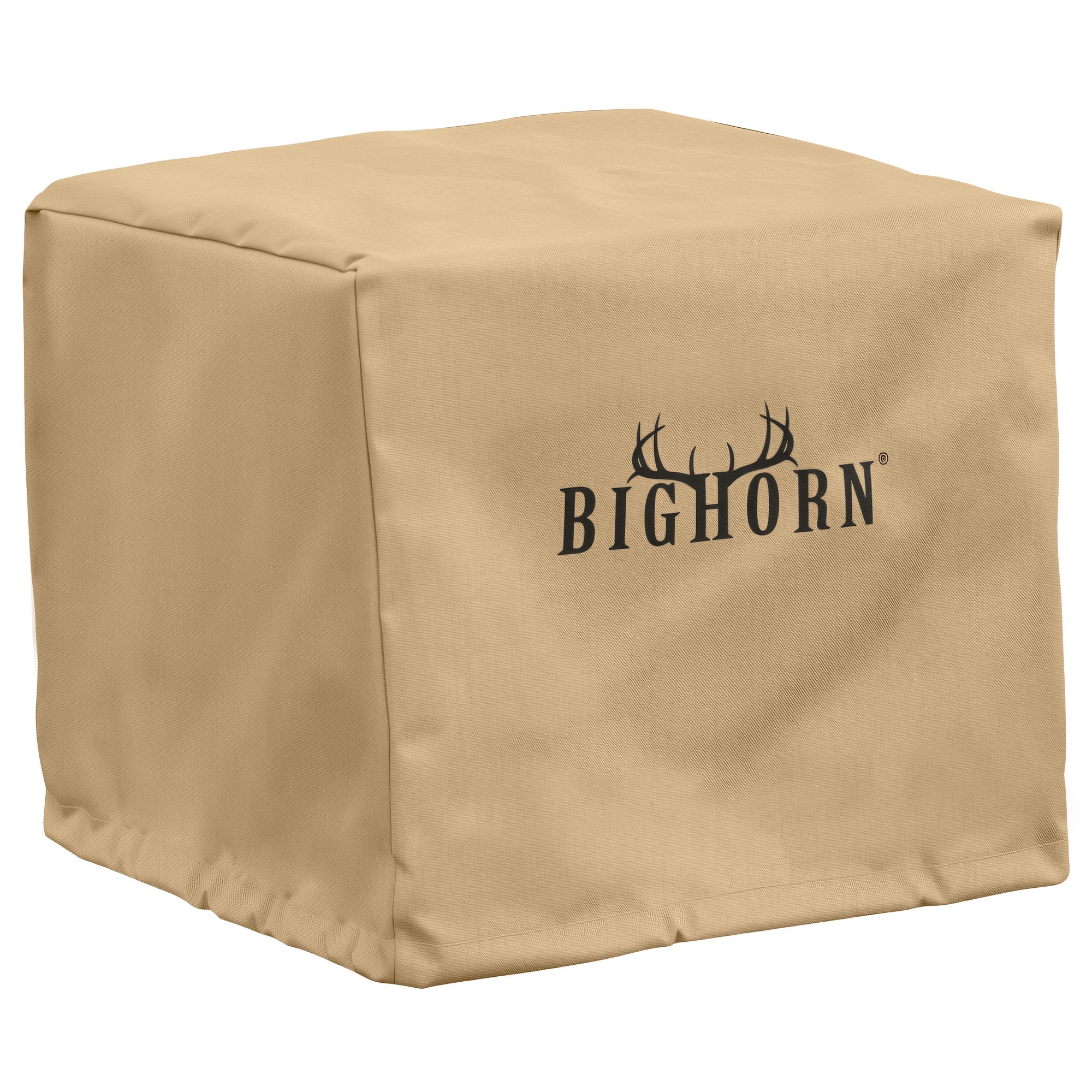
A fitted infrared gas grill cover can go on after that cooled inspection, or after the last cook once the cooker is cold. Confirm the current fit on the product page; this article will not invent a cover dimension.
When a cart bundle is actually easier than packing the grill down
If you cook in the same outdoor spot most nights, leaving the cool grill on a cart, covered, with the cylinder still outdoors and upright, is often easier than packing the whole cooker into a vehicle after every meal. Pack it down when you are truly traveling, or when weather and space make a cart a poor home. An outdoor kitchen island is a different, heavier station; do not treat a portable infrared grill as if it were a built-in just because it spent the week on a cart.
The checklist does not change with the furniture: cool, disconnect, protect the emitter, and keep the fuel outdoors and upright.
If you are parking a compact infrared cooker on a cart or packing it for a truck or RV, confirm the current 16-inch 1500°F portable infrared steak grill with pizza stone listing, let it cool, and keep the cylinder outdoors and upright.
FAQ
Can I store a propane cylinder in a garage with the grill?
No. PERC says you should never use or store a cylinder in an enclosed area such as a basement, garage, shed, or tent, and even a cylinder that seems empty may still contain propane. Store cylinders outdoors, upright, and away from ignition sources. The grill body, with the cylinder removed, is a separate question from storing the fuel.
Should I disconnect the tank when I store a portable infrared grill?
When the cooker is cool and you are putting it away, shut the burner controls off, close the cylinder valve, and disconnect the tank if you will store or move the grill. Replace protective caps on fittings if you have them. Do a leak check when you reconnect, before the next cook.
How should I transport a portable infrared grill in a truck or an RV?
Let the grill cool completely. Transport the cylinder upright, secured so it cannot tip or roll, and do not leave it in a closed, hot vehicle or trunk. PERC says to drive directly to your destination and remove cylinders from the vehicle immediately. Strap the cooker so the emitter, lid, and any stone cannot bounce and crack or bend.
Do I need a cover if the grill stays on a cart outdoors?
A cover helps once the grill is cool, to keep weather and dust off the cooker. It does not let you store a propane cylinder in a garage, and it should not be pulled over a hot grill. Choose a cover that actually fits the cooker you have, and still inspect the burner and connections before the next lighting.