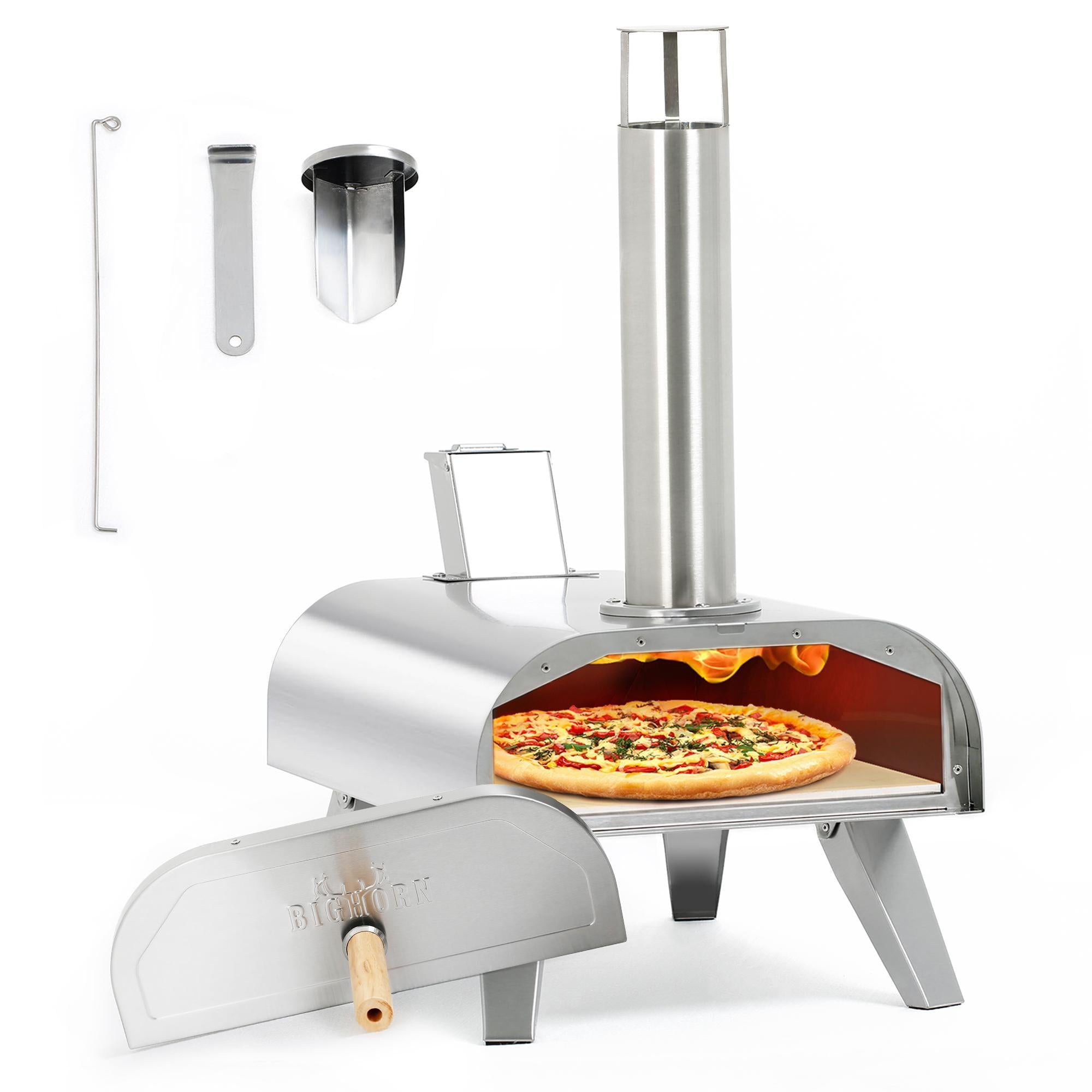
What Stainless Steel Construction Really Means for Pizza Oven Life

ByJohn White
Share

“Stainless steel” does not identify one material or guarantee that an outdoor pizza oven will remain spotless. It may describe the exterior shell while burners, fasteners, brackets and internal panels use different alloys. Durability depends on grade selection, sheet thickness, bracing, weld finishing, insulation, drainage, cleaning and the environment in which the oven is stored.

A buyer cannot verify every hidden layer in a showroom. The practical goal is to separate facts that can be documented from details that remain unknown, then decide whether maintenance and warranty coverage fit the site. A coastal patio, a humid covered deck and a dry inland garage impose different corrosion risks even on the same oven.

Ask Which Parts Use Which Grade

Grade numbers matter only when they are attached to a component. Type 304 is an austenitic chromium-nickel stainless steel widely used for food and kitchen applications. Type 430 is a ferritic chromium stainless steel with lower nickel content; it can be appropriate for many appliance parts but generally offers less corrosion resistance in aggressive chloride exposure than common 304 or 316 grades. Type 316 adds molybdenum and is often selected where chloride resistance is more demanding.

Do not reduce the purchase to “304 good, 430 bad.” A well-designed 430 exterior kept clean in a mild environment may outlast thin, poorly fabricated 304 with contaminated welds and water traps. Likewise, a 304 shell does not prove that screws, burner components or hidden brackets share that grade.

Request or record the following:

Component Grade disclosed? Thickness disclosed? Why it matters
Exterior hood/shell Weathering, staining and dent resistance
Inner liner Direct heat and combustion exposure
Burner or firebox High heat, condensate and residue
Cooking support/stone frame Repeated loading and thermal cycling
Fasteners and hinges Dissimilar metals and crevice corrosion
Legs/cart Structural stability and ground moisture
Weld filler/finish Heat tint and rough crevices can initiate corrosion

World Stainless notes that food-grade stainless steels such as 304 and 316 are widely used in kitchen applications, while 430 is a practical lower-nickel option. Use such general material information to understand tradeoffs, but rely on the manufacturer for the exact oven’s construction.

Inspect Fabrication Instead of Judging the Shine

A polished finish can hide weak construction. Open doors and removable panels when permitted and inspect edges, seams and fasteners. Consistent folded edges and bracing resist distortion better than broad unsupported sheets. A door should close without rubbing at room temperature; ask whether the design accounts for expansion during heating.

Use this cold inspection card:

  • Press broad exterior panels lightly. Note excessive oil-canning or movement.
  • Check that feet sit evenly and fasteners are fully seated.
  • Look for sharp unfinished edges inside service areas.
  • Examine visible welds for gaps, heavy heat tint, rough pits or uncleaned spatter.
  • Identify seams that face upward and can hold rain or cleaning water.
  • Check whether unlike-metal screws or brackets already show staining.
  • Confirm that burners, cords, hoses and valves can be inspected without dismantling unrelated parts.
  • Photograph the clean baseline for later maintenance comparisons.

Sheet thickness is valuable when documented, but a consumer should not attempt destructive measurement. Ask for the published gauge or thickness and evaluate it together with bends, ribs and supports. A thinner formed panel can be stiffer than a thicker flat sheet. For double-wall construction, ask what the second wall accomplishes, what insulation is used if any, and whether vents or drainage paths must remain open. Do not insert insulation into a cavity or block ventilation to reduce surface temperature.

Heat discoloration is not automatically structural failure. Straw, blue or rainbow colors can result from oxide growth at elevated temperature, especially near exhaust and burners. New distortion, loose joints, cracking, flaking, abnormal flame or a door that no longer seats correctly deserves manufacturer review.

Match Corrosion Risk to the Storage Environment

Stainless steel protects itself with a thin passive chromium-rich film. Chlorides, deposits, crevices and persistent moisture can undermine that film. Salt air, pool chemicals, de-icing salt and some cleaners increase risk. A fitted cover may reduce direct rain yet trap humid air against a dirty or warm surface.

Score the site before choosing construction:

Exposure Low Medium High
Distance from ocean/salt spray Far inland Occasional salt air Direct coastal exposure
Pool or chlorine chemicals nearby None Stored in area Frequent vapor/splash risk
Rain and condensation Dry storage Covered outdoor storage Persistent dampness
Cleaning frequency After each use Monthly Rare
Cover ventilation Dry, ventilated Sometimes damp Moisture trapped
Winter de-icing salt None Nearby traffic Direct splash/storage exposure

A high-exposure site justifies stronger documentation, easier wash-down access and more frequent inspection. It may support selecting a more corrosion-resistant alloy, but grade alone does not replace drainage and care. Ask whether the warranty excludes coastal exposure, surface rust, heat discoloration or chemical damage.

Tea-colored streaks often signal early surface contamination or corrosion products. Address them promptly using the manufacturer’s cleaning procedure rather than allowing deposits to remain. Rust near a screw may originate from the fastener, transferred carbon steel or debris rather than the main shell; the source matters when deciding whether cleaning or part replacement is appropriate.

Clean Without Damaging the Passive Surface

Wait until the oven is fully cool. Remove loose ash, flour and grease by the component-specific method before washing stainless panels. Use a soft cloth in the direction of the visible grain. Rinse away cleaner residue where the instructions permit and dry the surface, particularly around seams and fasteners.

Avoid steel wool and ordinary carbon-steel brushes because they can embed iron particles that later rust. Avoid cleaners containing hydrochloric or muriatic acid; Nickel Institute guidance warns that hydrochloric-acid cleaning products can rapidly corrode stainless steel. Chlorine bleach and chloride-containing products also require caution—use only products and dilutions approved by the oven manufacturer, and never mix cleaners.

Build a maintenance calendar:

Interval Action Record
After each session Cool, remove food residue, wipe approved surfaces, dry Smoke/grease location
Monthly during use Inspect seams, fasteners, vents, legs and cover moisture Photos and changes
After salt or pool exposure Rinse/clean as approved and dry promptly Exposure date
Before long storage Deep clean, dry, ventilate cover, protect model-specific parts Storage condition
Before return to service Check corrosion, blocked openings, loose hardware, burner/cord/hose condition Go/no-go decision

Do not soak a pizza stone or expose it to sudden temperature change. Stainless care and stone care are separate tasks. Likewise, do not polish burner ports, ignition components or electrical parts with a cleaner intended for the exterior shell.

Calculate Ownership Cost, Not Just Purchase Price

A durable oven reduces replacement risk only when its care fits the owner’s routine. Compare five-year ownership using documented costs:

purchase price + required cover/cart + approved cleaners + replacement wear parts + estimated maintenance time − expected resale value

Maintenance time belongs in the calculation. A coastal owner who must rinse and dry the oven frequently may prefer easily accessible smooth panels and replaceable fasteners over a complex decorative shell. Check availability and price for stones, burners, igniters, regulators, handles and covers tied to the exact model.

Warranty language is evidence. Record term, covered components, exclusions, proof-of-purchase requirements and whether shipping or labor is included. If a page gives inconsistent warranty periods, ask the seller for written clarification before purchase and save the dated response.

Stainless Steel Pizza Oven FAQs

Is all stainless steel equally rust resistant?

No. Alloy, surface finish, fabrication, contamination and environment all matter. Ask which grade is used for each major component rather than accepting one grade claim for the entire oven. Coastal chlorides and trapped moisture increase the need for resistant materials and frequent cleaning.

Does a magnet prove stainless quality?

No. Many ferritic stainless steels, including 430, are magnetic, while common annealed 304 is usually much less magnetic; fabrication can also change magnetic response. A magnet cannot reveal thickness, corrosion resistance, weld quality or the grade of hidden parts. Use documented material information.

Can I use bleach or chlorine cleaner?

Only if the exact manufacturer instructions explicitly allow the product and dilution. Chlorides can attack stainless steel, especially when concentrated in crevices or left to dry. Never use hydrochloric or muriatic acid cleaner, and never mix cleaning chemicals.

What do brown or tea-colored stains mean?

They may indicate deposits, transferred iron or early corrosion. Photograph the area, clean it promptly by the approved method and inspect the nearby seam or fastener. Recurring stains, pitting, cracking or distortion should be reported to the manufacturer.

Does a double wall guarantee a cooler exterior?

No. Performance depends on wall spacing, insulation, vents, heat path and operating condition. Use published surface warnings and clearances; do not assume a double-wall claim makes nearby combustible material safe.

Short Safety Note

Let the oven cool before inspection or cleaning. Follow the exact instructions for the shell, stone, burner, electrical parts and fuel system; one cleaner or method is not suitable for every component. Do not block vents, add insulation, grind welds or substitute fasteners without authorization. Remove an oven from service if corrosion affects a fuel connection, structural support, burner, electrical enclosure or other safety-critical part, and seek qualified manufacturer guidance.

The Material Decision

Choose a stainless steel pizza oven from a component map, fabrication inspection and exposure score—not from the reflection of the lid. Documented grades and thicknesses reduce uncertainty. Smooth drainage, accessible cleaning, replaceable parts and clear warranty coverage make the material easier to protect over repeated heat cycles.

For a dry inland patio, ordinary well-made appliance construction may be sufficient. For coastal, poolside or persistently damp storage, demand stronger corrosion documentation and accept a more frequent care schedule. The best material choice is the one whose construction and maintenance requirements remain credible in the exact environment.


More to Read

Outdoor Pellet Pizza Oven: Yard Layout, Wind, and Seasonal Setup An outdoor pellet pizza oven belongs in a yard that is planned: a level, heat-safe surface, the manual's clearances, a wind map that keeps smoke ou... Portable Pellet Pizza Oven: A Camping Checklist That Works Camping with a portable pellet pizza oven works when the trip is a checklist: gear packed, pellets dry, site rules confirmed, fire ban alternatives... Wood Pellet Pizza Oven: How to Build and Keep a Stable Fire A wood pellet pizza oven bakes well when the fire is stable: dry food-grade hardwood pellets, a deliberate lighting sequence, small fuel additions,...