
If your cookies burn while the center stays raw, your oven temperature is likely off by 25°F or more. The fix is simple: use an oven thermometer to measure the actual temperature, then adjust accordingly. This 15-minute test will end your baking frustrations and ensure consistent results every time.

What You'll Need
Required:
- Oven thermometer ($10-20) – Choose an analog model with a large dial you can read through the oven window
Optional:
- Pen and paper for recording readings
- Timer (your phone works fine)
Don't have a thermometer? The sugar test (melting point 366°F) can give a rough indication, but spending $15 on a thermometer is far more practical and accurate.
How to Test in 4 Simple Steps
Safety note: The oven window and door will be extremely hot during testing. Use an oven mitt if you need to adjust the thermometer, and keep children and pets away from the oven during the 90-minute test period.
Step 1: Set Up
Place your oven thermometer in the center of the middle rack.
Why the center? It's the most neutral spot, away from heating elements and door drafts.
Step 2: Preheat Properly
Set your oven to 350°F. Once it beeps, wait an additional 20 minutes.
Why wait? The beep signals when the sensor is hot, but the oven walls need time to stabilize.
Step 3: Record Four Readings
- Without opening the door, read the thermometer through the window every 20 minutes:
- Reading 1: 360°F
- Reading 2: 340°F
- Reading 3: 355°F
- Reading 4: 345°F
Step 4: Calculate the Average
Add all four numbers and divide by 4.
Example: (360 + 340 + 355 + 345) ÷ 4 = 350°F

What Your Results Mean
| Average Temperature | What It Means | Action Needed |
| 345-355°F | ✅ Accurate | None – your oven is fine |
| 325-344°F or 356-375°F | ⚠️ Needs calibration | Adjust thermostat (see below) |
| Below 325°F or above 375°F | 🔧 Needs repair | Call a technician |
Temperature swings are normal. If your four readings varied by 20-30°F but averaged correctly, that's typical cycling behavior.
Red flag: If readings jump more than 50°F between checks, your thermostat or heating element may be failing.
How to Fix It
For small offsets (±10-35°F): Calibrate yourself
Most modern ovens let you adjust the thermostat:
- Check your owner's manual for "temperature calibration" or "offset adjustment."
- Digital ovens: Usually accessed through a settings menu
- Dial ovens: Look for a small screw behind the temperature knob
For cooking right now: Compensate manually
- If your oven runs 25°F hot: Set it to 325°F when a recipe calls for 350°F
- Rotate pans halfway through for even cooking
- Use convection mode (circulates air more evenly)
For major problems: Call a pro
- Temperature swings exceed 50°F
- Door seal is visibly damaged
- Heating element glows unevenly
Understanding Temperature Fluctuations
Why does my oven cycle on and off?
Your oven works like a home thermostat: it heats past the target, shuts off, cools slightly below target, then kicks back on. This is normal and unavoidable in residential ovens.
What about hot spots?
Most ovens are hotter in the back corners (closer to heating elements) and cooler near the door (heat escapes through seals).
Quick test: Fill a sheet pan with white bread slices and bake at 350°F until browned. The darker slices show your hot spots. Use this knowledge to rotate pans during baking.

When Calibration Isn't Enough
At this point, you know how to make your oven accurate. Set it to 350°F, and it will actually be 350°F. For 90% of home cooking—cakes, cookies, roasts, casseroles—this solves the problem completely.
But accuracy isn't the same as capability.
Even a perfectly calibrated oven has physical limits:
- Maximum temperature: Most home ovens cap at 500-550°F
- Heat recovery: Opening the door drops the temperature by 50°F+ and takes several minutes to recover
- Heat distribution: Radiant heat from coils/flames can't replicate concentrated flame contact
Why does this matter?
Certain cooking techniques don't just need accurate heat—they need extreme heat that standard ovens physically cannot produce, no matter how well calibrated.
The clearest example: Neapolitan pizza
Traditional Neapolitan pizza requires 700-900°F to create that characteristic leopard-spotted crust in 60-90 seconds. At this temperature:
- The crust gets charred bubbles while staying chewy inside
- The bottom crisps before the toppings dry out
- Moisture locks in rather than evaporating
Your perfectly calibrated 500°F oven will make good pizza—but it's physically incapable of creating this result. The dough will dry out before it can char, giving you a cracker-like texture instead of the airy, charred crust professionals achieve.
The solution: Specialized high-heat equipment
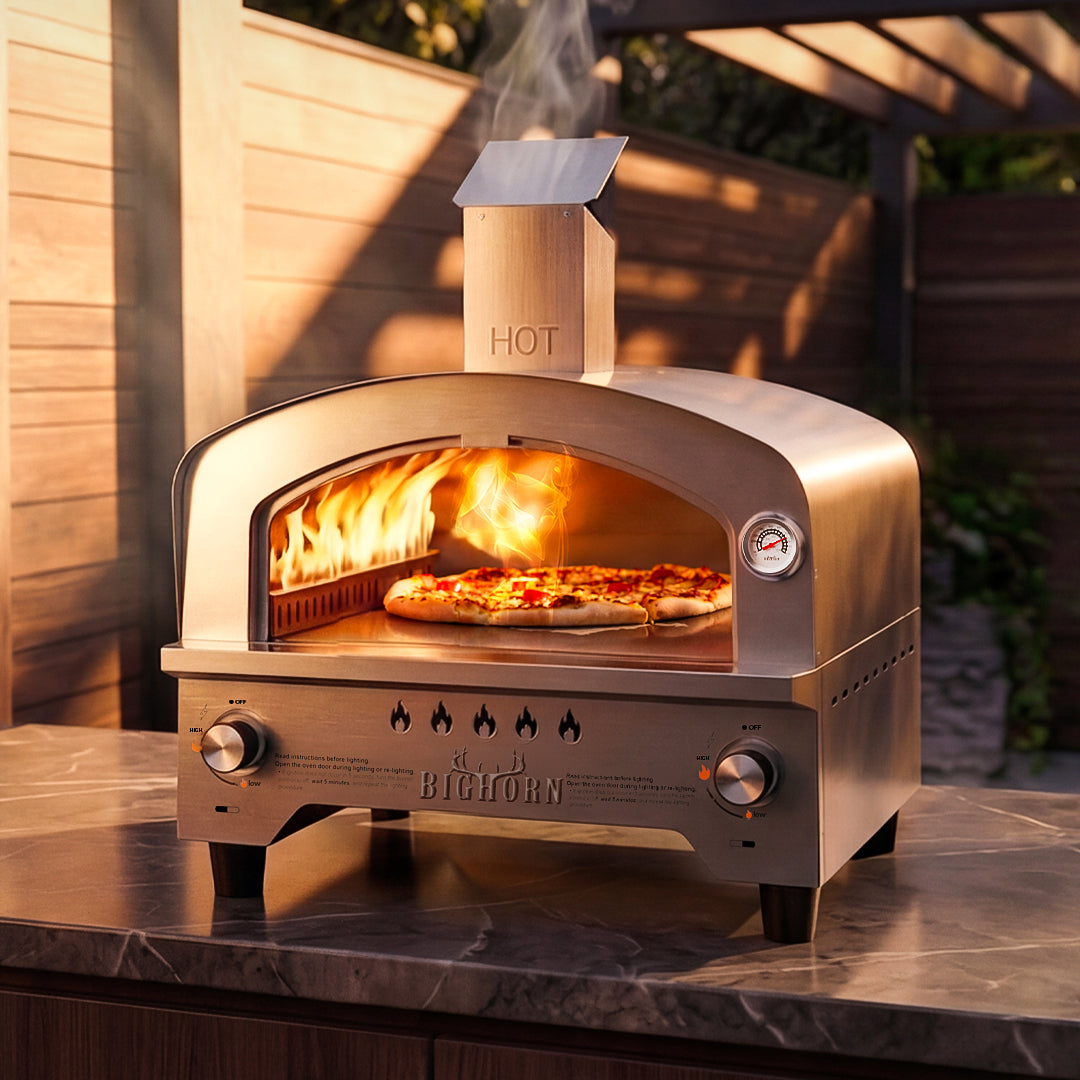
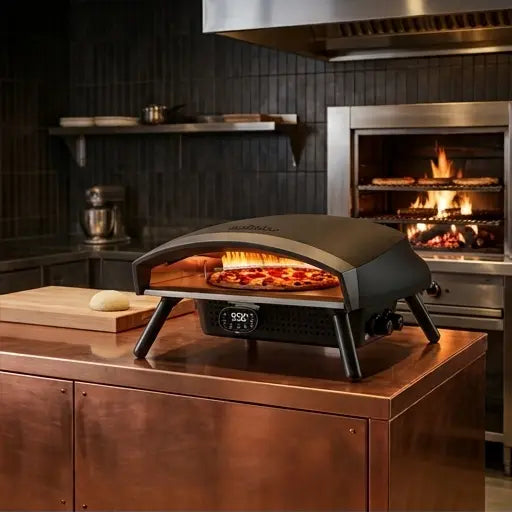
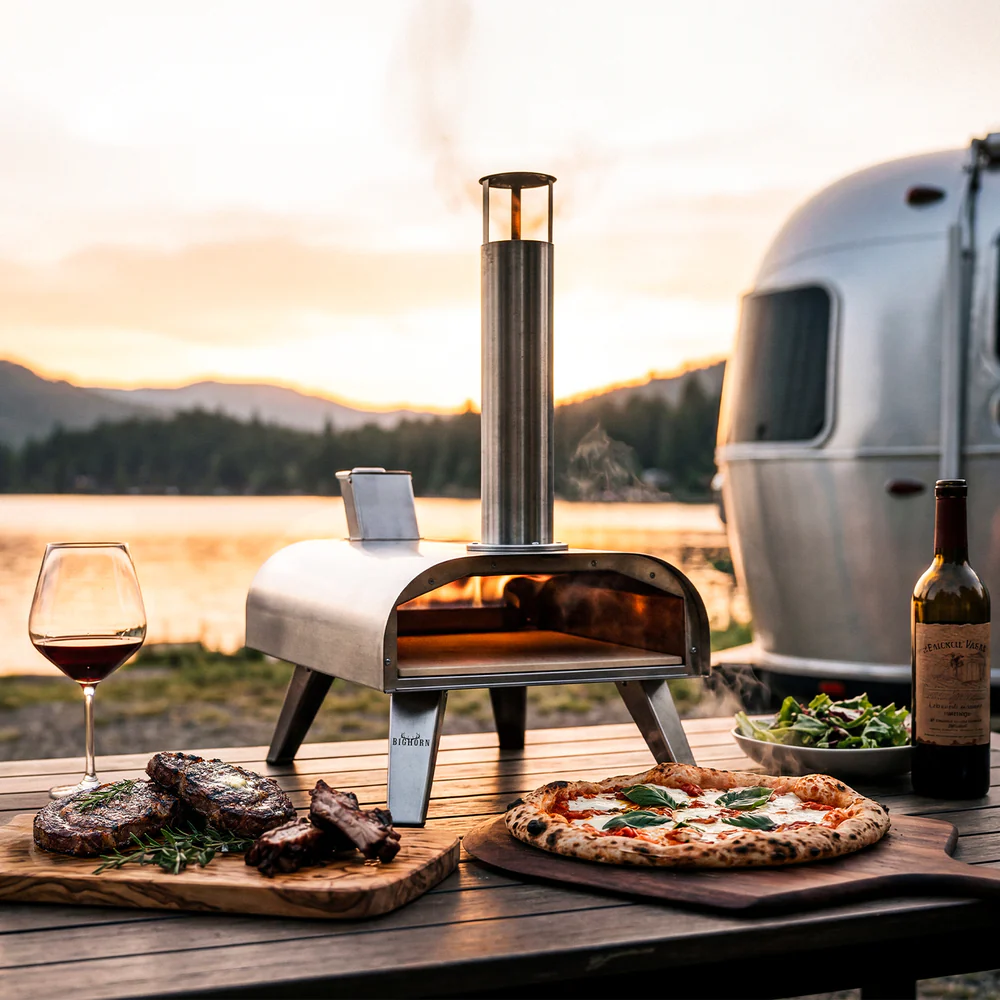
Outdoor pizza ovens like those from Big Horn Outdoors® are engineered to reach 887°F with thick stone floors that store thermal mass. This enables the "hot and fast" method (60-second pizzas) that home ovens cannot replicate.
This isn't an upgrade to your oven—it's a different tool for a different job, like using a blowtorch instead of a stovetop for crème brûlée.

Common Mistakes to Avoid When Testing
Now that you understand both your oven's capabilities and limitations, here are the most common errors people make during temperature testing—and how to avoid them:
Opening the Door to Check the Thermometer
Every time you open the door, the temperature drops 50-100°F instantly. This ruins your readings. Always read through the oven window. If your thermometer is hard to read, invest in one with a larger dial or use a smartphone camera to zoom in.
Testing Only Once
A single reading tells you nothing about cycling behavior. Your oven might read 350°F at that exact moment but swing between 320-380°F over time. Always take multiple readings 20 minutes apart to capture the full cycle.
Placing the Thermometer Too Close to Heating Elements
The back corners near heating elements can be 50-75°F hotter than the center. This isn't a calibration issue—it's a hot spot. Test from the center rack position for the most accurate average.
Ignoring External Factors
If you just cooked something, the oven walls are still hot and will affect readings. Always start with a completely cool oven. Similarly, testing in a cold garage in winter will require longer preheat times.
Expecting Perfection
Residential ovens cycle ±15-25°F around the target. If your average is within 10°F and swings stay under 30°F, your oven is performing normally. Don't obsess over getting exactly 350.00°F—that's not how ovens work.
Take Control of Your Oven Today
Now you know how to test, interpret, and fix your oven's temperature. A $15 thermometer and 90 minutes of testing can save you years of frustration.
Next steps:
- Buy an oven thermometer if you don't have one
- Run the test this weekend
- Adjust your oven's calibration or your cooking habits accordingly
Ready to make professional-grade pizza? Explore Big Horn Outdoors®' 12" pizza ovens—designed to reach 887°F for authentic Neapolitan results your calibrated home oven can't achieve.
Frequently Asked Questions about Oven Temperature and Accuracy
Q1: The oven display and my thermometer don't match. Which is right?
Trust the thermometer. The internal sensors of the oven often get less accurate over time. For example, if your thermometer shows 375°F but the oven says 350°F, the thermometer is telling the truth.
What to do: You can either "recalibrate" your oven (check your manual) or simply set your oven 25°F lower than the recipe suggests to balance it out.
Q2: My oven is off by 50°F. Can I just cook the food longer?
No. Too much heat changes how food cooks. A small gap (10–15°F) can be fixed by changing the time, but 50°F is too big of a difference—the outside will burn before the inside is even cooked.
If it's off by this much, something is likely broken (like the heating element or the door seal). You need to give it a professional repair.
Q3: Should I test every temperature, or is 350°F enough?
350°F is usually enough for daily baking. Most ovens have a consistent "offset." If it runs 25°F hot at 350°F, it will likely run 25°F hot at 400°F too.
But if you do a lot of low-heat drying (below 250°F) or high-heat roasting (above 450°F), test those specific temperatures as well, as ovens can behave differently at extremes.
Q4: Will using the "Convection" (Fan) setting make the temperature more accurate?
No, but it makes the oven "feel" hotter. The fan just moves air around to remove cold spots. Because the heat hits the food more efficiently, it cooks as if the temperature were 25°F higher.
Tip: When using convection, always lower your recipe temperature by 25°F. To test your oven's basic accuracy, always keep the fan turned OFF.
Q5: For great pizza, should I buy a high-end home oven or a pizza oven?
Yes, you should buy a dedicated pizza oven.
High-end home ovens (~$2,000) are great for baking cakes and roasting chickens, but they usually max out at 550°F. But to get that "restaurant-style" charred crust, you need extreme heat. Dedicated pizza ovens (usually $200–$500) can hit 700–900°F and are better for making pizzas.
No standard home oven can get hot enough to match a cheap, specialized pizza oven.
Explore more in the Pizza Oven Guides.
More to Read
 Big Horn Outdoors® Expands Retail Presence with New Experience at Piedmont Outfitters
Big Horn Outdoors® is excited to announce a new retail destination for outdoor cooking enthusiasts. Customers can now experience the brand's popula...
Big Horn Outdoors® Expands Retail Presence with New Experience at Piedmont Outfitters
Big Horn Outdoors® is excited to announce a new retail destination for outdoor cooking enthusiasts. Customers can now experience the brand's popula...