Can a beautiful, thick-cut ribeye promise a good treatment with aroma? Sometimes you’re fighting flare-ups that char the outside, moving the steak around to avoid "cold spots," and when you finally pull it off, it’s a disappointing grayish-brown, and maybe even a little dry. Why did we aim for steakhouse-quality but end up with a backyard compromise?
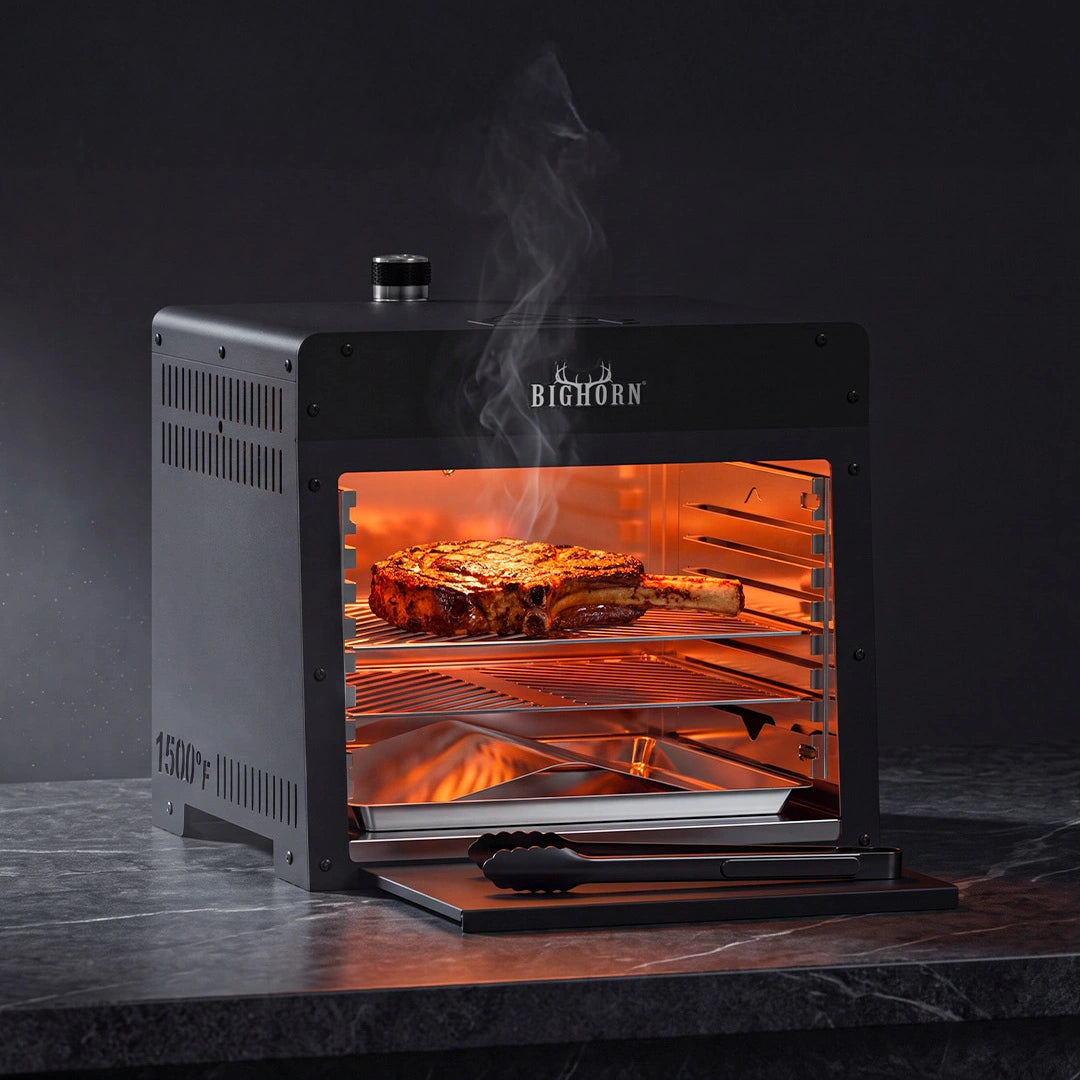
Related product: Shop 16-inch Portable Infrared Steak Grill.
Maybe it isn't just the cut of meat or a special seasoning—professional steakhouses have long used a different kind of heat for that perfect crust and juicy interior, which is now available for your own backyard: infrared grilling.
What Exactly Is an Infrared Grill?
An infrared grill is a gas grill that uses infrared technology as its heat source. But to understand what that means, we first need to understand the two different ways grills transfer heat: convection and radiation.
Understanding the Power of Radiant Heat
Your conventional gas grill is a convection device. It works by using an open flame to heat the air inside the grill. This superheated, dry air then circulates and cooks your food. In short, a conventional grill is essentially a "hot air blower" , and just like a hairdryer, that hot, moving wind actively strips moisture from your food.
An infrared grill works on a completely different principle: radiant heat.
Instead of an open flame heating the air, the gas flame heats a specialized infrared element, which is typically a ceramic plate. This plate absorbs the energy and becomes intensely hot, often glowing red. It then emits that energy as powerful, invisible infrared waves. This is the same natural radiant heat you feel from the sun on a cold day; the sun warms you (the object) without having to first warm the cold air in between.
An infrared grill’s radiant waves travel at the speed of light and heat the food directly, not the air around it. This fundamental difference is the source of every major benefit.

How It Differs from Conventional Grilling
The distinction between heating air and heating food directly changes the entire grilling equation.
First, there's moisture. Because an infrared grill doesn't use hot, dry air as its primary cooking method, it doesn't disrupt the "moisture barrier" on the surface of the meat. The food cooks in its own juices, without the drying effect of convection. The result? Food cooked with infrared technology can retain up to 35% more of its natural juices.
Second is speed. Think about how long it takes to heat all the air in a conventional grill. It can take 15 to 20 minutes to properly preheat. An infrared grill’s radiant element heats up almost instantly, reaching its target temperature in as little as 3 to 5 minutes. This efficiency means you can start cooking almost immediately.
Finally, there's evenness. A conventional grill's circulating air is chaotic, leading to notorious "hot and cold spots" that force you to constantly move your food around to get a consistent cook. An infrared grill's radiant element, by contrast, is a single, uniform surface that projects an even, consistent blanket of heat, eliminating those erratic temperature zones.

The Secret to Achieving a Steakhouse-Quality Sear
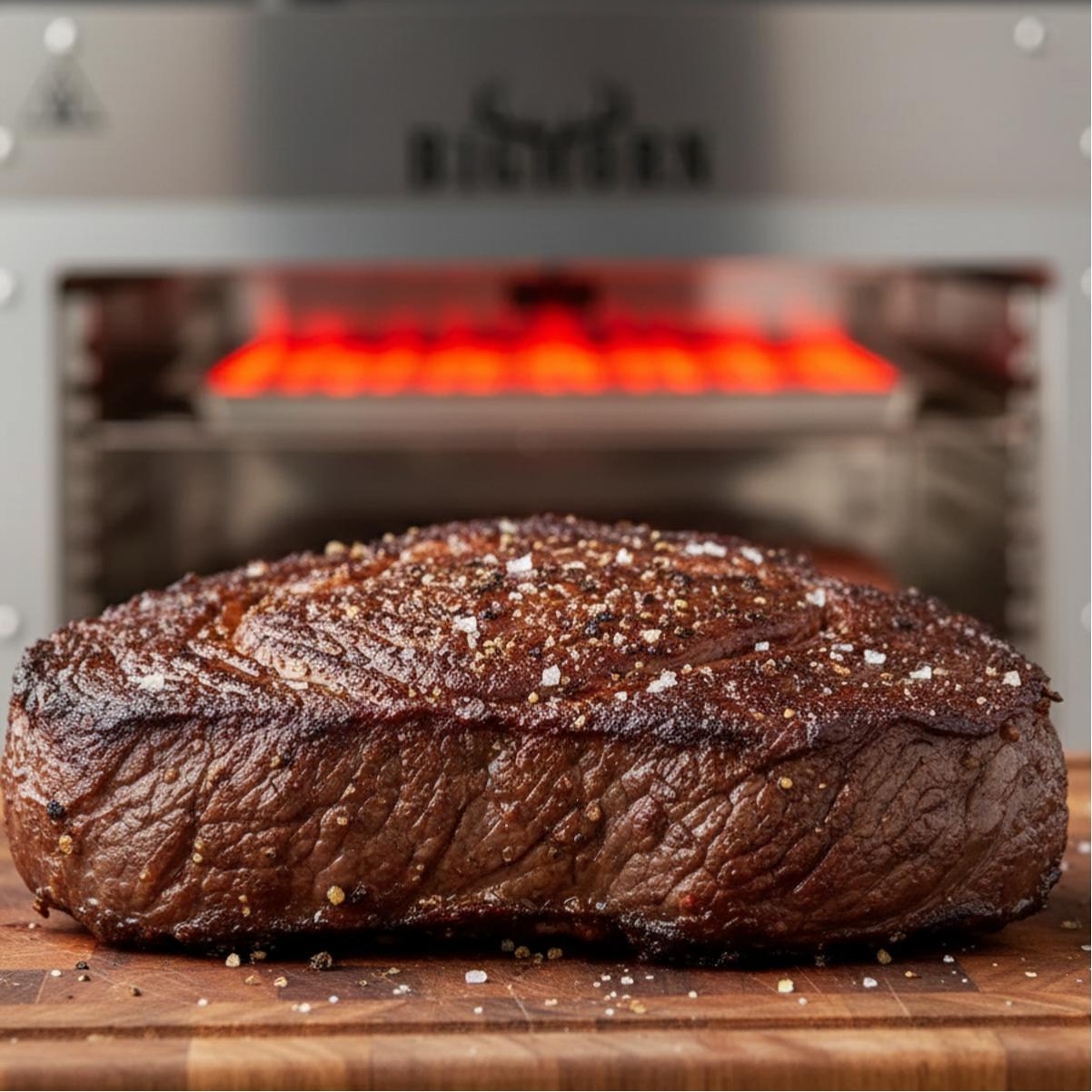
The most celebrated benefit of infrared grilling is its unparalleled ability to produce a "steakhouse-quality sear". This isn't just about grill marks; it's about creating a dark, flavorful, and perfectly caramelized crust over the entire surface of the meat.
Unlocking Intense Heat for a Perfect Crust
That delicious, dark-brown crust you get at a high-end steakhouse has a scientific name: the Maillard reaction. This is a complex chemical reaction between amino acids and reducing sugars that creates thousands of new flavor compounds and a deep brown color. This reaction happens at temperatures above 300°F, but it happens exponentially faster and more effectively at extreme heats.
Your conventional grill, which tops out around 500°F-600°F, struggles to achieve this reaction before it overcooks the center of the steak.
This is where infrared technology shines. The ceramic burner systems in infrared grills are designed to generate extreme temperatures, pushing past 1,000°F, 1,500°F, and even 1,600°F. This is the exact technology steakhouses use. At this intense temperature, the Maillard reaction is triggered instantly, creating that perfect, flavorful crust in 60-90 seconds per side.
Why It's the Ultimate Grill for Steaks and a Perfect Ribeye Broiler
Here is the single most important concept to understand about infrared grilling. You have probably heard the persistent myth that "searing locks in juices."
Research and culinary science have shown this is false. So, if searing doesn't lock in juices, why is a steak from an infrared grill so much juicier than one from a conventional grill?
It's because you are getting two separate benefits at the same time:
- The Crust (Flavor): The intense 1500°F heat triggers the Maillard reaction, giving you that incredible steakhouse flavor and crust.
- The Juiciness (Moisture): The radiant heat method (the "laser," not the "hairdryer") cooks the steak without using hot, dry air, allowing it to retain up to 35% more of its natural moisture.
A conventional grill forces you to choose: cook it long enough to get a "crust" (and dry out the inside) or cook it quickly to keep it juicy (but end up with a gray, un-seared exterior). An infrared grill is the only technology that delivers both—the perfect crust and a juicy interior. This is the true "Backyard Steakhouse" experience.

Key Advantages Beyond a Perfect Sear
While the sear is the main event, the day-to-day experience of using an infrared grill is defined by its ability to solve the most common grilling frustrations.
Say Goodbye to Flare-Ups and Uneven Cooking
First, infrared grilling provides perfectly even heat. That radiant plate is a single, uniform surface, which means the end of "hot and cold spots". You can lay down four steaks and know that all four are cooking at the exact same temperature, with no need to "constantly move the food around".
More importantly, infrared grilling eliminates dangerous flare-ups. On a conventional grill, when fat and marinades drip from the meat, they hit the open flame below and ignite, causing flare-ups that can singe your eyebrows and coat your food in a bitter, sooty flavor.
On an infrared grill, the ceramic element is so intensely hot that any drippings that hit it are instantly vaporized. But here’s the best part: those drippings aren't just eliminated; they're transformed. That instant vaporization shoots back up as a "flavor-enhancing smoke" , basting the food in its own savory flavor. You get zero flare-ups, and more flavor.

More Flavor, More Moisture, and Less Waiting
When you combine all these benefits, the picture of a truly superior grilling experience becomes clear. With an infrared grill, you get:
- More Flavor: You get the deep, rich, complex flavors from a perfect Maillard crust , combined with the "flavor-enhancing smoke" from vaporized drippings.
- More Moisture: Your food retains up to 35% more of its natural juices because you've finally eliminated the drying, "hot air" convection method.
- Less Waiting: Your grill is fully preheated and ready to cook in 3-5 minutes, not 15-20. This, combined with cooking times that can be up to 50% faster , makes grilling a steak a quick weeknight possibility, not just a weekend project.
Exploring the Versatility of an Infrared Gas Grill
A common question is whether a grill this powerful is a "one-trick pony". While it's true that high-temperature infrared is the undisputed champion for steaks, its power can be harnessed for much more.
More Than Just the Perfect Steak Grill
That same rapid, high-heat sear is perfect for many other foods. It creates a beautifully crusty, yet juicy, burger. It can cook pork chops , thin-cut chicken breasts , and meat for fajitas so quickly that they have no time to dry out.
For thicker cuts, like a pork loin or a whole chicken, you can use a professional technique called "combo cooking". You use the intense infrared heat to get a perfect sear and crust on the outside, then move the meat to a cooler, conventional grill (or an oven) to finish cooking through gently. This "reverse sear" (or sear-then-cook) method is how pros get a perfect edge-to-edge medium-rare and a dark crust.
Grilling Delicate Foods with Precision
What about delicate items like fish or vegetables? While the 1500°F heat can incinerate them if you're not careful , it can also be used with precision.
That high heat is fantastic for getting a beautiful char on vegetables like zucchini, asparagus, or romaine hearts , giving them a crisp-tender texture instead of the mushy one they'd get on a cooler grill. For delicate fish, the trick is to use an approved grill tray or a secondary cooking rack. This creates a bit of distance, allowing you to use the powerful radiant heat more gently. The result is perfectly cooked, non-stuck fish with crispy skin.
How to Choose the Best Infrared Grill for You
"Infrared" has become a popular marketing term, but not all infrared systems are created equal. The "best" grill for you depends entirely on what you want to cook.
What to Consider Before You Buy
When shopping, you will generally find three types of infrared systems:
- Hybrid Grills: These are large, traditional-style grills that replace one of their conventional "blue flame" burners with a single infrared "sear zone". They are a good all-in-one option but are often expensive and the sear zone can be small.
- Full Infrared Grills (Lower-Temp): Some brands use "heat emitter" systems or other designs that are fully infrared. These provide very even, moist heat but often top out at 600°F-700°F. They are great for all-around grilling but cannot provide the 1500°F steakhouse sear.
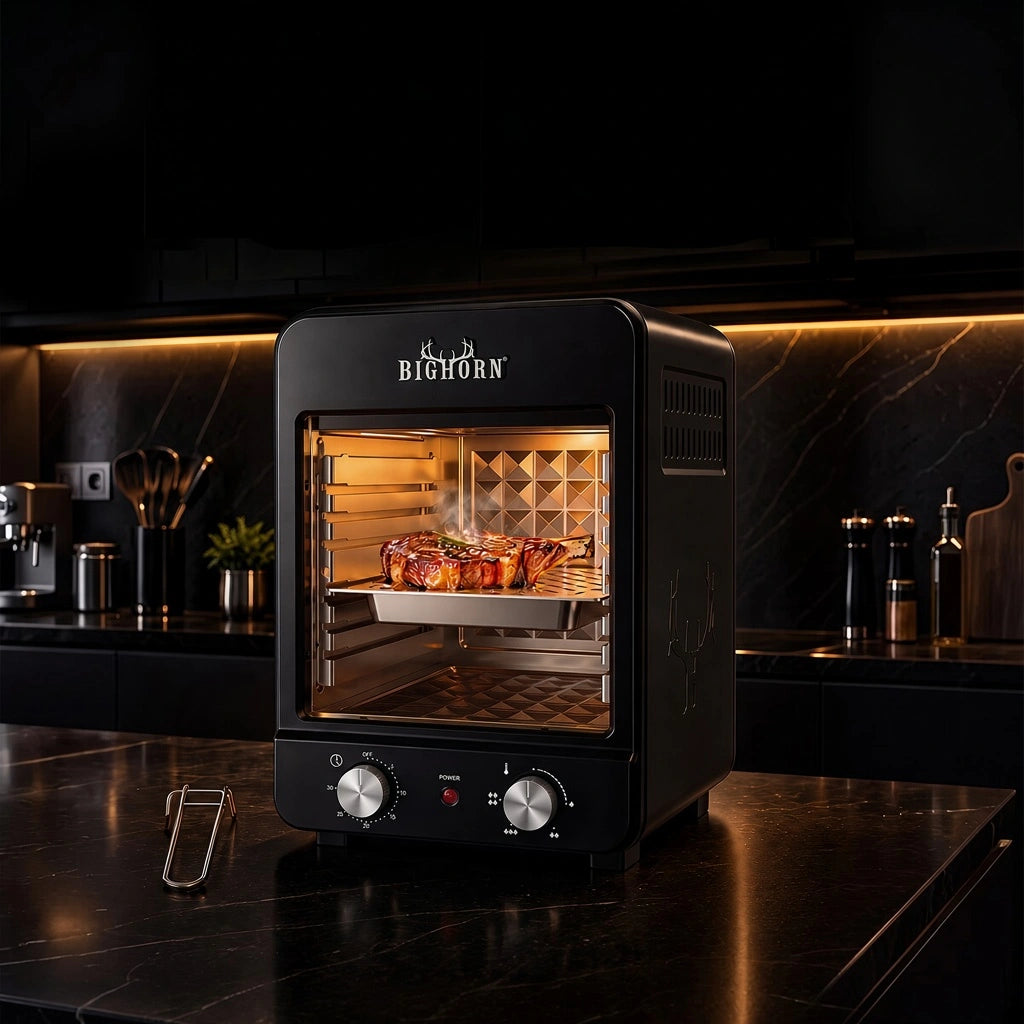
- Specialized Infrared Broilers: This class of grill is a specialist tool. It's designed with one primary goal: to use a ceramic burner system to achieve the absolute maximum temperatures of 1000°F to 1500°F+. This is the "ultimate steak cooker".
After 1,000 words on why the 1500°F sear is the key to steakhouse results, the choice becomes clear. If your goal is to add that "Backyard Steakhouse" capability to your arsenal, the most effective and powerful option is a specialized, high-temperature ceramic broiler.

The Final Verdict
Infrared grilling isn't a gimmick; it's a fundamental shift in cooking physics. By using focused, radiant heat instead of hot, dry air, it delivers results that are measurably superior.
It solves the biggest problems of conventional grilling. It gives you juicier food by preserving up to 35% more moisture. It gives you faster cooking with 3-minute preheats. It provides a safer, cleaner experience with no flare-ups. And most importantly, it delivers the steakhouse-quality sear that conventional grills simply cannot produce. It is the "smart innovation" that truly elevates your backyard cooking from a simple cookout to a culinary adventure.
Upgrading your grilling experience means upgrading your technology. Infrared's ability to deliver intense, moisture-preserving heat is the key to unlocking true "Backyard Steakhouse" results. Whether you're perfecting a ribeye or getting a lightning-fast sear on chicken, the benefits of radiant heat are undeniable.
Get Steakhouse Sear Safely
Ready to embark on your own culinary adventure? The Big Horn Outdoors® 1500°F Infrared Steak Grill is engineered to bring that professional-grade searing power to your backyard. Crafted from durable stainless steel and featuring a top-down ceramic broiler, it's the ultimate tool for achieving a mouthwatering, steakhouse-quality crust. Explore the Big Horn® 1500°F Grill today and stop grilling with hot air.
Frequently Asked Questions
Q1: Is infrared grilling safe, and is this infrared radiation healthy?
Yes, of course! That's a very common question, but what "radiation" in infrared radiation refers to is nothing more than the scientific name for heat. That's just perfectly natural, safe heat from the sun, for example, or from a hot bed of charcoal—a perfectly natural source of safe heat energy, in no way connected to UV radiation, to nuclear radiation of any kind. In many ways, infrared grills are much safer than traditional grills, as they're far more enclosed, designed to mitigate flare-ups of harmful, hot grease, for example.
Q2: How does one clean an infrared grill?
Cleaning infrared grills is much simpler than other types of grills as far as infrared is concerned because this powerful heat source (capable of reaching over 1000°F at times) functions as a self-cleaning mechanism itself. A majority of food residues/drippings that fall onto the infrared ceramic surfaces end up either vaporized or converted to ash, so all you need to do for cleaning is run a brief burst of this heat (turning them up to high for perhaps 5-10 minutes after cooking).
Q3: Can I cook using low heat in an infrared grill?
That depends upon the grill type. High-intensity ceramic broilers, which are designed to function at 1500°F for a restaurant-style sear, struggle to function in the lower temperature range. These infrared devices function as specialized accessories for searing only. That is why they work so well as a "sear station" in conjunction with a regular grill for what they call "Combo Cooking." There also exists another type of infrared grill known as "heat emitter" infrared grills, which work at a different, more variable temperature range, but they do not have the same high-end capabilities when it comes to searing.
Q4: Are infrared grills more gas-efficient?
Yes, they definitely are more energy efficient. A regular grill burns a huge amount of fuel in order to heat up all of the air around what it is grilling. An infrared grill concentrates all of this heat onto what it is grilling, using very little fuel in the process. Along with this, an infrared grill preheats in only 3-5 minutes, as opposed to an ordinary grill's 20 minutes, which means that an infrared grill is running for much less time.
Explore more in the Grill Recipes.
More to Read
 Big Horn Outdoors® Expands Retail Presence with New Experience at Piedmont Outfitters
Big Horn Outdoors® is excited to announce a new retail destination for outdoor cooking enthusiasts. Customers can now experience the brand's popula...
Big Horn Outdoors® Expands Retail Presence with New Experience at Piedmont Outfitters
Big Horn Outdoors® is excited to announce a new retail destination for outdoor cooking enthusiasts. Customers can now experience the brand's popula...