You need a multi-fuel pizza oven if you want to switch between wood-fired cooking and convenient heat control without buying two ovens. A dedicated gas or pellet oven is sufficient if you consistently prefer one fuel. Multi-fuel flexibility becomes valuable when your cooking schedule, outdoor space, or preferred cooking experience changes between occasions.
By the Big Horn Outdoors Product Team
Published: September 19, 2026
What Is a Multi-Fuel Pizza Oven?
A multi-fuel pizza oven is designed to operate with two or more approved heat sources, such as wood pellets, propane, or electricity. Unlike a dedicated gas or wood-fired oven, it allows you to change how you cook while keeping the same main cooking chamber.
However, multi-fuel does not mean every oven accepts every fuel.
Some outdoor pizza ovens combine hardwood and charcoal. Others use pellets and propane. Certain models also support electric heating through a compatible accessory.
The distinction matters because each configuration serves a different purpose.
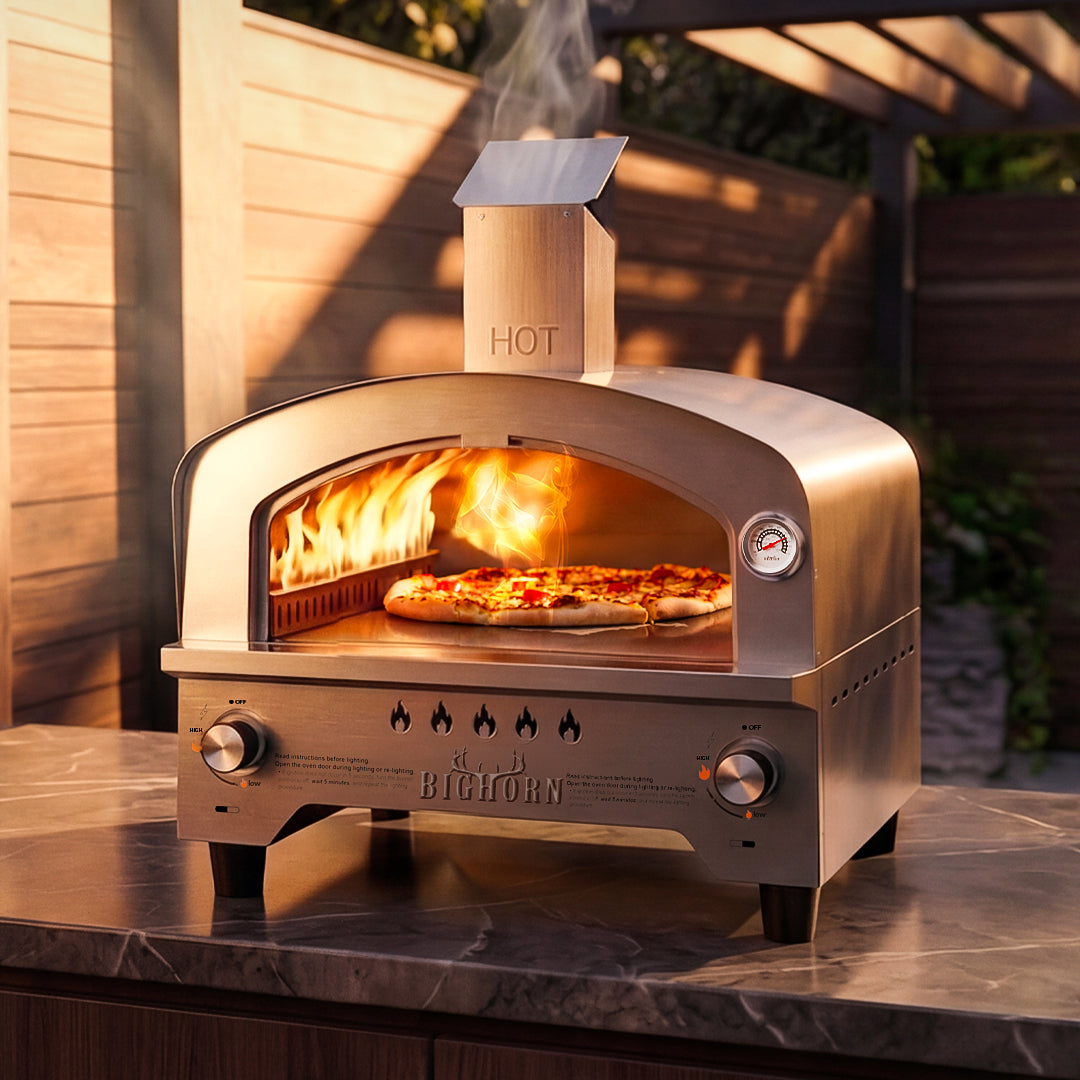
For example, the Big Horn Outdoors 12-inch wood-pellet pizza oven supports three heating options through its modular design:
-
Wood pellets as the original fuel source.
-
Propane through a compatible gas-burner attachment.
-
Electric heating through a compatible electric-heater attachment.
The gas and electric accessories are sold separately for this particular base model.
Its stainless steel construction, folding legs, and listed weight of 24.9 pounds make it a portable outdoor-cooking option. The manufacturer lists temperatures up to 887°F (475°C) when operating under the specified pellet-firing conditions.
Those specifications belong to this exact model, not every multi-fuel pizza oven.
The practical advantage is that you can begin with pellet cooking and add another approved heating method when your routine calls for it.
Who Actually Needs a Multi-Fuel Pizza Oven?
A multi-fuel pizza oven makes sense when you regularly encounter two different cooking situations: occasions when you enjoy managing a real fire and occasions when convenience matters more.
Consider how you normally prepare dinner.
On a Saturday afternoon, you might have time to light hardwood pellets, manage the flame, and experiment with pizza crust.
On a Wednesday evening, you might want to prepare several pizzas without repeatedly checking the firebox.
These situations demand different levels of attention.
A multi-fuel oven lets you choose the appropriate heat source instead of forcing every cooking session into the same routine.
You enjoy wood-fired cooking but want an easier alternative
Wood-fired pizza preparation involves more than reaching a high temperature.
You need to establish combustion, maintain airflow, add fuel when necessary, and monitor how the flame moves across the cooking chamber.
For people who enjoy outdoor cooking as an activity, this involvement is part of the appeal.
However, tending a pellet fire can become inconvenient when preparing food for several guests or cooking after work.
An approved gas conversion provides an alternative for those occasions.
Different household members have different preferences
One person might enjoy managing pellets and experimenting with live-fire cooking.
Another might prefer adjusting a gas burner and concentrating on stretching dough, adding toppings, and turning pizzas.
A compatible multi-fuel system accommodates both preferences without requiring separate ovens.
You want flexibility without committing to every accessory immediately
Not everyone knows which heating method they will prefer after several months of ownership.
Starting with a pellet oven that supports future conversion allows you to learn the original cooking process before purchasing additional equipment.
This approach is particularly useful for first-time pizza oven buyers who are interested in wood-fired cooking but uncertain about the maintenance involved.
The important distinction is whether you have a realistic reason to use the second fuel.
Buying a multi-fuel oven purely because it offers more features does not necessarily improve your cooking experience.
When Is a Single-Fuel Pizza Oven Enough?
A single-fuel pizza oven is enough when one heating method already satisfies your cooking preferences, available space, and regular schedule. Multi-fuel capability does not automatically produce better pizza or make an oven easier to operate.
For some households, adding extra fuel options creates unnecessary equipment and maintenance.
A dedicated gas pizza oven may suit someone who frequently prepares pizza outdoors but does not enjoy managing a fire.
Gas burners provide adjustable heat without the ash associated with burning wood or pellets.
A dedicated pellet oven may suit someone who specifically wants wood-fired cooking and enjoys maintaining the flame throughout the session.
An indoor-rated electric countertop pizza oven may be more appropriate when the primary cooking location is a kitchen rather than a backyard.
The following comparison highlights the practical differences.
| Oven type | Main advantage | Main consideration |
|---|---|---|
| Dedicated gas oven | Adjustable outdoor heat with minimal ash cleanup | Requires an approved gas supply |
| Dedicated pellet oven | Wood-fired cooking experience | Requires fuel management and ash removal |
| Indoor electric oven | Convenient indoor countertop cooking | Must be specifically rated for indoor use |
| Multi-fuel oven | Multiple approved heating methods | May require additional accessories and conversion steps |
There is no requirement to own multiple heating systems to make excellent pizza.
An oven with sufficient heat, a properly preheated stone, and suitable dough can produce excellent results regardless of whether its heat comes from wood pellets or gas.
The right question is not how many fuels an oven supports.
It is how often you would actually use them.
Does Multi-Fuel Cooking Make Pizza Taste Better?
Multi-fuel capability does not automatically improve pizza flavor. Wood pellets can contribute smoke aroma and a distinctive live-fire experience, while gas provides a more controllable heat source without deliberately adding wood-smoke character.
The difference is more nuanced than assuming wood always produces better pizza.
At high temperatures, a pizza may finish cooking in approximately 60–90 seconds, depending on the oven, dough, toppings, and stone temperature.
That short cooking period limits how much smoke flavor can penetrate the food.
Much of the recognizable wood-fired character also comes from the way high heat affects the crust.
How heat creates the pizza crust
When dough enters a properly heated oven, several processes happen simultaneously.
Moisture begins evaporating from the surface. Gas expands inside the dough, contributing to oven spring. The outer crust becomes firmer as heat continues penetrating the pizza.
The Maillard reaction, a chemical reaction involving amino acids and reducing sugars, contributes to browning and roasted flavors.
At sufficiently high temperatures, exposed areas of the crust can develop the characteristic dark spots associated with Neapolitan-style pizza.
These reactions are not exclusive to wood-fired ovens.
Gas ovens can also generate the high temperatures needed for rapid crust development.
The differences lie more in flame behavior, heat distribution, fuel management, and the overall cooking experience.
Why stone temperature matters more than the fuel label
A pizza oven heats food through several mechanisms.
Radiant heat from the flame and hot chamber surfaces affects the exposed crust and toppings. Hot air contributes convective heating, while the stone transfers heat directly into the pizza base through conduction.
If the cooking stone is insufficiently heated, the toppings may finish before the bottom crust develops properly.
That problem can occur in pellet, gas, and multi-fuel ovens alike.
An infrared thermometer helps you check the stone surface before launching a pizza.
For the Big Horn Outdoors 12-inch pellet model, the manufacturer recommends preheating the stone to approximately 660°F before cooking.
A second fuel option cannot compensate for inadequate preheating or poor heat management.
How Do You Choose Between Pellets, Gas, and Electricity?
Choose the fuel according to the experience you want, the cooking location, and the amount of attention you can give the oven. Pellets require active combustion management, gas provides adjustable outdoor heat, and compatible electric heating removes the need to maintain a combustion flame.
Each method changes the practical workflow.
Wood pellets for hands-on outdoor cooking
Food-grade hardwood pellets produce heat through combustion.
As the pellets burn, hot gases and flames transfer energy into the oven chamber and cooking stone.
You must maintain an appropriate fuel supply and airflow to sustain the fire.
Pellet quality matters. Damp pellets may burn inconsistently, create additional smoke, or make ignition difficult.
Store pellets in a dry location and use only fuel approved for your specific oven.
Do not substitute heating pellets containing unsuitable additives for food-grade cooking pellets.
Propane for adjustable outdoor heat
A compatible propane burner provides a controllable flame without requiring you to repeatedly replenish solid fuel.
This can simplify cooking when preparing several pizzas in succession.
However, gas does not eliminate the need to monitor temperatures.
After each pizza, the stone may need time to recover heat before the next dough is launched.
You still need to rotate pizzas, monitor browning, and adjust the burner when necessary.
Electricity for compatible cooking configurations
Electric heating generates heat through an electrical element rather than burning wood or propane.
An approved electric attachment may provide an alternative when managing solid fuel is inconvenient.
However, electric compatibility does not automatically mean an entire multi-fuel oven is approved for indoor operation.
Use an electric configuration indoors only when the exact oven, attachment, and manufacturer's instructions explicitly permit indoor use.
Never operate a pellet fire or propane burner indoors simply because the same oven body also accepts an electric accessory.
If indoor pizza preparation is your primary requirement, a dedicated indoor-rated electric pizza oven may be the more straightforward choice.
How Much Pizza Can a Multi-Fuel Oven Cook?
A multi-fuel oven's pizza capacity depends on its cooking surface and chamber dimensions, not the number of fuels it accepts. A 12-inch cooking format generally suits smaller pizzas, while a 16-inch format provides more room for larger pies.
Changing fuel sources does not increase the cooking surface.
This is easy to overlook when comparing multi-fuel systems with larger dedicated gas ovens.
For example, Big Horn Outdoors offers both 12-inch and 16-inch pellet-and-gas pizza oven configurations.
The larger cooking format can accommodate a larger pizza, but it also requires more consideration for transportation, countertop space, and storage.
Before choosing an oven, think about the number of people you usually feed.
A compact oven may be sufficient for two people preparing individual pizzas.
A family gathering can still be served with a 12-inch oven, but producing several smaller pizzas requires more consecutive baking sessions.
A larger cooking surface may be useful when you want fewer, larger pizzas rather than many smaller ones.
For frequent entertaining, consider heat recovery between pizzas alongside the advertised maximum temperature.
An oven that reaches an impressive peak temperature still needs to restore sufficient heat to the stone after each bake.
Choose pizza capacity first, then decide whether multiple fuel options would improve how you use that capacity.
What Extra Costs and Accessories Should You Consider?
A multi-fuel pizza oven may require additional burners, electric elements, fuel supplies, or conversion hardware. The complete cost depends on what the selected configuration includes and which heating methods you intend to use.
The oven's advertised fuel compatibility and the equipment included in the box are not always the same.
For example, the Big Horn Outdoors 12-inch wood-pellet pizza oven is compatible with separate gas-burner and electric-heater attachments.
Buying the base pellet oven does not mean both conversion accessories are included.
Before purchasing, confirm these details:
-
Whether your preferred second heat source is included or sold separately.
-
Whether the attachment is compatible with the exact oven model.
-
Whether gas hoses, regulators, or other required components are included.
-
Whether you have an appropriate fuel supply or electrical connection.
-
Whether the oven and accessories fit your available storage space.
A practical approach is to purchase only the equipment needed for your current cooking routine.
If you begin with pellets and consistently enjoy that experience, you may never need another attachment.
If maintaining the pellet fire becomes inconvenient during busy cooking sessions, adding a compatible gas burner may become worthwhile.
This approach prevents unused accessories from occupying storage space.
It also allows you to evaluate multi-fuel flexibility through actual cooking habits rather than assumptions about future use.
How Should You Manage Heat, Safety, and Maintenance?
Safe multi-fuel cooking requires following the operating instructions for each approved heating configuration. Do not combine different fuel sources or change hot components unless the exact product manual explicitly permits that procedure.
Fuel flexibility increases your options, but it also introduces additional responsibilities.
Allow the oven to cool before changing fuel systems
A pizza oven can retain substantial heat after the visible flame disappears.
Metal components, the cooking stone, and the firebox may remain hot long after cooking ends.
Follow the manufacturer's shutdown and cooling instructions before removing or installing fuel attachments.
Do not assume a detachable component is safe to handle immediately after switching off the heat.
Keep combustion modes outdoors
Pellet and propane combustion produce gases that must be safely ventilated.
Carbon monoxide is especially dangerous because it is colorless and odorless.
Never operate a combustion-fueled pizza oven inside a home, garage, tent, RV, or other enclosed space.
A covered outdoor location is not automatically suitable either. Follow the model's specified ventilation and clearance requirements.
Position the oven on a stable, appropriate surface and keep combustible materials away from hot surfaces and exhaust openings.
Maintain each heating system properly
Pellet cooking creates ash and combustion residue.
After the oven has cooled completely, remove accumulated ash according to the manufacturer's instructions.
For propane operation, inspect the approved gas components and connections as directed by the manufacturer. Do not use damaged hoses or incompatible regulators.
Electric accessories should be kept dry and inspected for damaged cords or connections before use.
The cooking stone also requires attention.
Avoid exposing a hot stone to cold water or sudden temperature changes, which can cause thermal shock and cracking.
A multi-fuel oven is most convenient when each heating system remains clean, correctly assembled, and ready for its intended use.
Which Multi-Fuel Pizza Oven Fits Your Cooking Routine?
Choose a multi-fuel pizza oven by matching its approved fuel combinations, cooking capacity, and included components to your actual cooking plans. More fuel options are useful only when they solve a problem you expect to encounter.
Big Horn Outdoors offers several configurations for different cooking preferences.
The 12-inch wood-pellet pizza oven provides a starting point for people interested in pellet cooking who may want compatible gas or electric attachments later.
The 12-inch pellet-and-gas configuration suits outdoor cooks who intend to alternate between live-fire cooking and propane convenience.
A pellet-and-electric configuration serves a different preference: maintaining a pellet option while adding an approved electric heating method.
For people who regularly make larger pizzas, the 16-inch pellet-and-gas model provides a larger cooking format.
Before ordering, check the exact product page and selected package to confirm the included heating accessories.
Big Horn Outdoors Expert Views
A multi-fuel pizza oven should give you a practical choice, not an obligation to use every available fuel.
Start by identifying the cooking experience you enjoy most. If managing a pellet fire is part of that enjoyment, begin with pellets. If you also want adjustable heat for busy outdoor pizza nights, consider a compatible gas option.
Focus on the cooking surface, stone temperature, fuel compatibility, and required accessories before comparing the number of heating methods.
The most useful pizza oven is the one that fits your actual cooking routine and makes you want to use it regularly.
Conclusion: Do You Really Need a Multi-Fuel Pizza Oven?
You need a multi-fuel pizza oven when switching heat sources would genuinely improve how often or how comfortably you cook.
If you enjoy wood-fired pizza but sometimes want the convenience of propane, a compatible pellet-and-gas oven provides a practical balance.
If you prefer one consistent outdoor cooking method, a dedicated gas or pellet oven may be sufficient.
If indoor cooking is your priority, begin by considering an electric pizza oven specifically approved for indoor use.
For cooks who want to explore multiple heating methods, the Big Horn Outdoors multi-fuel pizza oven collection includes compact and larger-capacity configurations with different fuel combinations.
Choose the oven based on the fuels you will actually use, not simply the maximum number it can support.
Frequently Asked Questions
Can I use wood pellets and gas at the same time?
Do not combine pellets and propane unless the exact oven's manufacturer explicitly approves simultaneous operation. Many multi-fuel ovens are designed to switch between heating systems rather than operate them together.
Is a multi-fuel pizza oven harder for beginners?
Not necessarily. Beginners can start with one approved fuel and learn basic temperature management before trying another. Adding multiple heating methods introduces additional operating instructions and maintenance requirements.
Can a multi-fuel pizza oven replace a regular kitchen oven?
It can handle suitable pizzas and certain other foods, but it does not necessarily replace a conventional oven. Cooking capacity, temperature control, permitted cookware, and indoor suitability depend on the exact model and heating configuration.
Is a 12-inch multi-fuel pizza oven big enough for a family?
A 12-inch oven can serve a family by producing several pizzas consecutively. A larger cooking surface may be more convenient if you regularly prepare larger pizzas or entertain groups.
Do I need to buy every fuel attachment when purchasing the oven?
No. Purchase the attachments required for the heating methods you intend to use. If you are uncertain whether you need gas or electric conversion, begin with your preferred base fuel and add a compatible accessory when a specific cooking need arises.