
Yes, an electric pizza oven can make crispy pizza when it delivers enough heat to the crust and removes excess moisture during baking. Dedicated electric pizza ovens can reach temperatures up to 850°F, depending on the model. A thoroughly preheated pizza stone, properly stretched dough, and controlled toppings help produce a golden, crisp base without wood or gas.
By the Big Horn Outdoors Product Team
Published: September 19, 2026
Why Can an Electric Pizza Oven Make Crispy Pizza?
An electric pizza oven creates crispy pizza through three processes: direct heat transfer into the dough, moisture evaporation, and surface browning. A sufficiently hot baking stone helps produce a firm, golden bottom crust, while the oven's upper heating element cooks the toppings and browns the exposed edges.
Electric heating elements convert electricity into heat. In a dedicated pizza oven, that energy reaches the pizza through several mechanisms.
Conduction occurs when the dough touches the hot pizza stone. Heat moves directly into the bottom of the crust, helping the dough set and moisture escape.
Radiant heat travels from the heating elements and surrounding hot surfaces toward the pizza. This helps brown the crust and cook the cheese and toppings.
Convection transfers heat through the movement of hot air inside the cooking chamber.
These processes work together, but they do not contribute equally to crispness.
For a pizza with melted cheese and a soft bottom, the problem is often insufficient heat transfer through the baking surface rather than a lack of heat in the oven itself.
The Maillard reaction also contributes to the result. As the dough's surface dries and heats, amino acids and reducing sugars react, producing the browned color and roasted flavor associated with a well-baked crust.
An electric oven does not need a visible flame to produce these reactions.
In fact, electricity can be particularly convenient for home pizza making because the cook can focus on dough preparation, baking temperature, and timing rather than managing fuel combustion.
What Temperature Makes Pizza Crispy in an Electric Oven?
A baking temperature of approximately 450–550°F is a practical starting range for crispy homemade pizza in a conventional electric oven. Dedicated electric pizza ovens can operate considerably hotter, with some reaching 850°F. The appropriate temperature depends on crust thickness, dough formulation, toppings, and desired pizza style.
Higher temperatures generally help dough set quickly and create a browned exterior before the interior loses too much moisture.
However, using the highest possible temperature does not automatically produce the crispiest pizza.
A thick pizza may develop a dark exterior before its center finishes baking. A thin pizza can tolerate faster heat transfer because the dough has less thickness and moisture to cook through.
The following ranges provide general starting points rather than universal settings.
| Pizza Style | Starting Baking Temperature | Desired Crust Texture |
|---|---|---|
| Thin-crust pizza | 500–650°F | Crisp, firm, lightly browned |
| New York-style pizza | 500–650°F | Crisp underside with a flexible interior |
| Neapolitan-style pizza | 750–850°F | Puffy rim, spotted browning, tender center |
| Pan-style pizza | 425–500°F | Crisp exterior with a thicker interior |
| Frozen pizza | Follow package instructions | Fully heated center and appropriately crisp base |
Actual baking time depends on the oven and the thickness of the pizza.
Neapolitan-style pizza deserves particular attention. Although high temperatures create rapid browning and distinctive blistering, traditional Neapolitan pizza is not uniformly crunchy. It typically has a soft, pliable center.
For someone who wants a distinctly crispy pizza, a thin-crust or New York-style preparation may be more suitable.
How Does the Big Horn Outdoors Electric Pizza Oven Handle High Heat?
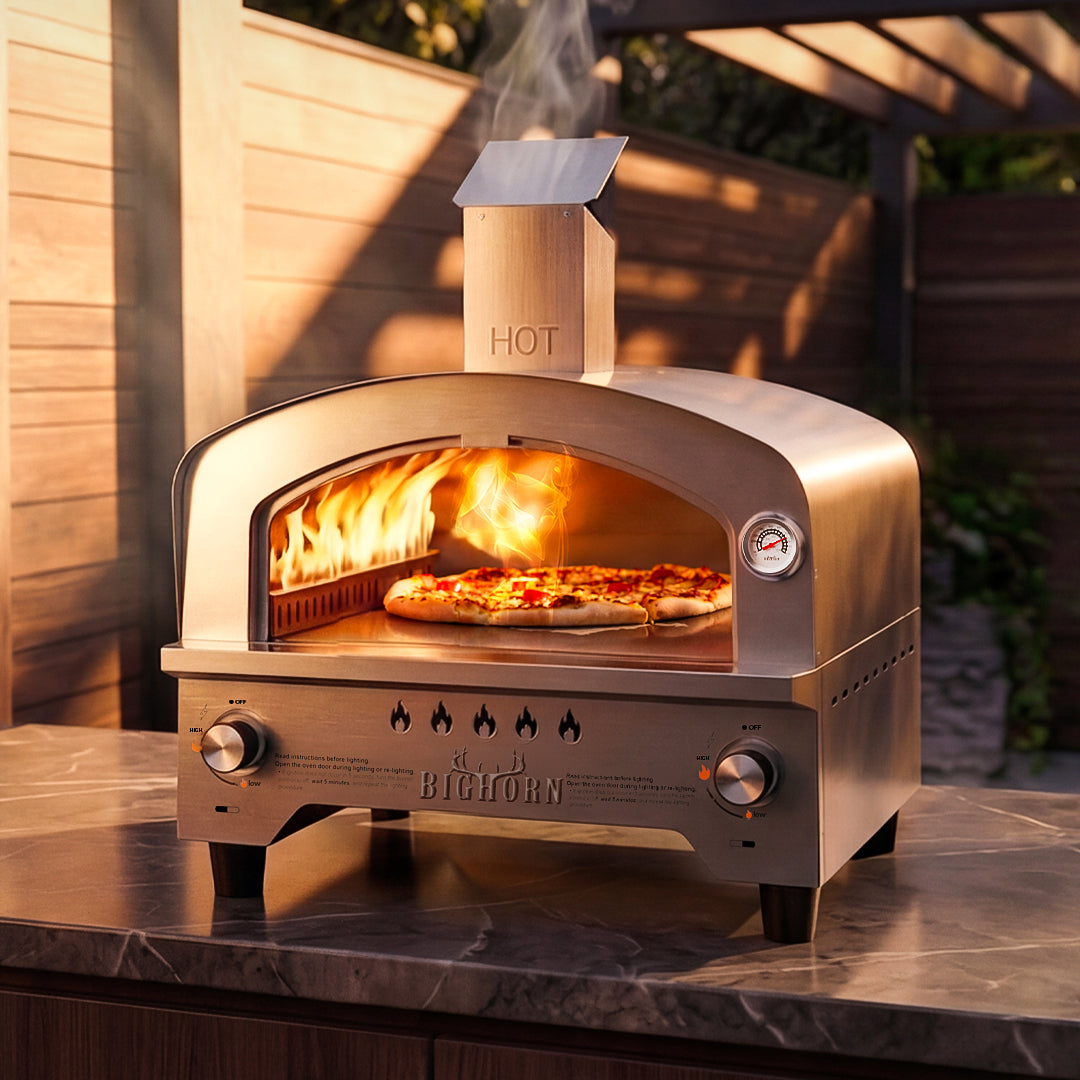
The Big Horn Outdoors 14-inch indoor electric countertop pizza oven is designed for high-temperature pizza baking without wood or gas.
According to its official product specifications, the model offers:
-
A temperature range of 220–850°F.
-
An 1,800-watt heating system.
-
Upper and lower heating tubes.
-
A 14-inch pizza stone.
-
Six cooking programs: Manual, Wood Fired, Frozen, New York, Thin Crispy, and Deep Dish.
-
An advertised preheating time of approximately 15 minutes.
The manufacturer also lists a cooking time of approximately three minutes for a 14-inch pizza under suitable conditions.
These capabilities are specific to this model and should not be assumed for every electric pizza oven.
For a crisp-bottom pizza, the relevant advantage is the combination of a heated baking surface and controlled heat above and below the dough.
How Does a Pizza Stone Create a Crispy Crust?
A pizza stone improves crust crispness by storing heat and transferring it directly into the dough through conduction. When properly preheated, the stone supplies energy to the pizza's underside faster than hot air alone, helping moisture evaporate and the crust brown.
The distinction between oven temperature and stone temperature is important.
An electric pizza oven may display its selected temperature while its baking surface is still heating. The stone needs time to absorb energy throughout its thickness.
Launching pizza too early can produce a familiar result: melted cheese, browned edges, and a pale, flexible bottom.
Why Is Preheating Important?
A stone that has not reached an appropriate baking temperature cannot transfer enough heat into the dough during the critical early stage of cooking.
For a conventional electric oven, pizza stones commonly require approximately 30–60 minutes of preheating, depending on the equipment and baking temperature.
Dedicated countertop pizza ovens may heat considerably faster.
The Big Horn Outdoors 14-inch indoor electric pizza oven, for example, advertises a preheating time of approximately 15 minutes.
Nevertheless, preheating performance varies with the oven, selected temperature, stone construction, and starting conditions.
An infrared thermometer can help assess the baking surface, provided its temperature range is suitable for high-heat pizza cooking.
Measure the stone itself rather than relying exclusively on the oven's air-temperature display.
Should Pizza Go Directly on the Stone?
For traditional thin-crust pizza, placing the dough directly on the preheated stone helps maximize bottom heat transfer.
A baking tray introduces another layer between the stone and the dough.
That arrangement can be appropriate for pan pizza, but it produces a different heating pattern from direct stone baking.
Use a pizza peel to transfer the assembled pizza onto the stone. Lightly dusting the peel with flour or semolina can help prevent sticking.
Avoid excessive loose flour, which may burn on the hot baking surface.
Which Dough and Toppings Produce the Crispiest Pizza?
A moderately hydrated dough, relatively thin center, restrained sauce layer, and well-drained toppings create favorable conditions for crispy pizza. For a thin-crust electric-oven recipe, approximately 60–65% dough hydration can be a useful starting point, although the ideal percentage varies with flour and pizza style.
Dough hydration describes the weight of water relative to the weight of flour.
For example, dough containing 1,000 grams of flour and 620 grams of water has 62% hydration.
Higher-hydration dough can produce an airy interior, but its additional water must evaporate before the exposed surfaces become crisp.
Lower-hydration dough may crisp more readily, although reducing water too far can make the finished crust excessively dry or dense.
The objective is not to eliminate moisture. It is to balance a crisp exterior with the desired interior texture.
Does Dough Thickness Affect Crispiness?
Yes. Thin dough generally develops a crisp texture faster because heat has less distance to travel before the center is cooked.
For a thin-crust pizza, stretch the center evenly and avoid leaving thick patches.
Keep the rim slightly thicker if you want an airy edge, but do not allow the middle to become so thin that wet toppings tear through it.
A consistent thickness also helps prevent one section from burning while another remains soft.
Can Too Much Sauce Make Pizza Soggy?
Yes. Excess sauce adds moisture that must evaporate during baking, and a thick layer can leave the dough beneath it soft.
Spread sauce thinly and avoid concentrating it in the center.
Fresh mozzarella, mushrooms, tomatoes, spinach, and some canned vegetables can introduce additional water.
For better results:
-
Drain fresh mozzarella before adding it.
-
Remove excess moisture from canned ingredients.
-
Pre-cook particularly watery vegetables when appropriate.
-
Avoid piling toppings heavily in the center.
-
Assemble the pizza shortly before baking.
A pizza does not need to be sparsely topped to become crispy, but its toppings must be compatible with the crust thickness and baking time.
A Practical Method for Crispy Electric-Oven Pizza
Crispy pizza depends on the sequence of preparation as much as the oven itself. Preheat the baking surface, stretch the dough evenly, control topping moisture, and bake until the underside is properly browned. Finally, transfer the finished pizza to a wire rack so trapped steam does not soften the crust.
The following method provides a repeatable starting point for home cooks.
Step 1: Preheat the Electric Pizza Oven
Place the manufacturer's approved baking stone inside the oven according to the operating instructions.
Select a temperature appropriate for the pizza style.
For a dedicated high-temperature oven, the Thin Crispy or comparable preset may provide a convenient starting point.
Allow the oven to complete its recommended preheat cycle.
Step 2: Prepare the Dough
Bring refrigerated dough toward room temperature according to the recipe.
Stretch it into a relatively thin, even round.
If the dough repeatedly contracts, allow it to rest briefly before continuing.
Excessive stretching can tear the center, so work gradually rather than forcing it into shape.
Step 3: Add the Toppings
Apply a thin layer of pizza sauce.
Distribute cheese and toppings evenly without creating a heavy mound in the middle.
If using fresh mozzarella, drain it thoroughly.
The objective is to let heat reach and cook the dough before moisture from the toppings saturates the center.
Step 4: Bake on the Hot Stone
Transfer the pizza from the peel directly onto the preheated stone.
Close the oven promptly to limit heat loss.
Observe the crust and toppings as cooking progresses.
If the oven has a noticeably hotter side, rotate the pizza when it can be moved safely without disturbing the toppings.
Avoid repeatedly opening the door, because each opening releases heat.
Step 5: Check the Underside
A finished crispy pizza should have a browned underside rather than a pale or damp-looking center.
Use the peel to lift an edge and inspect the crust.
If the cheese is already browning rapidly but the bottom remains pale, extending the baking time may burn the toppings before correcting the crust.
For the next pizza, improve stone preheating or adjust the heating balance if the oven provides that control.
Step 6: Rest the Pizza on a Wire Rack
Remove the pizza and place it on a wire cooling rack for approximately one minute.
This allows steam to escape from beneath the crust.
Leaving a hot pizza on a solid cutting board or plate can trap moisture against its underside and reduce crispness.
Slice and serve once the toppings have settled slightly.
Electric Pizza Oven Problems and Their Solutions
When an electric pizza oven produces a soft crust, the most useful troubleshooting approach is to identify whether the problem comes from insufficient bottom heat, excessive moisture, dough thickness, or heat imbalance. Changing one variable at a time makes the next baking attempt easier to evaluate.
The following table connects common symptoms with practical adjustments.
| Problem | Possible Cause | Practical Adjustment |
|---|---|---|
| Pale, soft bottom | Stone insufficiently heated | Extend preheating within the manufacturer's instructions |
| Burned toppings, undercooked base | Excessive upper heat or insufficient bottom heat | Adjust heating balance if supported |
| Soggy center | Excess sauce or wet toppings | Reduce sauce and drain ingredients |
| Hard, dry crust | Excessive baking or unsuitable dough formulation | Review baking time and dough hydration |
| Uneven browning | Uneven dough or heat distribution | Stretch evenly and rotate when needed |
| First pizza crispy, second pizza soft | Stone has not recovered enough heat | Allow additional reheating between pizzas |
The order of troubleshooting matters.
Start by checking the stone's readiness and the pizza's underside.
If bottom heat appears adequate, examine the dough and toppings.
A pizza that emerges crisp but softens several minutes later may need better moisture management after baking rather than a higher oven temperature.
Recording the selected temperature, baking time, dough thickness, and result can also make future adjustments more consistent.
Electric Pizza Oven Safety and Maintenance
A high-temperature electric pizza oven should be operated on an appropriate heat-resistant surface with the ventilation clearances specified by its manufacturer. Pizza stones must be protected against thermal shock, and the oven should cool completely before cleaning or moving.
An electric oven eliminates the need to manage burning wood or gas, but it still operates at temperatures capable of causing severe burns.
Important precautions include keeping hands away from the heating elements, using a suitable pizza peel, and avoiding contact with the oven's hot surfaces.
Only use the appliance in locations approved by its manufacturer.
For indoor countertop models, maintain the required space around the appliance and keep combustible objects away.
Do not assume that an outdoor electric pizza oven is suitable for indoor operation simply because it uses electricity.
How Should You Clean a Pizza Stone?
Allow the stone to cool completely before cleaning.
Remove loose food and baked-on residue using a suitable scraper or brush, following the manufacturer's care instructions.
Avoid suddenly cooling a hot stone with water.
Rapid temperature changes can cause thermal shock, potentially cracking the stone.
Do not soak an unglazed stone or use soap unless its manufacturer specifically permits that method.
For a countertop oven with a removable stone, follow the product manual for removal, cleaning, drying, and reinstallation.
Is an Electric Pizza Oven Better for Crispy Pizza Than Gas or Wood?
Electric, gas, and wood-fired pizza ovens can all produce crispy crusts when their baking surfaces reach suitable temperatures. The principal differences involve temperature control, cooking environment, fuel management, portability, and flavor development rather than whether the heat source can make pizza crispy.
A dedicated electric pizza oven is particularly practical when indoor operation, repeatable settings, and avoiding fuel storage are important.
Gas pizza ovens offer adjustable flame-based heating and can be useful in outdoor kitchens.
Wood-fired ovens introduce a different cooking experience through combustion, fuel management, and the possibility of smoke-derived flavor.
However, fuel type alone does not determine crust texture.
A poorly preheated wood-fired oven can produce a pale bottom, while a properly heated electric oven can produce a crisp, browned crust.
Big Horn Outdoors Expert Views
The key to crispy pizza is matching bottom heat to the dough and toppings. A hot baking surface develops the crust, while upper heat finishes the exposed dough and ingredients. When these processes are balanced, an electric pizza oven can produce the browned underside, crisp edge, and tender interior associated with well-made pizza.
For home cooks, the most useful starting adjustments are stone preheating, dough thickness, and topping moisture. Higher temperatures can help, but they should suit the pizza style rather than simply being set to the oven's maximum.
— Big Horn Outdoors Product Team
What Should You Consider Before Buying an Electric Pizza Oven?
For someone primarily interested in crispy homemade pizza, the most useful product attributes are maximum baking temperature, baking-surface design, temperature control, pizza capacity, and suitable installation environment.
A dedicated electric pizza oven with a stone and separate upper and lower heating systems can offer more flexibility than a basic countertop appliance intended for general baking.
Preset cooking programs can also simplify the learning process.
The Big Horn Outdoors 14-inch indoor electric countertop pizza oven includes a Thin Crispy program alongside modes for other pizza styles.
That makes it relevant for households interested in experimenting with different crust textures without managing wood or gas.
Buyers should still check the exact model's specifications, electrical requirements, countertop clearance, and included accessories before purchasing.
For someone who usually cooks frozen pizza or only makes pizza occasionally, an existing conventional electric oven with a suitable pizza stone may already provide satisfactory results.
The decision depends on how frequently pizza is prepared and how much control over baking temperature and crust texture is desired.
Conclusion: Can an Electric Pizza Oven Deliver a Crispy Crust?
Yes. An electric pizza oven can produce crispy pizza without relying on wood or gas.
The most important factors are a sufficiently hot baking surface, an appropriate dough formulation, controlled topping moisture, and balanced heat above and below the pizza.
Dedicated high-temperature electric pizza ovens offer additional flexibility for different pizza styles, while conventional electric ovens can also achieve good results with a properly preheated stone or steel.
For home cooks, the most productive approach is to begin with a simple thin-crust pizza, establish a consistent baking process, and adjust temperature, dough thickness, or toppings one at a time.
The goal is not simply to bake pizza at the highest possible temperature. It is to develop a crust that is crisp where it should be, tender where it needs to be, and properly cooked throughout.
Frequently Asked Questions
Can an Electric Pizza Oven Make Restaurant-Style Pizza?
Yes. A dedicated electric pizza oven with a high-temperature baking surface can produce the browning and crust texture associated with many restaurant-style pizzas. The result depends on the oven's capabilities, dough preparation, and baking technique.
Does an Electric Pizza Oven Need a Pizza Stone?
Not every electric pizza oven requires a stone, but a suitable baking surface is important for a crisp bottom. Use the stone, steel, or other surface specified by the manufacturer rather than adding incompatible accessories.
Can You Make Crispy Frozen Pizza in an Electric Pizza Oven?
Yes. Follow the frozen pizza's cooking instructions and use a suitable oven setting. A fully preheated baking surface can improve bottom browning, but frozen pizzas designed for lower temperatures should not automatically be baked at an oven's maximum setting.
Why Does Pizza Become Soft After Leaving the Oven?
Steam escaping from the hot crust can collect underneath the pizza when it rests on a solid plate or cutting board. Placing it briefly on a wire rack allows moisture to escape and helps preserve the crispy texture.
Can an Electric Pizza Oven Make Crispy Pizza Without Oil?
Yes. Oil is not required for crispy pizza because direct heat transfer and moisture evaporation are the main mechanisms. Small amounts of oil in some dough recipes can contribute to browning and texture, but a properly preheated baking surface remains essential.