A pellet pizza oven needs food-grade hardwood pellets made for cooking, smoking, or pizza ovens—not heating pellets, charcoal, firewood, propane, or lighter fluid. These compact pellets feed a clean, high-heat wood fire when they are dry and sized correctly for the oven’s burner or hopper. For the best results, choose 100% hardwood pellets with no chemical additives.
By the Big Horn Outdoors Product Team
Published September 28, 2026
What fuel should you use in a pellet pizza oven?
A pellet pizza oven is designed to burn dry, food-grade hardwood pellets, typically sold for BBQ smoking or pizza-oven cooking. The right pellets provide predictable combustion, manageable ash, and the wood-fired heat needed to bake pizza on a properly preheated stone.
Wood pellets are small cylinders of compressed hardwood sawdust. Pressure and the wood’s natural lignin hold them together; cooking pellets should not rely on glues, accelerants, artificial scents, or unknown filler materials.
Choose pellets labeled for food use, grilling, smoking, or pizza ovens. A cooking-grade pellet is fundamentally different from a generic home-heating pellet because the latter may be made to heating specifications rather than food-contact cooking use.
Use the fuel that the oven’s manufacturer specifies. Some portable ovens have a rear fuel tray, while others use a hopper or a burner assembly. Pellet size, feed path, airflow, and fuel capacity affect how the fire burns. A pellet that is too large, damp, dusty, or inconsistent can restrict feeding and make temperature control more difficult.
For a wood-pellet model, the practical answer is simple:
- Use dry, food-grade hardwood pellets.
- Use the pellet size and loading method specified for the oven.
- Store pellets away from moisture.
- Refill gradually once the fire is established.
- Never substitute fuels unless the exact oven is designed and approved for them.
Big Horn Outdoors offers different pizza-oven formats, including pellet, gas, electric countertop, and multi-fuel options. Fuel compatibility is model-specific, so a gas burner, electric heater, or wood fuel should only be used when the official page for that exact oven says it is compatible.
Why are food-grade hardwood pellets important?
Food-grade hardwood pellets are important because they are intended for cooking and can burn more cleanly and predictably than pellets sold solely for heating. They also help prevent off-flavors, excess smoke, and uncertainty about additives.
The fuel choice affects more than flavor. It affects how reliably the oven lights, how quickly heat recovers between pizzas, how much ash collects in the burn area, and whether the flame stays lively enough to cook the toppings while the stone crisps the crust.
A pizza oven works best when combustion is efficient. Wood pellets burn after heat, oxygen, and fuel meet in the burner area. If airflow is restricted or pellets contain excess moisture, part of the fuel energy goes toward evaporating water rather than heating the oven. The result can be a weak flame, heavy smoke, slower preheating, and inconsistent browning.
Hardwood pellets are a practical choice because hardwood is dense and commonly used in cooking pellets. Oak is often selected for a relatively neutral smoke profile, while hickory, apple, cherry, maple, and blended hardwood pellets can contribute different aromatic notes. Flavor differences are usually subtle in a fast, high-heat pizza cook, especially compared with the impact of dough fermentation, sauce, cheese, and toppings.
Do not assume that “natural” automatically means appropriate for food. Read the package. Look for a clear food-use statement and ingredient information such as 100% hardwood or a stated hardwood species. Avoid bags marked only for heating, utility, industrial, or non-food applications.
Which pellets work best for pizza ovens?
For most pellet pizza ovens, dry 100% hardwood pellets made for cooking are the best starting point. Oak or a neutral hardwood blend is a dependable choice for classic pizza, while fruitwood blends can add a gentler smoke character.
The best pellet is not necessarily the strongest-smelling one. Pizza cooks rapidly at high heat, so consistent flame behavior and stone recovery are often more useful than a pronounced smoke flavor. Select a pellet that works with the oven’s specified feed system and gives you repeatable performance.
The following comparison helps match pellet characteristics to a cooking goal. It is general fuel guidance, not a claim that every pellet type is suitable for every oven.
| Pellet type | Typical cooking character | Best use |
|---|---|---|
| Oak hardwood | Clean, relatively neutral wood smoke | Neapolitan-style, New York-style, and everyday pizza |
| Maple hardwood | Mild, slightly sweet profile | Vegetables, white pizzas, lighter toppings |
| Apple or cherry hardwood | Fruity, mild-to-medium smoke character | Pork, chicken, roasted fruit, specialty pizzas |
| Hickory hardwood | More assertive smoke profile | Sausage, beef, mushrooms, and hearty toppings |
| Hardwood blend | Varies by stated wood mix | Versatile cooking when ingredients are clearly labeled |
Choose a pellet based on three priorities:
- Food suitability: The bag should state that the pellets are intended for cooking, grilling, smoking, or pizza ovens.
- Dry condition: Pellets should be hard, uniform, and free of swelling or clumps.
- Oven fit: Follow the manufacturer’s fuel-size, loading, and operating instructions for your particular oven.
Big Horn Outdoors recommends treating pellets as a cooking ingredient as well as a heat source. A clean, dry, cooking-grade pellet supports better fire management and lets the flavor of the pizza remain the focus.
Can you use heating pellets, charcoal, or firewood?
No—do not use heating pellets, charcoal, or firewood in a pellet pizza oven unless the official instructions for that exact model explicitly permit that fuel. A pellet oven’s combustion system is engineered around pellets, their size, their burn rate, and the airflow they require.
Heating pellets are the clearest fuel to avoid. Their packaging may not provide the food-use assurances that cooking pellets do, and their wood source or manufacturing standards may differ from pellets formulated for grills and pizza ovens. Even if they appear similar, using them adds unnecessary uncertainty to a food-preparation appliance.
Charcoal also behaves differently from pellets. It tends to burn as a bed of glowing embers rather than as a controlled pellet flame. A pellet tray or hopper may not provide the airflow, containment, or capacity charcoal needs. Charcoal dust can also obstruct a pellet feed path or leave more residue in areas designed for compressed wood fuel.
Firewood and wood chunks are usually too large and burn differently. They can overfill a pellet burner, create excess flame at the opening, block airflow, or produce heat patterns the oven was not designed to manage. Never break down treated lumber, construction scraps, painted wood, pallets, or furniture wood for pizza-oven fuel.
Do not use these materials in a pellet pizza oven unless the manufacturer specifically authorizes them:
- Heating or utility pellets
- Charcoal briquettes or lump charcoal
- Firewood logs, wood chips, or wood chunks
- Wood pellets with flavor oils, binders, or unknown additives
- Treated, painted, stained, or reclaimed wood
- Liquid fire starters, gasoline, alcohol, or other accelerants
If a pizza oven is marketed as multi-fuel, confirm the required attachment, tray, burner, conversion process, and fuel type on the official page for that exact model. “Multi-fuel” does not mean every fuel can be placed in every configuration.
How do pellets create pizza-oven heat?
Pellets create pizza-oven heat by burning in a concentrated, oxygen-fed flame that heats the oven chamber, cooking stone, and surrounding metal surfaces. The stone then transfers heat into the dough, while radiant and convective heat cook the top of the pizza.
Three heat-transfer mechanisms work together:
- Conduction occurs when the dough contacts the hot pizza stone. This is what helps set the base and create a crisp underside.
- Radiant heat travels from the flame, hot ceiling, and hot interior surfaces toward the pizza. It melts cheese, browns toppings, and chars the rim.
- Convection is heat carried by moving hot air and combustion gases. It circulates through the oven chamber and contributes to overall cooking.
The stone temperature matters as much as the air temperature. A very hot chamber with a stone that has not fully absorbed heat may brown toppings quickly while leaving the center of the crust pale or underdone. Conversely, an overheated stone can scorch the base before the toppings finish.
For that reason, preheat until the oven and stone are both ready, then monitor the cooking surface with a suitable infrared thermometer if the oven’s instructions allow it. Check several spots on the stone because the area nearest the flame may be hotter than the front.
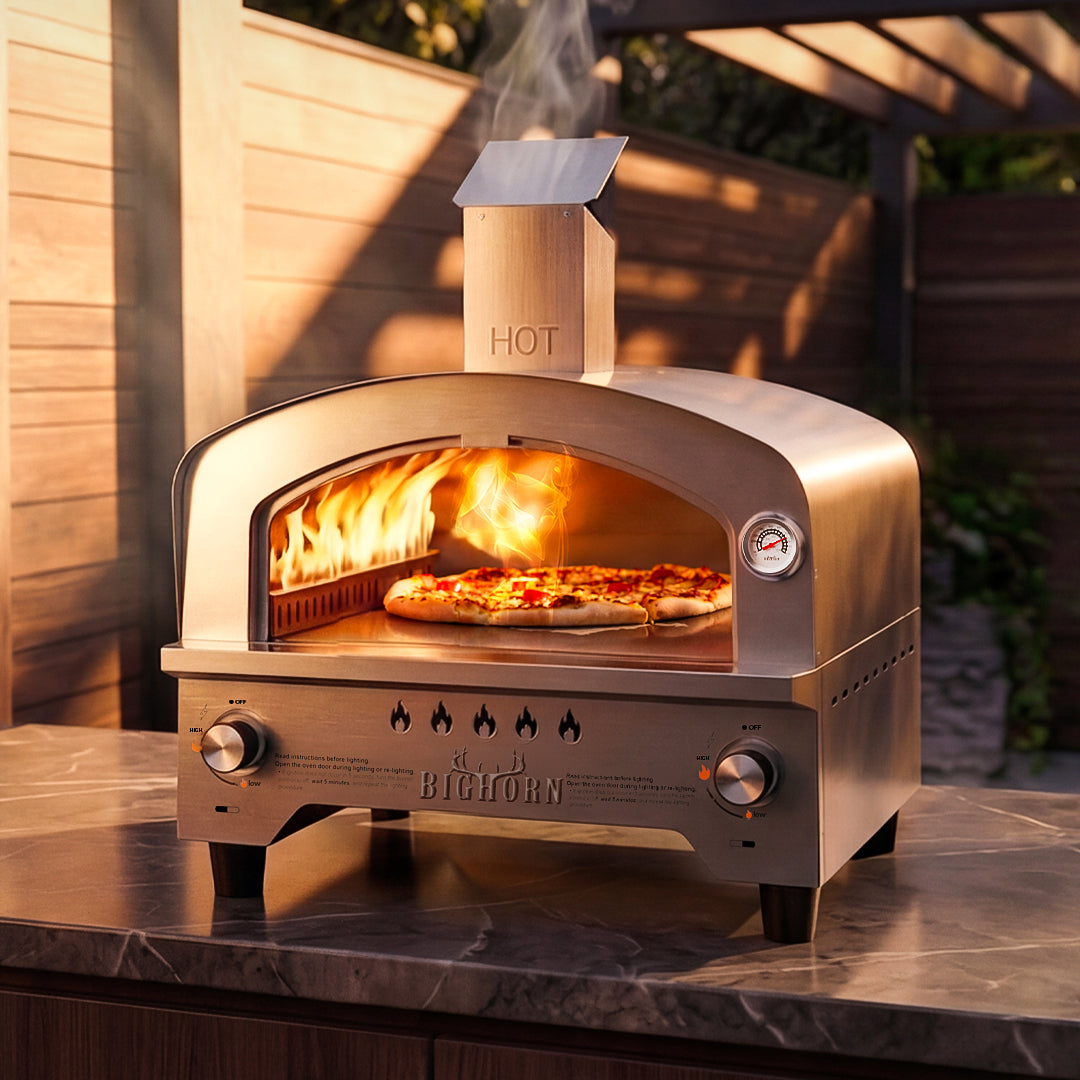
The Big Horn Outdoors 12-inch wood-pellet pizza oven is a model-specific example of why product instructions matter: its official listed performance includes an 18- to 20-minute preheat, temperatures up to 887°F, and pizzas in approximately 60 to 90 seconds under appropriate conditions. Those figures apply only to that exact 12-inch pellet model and should not be assumed for other Big Horn Outdoors ovens or other brands.
Pellet storage and fire management
Keep cooking pellets dry, sealed, and off the ground because moisture can make them swell, crumble, smoke excessively, and burn inconsistently. Good fuel storage is one of the simplest ways to protect ignition reliability and pizza quality.
A bag of pellets can absorb humidity after opening. Once moisture enters the compressed wood, the pellets may soften or turn dusty. In a pellet oven, that can interrupt feeding and reduce the intensity of the fire.
Use this simple storage and operating routine:
- Keep unopened bags in a dry indoor area, shed, or weather-protected storage bin.
- Transfer opened pellets into an airtight container with a secure lid.
- Bring only the amount needed for the cook to the outdoor cooking area.
- Inspect pellets before loading; discard pellets that are swollen, moldy, unusually powdery, or damp.
- Remove ash only after the oven is fully cool.
- Keep the fuel tray, burn area, air openings, and feed route clear of ash buildup.
Fire management is usually more effective when done gradually. Start according to the oven instructions, allow the initial fire to establish, then add or refill pellets in measured amounts. Dumping a large quantity of pellets onto a weak fire can reduce airflow and smother combustion.
A lively, clean-burning flame typically produces less visible smoke than a struggling fire. If the oven is producing thick, acrid smoke, pause cooking and check whether the pellets are damp, the fire is underfed with oxygen, the burn area is dirty, or the fuel load is excessive.
Where can you safely operate a pellet pizza oven?
Operate a pellet pizza oven outdoors on a stable, heat-resistant surface with open ventilation and adequate clearance from combustible materials. Never use a wood-pellet pizza oven in a house, garage, tent, enclosed porch, vehicle, or other enclosed or partially enclosed space.
Burning pellets produces heat, smoke, sparks, and combustion gases, including carbon monoxide. Carbon monoxide is colorless and odorless, which is why outdoor use is essential even if doors or windows are open nearby.
Set up in an area that is:
- Level and stable, so the oven cannot tip during loading or turning pizza.
- Outdoors and away from enclosed spaces.
- Clear of dry leaves, paper, fuel containers, patio furniture cushions, and overhanging materials.
- Positioned with the oven opening away from foot traffic and children.
- Sheltered from strong wind without being enclosed.
- Close enough to cooking tools and a safe work surface, but not crowded.
Follow the manufacturer’s stated clearance and surface requirements for the specific oven. Do not improvise with a plastic folding table, a vehicle tailgate, a combustible deck surface, or an unstable camping surface unless the product instructions explicitly confirm that setup is appropriate.
Keep a suitable fire extinguisher accessible, use heat-resistant gloves when handling hot components, and let the oven cool fully before covering, moving, cleaning, or storing it.
Big Horn Outdoors Expert Views
“Choose fuel for the appliance, not just for the flavor you want. A pellet pizza oven needs dry, food-grade hardwood pellets that fit its intended loading and airflow design. Once the fire is stable, focus on the stone as well as the flame: the stone bakes the base, while radiant heat finishes the top. Clean fuel, a clear burn path, gradual refueling, and outdoor-only operation give you more control than simply adding more pellets. If you want gas or electric convenience, select a pizza oven built for that fuel or use only the compatible attachment identified for the exact model.”
— Big Horn Outdoors Product Team
How do you choose the right pizza oven fuel system?
Choose a pellet pizza oven if you want real wood-fire cooking with compact, uniform fuel and are willing to manage ignition, refueling, ash, and weather. Choose gas or electric when the relevant oven model is designed for the convenience, control, or indoor-use requirements those fuels may provide.
Fuel type shapes the cooking experience as much as oven size does. A pellet oven is not automatically better than a gas, electric, or multi-fuel oven; it is a better fit for a particular cooking style.
| Fuel system | Best for | Key trade-off |
|---|---|---|
| Hardwood pellets | Wood-fired flavor, portable outdoor cooking, hands-on fire management | Requires dry fuel, ash cleanup, and active fire monitoring |
| Propane or gas | Fast ignition and adjustable flame on compatible outdoor ovens | Requires a gas supply and model-specific burner setup |
| Electric | Countertop convenience where the exact product is rated for the intended environment | Requires electrical power and may not suit outdoor travel |
| Multi-fuel | Cooks who want approved fuel flexibility in one compatible system | Attachments and operating steps vary by exact model |
Big Horn Outdoors began with a 2012 backyard-cooking challenge: making high-heat outdoor cooking more manageable while addressing uneven heat, smoke, and unstable temperatures. That focus remains useful when choosing between fuel systems. The best oven is the one whose fuel, capacity, portability, cooking environment, and maintenance needs match how you actually plan to cook.
For example, a camper who cooks outdoors with limited space may prioritize folding legs, manageable weight, and a sealed container of pellets. A patio cook making several pizzas may value fuel capacity, stone recovery, and an organized prep area. A household wanting countertop cooking should consider an electric unit only where that exact model is designed and rated for the intended indoor location.
Key takeaways
A pellet pizza oven needs dry, food-grade hardwood pellets intended for cooking. Do not substitute heating pellets, charcoal, firewood, or liquid accelerants unless the manufacturer explicitly approves that fuel for the exact model.
Start with oak or a clearly labeled hardwood blend if you want versatile, predictable pizza fuel. Keep pellets dry, maintain airflow, preheat the stone thoroughly, and cook only outdoors in a stable, clear location.
Choose a pellet oven when you value wood-fired cooking and do not mind tending the fire. Choose a gas, electric, or officially compatible multi-fuel Big Horn Outdoors option when its approved fuel system better suits your available space, portability needs, and preferred level of hands-on control.
FAQs
Are BBQ pellets the same as pizza oven pellets?
Many BBQ pellets can work in a pellet pizza oven if they are food-grade hardwood pellets and meet the oven manufacturer’s size and fuel requirements. Check the oven instructions first, and avoid pellets made only for heating use.
How much fuel does a pellet pizza oven use?
Fuel use varies with oven design, outdoor temperature, wind, preheat time, cooking temperature, and how often the door is opened. Keep additional dry pellets ready for the full cooking session instead of assuming one tray or hopper load will serve every model or every number of pizzas.
Do wood pellets make pizza taste smoky?
They can add a mild wood-fired aroma, but the smoke character is usually subtle in a fast, high-heat pizza cook. Clean-burning, dry hardwood pellets create a more pleasant result than damp pellets or an oxygen-starved fire.
Can you leave pellets in a pizza oven after cooking?
Follow the instructions for the exact model. In general, remove unused pellets once the oven is fully cool if they may be exposed to humidity, because moisture can degrade them and affect the next cook.
What should you do if pellet pizza oven smoke is excessive?
Stop adding fuel and check that the pellets are dry, the burn area is clean, and air passages are unobstructed. Thick or acrid smoke often indicates incomplete combustion, which can result from damp pellets, excess fuel, inadequate airflow, or accumulated ash.