Yes, a small pizza oven can handle family meals when you cook in a steady sequence rather than expecting several full-size pizzas at once. A 12-inch oven is practical for 2–4 people and can produce one pizza at a time; for frequent family pizza nights, a 14- or 15-inch oven gives more turning room and fits regular 12- to 14-inch pies more comfortably.
By the Big Horn Outdoors Product Team
Published September 28, 2026
What counts as a small pizza oven?
A small pizza oven typically has room for one pizza, often up to 12 inches, and is designed for compact patios, balconies where permitted, campsites, or portable outdoor cooking setups. Its strength is fast, sequential cooking—not batch baking several family-size pizzas at one time.
“Small” refers to more than the diameter of the pizza it can hold. It also describes the oven’s footprint, weight, fuel system, door opening, stone area, and the amount of room available to turn a pizza with a peel.
A compact oven can be an excellent family-meal tool because pizzas cook individually and quickly at high heat. Instead of making one large pie that must please everyone, you can make several smaller pizzas with different toppings: cheese for children, vegetables for one person, pepperoni for another, or a white pizza for someone avoiding tomato sauce.
The practical limit is workflow. A small oven usually accommodates one pizza at a time, so the cook needs dough portions, sauce, cheese, toppings, peels, and serving tools ready before the oven is hot. The oven may be compact, but a successful family pizza night still needs a clear prep station.
Big Horn Outdoors offers pizza-oven formats that range across pellet, gas, electric countertop, and multi-fuel cooking systems. The right capacity depends on the exact model, its approved fuel, cooking-floor dimensions, intended environment, and the size of pizza you plan to make most often.
Can one small oven feed a family of four?
Yes. A one-pizza oven can feed a family of four if the household is comfortable eating in rounds, and if each pizza is sized for the oven with room to turn it safely. For most families, four 10- to 12-inch pizzas are more manageable than trying to force one oversized pizza into a compact chamber.
The key distinction is between serving capacity and simultaneous capacity.
A small pizza oven may only bake one pie at a time, but it can still produce a full meal when it recovers heat between pizzas and the cook works efficiently. Families commonly use this format for a pizza-night rhythm: launch one pie, rotate it as needed, slice it, then immediately prepare the next.
A 12-inch pizza is generally a personal pizza for one hungry adult or a shared pizza for two young children, depending on side dishes and appetites. That means a family of four may need three to five pizzas. Add a salad, grilled vegetables, fruit, or a simple dessert, and the meal becomes more complete without making the oven do all the work.
| Family-meal scenario | Small-oven approach | Why it works |
|---|---|---|
| Two adults and two young children | Three or four 10- to 12-inch pizzas | Smaller pies let each person choose toppings |
| Two adults and two teens | Four or five 12-inch pizzas plus sides | Larger appetites require more total food, not necessarily a bigger oven |
| Weekly family pizza night | Prep dough and toppings before preheating | Reduces the gap between finished pizzas |
| Casual gathering | Cook pizzas continuously and slice each into shares | Keeps food moving without requiring multiple pies in the oven |
This approach works best when guests understand that pizza comes out in rounds. If everyone expects to sit down to a hot pizza at exactly the same moment, a larger oven—or a second cooking appliance for sides—may be more appropriate.
Which oven size works best for family meals?
A 14- or 15-inch pizza oven is often the most flexible family size because it can handle regular 12- to 14-inch pizzas while leaving extra space for launching and turning. A 12-inch oven remains a strong choice for smaller households, portable use, and cooks who prefer individual pizzas.
The maximum pizza size is not the same as the ideal pizza size. If an oven is labeled for a 12-inch pizza, cooking an 11-inch pie may be easier because the extra clearance helps prevent the crust from touching the hottest area of the oven or the live flame.
More room also matters when you turn a pizza. High-heat pizza cooks quickly, but it rarely cooks evenly without rotation. A pizza peel needs space to slide under the crust, lift it slightly, and rotate it away from the hottest zone. A larger stone and wider opening can reduce the difficulty, especially for newer pizza makers.
Big Horn Outdoors advises choosing a 14- or 15-inch pizza oven for family meals and regular 12- to 14-inch pizzas. That recommendation reflects a practical point: families usually benefit more from maneuvering room and regular-pie capacity than from the smallest possible footprint.[bighornoutdoor]
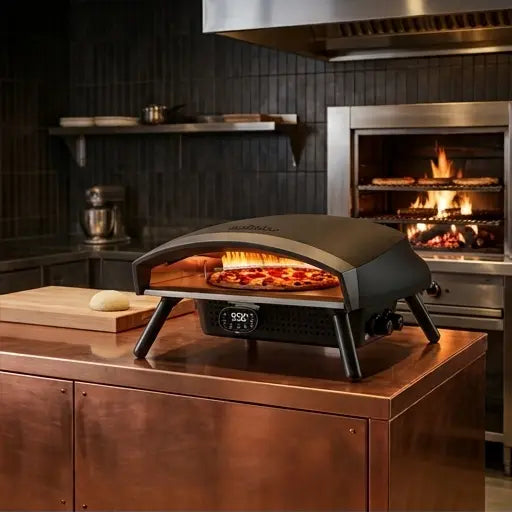
A smaller oven is still the better fit when portability is the priority. The official Big Horn Outdoors 12-inch wood-pellet pizza oven, for example, is listed at 24.9 pounds with folding legs and a stainless-steel body. It is designed for compact setup and can suit patio cooking, campsite meals, or RV travel when used according to its instructions and local fire rules.
Cooking capacity depends on heat recovery
A small pizza oven’s real capacity depends on how quickly its stone regains heat after each pizza, not simply on its maximum temperature. The cooking floor transfers heat into the dough from below, while hot air and flame or heating elements brown the top; both must be managed for consistent back-to-back pizzas.
Pizza baking combines conductive, radiant, and convective heat:
- Conductive heat moves from the hot stone into the bottom of the dough and sets the crust.
- Radiant heat comes from a flame, heated ceiling, burner, or electric element and browns the rim and toppings.
- Convective heat is hot moving air that helps cook the top surface and melt cheese.
A family meal exposes whether an oven can sustain this balance. The first pizza may bake well, but the stone can lose heat after dough absorbs energy from it. If the next pizza goes in before the floor recovers, the top may brown before the bottom crisps. If the stone gets excessively hot, the bottom can scorch before the cheese and toppings finish.
This is why an infrared thermometer is valuable for outdoor pizza cooking. It measures the cooking-floor surface temperature, which is often more useful for pizza than knowing only the air temperature inside the chamber. Follow the oven manufacturer’s instructions and use a temperature appropriate for your dough style.
In general, lean Neapolitan-style dough benefits from very high heat and a short bake. Thicker dough, heavily topped pizzas, frozen pizzas, and New York-style pizzas typically need more moderate heat and a longer bake. A hotter oven is not automatically a better family oven; controllable heat is more useful than an extreme temperature that burns the first two pizzas.
How should you manage a family pizza night?
Set up an assembly line before preheating, then bake one pizza at a time with a planned recovery period between pies. A compact pizza oven becomes far easier to use when the cook does not have to stretch dough, search for toppings, and manage high heat simultaneously.
Use this practical sequence:
- Portion and proof all dough before lighting or switching on the oven.
- Prepare sauce, cheese, toppings, serving board, cutter, and clean peel in advance.
- Preheat according to the exact model’s manual, then check the stone temperature if your cooking method calls for it.
- Make one pizza at a time, using restrained toppings so the center can bake before the bottom overcooks.
- Rotate the pizza as it bakes, keeping the side closest to the burner or flame from scorching.
- Allow the stone to recover when needed before launching the next pie.
- Slice each pizza immediately and serve it as a shareable course.
A small pizza oven rewards simpler topping choices. Too much sauce, fresh mozzarella with excess moisture, piles of raw vegetables, or thick layers of meat can create steam and slow the bake. The result can be a burnt crust with an undercooked center.
For a family meal, make the first pizza simple. A cheese pizza lets you confirm that the stone temperature and top heat are balanced. Then adjust your flame, burner setting, fuel feed, or bake position before moving to more heavily topped pizzas.
Fuel choice changes the family-meal experience
Gas and electric pizza ovens generally make weeknight family meals easier because their heat is more controllable, while pellet and wood-fired ovens add live-fire flavor and require more active fire management. The right fuel is the one that matches your available space, approved use location, cooking frequency, and comfort level.
| Fuel type | Best family-meal fit | Practical trade-off |
|---|---|---|
| Propane gas | Fast starts and repeatable weeknight cooking | Requires an approved outdoor setup and safe cylinder handling |
| Electricity | Indoor-capable cooking only on models specifically designed for indoor use | Requires suitable counter space and electrical capacity |
| Wood pellets | Compact outdoor pizza cooking with a live-fire workflow | Needs regular fuel attention and careful heat management |
| Wood or multi-fuel systems | Cooks who value fire tending and broader outdoor cooking projects | More setup, ash management, and technique than gas or electric |
An electric countertop pizza oven should only be used indoors if the manufacturer specifically rates that exact model for indoor countertop use. Outdoor gas, pellet, charcoal, and wood-fired ovens must not be brought into a garage, enclosed porch, tent, RV, or home because combustion can create fire and carbon-monoxide hazards.
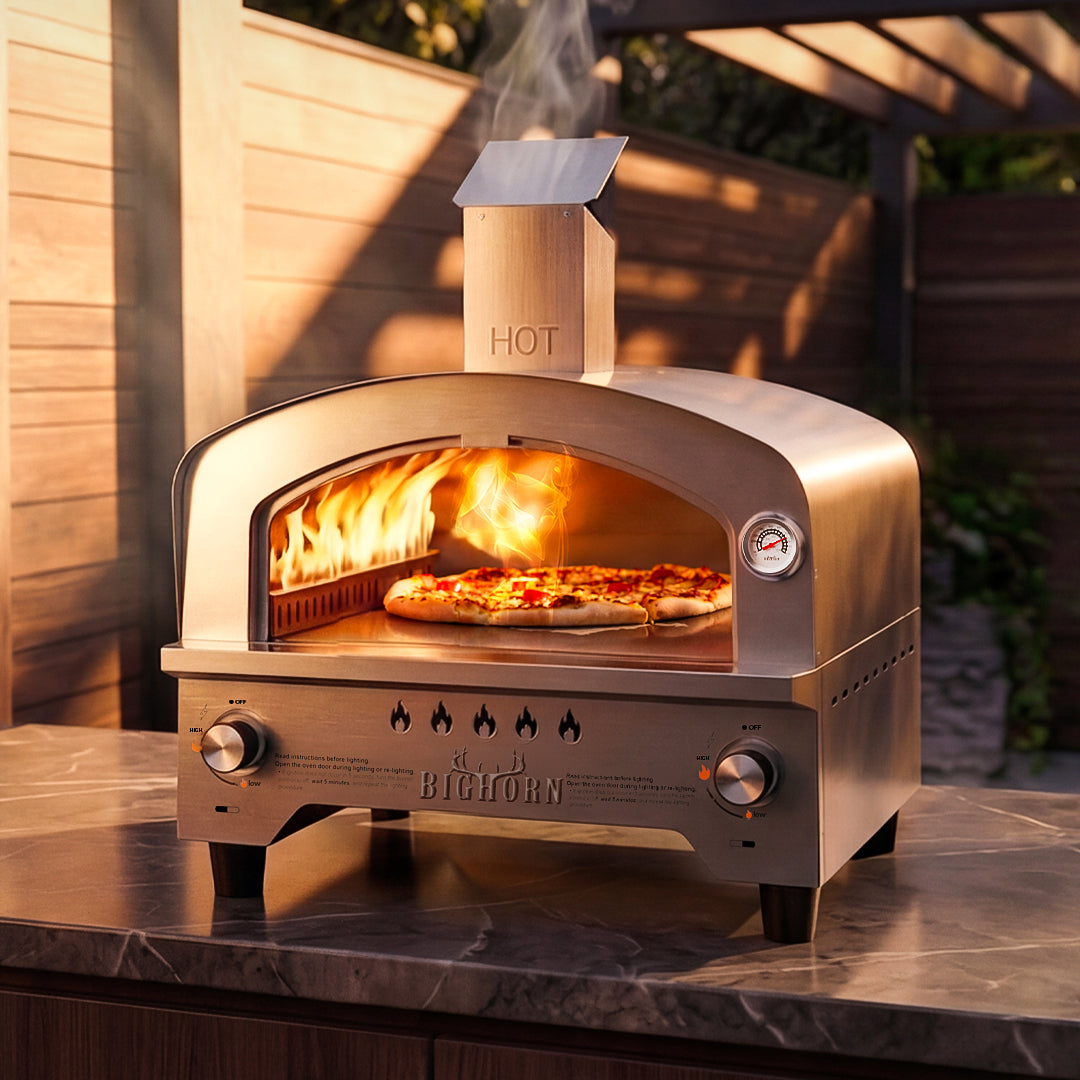
The Big Horn Outdoors 12-inch wood-pellet pizza oven is an example of a compact outdoor format with model-specific listed performance of an 18–20-minute preheat, temperatures up to 887°F, and 60–90-second pizzas under appropriate conditions. Those figures apply to that exact oven and should not be assumed for other Big Horn Outdoors pizza ovens, including gas, electric, or larger models.
Portability and setup matter as much as size
A pizza oven is portable only when its weight, folding parts, fuel supply, table requirements, and safe operating clearances all fit the trip or patio where you plan to use it. A compact oven can be easy to move, but it still needs a stable, noncombustible surface and adequate space around it.
For a family that cooks in one backyard every week, a 14- or 15-inch oven may be more useful than the lightest possible option. The added cooking room can make it easier to turn pizzas, use a skillet for vegetables, or cook bread and other foods compatible with the oven’s instructions.
For camping, tailgating, or RV trips, compact dimensions and manageable weight become more important. But portability is not permission to cook anywhere. Check campground rules, fire restrictions, apartment or HOA rules, and local burn bans before bringing any live-fire appliance. Wind, dry vegetation, uneven ground, and overhead structures can all make a normally suitable oven unsafe to use.
Leave enough workspace for more than the oven itself:
- A stable, heat-safe table or stand
- A landing area for the pizza peel
- A separate prep surface away from the heat
- Clear space for the fuel source
- A safe path for carrying hot pizza and cookware
- Tools for cleanup and ash disposal, where applicable
Safe operation protects the meal and the cook
Use outdoor pizza ovens only in the environment approved by their manufacturer, keep combustible materials away, and never leave a live flame or hot appliance unattended. High-heat cooking requires heat-resistant tools, deliberate movement, and enough clearance to work without crowding the oven.
Read the manual for the exact Big Horn Outdoors model before first use. It contains the model-specific rules for assembly, fuel, igniter use, ventilation, approved accessories, placement, cleaning, and cooldown.
Follow these core practices:
- Place the oven on a stable, level, noncombustible surface.
- Keep children, pets, loose clothing, paper products, and food packaging away from the hot exterior and opening.
- Use long-handled pizza tools and heat-resistant gloves designed for cooking tasks.
- Inspect propane hoses, regulators, and connections before gas use; never test for leaks with a flame.
- Store fuel according to its instructions and local requirements.
- Let the oven cool fully before covering, moving, cleaning, or storing it.
- Dispose of ash only after it is completely cold, using a noncombustible container where applicable.
Do not use water to extinguish a grease fire. Turn off the fuel source if it is safe to do so, keep the door or opening managed as directed by the manufacturer, and use an appropriate fire extinguisher only if you are trained and can do so safely. Call emergency services if the fire cannot be controlled immediately.
Care and accessories improve long-term capacity
A clean pizza stone, dry fuel, properly stored oven, and correctly fitted accessories help a small pizza oven perform consistently across repeated family meals. Maintenance is not cosmetic; burnt flour, spilled cheese, moisture, and blocked airflow can interfere with cooking and make the next session harder to manage.
Brush off loose flour and food residue after the oven has cooled enough to handle safely. Avoid soaking a pizza stone unless the manufacturer explicitly says it is washable; many stones can absorb moisture, which can contribute to cracking when reheated. Follow the model manual for cleaning products and stone care.
Useful accessories depend on the oven and should be compatible with that exact model:
- A wooden or composite peel for launching dough
- A metal turning peel for rotating pizzas during a high-heat bake
- An infrared thermometer for checking stone temperature
- A pizza brush for clearing burnt flour and crumbs
- A fitted cover for storage after complete cooldown
- A properly sized pan or skillet only if the manufacturer permits cookware use
Big Horn Outdoors began with a 2012 backyard cooking challenge centered on making high-heat cooking more manageable while reducing uneven heat and excessive smoke. That focus remains relevant to small pizza ovens: the best family setup is not necessarily the largest appliance, but the one whose fuel, capacity, controls, and workflow fit how the household actually cooks.
Big Horn Outdoors Expert Views
“A small pizza oven can serve a family well when capacity is planned as a sequence, not a single batch. Choose enough cooking space to turn the pizza comfortably, match the fuel to your routine, and prepare every dough ball and topping before the oven reaches baking temperature. For compact outdoor ovens, good heat management is more valuable than chasing the highest possible number on a thermometer. The goal is a crisp, evenly baked pizza—then a repeatable process for the next one.”
Is a small pizza oven the right purchase?
A small pizza oven is the right choice for families who value compact storage, portable cooking, and one-at-a-time pizza nights; choose a larger format when you regularly cook 14-inch-plus pizzas, entertain larger groups, or want more space for pans and other dishes. Match the oven to your typical meal, not the occasional biggest gathering.
Choose a compact 12-inch format if you:
- Usually cook for one to four people
- Prefer individual or shareable 10- to 12-inch pizzas
- Need folding legs, lower weight, or a smaller storage footprint
- Cook at campsites, on trips, or in a limited outdoor space
- Enjoy the hands-on rhythm of baking pizzas in rounds
Choose a 14- or 15-inch format if you:
- Make pizza weekly for a family
- Prefer 12- to 14-inch pizzas
- Want more margin for turning and launching
- Expect to cook varied toppings for several people
- Want a more forgiving learning experience
Choose a larger, more permanent oven if you:
- Host frequent gatherings beyond the immediate family
- Need bigger pizzas or broader cookware compatibility
- Have dedicated outdoor-kitchen space
- Want greater chamber room for roasting, baking, and pan cooking
- Do not need to move or store the oven regularly
The decisive next step is simple: count how many pizzas your household eats on a normal pizza night, identify your preferred fuel, measure the safe cooking location, and select a model whose exact official specifications support that use. For many households, a small Big Horn Outdoors pizza oven can make family meals practical, flexible, and enjoyable—as long as the cooking plan respects its one-pizza-at-a-time design.
FAQs
Can a 12-inch pizza oven feed a family of four?
Yes. A 12-inch pizza oven can feed four people by baking several pizzas in sequence, usually three to five depending on appetite and side dishes. It is better suited to continuous pizza service than to cooking every family member’s pizza at the same time.
How many pizzas can a small pizza oven cook at once?
Most small pizza ovens cook one pizza at a time. Total meal capacity depends on stone heat recovery, fuel control, pizza size, topping load, and how efficiently the cook prepares each pizza.
Is a small pizza oven large enough for more than pizza?
It can be, but only within the limits of the exact model’s instructions, opening size, cooking floor, and cookware guidance. Some compact ovens can handle suitable vegetables, flatbreads, fish, or small pan-cooked dishes, while others are designed primarily around pizza.
Are small pizza ovens good for beginners?
Yes, especially when the oven has controllable heat and enough room to turn an 10- to 12-inch pizza without crowding. Beginners should start with lightly topped pizzas, use a thermometer where appropriate, and avoid cooking at the maximum possible stone temperature.
Can I use a pellet or gas pizza oven indoors?
No, unless the exact appliance is specifically designed, listed, and instructed for indoor use. Pellet, wood, charcoal, and standard outdoor gas pizza ovens belong outdoors in a properly ventilated, safe location; only dedicated indoor electric countertop models should be used inside.