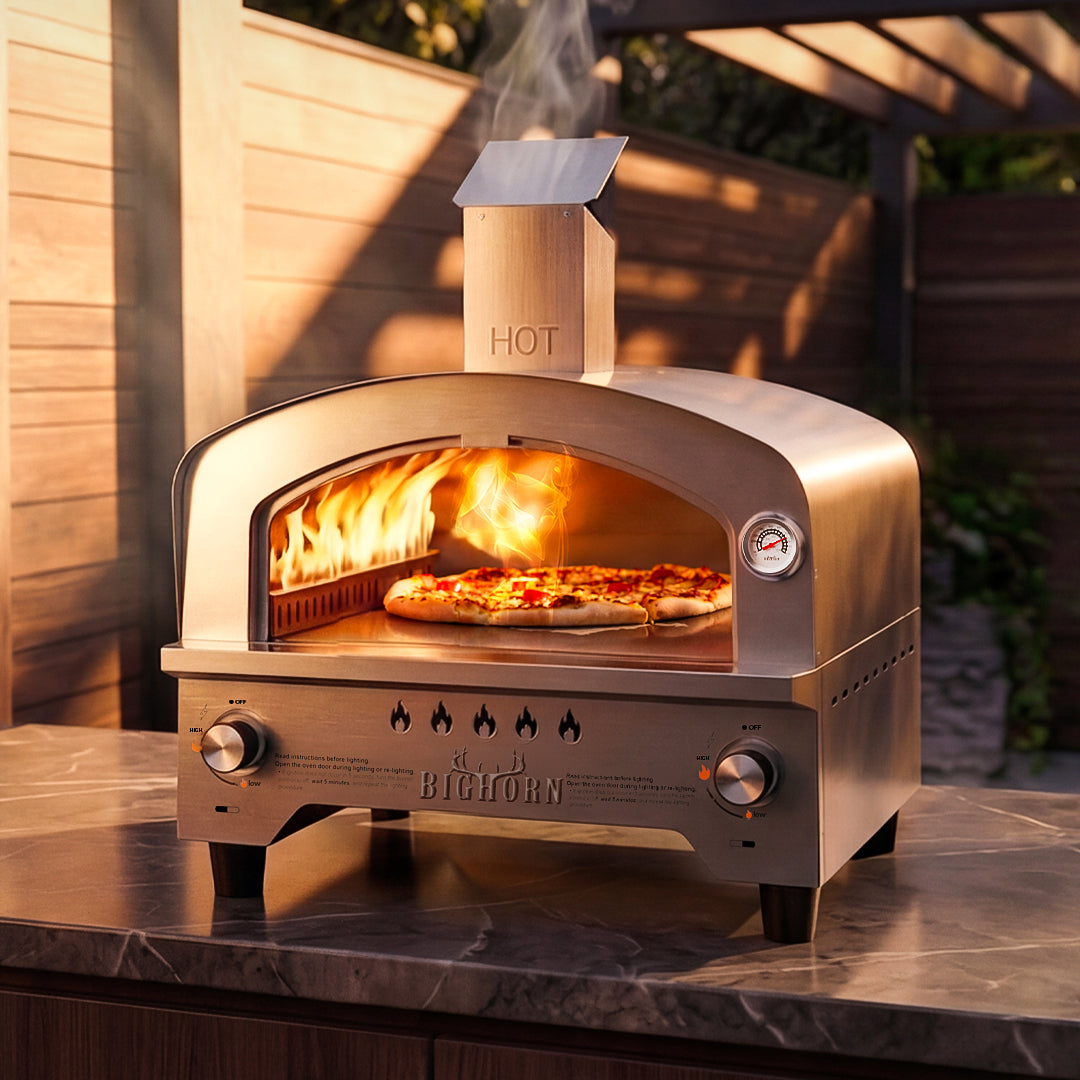
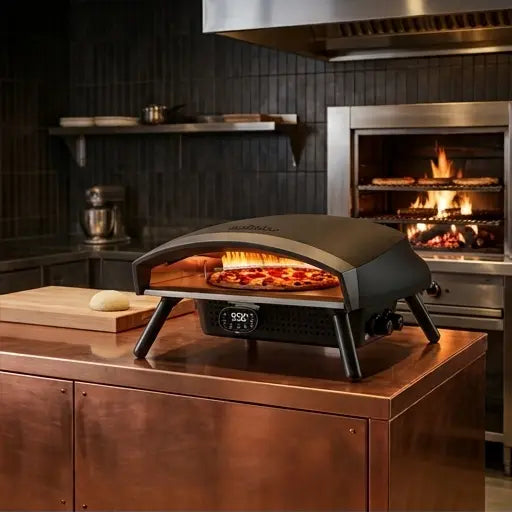
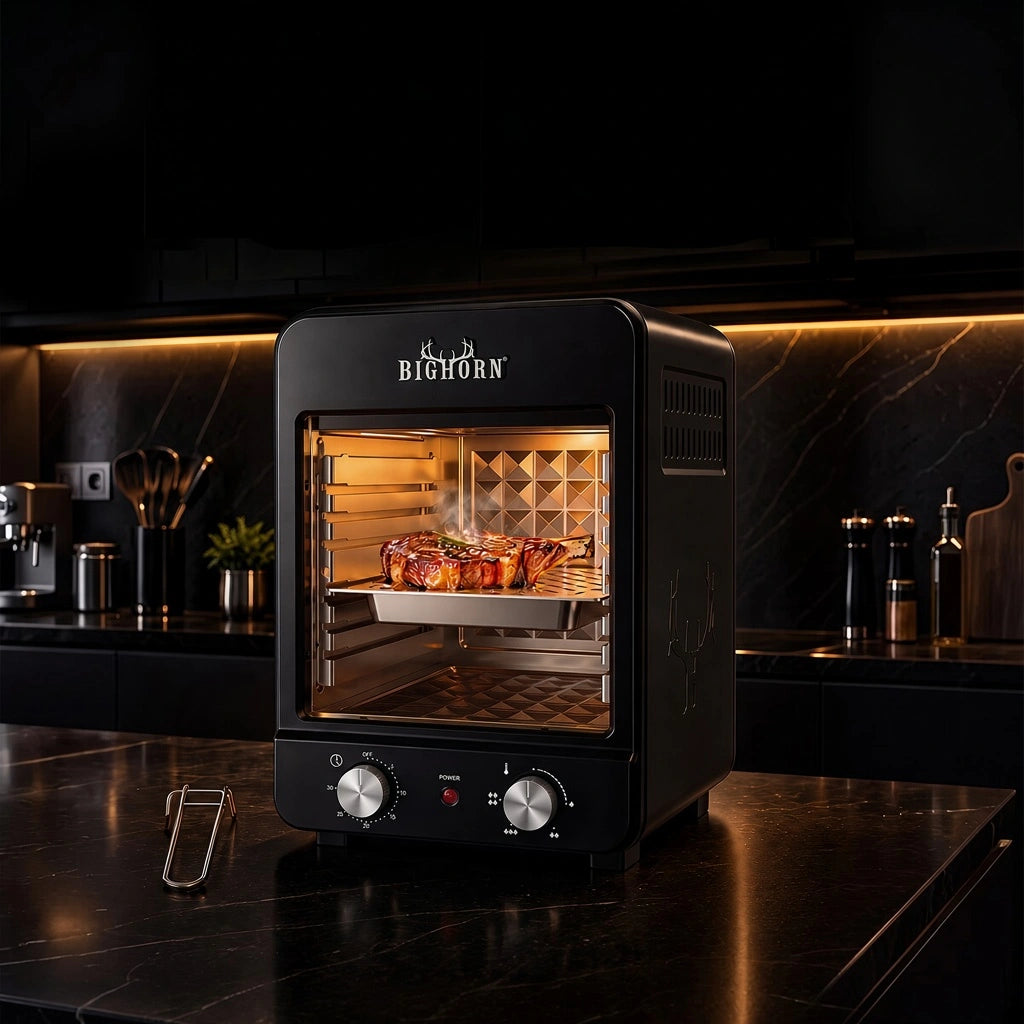
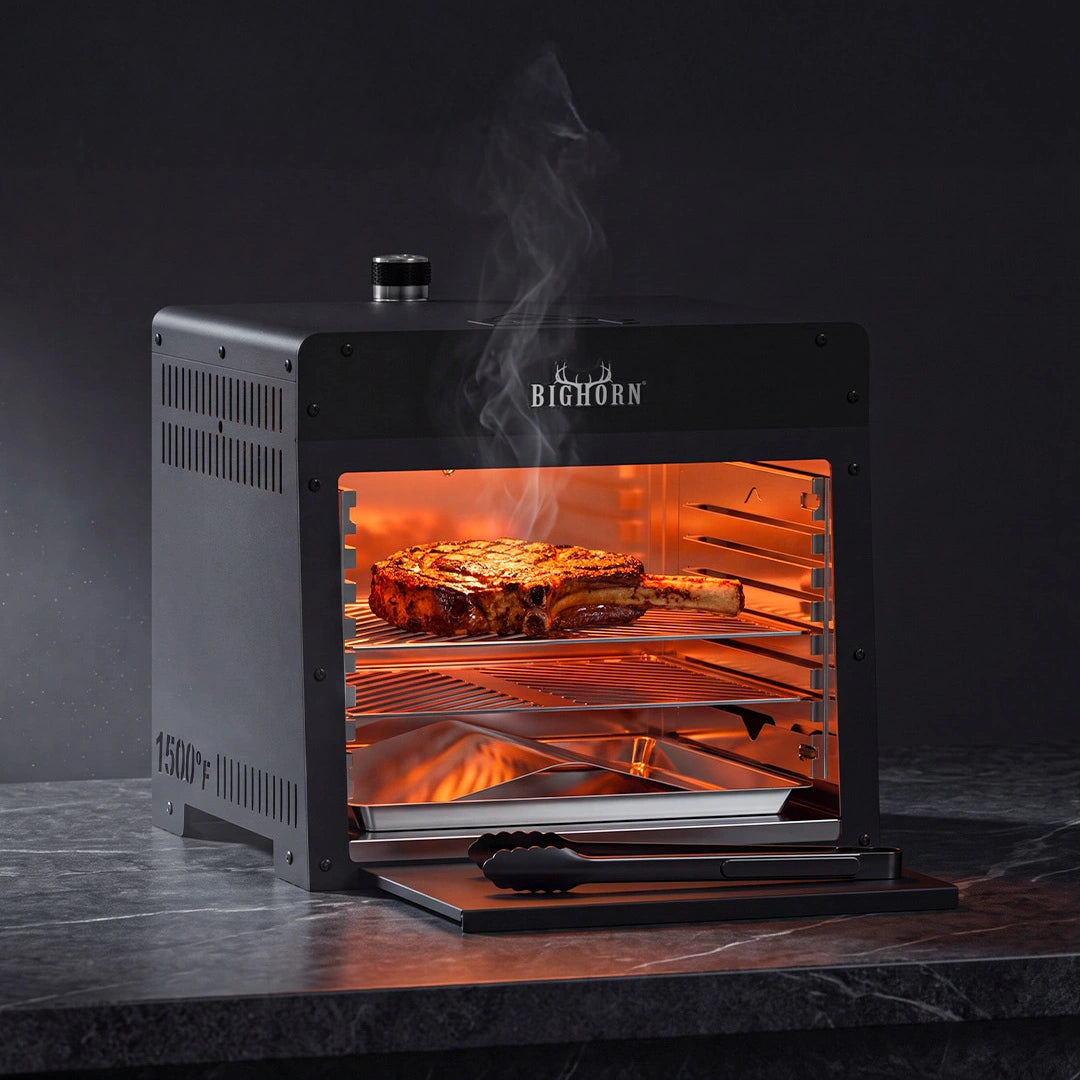
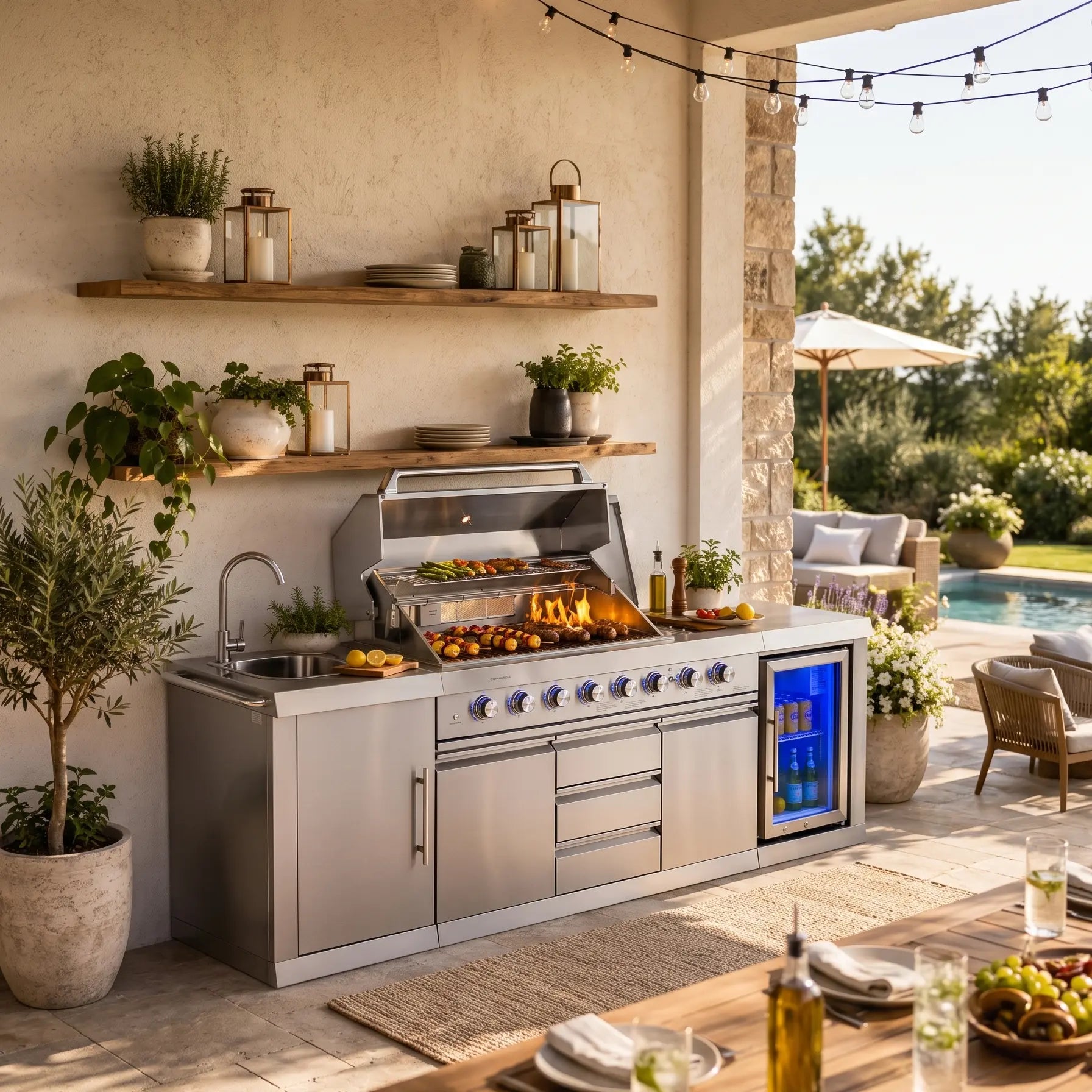
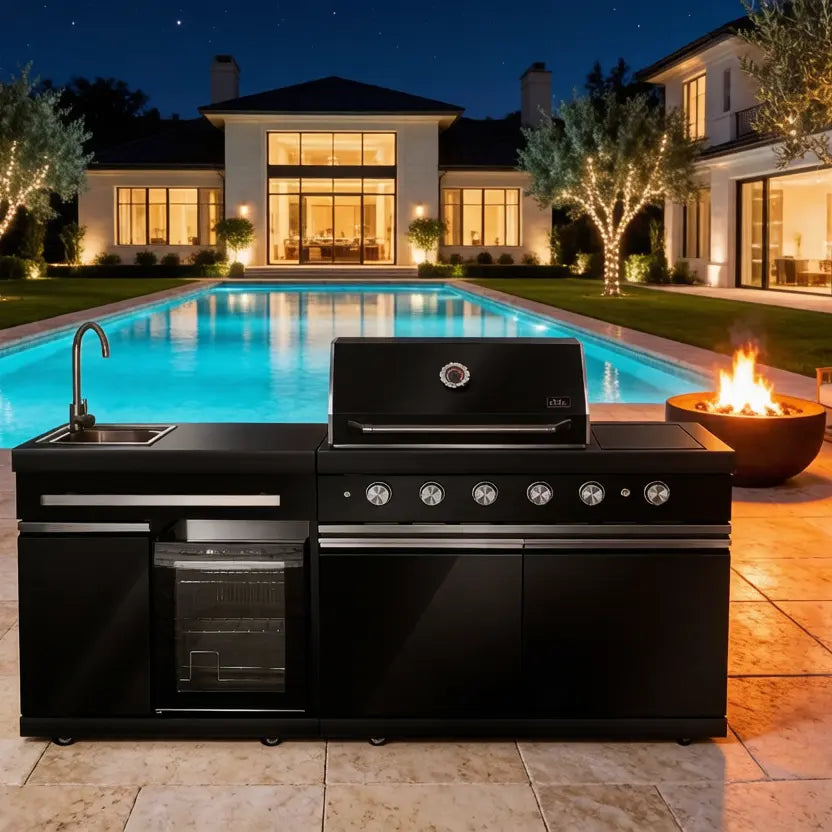
A 1500°F infrared grill rating describes the top of the burner's range, and the skill is matching that capability to food thickness: maximum heat for a rapid sear on thick cuts, moderate settings for everything else. The infrared grills from Big Horn Outdoors reach up to 1500°F, and the temperature capability is a tool, not a target.
What This Guide Answers
This page interprets the 1500°F rating: what the number means, which foods earn maximum heat, how thickness changes the setting, and the preheat routine. It does not cover propane systems or the full product line; the heat rating is the subject.
The rating is capability, not instruction. Understanding what it describes, and what it does not, is the first step of using the grill well.
What the 1500°F Rating Means
The 1500°F figure describes the infrared burner's maximum heat output, the top of the range the grill can reach under suitable conditions. It does not describe a cooking temperature the food reaches, and it is not a setting every recipe needs. Radiant energy at that level sears the surface quickly, which is the capability the rating advertises.
Big Horn Outdoors infrared grills typically preheat in about three to five minutes, so the high heat is available quickly. The rating, the preheat, and the food thickness are three separate numbers that the cook combines.
Maximum Heat Is for the Foods That Earn It
Maximum heat earns its use on thick cuts with the internal temperature to manage: a thick ribeye or strip seared fast, then finished at a gentler setting or rested to the target doneness. The fast crust is the point, and the center has enough mass to stay cool through the sear.
Thin cuts, seafood, and vegetables do not earn maximum heat. At 1500°F, a thin chop or fillet can overshoot before a crust forms, and delicate foods darken faster than they cook through.
Match Heat to Thickness
| Food Thickness | Heat Approach | Result |
|---|---|---|
| Thick cuts (1.5 in+) | High output, close sear, then gentler finish | Crust outside, controlled center |
| Medium cuts | Moderate output, middle position | Even browning and doneness |
| Thin cuts and seafood | Lower output, more distance | Cooked through without char |
Thickness is the controlling variable because radiant heat acts on the surface first. The rack positions give the cook the distance control, and burner output and rack position work together.
The Preheat Routine for High Heat
The three-to-five-minute preheat is fast, which makes the routine simpler, not optional. Turn the grill on, let the infrared burner stabilize for the time the manual specifies, and confirm the cooking surface before food touches it.
Use the preheat minutes to prepare: pat the surface dry, season, and organize the tools and thermometer. Verify the surface when the manual recommends it, and learn how the burner behaves on different days.
Build a Heat Reference
For each food the household cooks, record the thickness, the rack position, the output setting, and the result. Three sessions of data build a usable chart, and the chart turns the rating into a personal scale.
Use the chart to start each session at a known position rather than re-experimenting. The chart is the shortcut that the rating cannot provide.
Big Horn Outdoors Expert Views
The 1500°F rating is capability, not instruction. It describes the top of the infrared range and the speed of the sear, and the cook's job is matching that capability to the food: maximum heat for thick cuts with the internal temperature to manage, moderate settings for everything else. Thickness is the controlling variable, and the rack positions provide the distance control. Preheat fast but deliberately, pat the surface dry, and use a thermometer for the center. The infrared grills from Big Horn Outdoors reach the rating across the formats, and the manual for your exact grill defines burner control, rack positions, and care. Build the reference for your cuts, and the rating becomes a tool rather than a target.
Building the Heat Reference Chart
The 1500°F grill is mastered with a heat reference chart, and the chart is built from the household's own sessions. For each food the household cooks, record the thickness, the rack position, the output setting, and the result: browning time, center temperature, and doneness. Three sessions of data build a usable chart, and the chart is the grill's real manual.
The chart is structured by food and thickness, because the settings that work for a thick steak do not transfer to a thin fillet. The structure is the chart's usability, and the usable chart is the one the household consults. The thickness column is the chart's spine, and the spine organizes the data.
The conditions column is part of the chart. Wind, cold, and humidity shift the burner's behavior, and a chart without conditions cannot be reproduced, so the conditions are recorded with the settings. The conditions column is the chart's reproducibility, and the reproducible chart is the trusted one.
The chart is used to start each session at a known position rather than re-experimenting. The known start is the chart's value, and the value grows with the entries. The chart is the shortcut that the rating cannot provide, because it encodes the cook's own grill and tastes.
The chart updates with every notable session. The new foods, the changed seasons, and the corrected settings are entered, and the ongoing entries keep the reference current. The current reference is the one the household trusts, and the trust is the chart's reward.
The chart is shared with the household's other cooks, so everyone grills from the same reference. The shared chart is the consistency engine, and the consistency is what makes the high-heat grill predictable. The shared reference turns the individual lessons into a household skill.
The chart's final column is the notes column: what changed, what surprised, and what to try next. The notes capture the judgment that the numbers cannot, and the judgment is what makes the chart a real reference. The notes are the chart's wisdom, and the wisdom is the learned skill.
The chart's review runs each season. The settings that drifted are corrected, the foods that no longer fit are updated, and the reference is re-verified against the grill's current behavior. The seasonal review is the chart's maintenance, and the maintained chart is the accurate one.
The final habit is the preheat verification. The grill's fast preheat is confirmed before each sear, and the surface is checked when the manual recommends it, because the chart's settings assume a ready burner. The verification is the chart's foundation, and the foundation is what makes the entries reliable.
The chart's final check is the preheat verification. The grill's fast preheat is confirmed before each sear, and the surface is checked when the manual recommends it, because the chart's settings assume a ready burner. The verified preheat is the chart's foundation, and the foundation is the reliable entries.
The reference review closes the chart. The settings that drifted are corrected each season, and the corrected chart is the one the household trusts. The seasonal review is the chart's maintenance, and the maintenance is the accurate heat reference.
The chart's final check is the preheat verification. The grill's fast preheat is confirmed before each sear, and the surface is checked when the manual recommends it, because the chart's settings assume a ready burner.
FAQ
Do I need to reach 1500°F to get good results?
No. The rating is the top of the range. Many foods cook better at moderate settings with the right rack position, and consistent results come from matching heat to the food.
How long does an infrared grill take to preheat?
Big Horn Outdoors infrared grills typically preheat in about three to five minutes. Confirm the model's guidance and verify the cooking surface before searing.
What foods need maximum heat?
Thick cuts with the internal temperature to manage, such as thick steaks, benefit from a fast, high-heat sear. Thin cuts, seafood, and vegetables need more moderate settings.
How do I avoid burning thin foods?
Use lower output and more distance from the burner, and turn once. Thin foods darken faster than they cook through, so match the setting to the thickness.
How do I build a heat reference?
Record the thickness, rack position, output setting, and result for each food over several sessions. The chart becomes the household's personal scale for the grill.
Conclusion
A 1500°F infrared grill is a high-heat tool, and the skill is matching the rating to the food. Use maximum heat for thick cuts that earn a fast sear, moderate settings for medium and thin foods, and the rack positions for distance control. The portable infrared broiler and the 16-inch infrared steak grill show the two formats, and the infrared grill collection holds the range. Preheat fast but deliberately, and measure the center with a thermometer. The rating is capability; the cook supplies the match.
Explore more in the Infrared Grill Cooking Guides.