
Wood Pellet Pizza Oven
A wood pellet pizza oven after dark is the same cooker with worse visibility, less patience from neighbors, and a higher cost for a sloppy shutdown. You still need a clean fire and a ready stone. You also need light on the peel landing, a walkway you will not trip on, and a finish that happens before the street goes quiet. Night is not a reason to rush a smoky restart.
This is a night-operations page, not a party-handoff checklist and not a wind-siting guide. For the cook sequence, use how to use a wood pellet pizza oven: light, preheat and bake.
The short answer: light the work zone, keep the fire tidy, and finish before the neighborhood goes quiet
Light the work zone, keep the fire tidy, and finish before the neighborhood goes quiet. You need to see the peel landing and the walkway. Avoid a late, smoky restart, and do not cover a live fire in the dark. If you cannot light the patio safely, cook earlier.
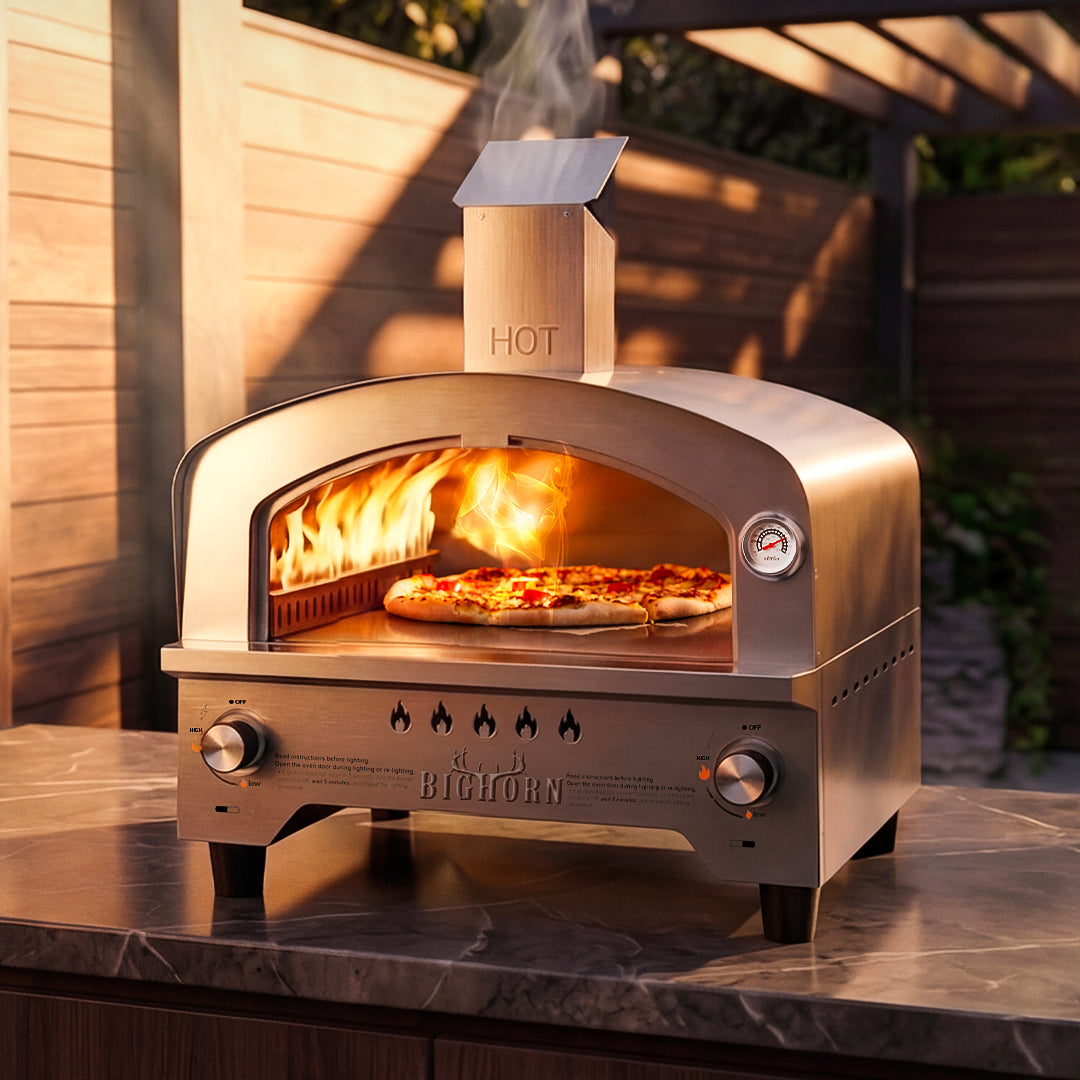
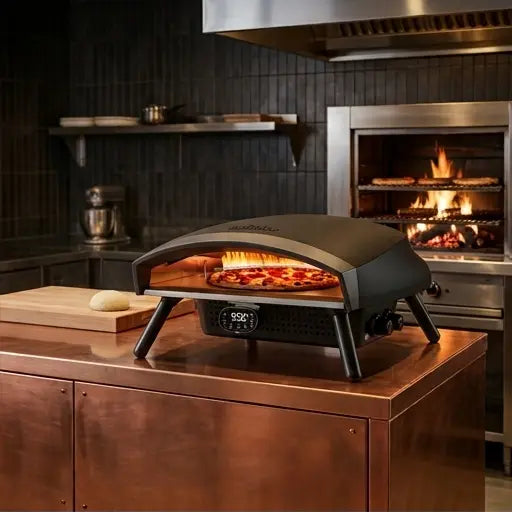
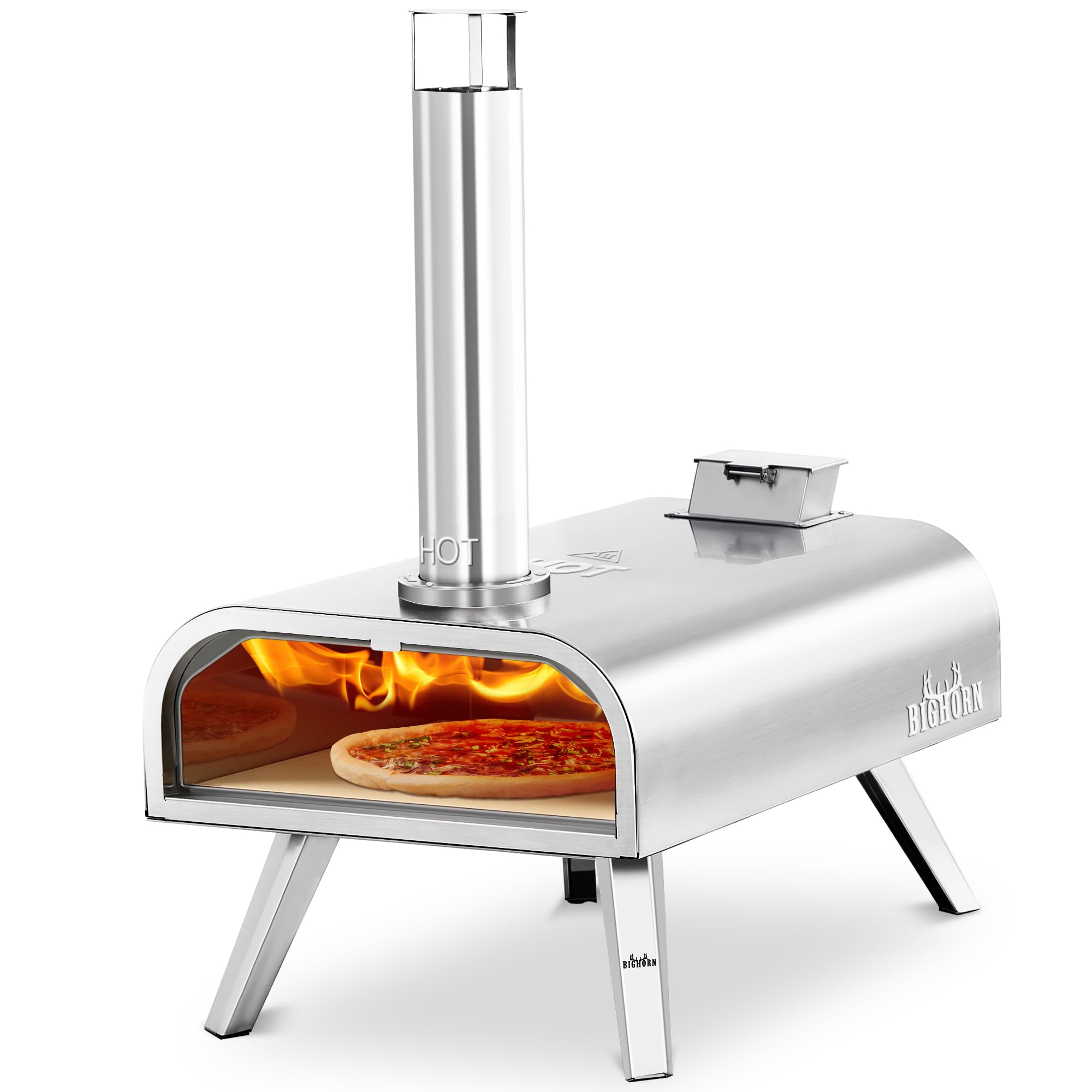
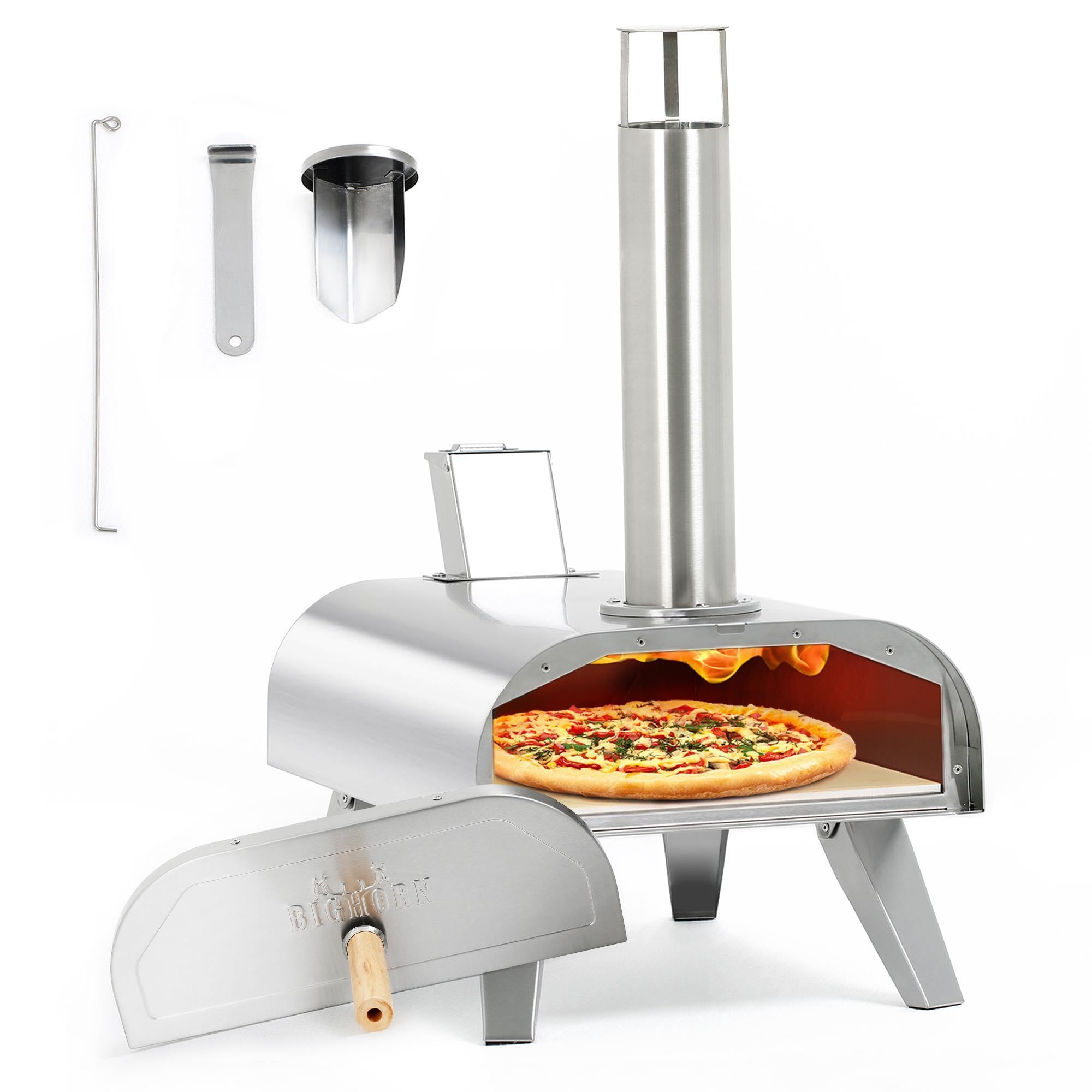
A 16-inch wood pellet pizza oven and a 12-inch portable wood pellet pizza oven are both easier to run when you can actually see them.
Task lighting that does not blind you over a hot stone
A flashlight in a pocket is not a lighting plan. Set the lamps before you light the pellets, and test whether you can see the front of the stone and the path back to the door. If you cannot, you are not ready to cook after dark.
Light the table, the peel path, and the front of the oven, not your eyes and not the neighbors’ windows. A low, shielded lamp or a headlamp aimed at the work is more useful than a floodlight in your face. You need to see whether a pie is catching, whether pellets spilled, and where you will set a hot peel. Do not rest a cheap clamp light on a hot shell.
Ash, sparks and a walkway you can still see
Ash and stray pellets are easier to miss at night. Keep a clear, lit walkway between the door, the oven, and a place to set tools. Shoes, not sandals, are a kinder habit around a fire you cannot fully see. For airflow and pot checks you should still do in the evening, the firebox airflow checklist is the companion, but do those checks under light, not by feel alone.
A small table: weeknight versus weekend-night expectations
| A weeknight cook | A weekend night | |
|---|---|---|
| Start time | Early enough to preheat, bake, and cool down on a work night | Still finish before the street is quiet |
| Queue | A few pies, not an open-ended party | A planned last pie, not “one more” at midnight |
| Neighbors | Less tolerance for a smoky restart | The same rule, with more people in the yard |
Neighbor-aware timing: fans, conversation and a smoky start
A noisy group and a white, smoky start travel farther after dark. Light a clean fire earlier, keep conversation to a reasonable hour, and do not use a mechanical fan as an excuse to start late if it only blows smoke toward a bedroom window. You do not need a legal lecture. You need to be the neighbor you would want next door.
Common failures: a dark peel landing and a late, smoky restart
The usual night failure is a pie that misses the stone because you could not see, or a fire that died and got a panicked, smoky relight at 10 p.m. Pull the pie if the fire is collapsing, relight only if you can do it cleanly, or stop. Stay with the cooker. NFPA grilling safety and U.S. Fire Administration cooking-fire prevention still apply in the dark. Keep the oven outdoors; EPA carbon monoxide guidance and CDC carbon monoxide information are the official reasons a chilly night is not an invitation to roll the oven into a garage.
Kids, pets and a cool-down path back inside
Give children and pets a lit path that does not pass the mouth of the oven, and a rule that the cooker is not a toy. When you are done, have a place to set hot tools and a path back inside that does not involve stepping over a hopper bag. A compact yard still needs that path; a maintenance habit that includes a clear deck will help the next morning too.
A shutdown in the dark that still includes a safe cover rule
Let the fire burn down, let the oven cool, and do not put a cover on a live fire or a wet, hot shell you cannot see clearly. Use a flashlight for the last ash and pellet check. If you are too tired to shut down carefully, you started too late.
When you should just cook earlier
If the patio is unlit, the neighbors are close, or you will be rushing a cooldown, cook in daylight. Confirm a current listing in the pellet pizza oven collection if you are buying a cooker for evening use, and plan light as part of the setup, not as an afterthought.
Leftovers: USDA leftover guidance, FDA safe food handling, and FoodSafety.gov — two hours or one hour above 90°F to chill, 165°F to reheat. Night is not a reason to leave pies on a dark table.
If you are baking after dark, confirm the current 16-inch wood pellet pizza oven listing, light the work zone, and finish the fire early enough for a safe, quiet shutdown.
FAQ
How long do you need to heat a wood fired pizza oven?
There is no single minute this page will invent, and night does not change that law. Heat until the stone and the fire are honestly ready, then bake. After dark, start early enough that preheat, the pies, and a safe cooldown all happen before you are rushing in the dark.
How unhealthy is wood fired pizza?
This page is not medical advice and will not invent a risk number. What you can do at night is keep the oven outdoors, stay out of the smoke, and avoid a late, smoky restart that hangs over the fence. If you have health concerns, talk to a clinician.
How to burn wood pellets in a pizza oven?
Use dry cooking pellets, light a clean fire, and stay with it, as the light-preheat-and-bake guide describes. After dark, add task lighting, a clear walkway, and a shutdown that does not put a cover on a live fire. Neighbor noise and smoke matter more at night than at noon.
Are wood fired pizza ovens any good?
They are good when you will manage a fire and a stone. At night they are only as good as your lighting, your cooldown plan, and your timing. A tidy evening cook is a pleasure. A late, smoky restart on a dark patio is a reason to cook earlier next time.
More to Read
Using the Height Crank Through One Asado: A Raise-and-Lower Timeline
Use a parrilla height crank through one asado: start high, lower for color, raise to hold, and refresh the fire when height alone cannot help.
Lighting a Parrilla From a Brasero or Fire Basket Instead of Under the Grate
Light an Argentine parrilla in a brasero or fire basket, then move ready coals under the grate so the starting fire does not sit under the meat.
Gift-Day Unboxing a Wood Pellet Pizza Oven: Parts Photos and a First-Burn Plan
Unbox a gift wood pellet pizza oven by photographing the parts, saving the manual, and planning a two-pie first burn — not a same-hour party.