
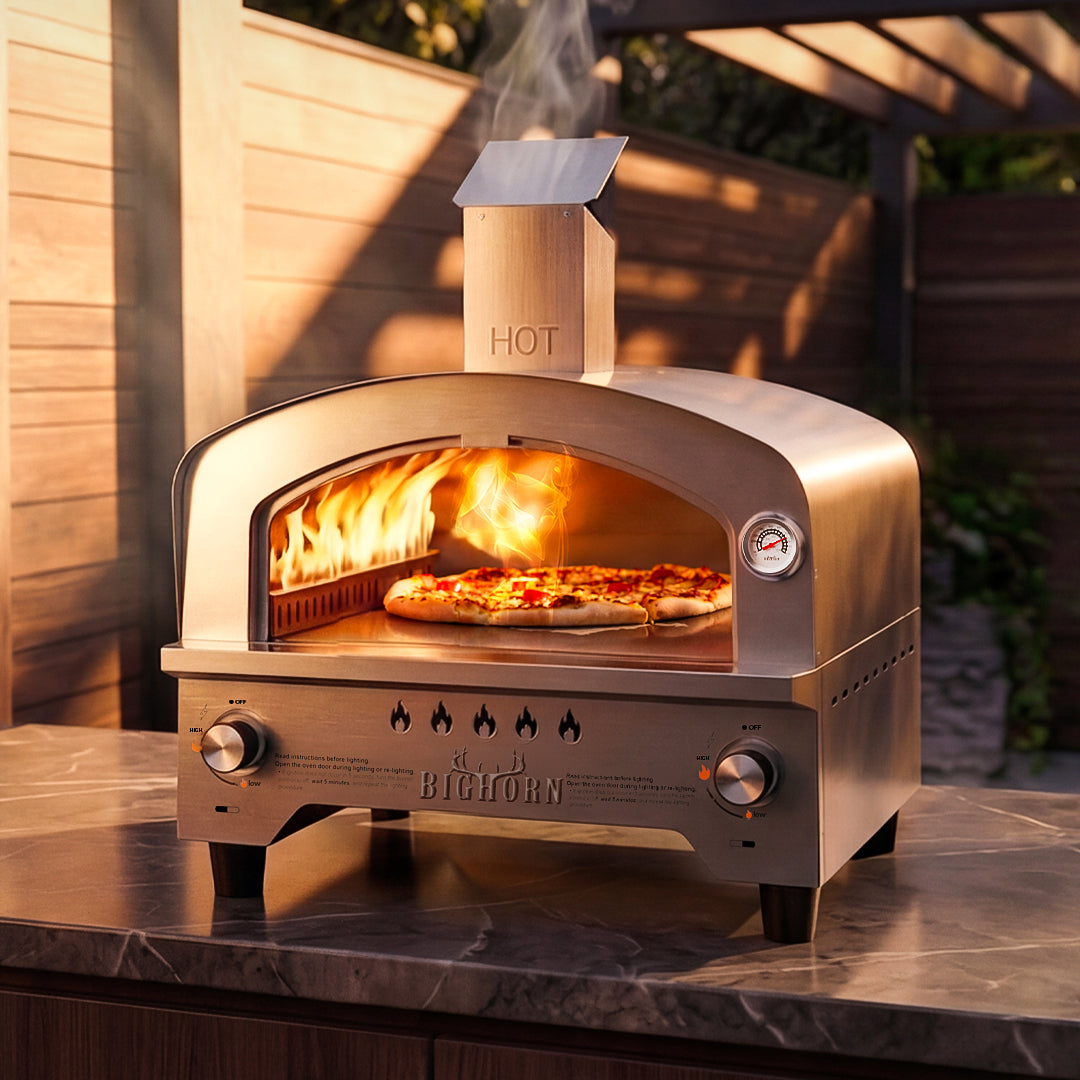
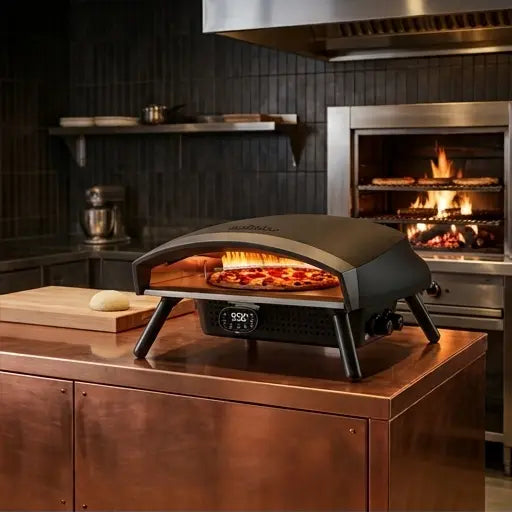
A pellet pizza oven firebox airflow checklist helps prevent avoidable ignition, smoke, and heat problems before they become a troubleshooting session. The aim is not to increase airflow beyond the design. It is to preserve the intake, fuel, combustion, and exhaust path specified by the manufacturer.
Use this checklist with the exact model manual open. Pellet tray, grate, door, chimney, cap, vents, and flame guard positions vary. Never alter holes, add a fan, improvise a door, or operate an outdoor pellet oven inside a garage, tent, shed, porch enclosure, or home.

What should correct firebox airflow achieve?
It should support documented ignition, stable combustion, safe exhaust, and repeatable heat.
Air enters through designed openings, supports combustion around the approved pellet load, and leaves through the intended exhaust path. The system must work without flame escaping the designated area, persistent smoke spilling toward the operator, or unexplained soot growth.
More draft is not automatically better. Excess wind or an unauthorized chimney extension can pull the flame differently and consume fuel faster. Too little flow can contribute to weak combustion and smoke. The reference is the manual’s illustrated behavior and your clean, correctly assembled baseline.
What belongs in the pre-ignition checklist?
Verify placement, assembly, openings, fuel, and tools while everything is cold.
- Place the oven outdoors on the required stable, level, heat-resistant surface.
- Maintain every clearance from structures, overhangs, fences, vegetation, and combustibles.
- Check that chimney, cap, pellet tray, grate, flame guard, door, and removable panels are installed correctly.
- Confirm approved air holes and exhaust openings are free from cooled ash, packaging, insects, and debris.
- Inspect parts for warping, cracks, corrosion, loose fasteners, or an incorrect fit.
- Use only dry pellets that match the manual’s type, grade, size, and composition.
- Set out the approved ignition tool, heat protection, timer, and emergency equipment required by the manual.
NFPA recommends outdoor placement away from structures and constant supervision for grills. Review its grilling safety tips as general guidance, then apply the exact pizza oven instructions.
How should you inspect pellets before loading?
Check the label, dryness, integrity, and amount of loose fines.
Pellets should match the fuel named in the manual and remain protected from moisture. Swollen, soft, crumbling, or visibly contaminated fuel can feed and burn differently. Excess loose dust at the bottom of a container may also affect the burn area.
Do not mix leftover unknown pellets with a new approved bag. Keep the package label and record the product used. Never substitute treated wood, painted wood, plywood, construction waste, charcoal, liquid fuel, or heating pellets unless the oven documentation expressly permits them.
EPA’s pellet stove fact sheet explains pellet grade and ash differences as general background. A pizza oven’s own fuel specification remains controlling.
What should you observe during ignition?
Watch smoke direction, flame location, and fuel behavior from a safe position.
- Set doors, vents, chimney parts, and fuel load exactly as the startup instructions require.
- Ignite only by the approved method—never with gasoline, alcohol, or an improvised accelerant.
- Stand clear of the opening and chimney outlet.
- Allow for the manual’s normal startup phase and observe whether smoke follows the intended path.
- Confirm that flame remains in the designed area and grows according to the documented sequence.
- Stop if smoke spills persistently, ignition repeatedly fails, or flame appears outside its intended zone.
Do not lean over the chimney to check flow and do not hold paper, tissue, incense, or another flame near the opening. If draft behavior is uncertain, use the chimney draft troubleshooting guide after safe shutdown.
What is the airflow checklist during preheat?
Confirm stable flame, expected smoke reduction, controlled fuel feed, and normal heat development.
| Check | Normal reference | Stop or investigate when |
|---|---|---|
| Flame position | Matches manual illustrations and stays contained | Flame escapes, flashes, or repeatedly dies |
| Smoke | Follows documented startup-to-cleaner-burn progression | Persistent unusual smoke or operator exposure |
| Pellet feed | Advances or burns as the design specifies | Bridging, overflow, back-burning, or stalled feed |
| Heat trend | Rises predictably toward the recipe condition | Plateau, sharp instability, or abnormal component heating |
| Sound and smell | Consistent with prior clean operation | Grinding, popping, electrical odor, gas odor, or unknown smell |
Do not add extra fuel solely because a surface reading seems low. Verify measurement location, floor saturation, and the documented feed method. A strong visible flame does not prove that the cooking floor is ready.

What should you monitor while cooking?
Watch for changes from the stable preheat condition without obstructing airflow.
Keep tools, pans, foil, food, and packaging away from intakes and exhaust. Do not rest a peel across the opening longer than necessary. Operate the door or fuel hatch only as the manual instructs for the active cooking phase.
During a batch, note whether flame weakens after refueling, ash begins migrating, smoke increases, or recovery slows. Stop and shut down if combustion becomes abnormal. Do not scrape, blow, or vacuum a live burn area.
Use the floor recovery method to separate a depleted cooking surface from a combustion-airflow problem. The back-to-back workflow keeps the next pizza from forcing a premature fuel or airflow adjustment.
Which symptoms require immediate shutdown?
Stop for uncontrolled flame, persistent smoke, fuel back-burning, dangerous odors, or damaged components.
- Flame exits a fuel inlet, hopper, side gap, or other unintended location.
- Smoke persistently spills toward the operator or guests.
- Pellets overflow, bridge, or burn backward through the feed path.
- A component glows, warps, cracks, or shifts unexpectedly.
- An electric fan, controller, or igniter reports a fault or smells abnormal.
- Anyone develops headache, dizziness, nausea, confusion, or unusual weakness near combustion equipment.
Follow the documented shutdown without moving the hot oven. OSHA’s carbon monoxide guidance describes exposure hazards and symptoms. Move to fresh air and seek appropriate emergency assistance if exposure is suspected.
How should you inspect the firebox after cooling?
Wait for the manual-defined safe condition, then inspect only owner-serviceable parts.
Remove cooled ash with the approved scoop, brush, pan, or ash tool. Check whether air holes, grate slots, pellet paths, and mating surfaces are clear without enlarging them. Confirm that removable pieces reinstall fully and in the correct direction.
The ash buildup guide explains how to distinguish ash from soot, burnt launch dust, grease, and food residue. Do not use compressed air or a household vacuum on ash unless both the oven and vacuum instructions expressly approve that use.
U.S. Fire Administration guidance says cooled ash should go into a tightly covered metal container kept outside at least 10 feet from buildings, and never directly into a trash can. See its safe ash disposal pictograph.
Which airflow mistakes should you avoid?
Never treat a designed opening as an adjustable shortcut unless the manual says it is a control.
- Covering an intake with foil to slow a fast flame.
- Propping a door in an undocumented position.
- Adding an aftermarket fan, chimney section, elbow, liner, or cap.
- Drilling more holes or enlarging existing openings.
- Using a hair dryer, leaf blower, or compressed air to force ignition.
- Overfilling the pellet tray to extend the burn.
- Operating indoors or under an unapproved shelter to escape wind.
CPSC warns that carbon monoxide from charcoal and other combustion sources can be deadly in enclosed spaces; review its carbon monoxide safety page. Outdoor placement is not optional.
How should weather change the checklist?
Use weather to decide whether to cook, not to justify a modification.
Wind can disturb the intake and chimney outlet, humidity can affect stored pellets, and rain can create thermal-shock, footing, and electrical hazards. Check the forecast and the immediate site, including gusts created by walls, fences, vehicles, and corners.
Relocate only to a manufacturer-approved outdoor position with all clearances intact. Never add a wind shield or chimney extension unless it is an approved accessory for the model. If conditions exceed the manual’s limits, postpone cooking.
EPA’s best wood-burning practices emphasize dry fuel and attention to local conditions. Local fire restrictions and air-quality rules also apply.
What should the airflow log include?
Record assembly, fuel, weather, ignition, flame, smoke, heat, ash, and shutdown.
Use one row per session. Note the model, chimney and door configuration, pellet product, storage condition, approximate load, wind, ignition sequence, time to stable flame, smoke behavior, heat-up trend, pizzas cooked, ash location, and cleaning date.
The log helps identify whether a change follows a new fuel bag, damp weather, missed cleaning, different assembly, or a component problem. Provide it to authorized support if symptoms repeat after proper cold cleaning.
Browse pellet pizza ovens and review the exact product manual before choosing fuel or planning maintenance.
FAQ
How long do I cook a pizza at 200 degrees C?
Use a verified recipe written for 200°C and the intended pizza style. Dough thickness, toppings, pan use, oven design, and the location of the temperature measurement all affect time. Check the base, rim, center, and any safety-sensitive toppings before removal.
Can you use wood pellets in a pizza oven?
Only use wood pellets when the exact pizza oven is designed for them, and follow its required type, size, composition, grade, and loading method. Never substitute heating pellets, treated wood, construction waste, charcoal, or another fuel unless the manufacturer expressly approves it.
Does a pizza oven need to be vented?
The required venting depends on the exact oven design, fuel, listing, and installation. Outdoor pellet ovens must retain every manufacturer-designed intake and exhaust opening. Do not block, extend, connect, or modify a vent or chimney, and never operate an outdoor combustion oven inside an enclosure.
Can you use concrete for a pizza oven?
Do not substitute ordinary concrete for a cooking-floor, refractory, stand, or enclosure component without an engineered design and manufacturer approval. Heat, moisture, structural loads, food-contact requirements, and local codes all matter. For a purchased oven, use only its specified base and installation method.
A good airflow checklist prevents improvisation. Keep the factory path clear, use dry approved pellets, observe the documented burn, and end the session when smoke, flame, or components depart from the safe baseline.
Explore Big Horn Outdoors pellet pizza ovens