







Gas Pizza Oven Ownership
Someone asks if the motor means the host can finally eat. The honest field answer is narrower: an auto rotating gas pizza oven fixes the frantic mid-party turn, not the whole service. Dough still has to be ready, the stone still has to recover, and you still stay with a live flame.
This page is a party-ops look at what the motor actually equalizes during a busy night. It is not a second worth-it essay about rotating stones in general; that decision already has a home on the rotating pizza oven turning-stone guide. Here the question is what changes when guests are holding plates and the queue is real.
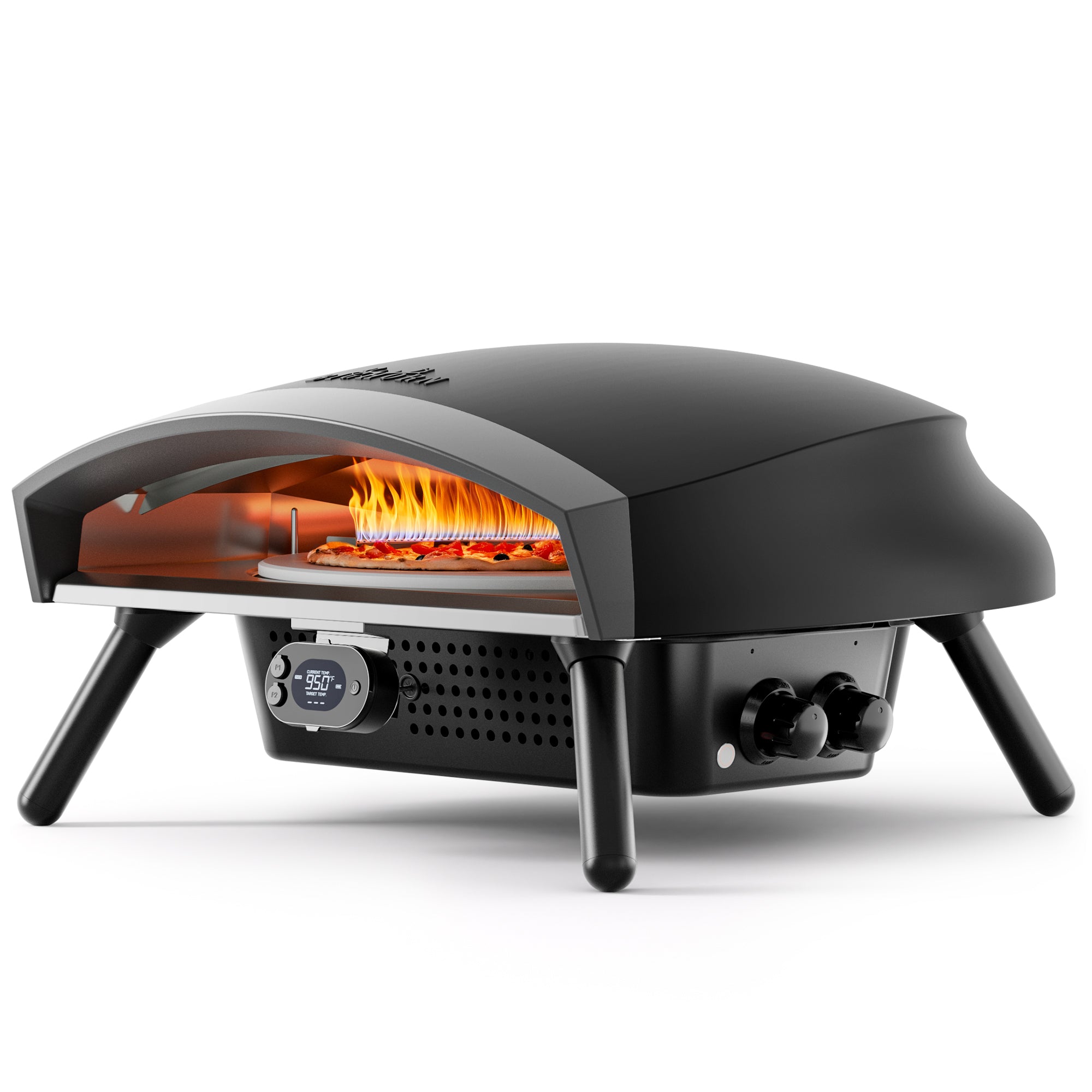
What does auto-rotation equalize during a party?
It equalizes time in the hot lane.
A continuously rotating stone keeps one rim from parking in the fiercest zone, so color and melt stay more even while you talk, stage the next peel, or reset toppings.
That is the party-specific win. On a quiet Tuesday you can turn by hand and learn the map. On a Saturday with eight people, the motor reduces the number of times you have to interrupt a conversation to spin a pie that was already drifting toward scorch. The current page for the 16-inch gas outdoor pizza oven with auto-rotating stone describes a ceramic stone that rotates continuously, a built-in digital thermometer, a claim of about 950°F with a 16-minute heat-up, and 60-90 second Neapolitan-style cook times. Treat those as live-page claims for that model, and confirm them before you plan a menu around a clock.
Rotation does not invent heat. If the stone is cool, the pie will still stall. If toppings are overloaded, the center will still lag. Use the motor as a consistency tool after the chamber is ready, not as a substitute for a soak.
When hand-turning still wins
Hand-turning still wins when you want a deliberate finish, when a pie needs a pause for a wet center, or when you are teaching someone the map. A motor that never stops can be the wrong motion for a pan-style or heavily topped pie that needs a calmer moment. Stop the rotation if your manual allows it, or lift the pie with a peel and finish with intention.
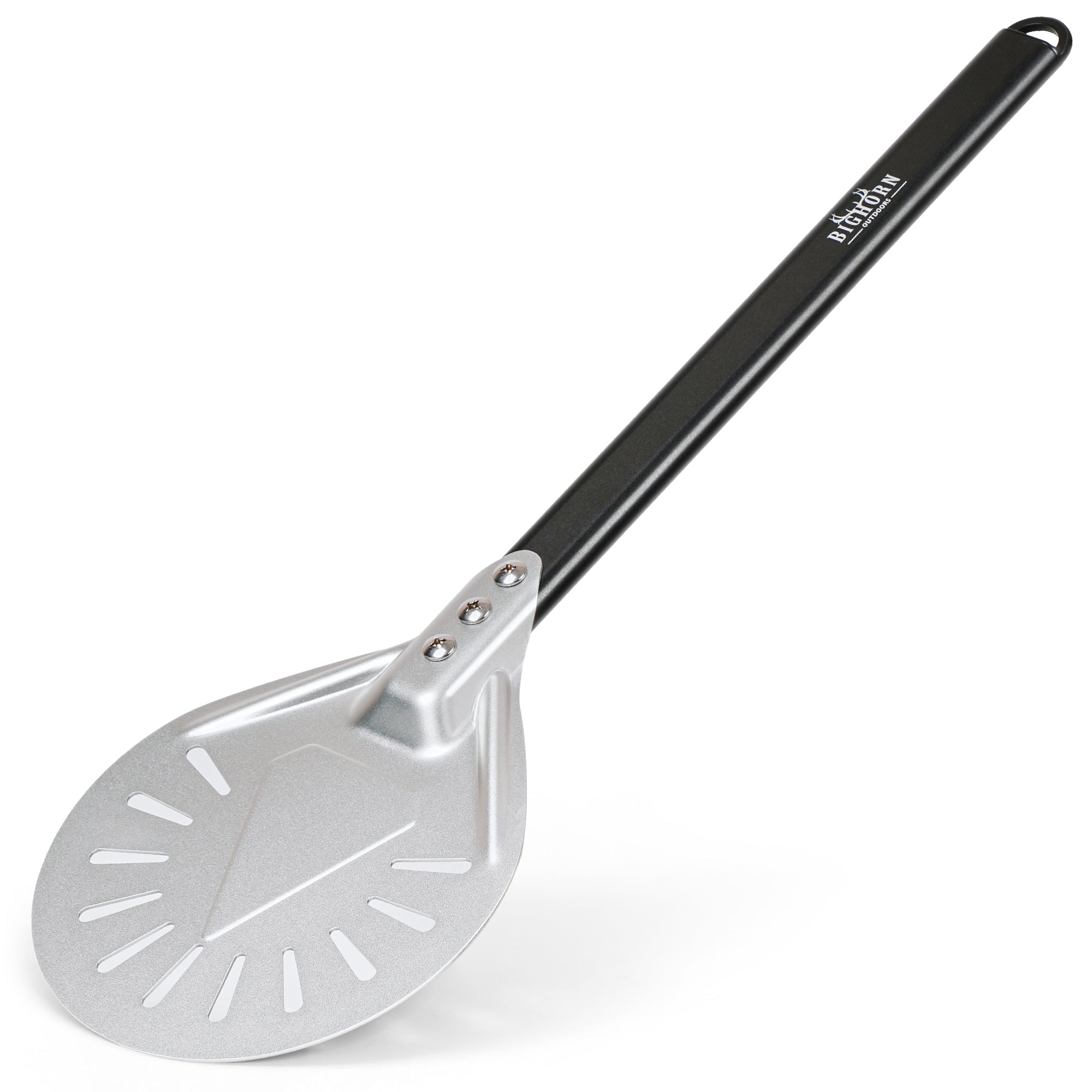
A 7-inch turning pizza peel remains useful even on a rotating stone: it corrects a slide, helps a stuck launch, and lets you move a pie that should not ride another full turn. Party ops is about having both tools ready, not about declaring one obsolete.
If wind is shoving flame toward the mouth, hand attention also wins. Check National Weather Service wind-safety guidance before you promise guests a set-and-forget motor night on an exposed deck.
How should you pace a party on a rotating oven?
Stage dough, then stage heat, then stage people.
Keep a short queue of ready dough balls, launch only into a recovered stone, and let the motor handle evenness while you manage the next peel and the topping station.
A workable cadence looks like this: heat until the thermometer and the stone agree with the style you want, launch pie one, let rotation work, land the pie, then wait for recovery before pie two. The motor saves turns; it does not erase the empty minute the deck needs. Party mise already has a deeper home on the pizza oven mise en place service plan; this page only needs the oven-side pacing.
Use the pizza calculator or a dough-batch plan if guest count is still fuzzy, and keep perishable toppings moving with ordinary food-safety timing from Clemson HGIC and Ready.gov food. A rotating stone will not rescue toppings that sat out through a long cocktail hour.
Motor maintenance during the season
Keep sauce, cheese, and ash out of the path the stone rides. If rotation hesitates, stop and cool the oven before you investigate; do not force a jammed pie around by hand against a struggling motor. Wipe cooled surfaces as the manual allows, and never hose the mechanism.
Listen for new noises. A grinding motor is a stop-and-diagnose signal, not a soundtrack. Confirm any digital thermometer care and any gas shut-off claims on the current product page and in the manual. Safety certifications mentioned on a listing are product claims; they do not replace leak checks, outdoor use, or attention.
Store the oven dry, covered when cool, and with the tank shut. Propane habits still follow NFPA grilling safety and a hose check. Local rules still apply.
Noise, weather, and other limits
A motor adds a light mechanical presence. On a quiet patio that can matter more than you expect; on a loud party it disappears. Weather matters more: rain, standing water, and high wind are poor nights for any outdoor gas oven, rotating or not. Keep the setup outdoors with air movement. Carbon monoxide guidance from the EPA indoor-air carbon monoxide guidance and the Red Cross fire safety pages still forbids “just pull it into the garage.”
If the night turns into a weather stop, shut the gas down, protect guests, and move already-cooked food into safe holding rather than improvising under a canopy that traps exhaust. Ready.gov home fire and U.S. Fire Administration cooking-fire pages are the calm references when a party plan meets a real hazard.
Rotating stone versus dual-burner: which party problem are you solving?
Choose rotation when your bottleneck is even color while you are busy hosting. Choose dual burners when your bottleneck is a left-right cold spot and slow recovery under multiple pies. Browse the gas pizza oven collection with that split in mind, and compare a dual-burner option such as the 15-inch dual-burner gas pizza oven only if the map, not the turn, is the pain.
If you are still deciding whether a rotating stone is worth owning at all, return to the worth-it style guide linked above. This page assumes you are already leaning toward rotation for service reasons. The table below keeps the party jobs separate.
| Party bottleneck | Rotating stone helps | Dual burners help | Still on you |
|---|---|---|---|
| One rim keeps scorching while you talk | Yes, by moving the pie | Sometimes, if the map is lopsided | Watching the pie and the queue |
| Pie two burns after pie one | Only a little | Yes, for even recovery | Empty soak time |
| Host cannot leave the mouth | Yes, fewer frantic turns | No, knobs still need attention | Staying with a live fire |
Key takeaways for a rotating party night
Heat the stone until it is ready, then let the motor equalize exposure while you run the queue. Keep a peel for corrections. Do not treat the motor as a hall pass to leave propane unattended. Match the tool to the bottleneck: rotation for evenness under social load, dual burners for map and recovery, hand skill for finishes. Confirm every temperature, time, and safety claim on the current oven page and in the manual before the first crowded night.
If party pacing is the reason you want a motorized stone, confirm the current features on the 16-inch auto-rotating gas pizza oven page and keep a turning peel ready for the moments the motor should not decide alone.
FAQ
Does an auto-rotating stone mean I can walk away from the oven?
No. Rotation equalizes exposure to a hot zone, but you still watch the pie, manage the queue, and stay with a live propane fire. A motor reduces frantic turning; it does not babysit an empty patio. Stay outdoors with the oven until the flame is off and the stone is done for the night.
When should I still turn by hand on a rotating gas oven?
Turn by hand when a topping-heavy pie needs a pause, when you want to finish one rim for color, or when the motor is off for a style that prefers a calmer deck. Auto-rotation is a party pacing tool, not a ban on peels. Keep a turning peel nearby for corrections.
Is a rotating gas oven the same decision as buying dual burners?
No. Dual burners reshape the heat map with two flames. A rotating stone moves the pie through whatever map you already have. Choose rotation when party pacing and even color are the bottleneck. Choose dual burners when left-right cold spots and recovery are the bottleneck. Some cooks want both features, but they solve different jobs.
What maintenance does the rotating mechanism need?
Follow the live product manual for your model: keep the stone path clear of debris, avoid forcing a jammed rotation, and shut the oven down if the motor sounds wrong or stops under a pie. Do not flood the mechanism with water or sauce. If the listing mentions a digital thermometer or auto shut-off features, confirm those details on the current product page rather than from memory.
More to Read
Leftover Holiday Turkey on the Grill or in the Pizza Oven: Sandwiches, Tostadas and a White Pie
Give leftover turkey a second heat, not another roast: grill sandwiches or tostadas, or bake a white pie, after a safe leftover inventory the night...
Parrilla Taco Night: Carne, Salsas and Grate Space for a Crowd
Run taco night on a parrilla as a grate-space plan: carne, a second protein, a salsa station, and tortillas held soft, without one crowded fire.
Bone-In Lamb Leg or Shoulder on a Santa Maria or Gas Grill
Grill a bone-in lamb leg or shoulder as a roast: Santa Maria height or a gas two-zone fire, a USDA safety floor, and a probe that does not touch bone.
