







Multi-Fuel & Convertible Ovens
A bolt-on burner looks like a shortcut to gas-oven life. The counterintuitive part is this: you are not buying a new chamber. You are changing how an existing pellet pizza oven takes heat. Fit, regulator, and the new heat map matter more than the idea of “adding flame.”
This page is a companion to the propane gas burner with regulator and hose, written for owners who already have a pellet oven and want faster weeknights. It is not a tank-runtime calculator; if you need to estimate how long a cylinder lasts, use a runtime guide rather than this fit-and-heat walkthrough. Camping fuel trade-offs also live elsewhere, including the pellet vs gas pizza oven camping comparison.
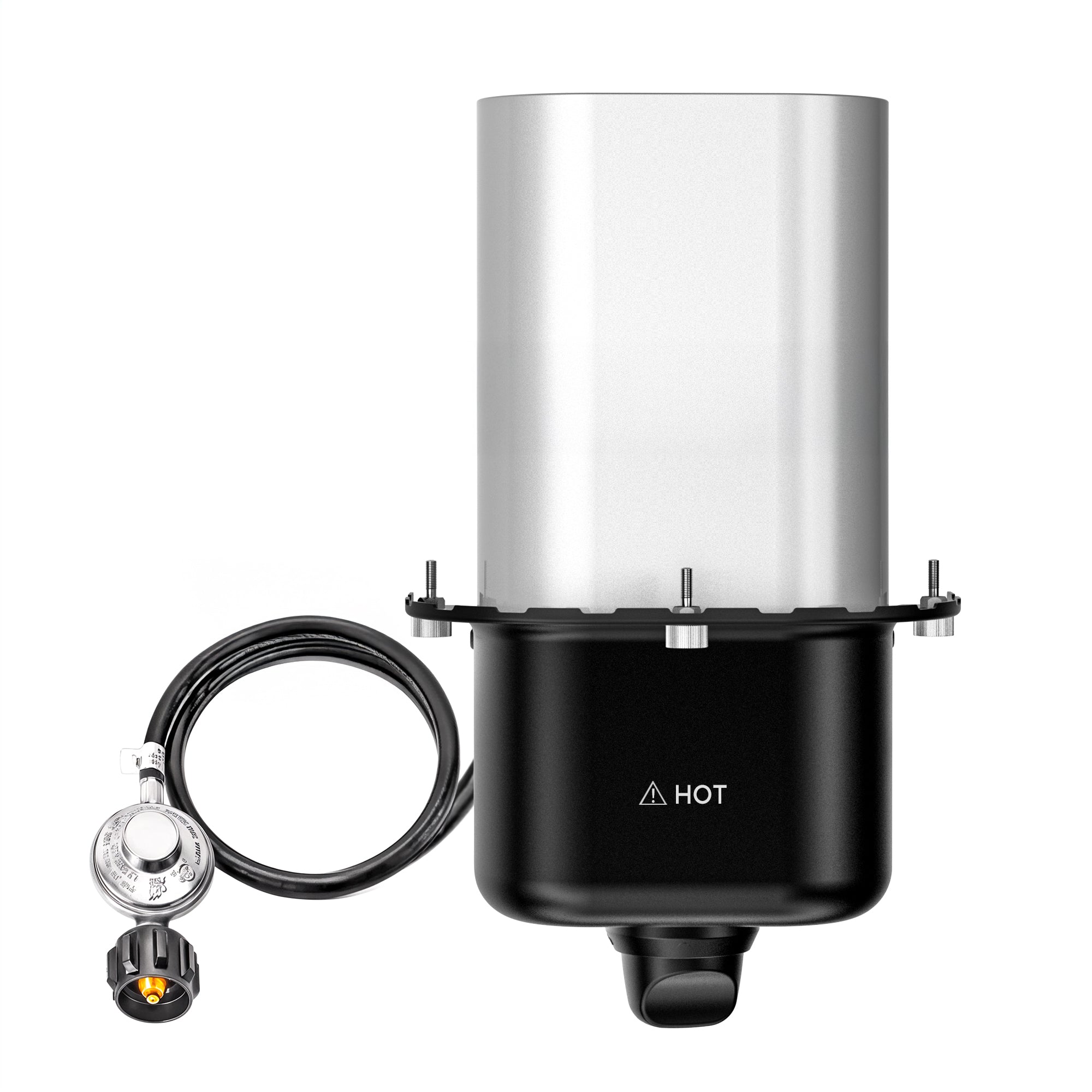
What a bolt-on burner changes
The attachment moves you from a pellet fire’s climb and ash management to a knob-controlled flame at the rear of the chamber. Heat can arrive more steadily once the stone is soaked, and you can stop feeding pellets between pies. What does not change is the need to read the stone, turn the pie, and wait for recovery.
The current burner page describes connecting the unit at the rear, a heat-control dial, and a low-power cooking function, and it mentions a control range up to 900°F. Treat those as claims on that listing, and confirm them on the live page plus your oven manual before you cook to a number. Rapid heating is a change in how you start; it is not a reason to launch before the deck is ready.
Cleanup usually gets lighter than a pellet-only night because you are not managing a full hopper of ash. You still have to leak-check, store the hose correctly, and keep the attachment point clear. If you wanted gas character without owning a second oven, this is the point of the accessory. If you wanted a chamber designed only around gas, look later at the dedicated comparison, not at a tighter screw on the same pellet body.
How should the burner fit a 12-inch or 16-inch oven?
Match the burner size to the oven.
Use the 12-inch burner size on a compatible 12-inch pellet or multi-fuel chamber, and the 16-inch burner size on a compatible 16-inch pellet oven, exactly as the current accessory page lists those two options.
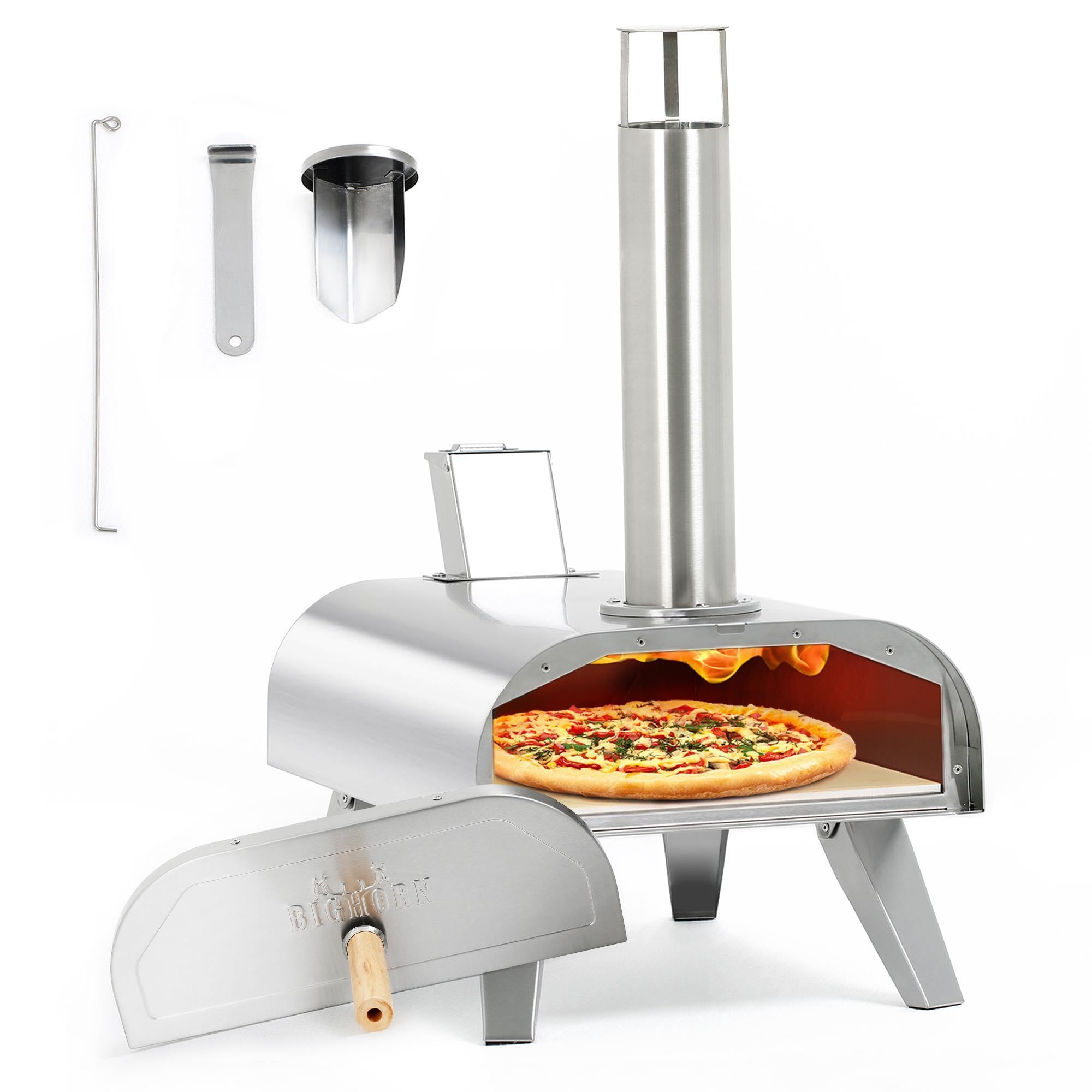
The 12-inch wood pellet pizza oven listing currently describes compatibility with optional gas burner and electric heater accessories sold separately. The 16-inch wood pellet pizza oven listing currently describes a dual-fuel, pellet-plus-gas-compatible setup with the gas burner sold separately. Neither page is a license to mix sizes.
Before the first install, dry-fit in daylight: confirm the rear opening, the hardware, and that the hose is not pinched against a leg or cart. If a clamp or port does not seat cleanly, stop and check the manual rather than improvising adapters. A clean fit is part of heat quality, because a crooked burner changes where flame enters the chamber and can paint one side of the stone.
Regulator and hose leak-check basics
Do the leak check before every first lighting of the night, not only on installation day. Keep the tank upright and outdoors, the hose unkinked, and the area free of grease or pellet dust. Open the valve, apply soapy water to every joint, and watch for growing bubbles.
If you see bubbles, smell gas, or hear a hiss, shut the tank and disconnect. Do not light “just to see.” A fuller walk-through lives in the gas pizza oven hose leak-test checklist, and tank habits are covered in how to check a propane tank for leaks. Official grilling guidance from the NFPA grilling safety pages is the better authority on outdoor gas use than a forum tip.
Store the regulator and hose off the ground, out of standing water, and away from the hot body of the oven when you pack up. A scorched hose is retired, not taped. Local rules for tanks on decks and balconies still apply.
How do you run pellet and gas on the same night?
Use one fuel at a time.
Either cook the whole menu on the burner after a cool, correct install, or finish the pellet course, cool the chamber, then fit gas; do not layer a live pellet bed under a newly opened propane line.
Weeknight cooks usually stay on gas once the burner is fitted, because the point of the accessory is fewer fuel additions. A flavor-first party might start on pellets, then switch only after a real cooldown, following a mid-cook changeover sequence rather than a mid-pie improvisation.
If you are still lighting a pellet fire, use a proper fire-start method instead of accelerants, and keep that process on its own page, such as a step-by-step lighting guide. The burner’s job begins only when the chamber is ready for a gas fitting and a fresh stone soak.
Flavor and crust differences
Pellets contribute more wood aroma; gas contributes cleaner, more repeatable heat. A bolt-on burner will not automatically recreate a wood-fired rim, and it should not be blamed for a pale top if the stone and dome were never brought into the same band. Read zones the same way you would on any outdoor oven, and keep style targets on a temperature-zone guide rather than re-teaching dough theory here.
Many owners use gas for weeknight pies and keep pellets for weekends when they want more smoke in the crust. That is a menu choice, not a defect in the attachment. Watch the first pie after a gas install closely: the flame side of a rear burner can still scorch a rim if you never turn.
Clearances and a safe gas setup
Give the oven, hose, and tank room to live outdoors. Keep the setup off low furniture that can scorch, away from siding and umbrellas, and out of enclosed patios, garages, and tents. Carbon monoxide guidance from the EPA indoor-air carbon monoxide guidance and the Red Cross fire safety pages applies as soon as you introduce propane.
Watch wind, which can drive flame toward the front or starve a burner. National Weather Service wind-safety guidance is a useful check before you cook on an exposed deck. Keep kids and pets away from the tank and the hose path, and have a working outdoor extinguisher within reach, as Ready.gov home fire pages and the U.S. Fire Administration cooking-fire guidance recommend for home cooking fires. Local fire codes still rule the patio.
When is an attachment enough, and when do you want a dedicated gas oven?
Choose the attachment if you already like your pellet oven and want a faster, cleaner weeknight mode without a second body to store. Choose a dedicated gas oven if you want a chamber and burner layout designed only for gas, or features a bolt-on kit will not add, such as a factory dual-burner map or an auto-rotating stone.
Browse the gas pizza oven collection when you are comparing purpose-built gas models. Keep the attachment when the pellet oven is still your main weekend tool and the burner is simply how you cook on a Tuesday. The table below is a decision card, not a ranking.
| Setup | Best when | Heat personality | Watch-outs |
|---|---|---|---|
| Pellet oven + matching burner | You already own the pellet oven and want faster weeknights | Knob control on an existing chamber | Size match, leak checks, same-night one-fuel rule |
| Dedicated gas oven | Gas is your default and you want a gas-first design | Chamber and burner built as a pair | A second body to store if you also keep pellets |
If you are adding gas convenience to a pellet oven you already use, confirm the 12-inch or 16-inch size on the current propane gas burner with regulator and hose page and leak-check the hose before the first weeknight pie.
FAQ
Do I need a different gas burner for a 12-inch and a 16-inch pellet oven?
Yes, match the burner size to the oven. The current propane-burner page lists a 12-inch pizza oven gas burner and a 16-inch pizza oven gas burner as separate sizes. Confirm the live accessory page and your oven manual before you order or install, and do not force a fitting that was described for a different chamber.
Can I run pellets and the gas burner at the same time?
Treat that as a no unless your specific manual clearly allows a combined fire. A same-night workflow usually means one fuel for heat-up and service, or a planned, cooled changeover between courses. Mixing a live pellet bed with a newly opened propane line is a safety problem, not a shortcut to more flavor.
How do I leak-check the regulator and hose?
With the oven outdoors, the tank upright, and no ignition yet, open the valve briefly and brush soapy water on the tank connection, regulator, hose, and burner fitting. Growing bubbles mean you should shut the tank, disconnect, and fix the joint before lighting. A dedicated hose leak-test guide on this site walks through the habit in more detail.
Will a bolt-on burner brown pizza the same way a dedicated gas oven does?
Not automatically. An attachment can add fast, knob-controlled heat to a pellet chamber, but the stone map, flame position, and recovery still belong to that portable oven. A dedicated gas oven is designed around gas from the start. Use the attachment for weeknight convenience, then judge crust on your stone readings rather than on a catalog promise.
More to Read
Leftover Holiday Turkey on the Grill or in the Pizza Oven: Sandwiches, Tostadas and a White Pie
Give leftover turkey a second heat, not another roast: grill sandwiches or tostadas, or bake a white pie, after a safe leftover inventory the night...
Parrilla Taco Night: Carne, Salsas and Grate Space for a Crowd
Run taco night on a parrilla as a grate-space plan: carne, a second protein, a salsa station, and tortillas held soft, without one crowded fire.
Bone-In Lamb Leg or Shoulder on a Santa Maria or Gas Grill
Grill a bone-in lamb leg or shoulder as a roast: Santa Maria height or a gas two-zone fire, a USDA safety floor, and a probe that does not touch bone.
