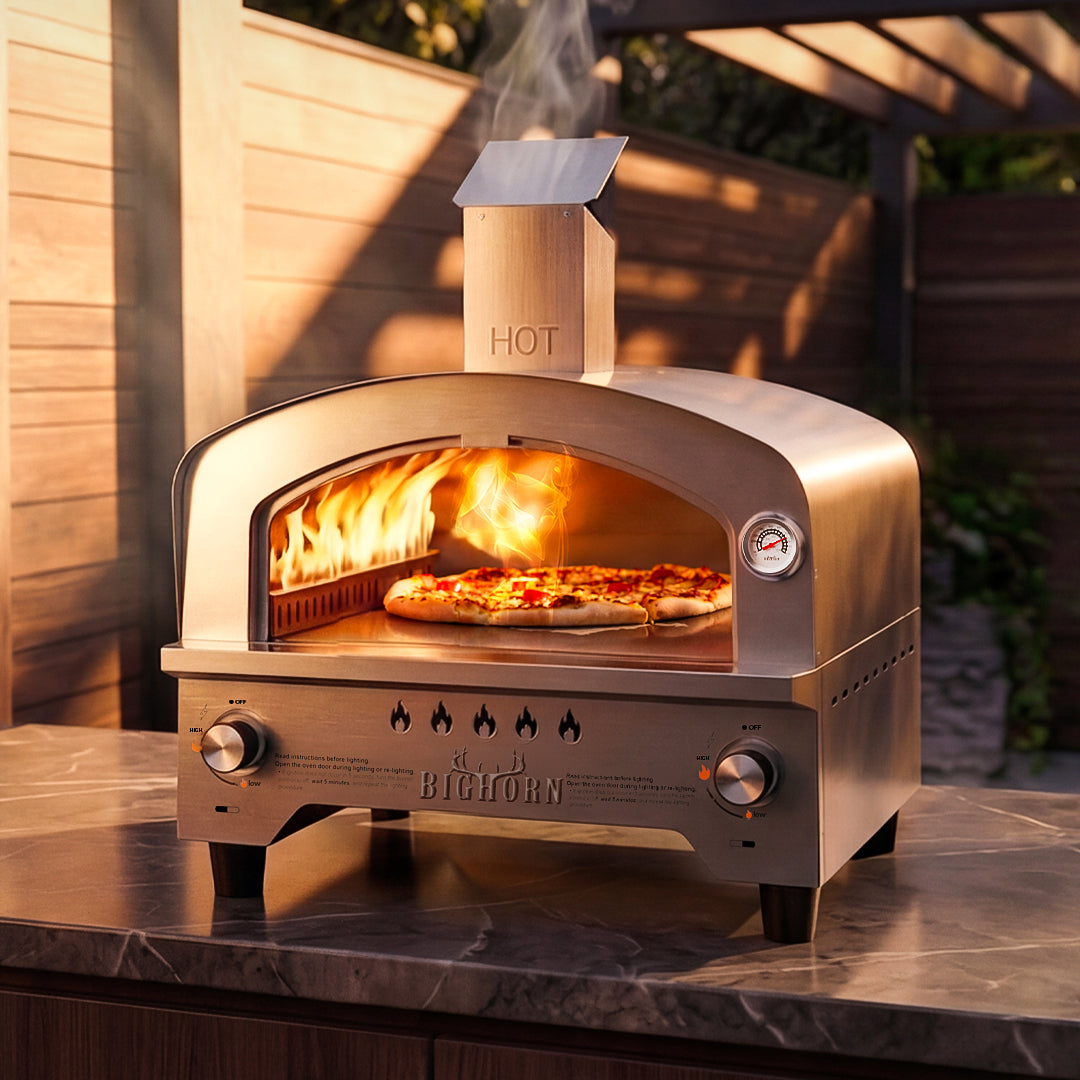
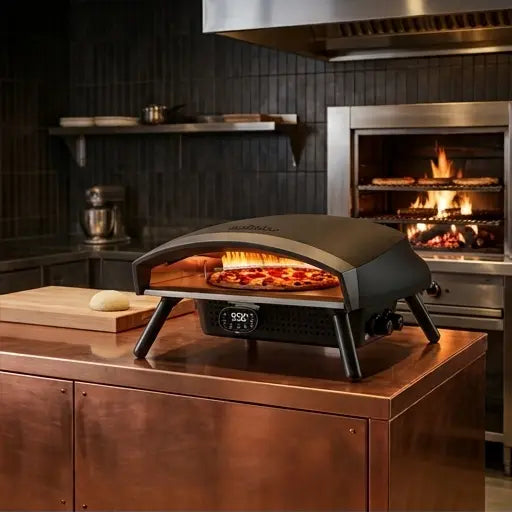
A backyard gas pizza oven serves ten guests comfortably when the oven is treated as one part of the evening, not the whole show. Plan around eight to ten shared pizzas arriving one at a time, backed by a cold appetizer and a salad, so guests eat while the cook works. The oven bakes each pizza in about 60 seconds once hot, which turns a ten-guest gathering into a manageable rhythm of long prep and short bakes.
Set the quantity from the menu
For ten adults with appetizers and sides, start with eight to ten shared pizzas, then adjust for pizza size, appetite, children, and dietary needs. A rehearsal with the exact dough and oven is more reliable than a universal pizzas-per-person formula. Make at least one spare dough ball — it protects the service from a torn launch and gives you a calibration bake before guests arrive.
Keep ball weights consistent so the oven does not face a different thickness each launch. The table below is a practical starting point, not a fixed rule.
| Item | Planned quantity | Backup or margin |
|---|---|---|
| Standard shared pizzas | 8–10 | Adjust after rehearsal |
| Dough balls | Pizza count + 1 | One test / spare |
| Topping combinations | 3 | Repeats as needed |
| Cold appetizer | Enough to cover the first gap | Refill from cold storage |
The backward schedule
Work backwards from the time you want the first pizza on the table. Dough fermentation depends on your formula, yeast, dough temperature, and room conditions, so use a tested recipe rather than a generic clock. A night-before mix, an overnight cold ferment, and a mid-afternoon ball-out on party day puts the dough where it should be when guests arrive.
Block out four prep moments ahead of time: dough mixed, dough balled, toppings cooked and portioned, and the cold station packed. Each has an owner so the host is not doing everything during the event.

Divide the yard into four zones
The practical trick for ten guests is zoning the space so the oven never becomes a hazard or a bottleneck. An oven zone holds the appliance, gas cylinder, hose, controls, peel, hot tools, and a clean landing board; only the designated cook enters it. A prep zone sits outside the radiant heat with covered dough and measured toppings. A cold zone keeps reserve toppings refrigerated until they move to prep. The guest zone is the seating area with a view of the oven without putting people between the cook and the gas valve.
A quick rehearsal with a cold peel — the full backward sweep, the cook’s stance, and the move to the landing board — draws these boundaries clearly and keeps guests out of the way during the bake itself.
Assign three roles
Ten guests cook far more smoothly with a three-person team than one exhausted host. A prep lead stretches dough one at a time and tops each pizza on command. An oven lead runs the bake — launch, rotate, pull — and watches the flame and gas. A host or service lead manages the table, cold food, and drinks. With clear roles, the oven keeps a steady output and nobody single-handedly manages the whole event.
Keep the bake rhythm steady
A gas oven makes the rhythm simple: keep the burners set, launch a pizza every couple of minutes, rotate once, and pull at about 60 seconds. Do not top the next pizza until the stone is nearing readiness, because a topped pizza absorbs moisture and can stick while it waits. Let the stone recover briefly between launches so consecutive pizzas bake identically.
Shut down on purpose
Plan the end of the bake before it happens. Close the valve on the tank before guests drift away, let the oven cool with the lid open, and move the landing board away from the hot zone. A written shutdown order — valve off, cool, clean — avoids the awkward moment when the last pizza is still on and everyone is waiting.
How do you handle dietary needs and allergies?
Collect allergy and dietary information in advance, and be honest that a shared flour-heavy workstation cannot guarantee allergen-free food. Offer at least one vegetable and one dairy-free option so guests with restrictions are not left with a single eatable slice. Label the topping combos at the table, and use separate brushes and peel sections for pizzas that cross dietary lines.
How do you set up a topping station that works?
A topping station is fastest when it is a production line: dough balls on the left, sauce and toppings in the middle, the launch peel on the right, and the oven beyond. Keep three topping groups that share baking behavior, and pre-measure them so a pizza can be assembled in under a minute. The prep lead works at the station while the oven lead bakes; that split keeps ten guests fed without the two of them tripping over each other.
What should you prepare the night before?
The night before removes almost all party-day stress. Mix the dough and set it for a cold ferment; cook and cool any proteins that go on top; portion the other toppings; and confirm the gas tank is full. The morning of the party, ball the dough and let it rest, then set up the zones and rehearse the peel sweep once. When guests arrive, you are only sequencing bakes rather than doing prep mid-event.
How do you budget for a ten-guest pizza party?
The budget splits into ingredients and fuel. For ten guests, plan roughly eight to ten pizzas: six to eight cups of flour, two to three pounds of mozzarella, two large cans of crushed tomatoes, and three topping groups. The gas consumption for a few hours of baking is modest, but confirm your tank is full before the event. Cooking at home is almost always cheaper per person than catering the same pizzas, and the leftovers extend the value the next day.
How do you keep the oven hot between batches?
Keep both burners set and avoid opening the oven more than needed. Between launches, let the stone recover for 20–30 seconds so the next pizza meets the same heat, and slide the landing board out of the hot zone in the meantime. The rhythm is a steady one-pizza-per-two-minutes flow, not a burst-and-pause pattern.
Ten-guest party FAQs
How many pizzas do I really need for ten guests?
Eight to ten shared pizzas with appetizers and salad is the reliable range. Children, dietary needs, and dessert shift it, so run one rehearsal beforehand if you can.
Can one gas oven keep up with ten guests?
Yes. With a 60-second bake and a two-minute rhythm, one oven produces a steady flow. The constraint is prep and space, not oven speed.
Do I need a helper?
Strongly recommended. Two or three defined roles make a ten-person pizza party calm instead of frantic.
To check the current specs and included accessories for a party-scale bake, review the 15-inch dual-burner gas pizza oven product page before you plan the menu.