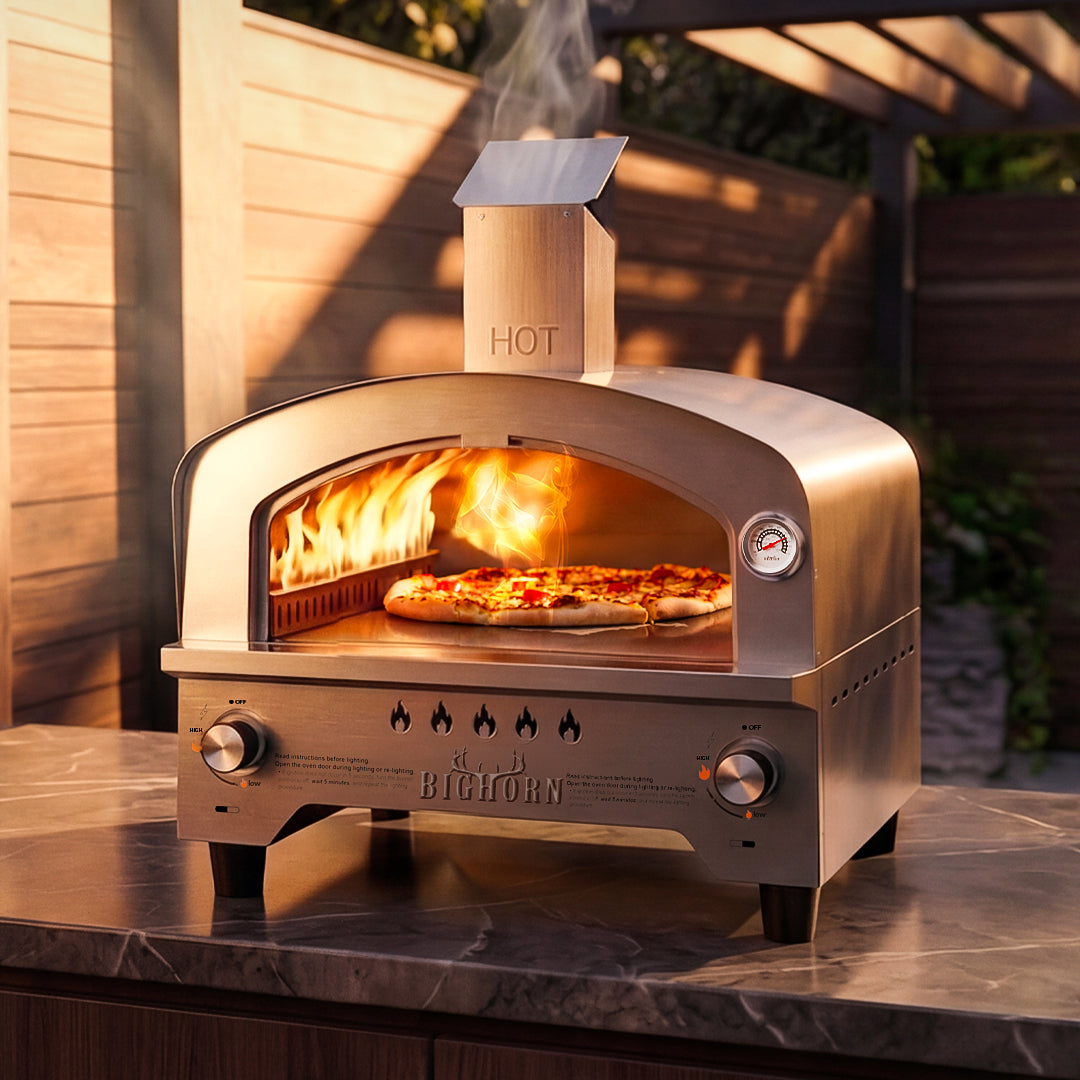
A campsite is not a backyard with trees. Fire restrictions can change overnight, tables may be combustible or unstable, wildlife rules affect food storage, and checkout or quiet hours may arrive before the stone is cool. A camping gas pizza oven works only when the appliance, cylinder, menu, site, and shutdown schedule are planned as one system.
Start from the two documents that control the trip: the current campground rules and the exact oven manual. A propane appliance may be permitted when wood fires are prohibited, but that is never automatic. “Gas stove,” “grill,” and “open flame” can have different definitions, so ask the managing authority about the appliance type and cylinder by name.
Build a Permission Card, Not a Memory
Restrictions can change with weather, staffing, or season. Record the official source and the date you checked it, then recheck within 48 hours of arrival.
| Question | Official answer | Source / date checked |
|---|---|---|
| Are propane cooking appliances currently allowed? | ||
| Is a permit or shutoff valve required? | ||
| Where may the appliance operate? | ||
| Are cylinder sizes or quantities limited? | ||
| What fire equipment must be present? | ||
| When must flame be extinguished each day? |
Pack a no-flame meal that covers dinner and the next morning. If restrictions tighten, wind becomes unsafe, or the designated area cannot meet the oven clearances, keep the cylinder closed and use the backup. A reservation does not create an exception.
Pack for the Walk, the Vehicle, and the Site
Portable weight excludes many necessary items. Measure the oven in its protected transport configuration and include the stone, regulator, hose, cylinder, approved support, peels, receiving board, gloves, leak-detection solution, extinguisher, chilled ingredients, and cleaning supplies. If the last stretch to the site is a trail, test the loaded carry at home instead of discovering the weight at dusk.
Protect the stone against flexing and point impacts according to the manufacturer. Cap or cover gas fittings so dirt and insects cannot enter. Secure the serviceable cylinder upright under the applicable transport rules and keep it out of direct sun in a hot vehicle. Separate clean-food, fuel, and dirty-return containers; leak-test supplies and fuel gloves do not belong with dough tools.
Read the Site Before Unloading Anything
Look up for branches, tarps, tent fabric, shelters, and awnings. Look outward for campers, vehicles, picnic traffic, dry vegetation, and doors. Look down for levelness, roots, combustible litter, and a surface that can carry the whole oven. A wood picnic table with a plastic coating, warped boards, or unknown load limits may look fine and still be unsafe; use the stand or surface specified for the appliance and support every foot.
The oven must remain outdoors in open air. A tent, vehicle, screened room, enclosed shelter, or camper doorway is not made safe by opening flaps or windows. Carbon monoxide from propane combustion can accumulate without warning.
Create a visible hot zone that includes the oven, cylinder, hose, controls, and the full peel sweep. Route the hose away from feet, chair legs, hot exhaust, and sharp table edges. Assign one adult to children and pets who is not also operating the oven.
Connect, Test, and Ignite in the Field
Use only the regulator, hose, fittings, cylinder, and fuel approved for the exact model. With all appliance controls off and ignition sources absent, connect by the documented method; never borrow an adapter or add tape where the fitting is not designed for it. Leak-test after every travel connection with the manufacturer’s solution—never with a match or lighter—and correct growing bubbles before lighting.
Open the cylinder valve and ignite only in the sequence stated in the manual. If ignition fails, turn everything off and wait the full dispersal period; repeated clicking while propane flows can accumulate gas. Strong gas odor, hissing, or a valve that cannot be closed means people move away, fuel stays closed, and the propane supplier or emergency services are called from a safe place.
Cold, Windy, or High: Field Variables Change the Bake
Altitude and low temperatures affect both propane delivery and the bake. At higher elevations, air is thinner, so a normal-looking flame may still be delivering less heat; give the oven a longer supervised warm-up and confirm the floor rather than the flame. In cold weather, propane in the cylinder produces less vapor pressure, which can slow ignition and recovery; keep the cylinder upright, use the correct regulator, and do not warm it with any heat source.
Wind, a cold stand, and ambient temperature change warm-up. Confirm normal burner behavior before loading food, and if the manufacturer permits surface measurement, take readings at the same locations with the same technique used at home. An infrared thermometer reports a surface, not chamber air or internal food temperature.
Choose a Menu That Protects the Cooler
Two to four pizzas are enough for a first trip. Use equal dough balls and two or three pre-portioned combinations, and pre-cook meat that cannot safely finish during a short bake. USDA guidance limits perishable food outside refrigeration to two hours under ordinary conditions and one hour above 90°F (32.2°C); at camp, repeated cooler opening and sun exposure shorten practical control.
| Item | Cold-storage plan | Field control |
|---|---|---|
| Dough | Covered box in cooler | Remove only the next ball |
| Cheese and sauce | Separate small containers | Refill from cold reserve |
| Pre-cooked toppings | Below 40°F (4.4°C) | Dedicated clean utensil |
| Finished pizza | Immediate service | Clean board and cutter |
Wildlife rules may require all food, waste, and scented supplies to return to a vehicle locker, bear box, or other designated storage whenever unattended. The prep table is not storage, and a closed cooler is not proof against animals that can open latches.
Set Wind and No-Go Conditions Before Lighting
Campgrounds often sit in valleys, near water, or among structures that create sudden gusts. Position the cold oven only as the manual allows; a close screen can block combustion air, trap heat, and redirect exhaust toward the cylinder.
Set a no-go condition before lighting: wind that rocks the stand, carries flame outside its normal path, pushes exhaust into occupied areas, or prevents stable ignition ends the cook. Do not rotate or carry a hot appliance to chase calmer air, and never relight repeatedly in gusty conditions. Keep dry grass and loose needles outside the required zone even when propane is permitted; the oven exterior and exhaust can ignite nearby material without an open wood fire.
Plan the Departure From the Last Pizza
The last pizza is not the end of oven time. The stone, burner shield, body, and tools must cool before movement, so establish the required pack-out or quiet-hour deadline and subtract full cooling, cold cleaning, disconnection, and packing from it.
| Departure calculation | Time |
|---|---|
| Required pack-out or quiet hour | |
| Cargo loading | |
| Cold cleaning and disconnection | |
| Tested cooling period plus margin | |
| Latest burner shutdown |
Learn the cooling time in a supervised home test rather than a generic estimate. Do not cool the stone with water, ice, rain exposure, or wet towels; an exterior panel can feel comfortable while internal parts remain dangerously hot. Follow the exact order for turning off the burner and cylinder, guard the hot zone, and disconnect only after the required cooling and instructions are satisfied.
Leave a Site the Next Camper Can Trust
Pack every food scrap and piece of waste according to campground rules. Grease, burned cheese, cleaning water, and sauce can attract wildlife and do not belong in soil or a fire ring. Separate dirty fuel equipment from clean food tools, and carry greasy waste in a rigid sealed container.
Before departure, count the stone, regulator, hose, tools, boards, gloves, cylinder, extinguisher, and oven parts, then inspect the ground for food, grease, hardware, and scorching. The final check confirms that no heat, leak, trash, or wildlife attractant remains.
Campsite Gas-Safety Checklist
Run this list once at setup and once before packing:
- Current official permission covers this appliance, this cylinder size, this location, and today’s date.
- The oven sits outdoors on its approved support with every clearance open and no overhead fabric.
- Fittings are capped for travel, the cylinder is secured upright, and the hose is away from heat, edges, and feet.
- Cold connection, leak test without flame, correct ignition order, and a full dispersal wait on failed ignition.
- Perishables below 40°F (4.4°C), raw and cooked tools separated, and wildlife storage rules followed.
- Burner, cylinder, and stone shut down early enough for every heat-retaining part to cool before packing.
Frequently Asked Questions
Can I use a propane pizza oven during a campfire ban?
Only when the current official restriction explicitly allows that appliance category and you meet every permit, valve, location, and fire-equipment condition. Ask for the rule by name (for example, “propane cooking appliance” versus “open flame”), record the answer, and keep a no-flame meal ready in case the answer changes.
Can I operate it under a campsite shelter?
Not unless the exact manual and site authority expressly permit that configuration and every overhead clearance and ventilation requirement is met. Check whether the shelter material is rated for heat and whether exhaust can escape; a tarp or awning that meets the letter of the clearance may still trap carbon monoxide in a breeze-blocked corner.
Is a wooden picnic table safe?
Do not assume so. Use the support material, dimensions, load capacity, and clearances specified for the oven, plus campground rules. A heat mat cannot automatically convert an unsuitable table, and a wobbly board under one foot is enough to change the risk.
Why does the flame look normal but the pizza is undercooked at altitude?
Thinner air delivers less heat even when the flame looks the same. Extend the supervised warm-up, confirm the floor temperature trend instead of the flame color, and use a smaller topping load on the first pizza before changing the fuel or equipment.
How do I know when it is cool enough to pack?
Follow the manual and verify all heat-retaining parts, including the stone, burner shield, underside, door, and tools. Learn the timing in a supervised home test, then add a margin for cooler evening air—not because the oven cools faster, but because hands move slower in gloves and darkness.
What should I do if the burner keeps going out in wind?
Shut down by the approved process. Do not build an improvised wind enclosure or relight repeatedly. If an approved calmer site is unavailable, use the backup meal and treat the wind condition as a no-go, not a challenge.
Camping Turns the Oven Into a System
Camping success depends on more than portable dimensions. Verify the rule, secure the fuel, read the site, keep the cooler controlled, and base service on actual floor recovery rather than flame appearance. Most importantly, stop early enough to return every component cold and leave no food or fuel problem behind. That complete field cycle makes a gas pizza oven a responsible camping tool instead of an unexpected campsite hazard.