
The best gas pizza oven is the one that matches your backyard and your cooking pace, and the comparison comes down to four features: pizza size, burner layout, convenience extras and footprint. Gas ovens win on speed and consistency — they start fast, hold steady heat and need no fire management beyond a dial — which makes them the natural choice for frequent outdoor cooking. This guide defines the criteria, applies them to Big Horn's gas pizza ovens, and explains how to compare any gas oven on the market without being led by marketing numbers.
Why gas for pizza
Gas pizza ovens trade the ritual of wood and pellets for pure convenience: turn on the gas, light the burner, and the oven is preheating while you stretch the dough. The heat is steady and repeatable, which suits cooks who want the same good result every week rather than a fire-management hobby. The trade-off is flavor — gas adds no smoke, so the crust's character comes from the heat and the dough, not the fuel. If you cook pizza often and value consistency, gas is the practical choice; if wood-fired flavor is the whole point, a pellet or wood oven fits better.
The criteria that decide the pick
| Criterion | Why it matters |
|---|---|
| Pizza size capacity | Your largest regular pizza must fit with launch margin |
| Burner layout | More burners and independent zones give heat control |
| Convenience extras | Auto-rotation and thermometers change the daily experience |
| Footprint and fuel | It must fit your patio and your propane setup |
| Price and value | Compare within your budget against features, not labels |
Answer the first four before you look at price. A gas oven that fits your pizzas, your patio and your routine is worth more than one with a bigger number on the box that does not fit your life.
Size: 15-inch vs 16-inch and beyond
Size is the first filter. If you mostly bake 12-inch pizzas, a 15-inch deck gives generous margin and a smaller footprint; if you regularly make 14–15 inch pies or host parties, a 16-inch oven adds peel room and faster stone recovery between bakes. The size decision should come from your largest regular pizza plus at least two inches of margin, and from how many pizzas you bake in a row. A single cook does not need the biggest deck; a party cook does. The size comparison guide covers this in more depth, but the rule is simple: match the deck to your pizza and your pace.

Burners and heat control
Burner layout determines how much control you have over the bake. A single burner heats from one side and forces you to rotate the pizza; a dual or multi-burner layout can create a hotter zone and a cooler zone, letting you manage the crust more deliberately. Auto-rotation removes the manual turning step entirely, which is a meaningful convenience for consistent results. When you compare models, ask what the burners actually do — how many there are, whether they are independently controlled, and whether the oven includes rotation or a thermometer. Those features matter more than the peak temperature on the label.
Convenience extras worth paying for
Some extras are worth real money. An auto-rotating stone gives even blistering with less hands-on work and is the single biggest convenience upgrade for frequent bakers. A digital thermometer removes the guesswork from preheat and session monitoring. A built-in stone that holds heat well matters for back-to-back pizzas. Extras like these change every cook, while a higher temperature number only matters if the crust actually benefits. Put the budget toward the features you will use weekly, and skip the ones that only impress on the spec sheet.
Reading the market without being misled
Gas pizza ovens are marketed hard on temperature and speed, so keep the criteria table in front of you. A "950°F capable" oven means little if the stone cannot hold heat or the burner layout creates a hot spot; a slightly lower-rated oven with even heat and a good stone often bakes better. Look for reviews that describe real bakes — pizza size, stone behavior and rotation — rather than temperature claims, and compare current prices on the product pages because they change. Your own criteria filter the marketing better than any review summary can.
Where Big Horn's gas ovens fit
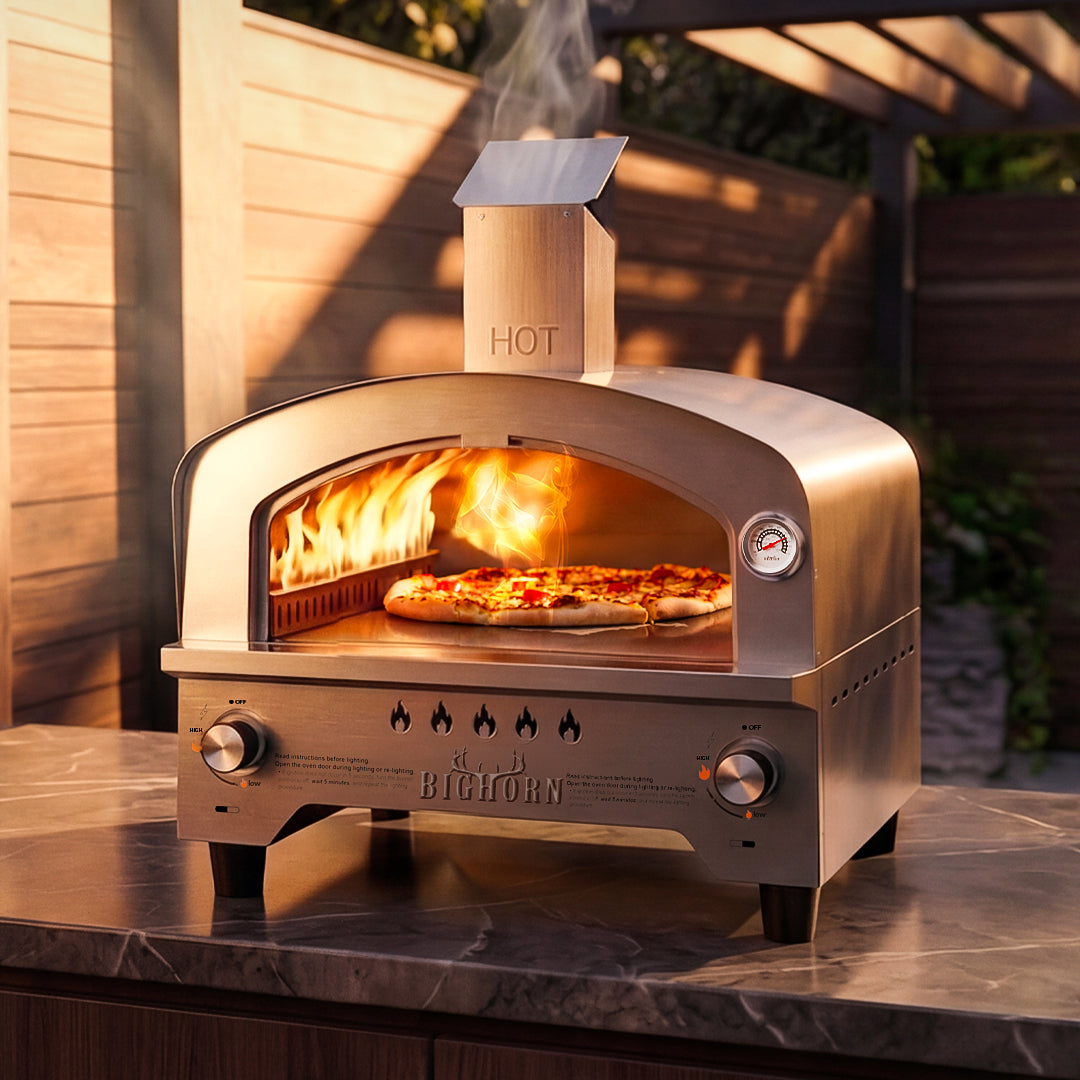
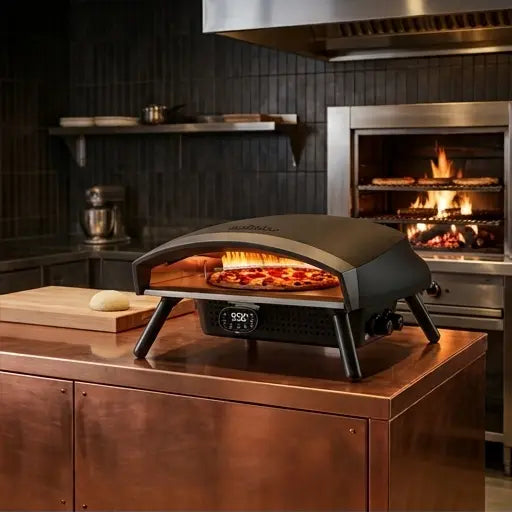
Big Horn's gas pizza oven collection includes models that fit this framework, from the 16-inch gas pizza oven with an auto-rotating stone and digital thermometer to the related gas options with different sizes and burner layouts. The product pages list the real specs and current prices, so run each model through the criteria table and compare within the line. This page is the single best-of owner for the gas family; the deeper size comparison and the auto-rotation guide answer the follow-up questions this overview raises.
The best gas pizza oven is not the one with the biggest number — it is the one that fits your pizzas, your patio and the way you actually cook. Decide the criteria first, compare within the gas category, and buy the model whose daily experience matches what you want from a pizza oven.
What beginners should look for
If this is your first gas pizza oven, prioritize the features that make early bakes successful: a stone that holds heat, easy ignition and temperature control, and a peel-friendly deck with some margin around your pizza size. A gas oven is already the easiest fuel to start with, so the beginner-friendly pick is the one that removes the remaining variables — a digital thermometer takes the guesswork out of preheat, and a turning peel or auto-rotation handles the even-bake step. Buy the simplest model that includes those conveniences, learn the launch and dough basics, and upgrade later only if a bigger deck or more burners would change how you cook.
What is included and what is extra
Read the box contents before comparing prices. Some gas ovens include the propane hose and regulator, a peel, or a stone cover; others sell those separately, which changes the real cost. A model that appears cheaper may need several hundred dollars of accessories to match a more expensive model that arrives ready to cook. Make a list of the system items — hose and regulator, peel, turning peel, cover, thermometer — and check each against the box contents. The criteria table compares the oven; the box-contents check compares the deal.
Comparing current models fairly
Gas oven lines change, so compare what is actually on the market today rather than what a review from two years ago describes. Open the product pages for the models in your shortlist, copy their listed specs into the criteria table, and note the current price and availability. If a spec is missing from the listing, ask the seller rather than assuming. Reviews matter most for real-world behavior — stone recovery, even heating, rotation reliability — so weigh patterns in recent reviews over headline temperature claims. A fair current comparison beats a confident memory of last year's model line.
Finally, if you can, see the oven in person or watch a full bake on video before buying. The physical footprint, the feel of the controls and the launch space are things a spec sheet cannot convey. Between the criteria table and a real look at the model, the "best gas pizza oven" question stops being a marketing contest and becomes a simple fit decision — and that is the version of best that actually serves your backyard.
Product details and prices in this guide were verified against official Big Horn Outdoors listings during the September 5, 2026 review; re-check prices and availability at checkout.
Explore more in the Gas Pizza Oven Guides.