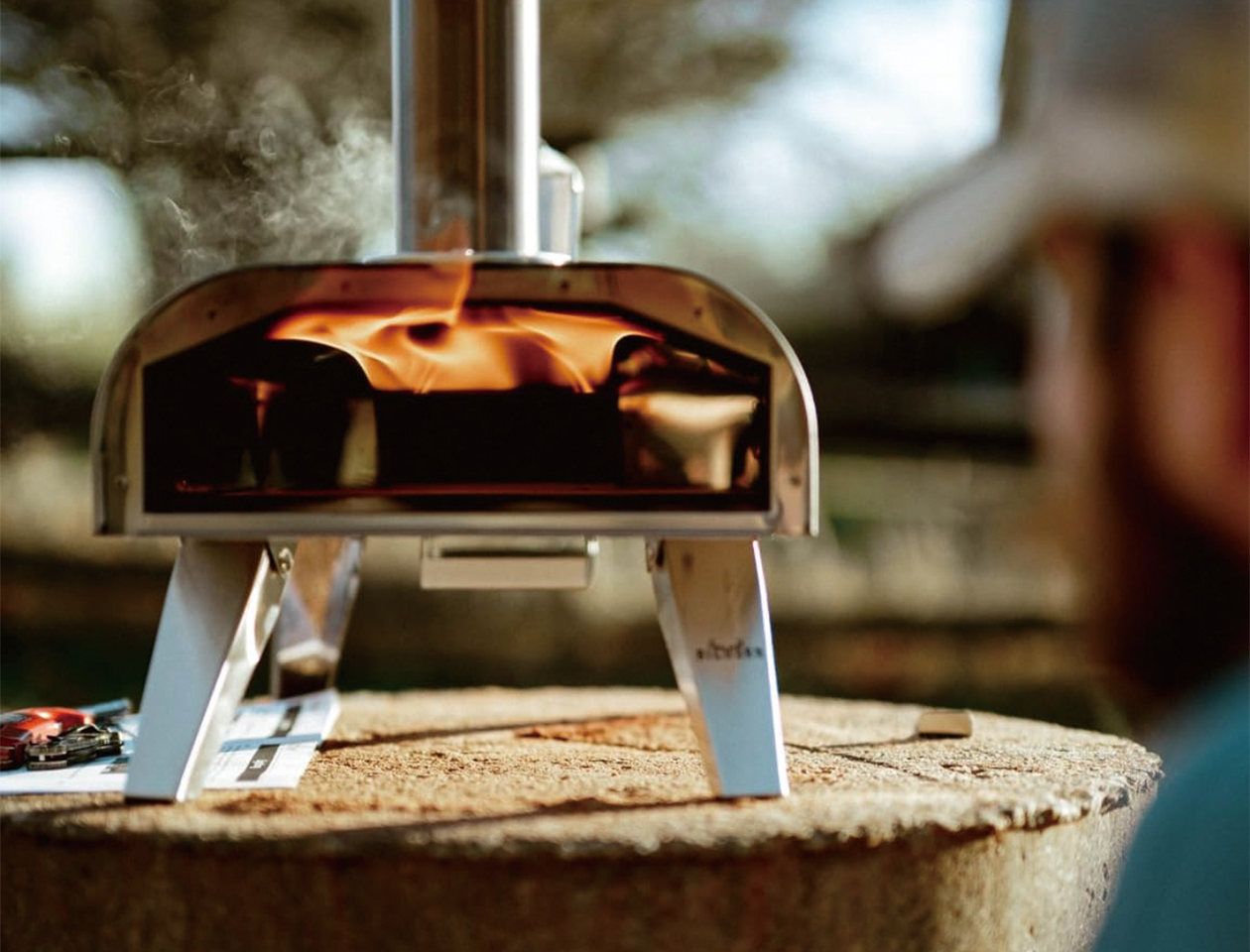
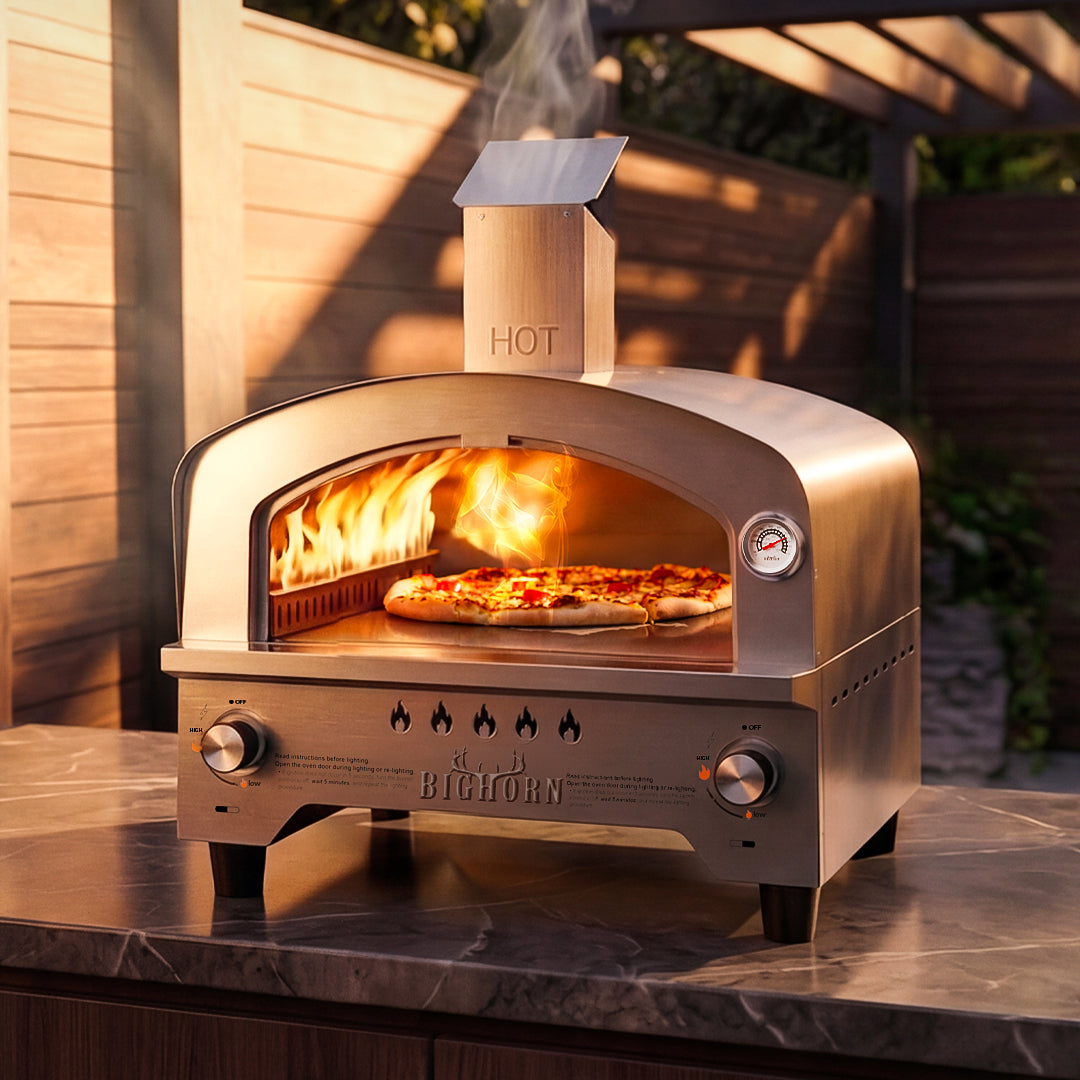
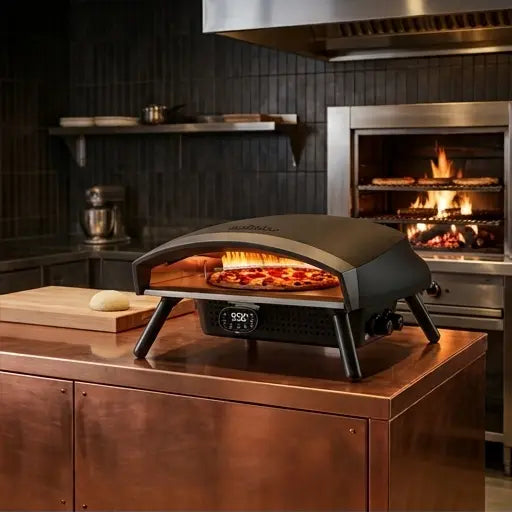
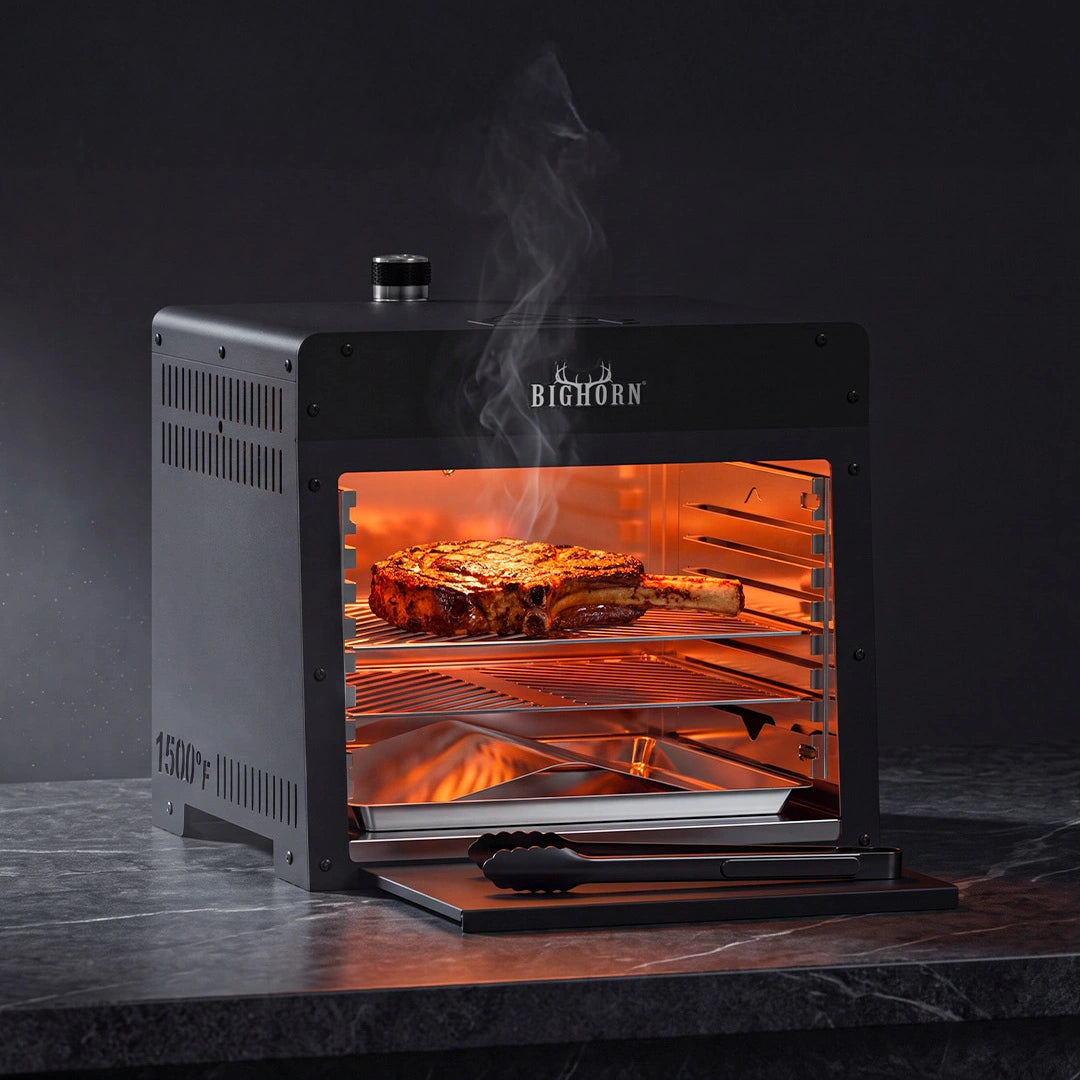
A propane outdoor oven may promise roasting, baking, and skillet cooking in addition to pizza. The claim is meaningful only when the chamber accepts real cookware, the burner can hold moderate heat, grease has a safe path, and food can be removed without reaching across flame. Maximum temperature does not answer those questions.
Run a four-dish acceptance test: flatbread, roasted vegetables, chicken, and a skillet dessert. Each dish exposes a different limitation while keeping the menu familiar, and each result belongs on a capability card you keep with the oven. Use the exact oven manual for approved cookware, door position, temperature controls, and location. Propane equipment designed for outdoor use must remain outdoors regardless of the recipe.
Measure the Cookware Envelope
Published floor dimensions do not equal usable pan space. A skillet handle needs clearance from the opening and burner. A roasting pan needs room for gloved fingers. A lid or tall chicken portion must pass beneath the roof without scraping.
Create cardboard templates for the intended pans, including handles and lifting space. Compare them with the cold oven at the dealer or after unboxing, before ignition.
| Dish | Tool or cookware | Critical fit question | Reject the use if… |
|---|---|---|---|
| Flatbread | Launch and turning peels | Can the bread rotate clear of flame? | Tool is too short or roof contact is likely |
| Vegetables | Low metal roasting pan | Can tongs stir without tipping the pan? | Pan blocks burner/airflow or cannot be gripped |
| Chicken | Deep grease-containing pan | Is there vertical and probe access? | Drippings can reach an unprotected flame |
| Dessert | Oven-rated skillet | Can two gloved hands control the removal angle? | Handle traps the door or points into traffic |
Confirm cookware material and coating limits with its manufacturer. “Oven-safe” may refer to a lower household-oven range than a pizza oven can produce. Avoid plastic, wood, silicone, nonstick, or enameled components unless they are explicitly rated for the actual temperature and method.
Never solve a fit problem by covering a vent, removing a burner guard, balancing a pan partly outside the opening, or using unknown bricks and tiles as risers.
Test Moderate Heat From a Cold Start
Versatility depends more on stable low and medium output than on the highest setting. Begin one trial from cold at the intended roasting control rather than heating to maximum and waiting for the stone to cool. Record the time, control position, chamber indicator if provided, and surface trend.
Propane flame reacts quickly to the knob, but the floor and walls respond slowly. After a high-heat pizza preheat, reducing the burner does not instantly reduce stored heat. This lag can burn a skillet base even while chamber air is cooling, so allow the stone to shed heat before a direct-contact pan test.
| Time | Control position | Center surface | Chamber indicator | Flame normal? | Observation |
|---|---|---|---|---|---|
| Start | |||||
| 10 min | |||||
| 20 min | |||||
| 30 min |
An infrared thermometer reports only the measured surface. Keep distance, angle, and location consistent, and do not use it for internal food safety. If the oven cannot maintain a normal flame at the desired control or repeatedly extinguishes, stop and follow the burner troubleshooting instructions instead of holding the valve between settings.
Dish 1: Flatbread Maps Top-to-Bottom Heat
Use one familiar dough, a restrained topping load, and a consistent diameter. Flatbread reveals whether the floor sets the base while burner heat finishes the top. Note first-turn timing and the side that colors fastest.
Burned black dust may be loose launch flour rather than crust. Improve the release process before changing the burner: keep the peel dry, top quickly, and perform a shake test. Clean the cooled or hot floor only by the method the manual permits.
If the base burns while the top stays pale, examine excess floor heat and weak upper heat. If the rim scorches on one side while the base is light, turn earlier and confirm the floor completed preheat. Use the result as a heat map for later pans.
Dish 2: Vegetables Test Pan Handling
Choose evenly cut peppers, onions, squash, cauliflower, or another vegetable suited to roasting. Use a low-sided approved pan with enough capacity to toss food without spilling oil. Do not overload it; crowded vegetables steam and make oven performance look weak.
Begin at a moderate cold-start baseline. Record the time to first stir, edge browning, center tenderness, and pan-base color. If food near the burner scorches, rotate the pan with a tool that keeps both hands outside the opening. If the base blackens before vegetables soften, the cooking floor may be too intense for direct pan contact at that stage.
Use only a manufacturer-approved rack, trivet, or heat buffer. Improvised tiles can crack, destabilize cookware, and alter airflow.
Dish 3: Chicken Tests Grease Control and Doneness
Chicken requires a deep, stable pan that contains rendered fat. Verify that the pan will not overfill and that it can be removed level with heat-resistant gloves. A rack inside the pan may help separate food from hot drippings, but only when the cookware and oven instructions allow it.
Surface browning is not proof of doneness. USDA guidance sets 165°F (73.9°C) as the safe minimum internal temperature for poultry; use a suitable food thermometer in the appropriate thick area without touching bone, and check more than one piece when sizes vary.
If the outside darkens far before the interior reaches the safe temperature, lower the approved heat profile, use smaller uniform portions, or choose another appliance. Do not shield flames with foil in a way that blocks ventilation or allow grease to contact the burner.
After the cook, note where grease traveled. Residue reaching inaccessible burner or insulation areas makes this menu impractical even when the chicken tastes good.
Dish 4: A Skillet Dessert Uses Declining Heat
A fruit crisp or cobbler can test residual heat after the main dish. The oven should cook the center without turning the base bitter. Use an oven-rated skillet whose handle clears the chamber and points toward a safe retrieval angle.
Check the base earlier than a household-oven recipe suggests because the floor may remain intense. If the oven permits a door, follow the exact rule for its use with a live burner; some doors have restricted positions or must not be fitted during operation.
Record whether the dessert needs an approved rack, whether the top browns evenly, and whether removal is comfortable. A dish that requires lifting a heavy skillet with one hand while reaching beneath a low roof is a failed acceptance test.
Sequence a Complete Menu
The oven’s stored heat suggests an order: pizza or flatbread at higher heat, then vegetables and chicken at a controlled roasting range, followed by dessert as heat declines. However, a safer first evaluation splits the dishes across multiple sessions. That approach lets the cook learn grease, cookware, and controls without racing between temperatures.
| Stage | Target dish | Burner change | Floor recovery/decline evidence | Holding plan |
|---|---|---|---|---|
| 1 | Flatbread | High-heat baseline | Serve immediately | |
| 2 | Vegetables | Approved moderate output | Covered short rest | |
| 3 | Chicken | Stable roasting profile | Safe rest/holding | |
| 4 | Dessert | Declining or documented setting | Cool on safe trivet |
Do not hold cooked food in an uncertain warm oven. USDA guidance generally treats hot holding as 140°F (60°C) or above; use an appropriate thermometer and a planned serving schedule so food moves from the oven to the table instead of sitting at an unknown temperature.
Evaluate Fuel Use Without Guessing the Cylinder
Do not estimate propane remaining by lifting a connected hot cylinder or pouring water over it beside the oven. Use the cylinder and fuel-monitoring methods accepted by the supplier and manufacturer. Begin a long menu with adequate fuel and a serviceable cylinder rather than planning a mid-cook change.
If a change is necessary, turn off the oven and cylinder by the prescribed sequence, let components cool as required, disconnect outdoors away from ignition, inspect, reconnect, and perform the full leak test. Never transfer propane between cylinders.
Log burner-on time at each control level. This will not precisely predict fuel in all weather, but it helps compare menus and decide when to begin with a fresh or refilled cylinder.
Cleanup Is Part of the Acceptance Test
Allow the oven, stone, pans, burner area, and grease to cool fully. Remove crumbs and residue by the model-specific method. Never pour water onto a hot stone or wash grease into the burner.
Time the cold reset. A versatile oven should allow the approved pan, stone area, and accessible surfaces to be cleaned without disassembling fuel components. Inspect the hose and fittings for grease or heat exposure, and store the cylinder and oven as directed.
Score each dish from one to five for fit, heat control, handling, food result, and cleanup. Give a zero to any unsafe workaround; good flavor cannot compensate for a pan that cannot be removed level.
Propane Multi-Dish Test Safety Checklist
- Approved open-air location with the specified cylinder, regulator, hose, fittings, cookware, clearances, and door configuration.
- Disturbed connections leak-tested by the manufacturer’s method—never with flame; cylinder upright and hose away from heat and traffic.
- Grease-containing pans sized so drippings cannot reach the burner; hands kept outside the chamber with the correct tools.
- Poultry and other proteins verified with a food thermometer (poultry 165°F / 73.9°C); hot holding at 140°F (60°C) or above.
- Stop for gas odor, hissing, abnormal flame, soot, or repeated flameout; no improvised vents, guards, tiles, or door seals.
- Exact burner-and-cylinder shutdown, then the oven, stone, pans, grease, and fuel components cool before cleaning, disconnection, covering, movement, or storage.
Frequently Asked Questions
Can a propane pizza oven roast meat safely?
Only when the exact manual permits the method, an approved pan fits and contains grease, and the oven can sustain the needed profile. Verify internal doneness with a food thermometer; chamber or floor readings are not substitutes. Run chicken as the third test dish so grease behavior is observed before you plan a full roast menu.
Can I use cast iron at maximum heat?
Cast iron may tolerate high temperatures, but seasoning, handles, lids, weight, and oven geometry still matter. Confirm the pan and oven instructions. Maximum heat is often unnecessary for roasting or dessert, and a stone that has stored high heat will keep cooking the pan base after the knob is turned down.
Should I preheat on high for every dish?
No. A cold-start moderate test may produce better roasting control and prevent the floor from storing excessive heat. Follow the recipe and exact oven instructions rather than applying a pizza preheat to every food, and let the floor shed stored heat between a hot bake and a pan dish.
How do I prevent grease flare-ups?
Use a correctly sized deep pan, avoid overfilling, keep grease from the burner, and follow the approved heat setting. If grease ignites or reaches an unintended area, shut down safely and use the manual’s response. Grease that reaches the burner area during the chicken test is a capability failure, not a recipe problem.
Can I close the door while the propane burner is running?
Only in the positions and operating modes explicitly allowed for that model. Door use affects combustion and heat; never improvise a tighter seal to increase temperature. If the door restricts peels or pan retrieval, that is a fit failure to record, not a reason to prop it at an unapproved angle.
Versatility Must Survive Four Real Dishes
A propane outdoor oven earns a place beyond pizza when it accepts safe cookware, holds moderate heat, manages grease, and finishes food without awkward retrieval. Run flatbread, vegetables, chicken, and a skillet dessert as controlled trials, then keep the scored results with the oven. The outcome is a menu-based capability map—not a list of theoretical uses copied from a maximum-temperature claim.