







Camping & Portable
Camping-stove mornings fail first because the canister is cold, the wind is up, and breakfast cannot wait. This is a shoulder-season decision guide, not a generic butane-versus-propane clone. Keep the stove outdoors, use a screen that does not trap exhaust, and confirm current fuel notes on the live product pages.
Why mornings fail first
Dawn is when canisters are coldest, when dew or frost is on the metal, and when you want a fast kettle. A stove that felt lively at a midday lunch can feel weak at 7 a.m., even if the forecast does not look like midwinter. Shoulder-season trips stack that early-hour problem with wind across an unsheltered picnic table.
The existing pages on a camping stove for cold weather and on butane versus propane in the cold cover the broader fuel comparison. This article stays on the morning failure mode: a cold bottle, a breeze, and a breakfast that has to happen before you break camp. Use those guides for the deeper fuel science; use this one to plan the first hour of the day.
National Weather Service winter safety and Ready.gov winter weather guidance are official reminders that cold, wind, and wet change outdoor work. They are not camping-stove manuals, but they are a better weather brief than a memory of last October.
Cold canister behavior, in qualitative terms
Liquefied-gas canisters need enough warmth to vaporize fuel. In qualitative terms, butane often feels the cold sooner than a propane mix, which is why a butane cartridge that was fine at a trailhead dinner can stutter at breakfast. That is a pattern, not a guaranteed temperature chart, and this article will not invent a cutoff degree or a boil-time table.
Keep canisters from sitting on frozen ground overnight when you can do so safely, following the stove and fuel-maker instructions. Do not warm a cartridge with a second flame, on a car heater vent in a closed cabin, or on an engine block as a hack. If the stove will not hold a flame, change the plan, not the laws of vapor pressure.
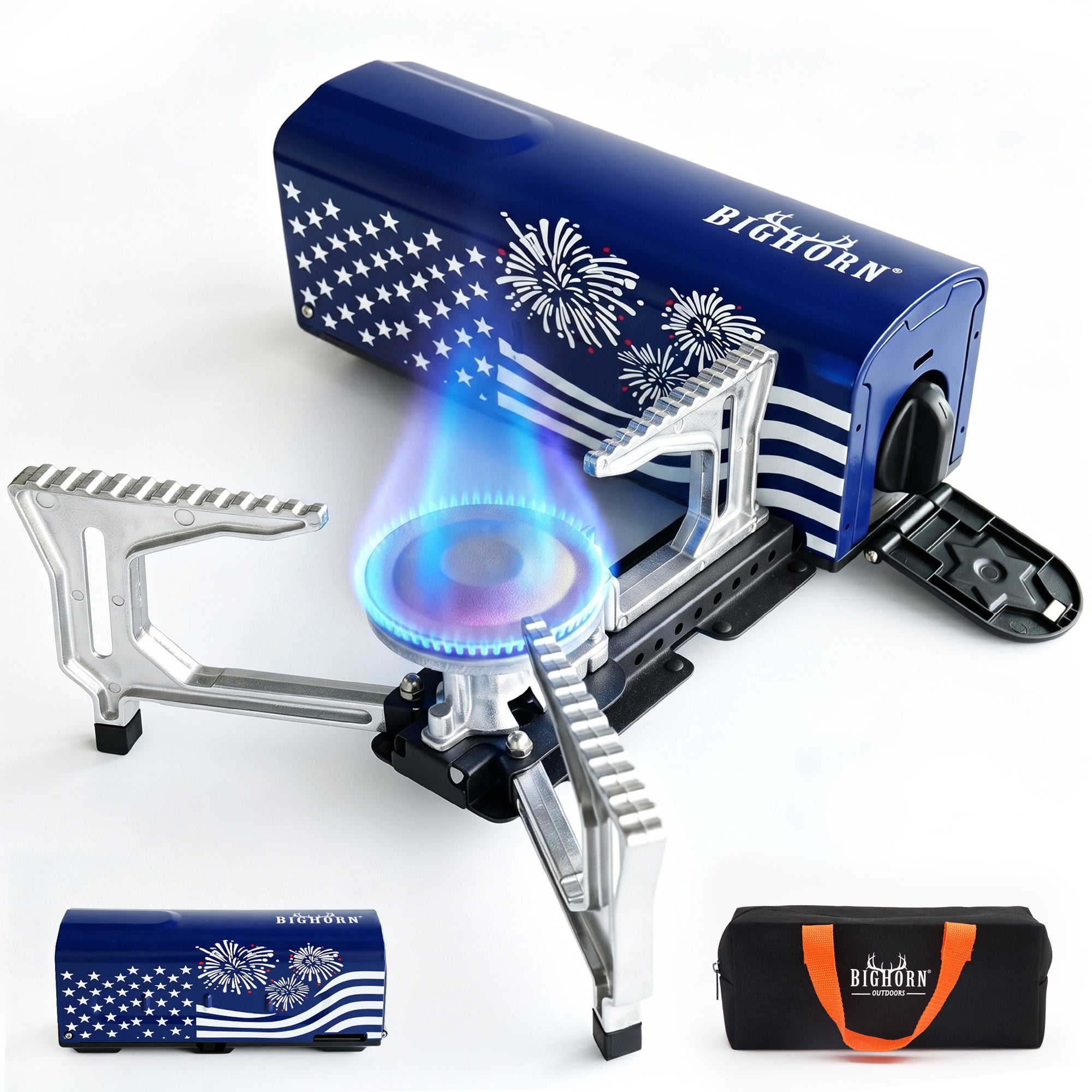
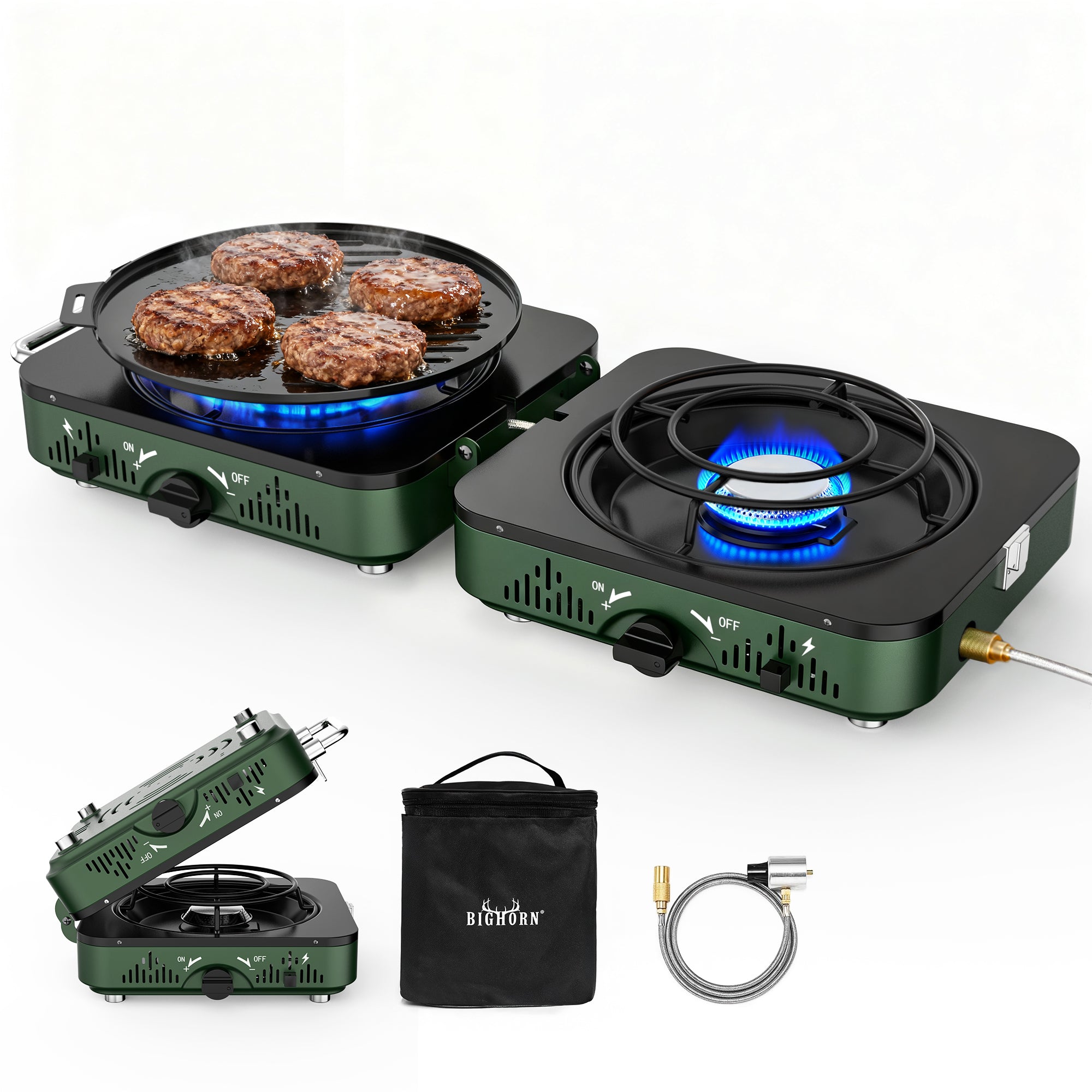
Confirm fuel type on the live listing before you pack. The current folding butane camping stove is a butane-cartridge path; the current portable two-burner propane camping stove is a propane path. Published BTU figures on either page are claims to recheck, not a promise that breakfast will boil in a fixed number of minutes on a cold morning.
Wind screens
Wind steals heat from the pot and can blow a small flame sideways. A low screen that blocks the breeze, stays stable, and does not enclose the burner is the usual field habit. Do not improvise a sealed box, a tightly zipped vestibule, or a ring of rocks that traps exhaust against the stove.
National Weather Service wind safety is the official wind-safety overview. EPA carbon monoxide information is the reason a "more enclosed" shelter is the wrong kind of help. Keep the stove fully outdoors, even when your hands are cold. The camp-stove wind-protection guide is the longer setup companion if you want barrier details; this page only needs the morning rule: block the gust, do not box in the exhaust.
A two-burner on a slightly sheltered table can be calmer than a single burner on an exposed tailgate, provided the table itself is stable and not a tip-over risk in the wind. Confirm the live stove page for any published stance, feet, or case notes rather than inventing a weight rating.
A trip-profile matrix
Match fuel to the trip you are actually taking, not to a generic "best for cold" medal. The table below is a planning aid. Recheck current listings in the propane camping stove collection and the butane camping stove collection before you pack either format.
| Trip profile | Often a better fuel conversation | Watch-outs |
|---|---|---|
| Short, mild shoulder-season walk with a lunch stop | A compact butane unit can still be practical if mornings are not near freezing and you have a wind plan | A dawn start on a cold cartridge; no indoor or tent use |
| Car camp with breakfast for two or more, wind expected | A propane two-burner, packed with enough cylinder capacity for a slow morning | Stable table, hose and regulator in good condition, stove fully outdoors |
| Alpine or near-freezing mornings | Lean toward a fuel the maker supports in the cold, and a pot-and-lid habit that wastes less heat | Do not invent a temperature rating this page does not have; read the live listing and official weather brief |
| Unknown wind and a tight schedule | Practice the stove at home outdoors, then pack the fuel you already proved in a breeze | A brand-new stove-and-fuel pairing at the trailhead is a weak experiment |
A product path, with disclosure
Big Horn Outdoors sells folding butane stoves and two-burner propane stoves. This article is part of that catalog, not a third-party fuel award. Choose the live listing that matches the cartridge or cylinder you can buy and legally transport, then read the manual for connection, leak checks, and storage.
If you already own one format, it is often wiser to change the morning plan — lid on the pot, better wind break, later breakfast — than to buy a second stove the night before a trip. If you are buying, confirm weight, packed size, and fuel type on the current page; packed-weight marketing claims should be rechecked, not copied from an old review.
NFPA grilling safety and U.S. Fire Administration cooking-fire prevention are home and cooking-fire references, and the same attention habit applies in camp: an attended stove, a clear area, and a unit that is fully out before it goes back in a case. FDA safe food handling still governs the breakfast you cook; a camp stove does not change official food temperatures.
A shoulder-season morning plan
The night before, stage the stove, the pot with a lid, the lighter, and the fuel off the bare ground if the maker's storage rules allow it. In the morning, set up in open air, block the direct gust without boxing the burner, and start with a kettle or a covered pot. If the flame will not hold, do not invent a heating hack for the cartridge. Eat a no-cook backup and try again when the canister has had honest ambient warmth.
Practice this once at home, outdoors, on a windy morning if you can. A trailhead is a hard place to learn that the cartridge you packed hates 40-degree dawn air.
Key takeaways
- Shoulder-season breakfasts fail first because of cold canisters and wind, not because the stove "stopped working" overnight.
- Butane often feels cold sooner than propane, in qualitative terms; this page will not invent a cutoff temperature or a boil-time chart.
- Use a wind screen that blocks the gust and does not trap exhaust. The stove stays fully outdoors.
- This is a disclosed Big Horn guide. Confirm live fuel notes, and keep official weather, CO, and food-safety guidance in the same pack plan.
For the broader fuel comparison, keep butane versus propane in the cold and camping stove for cold weather nearby, then confirm the current portable two-burner propane camping stove or folding butane camping stove listing before you pack.
FAQ
Why does a camping stove fail at breakfast first?
Mornings are when canisters are coldest and wind often hits an unsheltered table, while breakfast cannot wait. A stove that felt fine at lunch can feel weak at dawn. Keep the stove outdoors, and do not warm a cartridge with a second flame.
Is propane better than butane on a cold morning?
In qualitative terms, butane often feels the cold sooner than propane. That is a pattern, not a cutoff temperature this article will invent. Match the fuel to the trip, and confirm current notes on the live listings.
Can I put a sealed box around the stove to block the wind?
No. Use a low screen that blocks the gust and does not trap exhaust. A sealed box, a vestibule, or a tightly enclosed cook space is the wrong kind of help.
Is this a ranked review of camp-stove fuels?
No. Big Horn Outdoors sells folding butane stoves and two-burner propane stoves, and this article is part of that catalog. Read the live manual for the fuel you actually pack.
More to Read
Leftover Holiday Turkey on the Grill or in the Pizza Oven: Sandwiches, Tostadas and a White Pie
Give leftover turkey a second heat, not another roast: grill sandwiches or tostadas, or bake a white pie, after a safe leftover inventory the night...
Parrilla Taco Night: Carne, Salsas and Grate Space for a Crowd
Run taco night on a parrilla as a grate-space plan: carne, a second protein, a salsa station, and tortillas held soft, without one crowded fire.
Bone-In Lamb Leg or Shoulder on a Santa Maria or Gas Grill
Grill a bone-in lamb leg or shoulder as a roast: Santa Maria height or a gas two-zone fire, a USDA safety floor, and a probe that does not touch bone.
