







Camping Stoves & Fuel
The useful numbers here are small, and they are not a homemade carbon monoxide reading. One garage or mudroom is still one enclosed volume. One camping stove is one combustion source. One carbon monoxide alarm has to be in that room if you even discuss a last-resort setup — and the default number of indoor cooks is zero. Can you use a camping stove in a garage? The serious answer starts with those counts, not with a cracked door and a hopeful guess.
A garage or mudroom is still an enclosed space
A garage or mudroom is still an enclosed space, even with a door or window open. A camping stove can produce carbon monoxide and use up oxygen there. Use the stove outdoors. Treat any indoor or semi-enclosed cook as a last resort you should usually refuse, not a rainy-day habit.
People reach for a camp stove in a garage because it is already there, the weather is bad, or the power is out. The space feels familiar, and a slightly open door looks like ventilation. It is not the same as a campsite with open air on all sides. A mudroom off the kitchen is closer to the house, not safer. If you need the outdoor safety path in more detail, use the live page on camping-stove carbon monoxide, outdoor use, and monitoring.
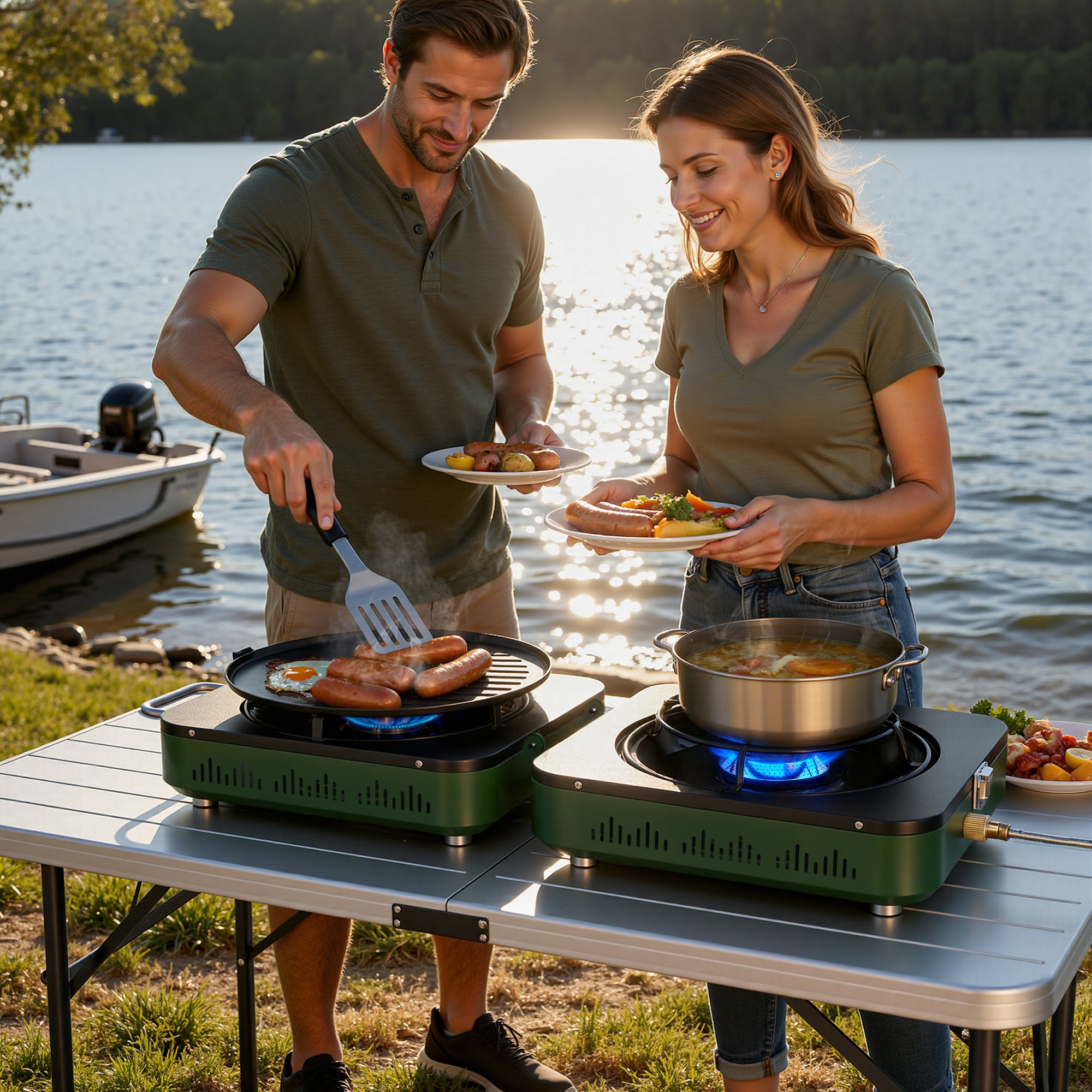
CO, oxygen and a ventilation rule you should not bargain with (CDC/CPSC)
Carbon monoxide is a colorless, odorless combustion gas. Public-health and product-safety agencies, including CDC and CPSC, warn against using camping stoves and similar fuel-burning devices in enclosed or poorly ventilated spaces such as tents, vehicles, and indoor rooms. This article will not invent a parts-per-million threshold, a clearance in inches, or a permit conclusion. The rule you should not bargain with is simpler: do not use a camping stove as an indoor cooker or heater.
EPA's overview of carbon monoxide and indoor air explains why CO is dangerous in enclosed air and why you should not try to "sense" it. U.S. Fire Administration cooking-fire prevention and Ready.gov home-fire guidance add the fire side: a garage holds cars, cardboard, fuel cans, and often a water heater. Lighting a camp stove there stacks risks that a picnic table does not. A mudroom can also share air with the house.
Oxygen depletion is part of the same problem. A flame in a tight space is not only a CO source. It is also a reason the air in that room can get worse while you stand over a pot. If a room feels stuffy, or anyone gets a headache or feels sick, get to fresh air and treat that as an emergency, not as a cue to "open the door a little more" and keep cooking.
Why “the door is open” is often not enough
An open garage door or a mudroom door on a hook still leaves walls, a roof, and a floor around the stove. Wind can blow exhaust back in. A vehicle, a freezer, or stored bins can block the opening you were counting on. Overnight air can sit still. "The door is open" is not a designed vent path, and it is not a reason to ignore the stove manual.
A window on the far wall does not automatically create a cross-breeze you can trust. A house fan aimed at the burner is not a vent. Do not run a camp stove in a garage with a running car, and do not use the stove to warm the room. If local fire officials or the manufacturer say outdoor use only, that instruction wins over a workaround.
When a power outage pushes people indoors — and safer alternatives
Outages are the usual pressure. The kitchen range may be down, the yard is dark and wet, and the camp stove is in the garage already. That pressure does not change the air in the room. Ready.gov power-outage guidance and Ready.gov food-and-emergency guidance start with food you can eat without a risky cook, and with a plan that does not depend on improvising a vent.
Safer alternatives, when they are available and allowed, include cooking fully outdoors in a stable, well-aired spot away from openings into the house, using a listed outdoor appliance as designed, or eating no-cook food until you can cook outside. A generator, a charcoal grill, and a camp stove all have their own enclosed-space warnings; swapping one combustion device for another inside the garage is not a solution. Cold-weather fuel behavior is a separate outdoor issue, covered in cold-weather camping-stove tips, not a reason to move the stove indoors.
How this differs from emergency-kit packing pages
Kit pages help you choose a stove, fuel, and a packing list before a storm. This page assumes you already have a stove and are staring at a garage or mudroom during bad weather or an outage. The packing question is owned by portable stoves for an emergency kit. The fuel-cluster overview sits in the camp stove fuel guides.
Keep the jobs apart. A kit can include a stove and still assume you will use it outside. Maintenance and storage, including the longer camping-stove care guide, also do not authorize an indoor cook. If your kit plan quietly assumed the garage was the kitchen, change the plan now, in clear weather.
A last-resort checklist that still says no when it should
If you are even discussing a last resort, work through the checklist honestly. The point of the list is to make "no" easy to say. It is not a permit, and it is not a set of clearances you can measure once and forget.
| Check | If you cannot say yes |
|---|---|
| The maker's instructions allow the setup you are considering, and local fire rules do not forbid it. | Do not light the stove. Cook outdoors or use no-cook food. |
| You can move the stove fully outdoors to a stable, aired location away from house openings. | Do that instead of "just this once" in the garage or mudroom. |
| You would be using the stove only to cook, never to heat the room or dry gear. | A camp stove is not a space heater. Keep it off. |
| A working carbon monoxide alarm is in that actual room, and you have a way to get everyone to fresh air fast. | Do not light the stove in that room. |
| Anyone in the household can refuse the cook and stop it immediately if air feels wrong or an alarm sounds. | The answer is no. |
In most ordinary power outages and rainy evenings, the checklist should end the idea. That is the intended result. American Red Cross fire-emergency guidance and NFPA home fire-safety guidance are official reminders that home fire and CO plans are not optional extras around a flame.
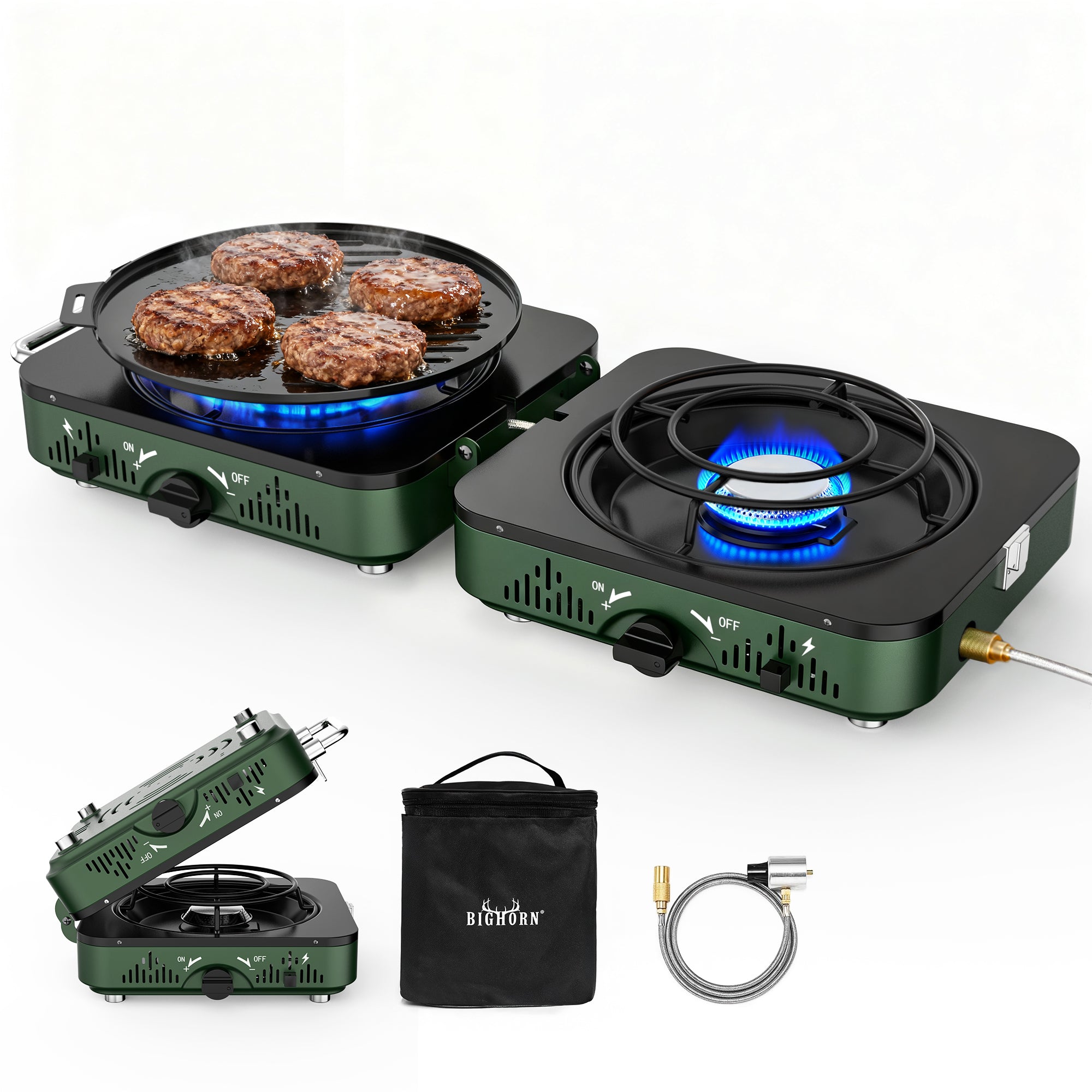
A CO alarm that is actually in the room, not in a far hallway
A carbon monoxide alarm in a hallway, a bedroom, or a distant basement does not watch the air over a garage workbench. If you keep an alarm as part of a last-resort discussion, it has to be in the room where the stove would run, installed and tested the way the alarm maker says, and loud enough to hear over a rolling boil. That still does not make an indoor camp-stove cook a good plan.
An alarm is a warning device, not a ventilation system. It cannot fix a closed volume. It cannot tell you that a slightly open door is "enough." If it sounds, get to fresh air and follow emergency guidance. Do not silence it and finish the pot.
A recap of who this method is for, and who should use a different cooker
This page is for someone tempted to light a camping stove in a garage or mudroom during rain, cold, or a power outage. The method is a hard outdoor default, a refusal to bargain about ventilation, and a last-resort checklist that usually still says no. It is not for people looking for a way to heat a workshop, dry clothes, or run a daily indoor kitchen on camp fuel.
If you need heat, use a heating appliance that is listed and installed for that space. If you need a meal, use no-cook food or an outdoor setup that is actually in the open. The camp stove can stay in the emergency kit. It does not need to come indoors to prove it was worth packing.
A portable 2-burner propane camping stove belongs outdoors. If you keep one for outages, pack it with a plan to cook outside, not with a habit of lighting it in the garage.
FAQ
Can you store a stove in a garage?
Storage and use are different jobs. A camping stove may be stored in a garage if the maker allows it, the unit is cool, fuel is secured as the manual and local rules require, and the space is not used as a living room. That is not permission to light the stove there. Keep cartridges or tanks away from heat and ignition, and do not treat a parked stove as a ready indoor cooker.
What are the downsides of a pellet stove?
A pellet heating stove is a different appliance from a camping stove or a pellet pizza oven. Common downsides of a home pellet heater include the need for a proper venting path, fuel storage, power for the feed system on many units, and professional installation or clearance rules. Those issues do not create a workaround for cooking on a camp stove in a garage. If you are comparing heating appliances, use heating guidance and local code, not this page.
What is the 3-2-10 rule for wood stoves?
The 3-2-10 rule is a chimney-clearance idea used with wood-heating appliances. It is not a camping-stove rule, and it is not a license to run a camp stove in a garage or mudroom. Do not translate a heating-chimney rule into a do-it-yourself indoor cook setup. For a camping stove, the working rule remains outdoor use, with ventilation you do not bargain away, and local fire guidance if you are in an emergency.
Is butane gas safe?
Butane is a common outdoor camp fuel when the stove is used in the open, the cartridge is seated correctly, and you follow the stove manual. It is not a safe indoor heating or cooking fuel in a closed garage, mudroom, tent, or vehicle. Like other combustion fuels, it can produce carbon monoxide and consume oxygen. Use butane outdoors, and store cartridges as the maker and local fire rules require.
More to Read
Leftover Holiday Turkey on the Grill or in the Pizza Oven: Sandwiches, Tostadas and a White Pie
Give leftover turkey a second heat, not another roast: grill sandwiches or tostadas, or bake a white pie, after a safe leftover inventory the night...
Parrilla Taco Night: Carne, Salsas and Grate Space for a Crowd
Run taco night on a parrilla as a grate-space plan: carne, a second protein, a salsa station, and tortillas held soft, without one crowded fire.
Bone-In Lamb Leg or Shoulder on a Santa Maria or Gas Grill
Grill a bone-in lamb leg or shoulder as a roast: Santa Maria height or a gas two-zone fire, a USDA safety floor, and a probe that does not touch bone.
