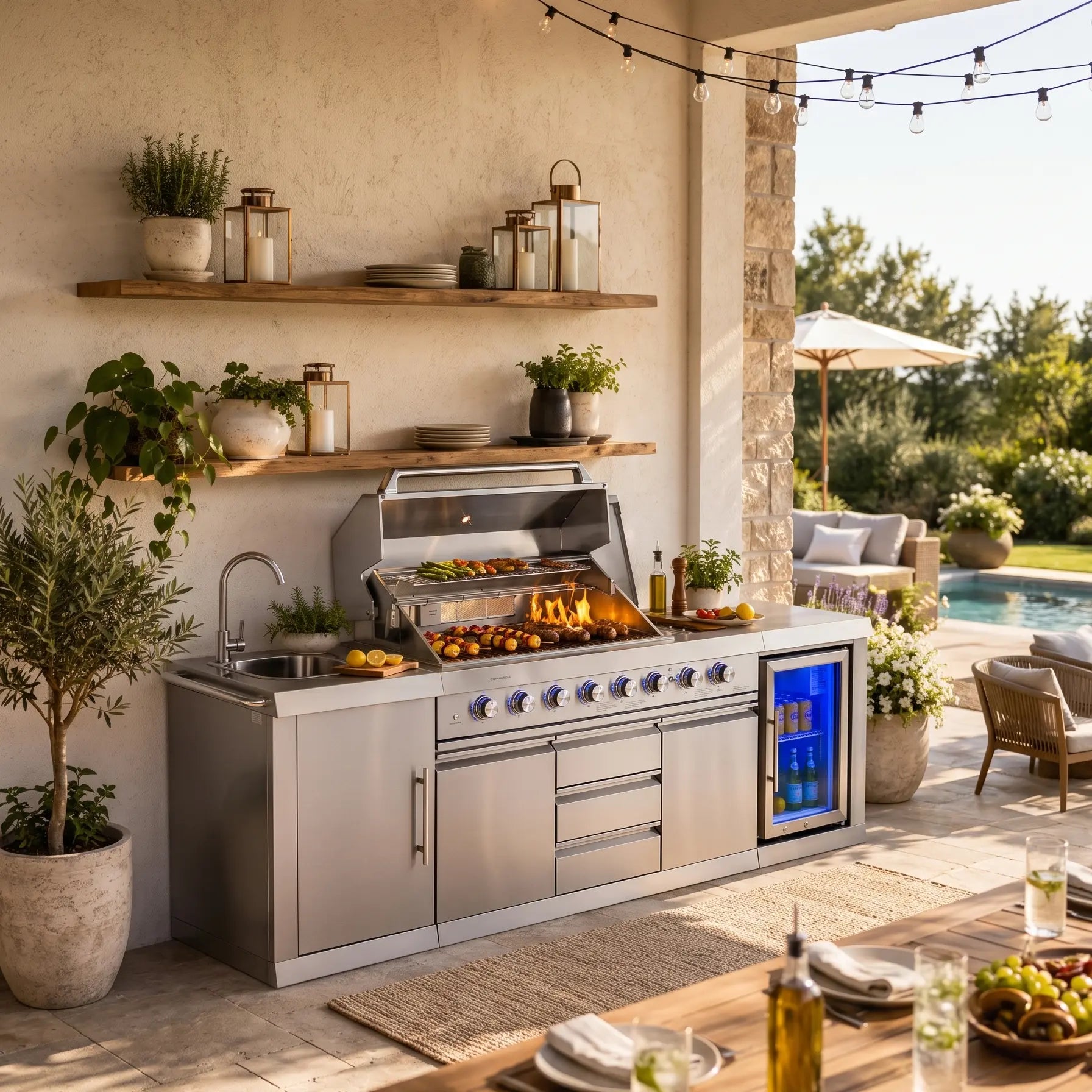
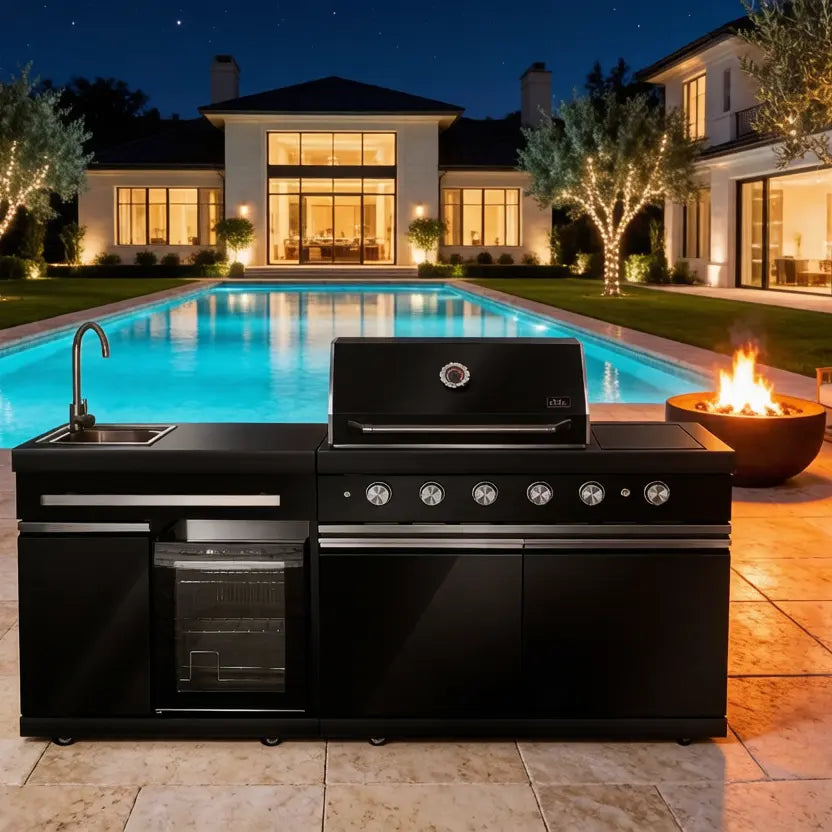
Yes—if you build it as a portable, modular setup rather than a permanent outdoor kitchen. A practical multi-zone station separates high-heat pizza cooking, low-and-slow smoking, and a fire-pit gathering area without brickwork, contractor labor, or built-in utilities; however, whether all equipment fits under $500 depends on current product prices and the accessories you already own.
By the Big Horn Outdoors Product Team
A permanent outdoor kitchen can require masonry, utility connections, cabinetry, and a dedicated foundation. A portable outdoor cooking layout follows a different model: each appliance has one primary job, can be moved or stored as needed, and does not require brick, mortar, built-in gas lines, or professional construction.
The goal is not to crowd every heat source into one corner. It is to create a practical backyard pizza and smoker setup with three distinct areas:
- A high-heat cooking zone for pizza, flatbreads, vegetables, and fast searing
- A low-and-slow zone for barbecue, roasts, poultry, and smoked vegetables
- A gathering zone centered on a fire pit for warmth and conversation
This modular concept lets homeowners, renters, campers, and RV travelers begin with one appliance, then add more zones as their cooking needs and available budget grow.
What Is a Multi-Zone Outdoor Cooking Station?
A multi-zone outdoor cooking station separates cooking tasks by heat level and purpose instead of asking one appliance to do everything. Three zones—high heat, controlled low heat, and a social fire area—can create a more efficient backyard workflow than one crowded grill station.
The concept follows the same operating principle as an organized professional kitchen: ingredients move from preparation to cooking to serving with minimal crossing paths. In a backyard, this reduces congestion, keeps hot tools contained, and gives guests a clearer place to gather.
A portable outdoor cooking layout can include folding tables, rolling carts, standalone ovens, smokers, and fire pits. It does not need permanent countertops, masonry, or built-in utility connections to be functional.
The three-zone approach
| Zone | Primary job | Suitable foods | Placement priority |
|---|---|---|---|
| High-heat zone | Fast radiant and convective cooking | Pizza, flatbreads, vegetables, steaks | Near prep and serving space |
| Low-and-slow zone | Controlled indirect cooking over time | Ribs, pork shoulder, brisket, poultry | Downwind and away from foot traffic |
| Gathering zone | Warmth and social use | Marshmallows, drinks, conversation | Separate from active cooking paths |
A pizza oven and smoker serve different cooking purposes. Pizza needs intense heat that quickly sets dough, browns cheese, and develops crust color. Smoking uses lower, steadier heat and clean airflow over a longer period.
The fire pit should function as a separate social zone rather than another crowded appliance at the cooking line. This gives guests a comfortable place to gather without stepping through the pizza-prep area or near the smoker.
Which Portable Layout Works Best in a Small Backyard?
An L-shaped or staggered-line layout generally works best for a small backyard because it separates heat sources while keeping prep, cooking, and serving within a practical walking distance. Avoid putting the pizza oven, smoker, and fire pit in one tight straight line.
Start with a flat, stable, noncombustible area such as concrete, pavers, or another surface approved in the appliance instructions. Then organize the movement of food and people: ingredients should move from prep table to cooker to serving area, while guests should be able to circulate around the cooking zone.
For a compact patio, use this basic layout:
- Place the prep table nearest the house, outdoor dining table, or serving area.
- Position the pizza oven beside the prep area, leaving room for pizza peels, turning tools, and hot-food landing space.
- Locate the smoker farther away, ideally where smoke will not drift toward guests, doors, or open windows.
- Place the fire pit as a separate destination beyond the main cooking lane.
- Keep doors, gates, stairs, and emergency access routes open.
Wind direction is a practical placement factor. Smoke from a pellet smoker or wood-fueled pizza oven should not blow toward the cook, underneath a low roof, through an open window, or across seated guests. Always review the current manufacturer instructions for required clearances, ventilation, and placement before finalizing the layout.
For a portable station, folding utility tables and rolling carts are often more useful than permanent cabinets. They hold flour, dough boxes, tongs, food probes, trays, cutting boards, and cleanup supplies during a cook, then can be stored afterward.
How Should You Choose Fuel for Each Cooking Zone?
Choose fuel according to the cooking job, desired control, local fire rules, storage conditions, and appliance instructions—not flavor preference alone. Pellets and wood support live-fire cooking, propane favors rapid flame adjustment, and electricity is suitable only for appliances rated for electric operation in the intended setting.
Fuel selection affects startup time, cleanup, smoke output, storage needs, and how easily a portable station can be moved. It also determines which tools and safety practices you will need.
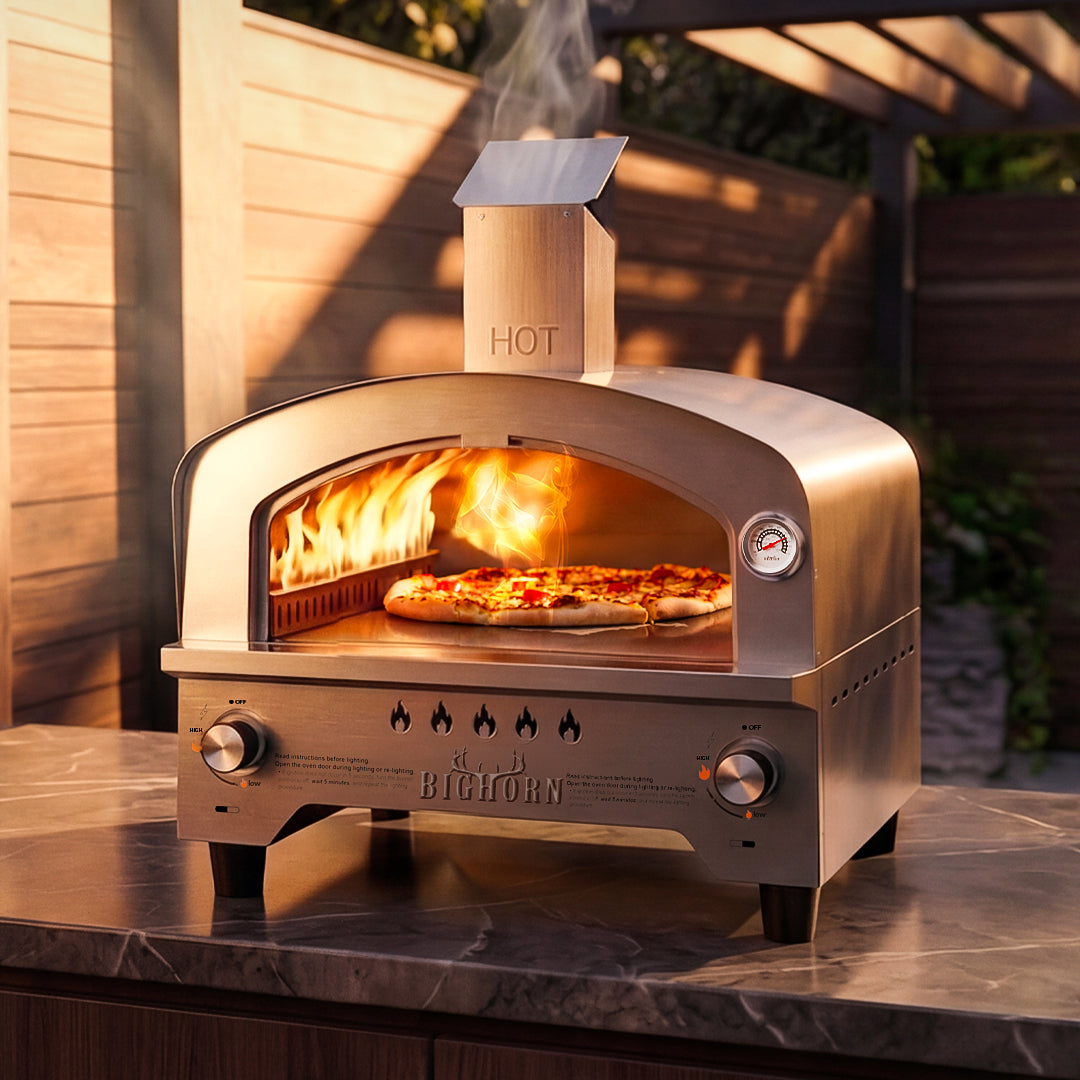
Big Horn Outdoors offers pizza ovens in pellet, gas, electric, and multi-fuel formats, but fuel compatibility is specific to each model. Do not attach a burner, heater, regulator, or accessory unless it is expressly approved for the exact appliance.
The Big Horn Outdoors multi-fuel pizza-oven collection includes models designed for wood pellets with propane gas or electric power. The current collection information lists 12-inch Pellet & Gas and 12-inch Pellet & Electric models, each described as capable of reaching 350°C, or 662°F, in approximately 20 minutes in the applicable gas or electric mode. These details apply only to the listed models and should not be generalized to the rest of the Big Horn Outdoors range.
Match the fuel to the job
- Wood pellets: Suitable for cooks who enjoy a live-fire workflow and wood-fired flavor. Use food-grade hardwood cooking pellets only, not heating pellets or unknown pellet blends.
- Propane: Useful for fast outdoor startup and responsive flame adjustment. Store cylinders upright outdoors and away from heat sources.
- Electricity: Appropriate only for products specifically designed for electric operation and the intended location. Confirm outlet, cord, weather, and ventilation requirements before use.
- Charcoal or wood: Often selected for stronger radiant heat and traditional live-fire cooking. Both require ash management, airflow control, and manufacturer-approved outdoor clearance.
A smoker may run on pellets, charcoal, wood, gas, or electricity, depending on its design. Choose the model that matches your desired temperature control, cooking capacity, fuel access, maintenance tolerance, and cooking frequency.
Build the High-Heat Pizza Zone First
A high-heat pizza zone needs more than an oven: it requires a stable, heat-appropriate stand and a dedicated landing area for tools and finished food. The space should let the cook launch, turn, retrieve, and serve pizzas without reaching across a hot oven opening.
Big Horn Outdoors traces its outdoor-cooking focus to a 2012 backyard cooking challenge centered on uneven heat, excessive smoke, and unstable temperatures. That same practical approach applies to a modular backyard station: a capable oven needs safe placement, an organized prep surface, and appropriate tools to work effectively.
Plan for these pizza-zone essentials:
- A stable surface suitable for the oven’s weight and heat requirements
- A nearby table for dough, toppings, flour, pans, and serving boards
- A pizza peel and turning peel sized for the oven’s opening and pizza diameter
- A brush for clearing flour and debris from the cooking surface
- A heat-resistant tray or landing surface for hot tools
- Covered storage for dry ingredients and accessories
Pizza cooking uses several forms of heat transfer at once. The heated stone transfers energy into the dough through conduction. Flame and hot internal surfaces radiate heat to the top of the pizza. Heated air contributes convective heat around the crust and toppings.
This is why strong pizza results depend on more than a stated maximum temperature. Stone recovery, flame position, dough hydration, topping quantity, and turning technique all influence the bake.
For example, the Big Horn Outdoors 12-inch Pellet & Electric Pizza Oven is listed in the current multi-fuel collection as suitable for wood-pellet operation outdoors in an open area. Follow the latest instructions for the exact model when using electric mode, including its outlet, surface, ventilation, and weather-exposure requirements.
Add a Low-and-Slow Smoker Zone
A smoker zone should be placed where it can operate for hours without obstructing the pizza station, seating area, or access to the home. Successful low-and-slow cooking depends on stable heat, controlled airflow, clean combustion, and enough time for collagen-rich cuts to become tender.
Smoking works differently from high-heat pizza cooking. As tougher cuts cook gradually, collagen converts into gelatin and fat renders over time. Raising the temperature aggressively may reduce cook time, but it can affect moisture retention, bark development, and the final texture of the meat.
A functional smoker zone includes:
- A level, suitable outdoor surface
- A food probe thermometer for monitoring internal temperature
- A rolling cart or folding table for trays, foil, gloves, and seasonings
- A metal ash container for fully cooled ash
- Dry storage for approved cooking fuel
- A clear path for monitoring food, fuel, grease, and airflow
Do not treat a smoker as a substitute for a pizza oven. The smoker’s controlled indirect heat works well for ribs, brisket, pork shoulder, poultry, fish, and vegetables that benefit from longer cooking. A pizza oven’s high heat is better suited to fast browning, crisp crusts, and quick roasting.
For a practical backyard pizza and smoker setup, begin larger smoked cuts earlier in the day. Use the pizza oven later for appetizers, vegetables, flatbreads, or pizzas while the smoked food rests. This schedule prevents both cookers from requiring constant attention at the same moment.
Create a Separate Fire-Pit Gathering Zone
A fire-pit gathering zone should prioritize people, clear access, and safe spacing rather than food preparation. Keep seating outside the fire pit’s heat and spark exposure area, and keep the fire pit separated from active cooking traffic.
A fire pit can extend an outdoor meal beyond dinner by creating warmth and a social focal point. It also adds another ignition source, which is why it should not be squeezed between a pizza oven, smoker, fuel storage, and guest seating.
Arrange chairs so people can enter and leave without walking between the fire pit and the cooking station. Keep cushions, rugs, dry leaves, décor, and other combustible materials beyond the clearances specified by the fire pit manufacturer.
Do not operate a fire pit under a low combustible roof, in an enclosed area, or near overhanging branches unless the exact product instructions allow it. Follow local burn restrictions, keep appropriate fire-safety equipment accessible, and allow the unit to cool fully before covering or moving it.
Big Horn Outdoors Expert Views
“A capable backyard cooking station does not have to be permanent. Begin with the cooking tasks you do most: high heat for pizza and fast roasting, steady indirect heat for smoking, and a separate comfortable place for guests to gather. Keep each appliance on a stable, appropriate surface; make room for prep and hot tools; and follow the instructions for every specific product. A modular layout works because it can change with the season, the meal, and the number of people you are serving.”
What Can a $500 Budget Realistically Cover?
A $500 budget may cover a basic portable cooking foundation, but it will not always cover a new pizza oven, smoker, fire pit, accessories, and fuel simultaneously. The most practical approach is to build in phases and confirm current prices before defining a final package.
Prices, availability, promotions, delivery costs, and accessory requirements change. Treat the budget as a planning limit, not as a promise that every component can be purchased new at one time.
A practical phased-buying plan
| Phase | Priority purchase | Why it matters |
|---|---|---|
| 1 | One primary cooker and essential tools | Lets you begin cooking immediately |
| 2 | Prep table or rolling cart | Improves organization, safety, and workflow |
| 3 | A second cooking appliance | Adds high-heat or low-and-slow capability |
| 4 | Fire pit and seating upgrades | Expands the social area after the cooking system works |
The Backyard Master Kit is best treated as a build-your-own bundle rather than a fixed package or price promise. Select a compatible Big Horn Outdoors pizza oven for the high-heat zone, pair it with a smoker that suits your preferred fuel and cooking volume, then add a separate fire-pit solution for the gathering zone.
Before purchasing, review the current product pages for fuel type, intended environment, dimensions, weight, included components, accessories, assembly requirements, and maintenance instructions. A lower-priced cooker may still need a separate stand, cover, fuel supply, regulator, peel, thermometer, or other essential tools.
How Do You Maintain a Portable Cooking Station?
A portable outdoor cooking station stays safe and useful when it is cleaned, inspected, and stored after each cook. Remove cold ash, manage grease, protect equipment from weather, and check fuel or electrical connections before the next use.
Make cleanup part of the design. Store peels, brushes, probes, gloves, covers, and cleaning tools in one bin, cart, or cabinet. This keeps food-prep surfaces clear and prevents hot or dirty tools from being left around the patio.
Follow these basic maintenance rules:
- Allow every appliance and all ash to cool completely before cleaning, covering, or moving it.
- Put ash in a metal container with a tight-fitting lid only after it is fully cold.
- Check propane connections according to the product manual; never test for leaks with a flame.
- Keep electric cords away from water, hot surfaces, sharp edges, and foot traffic.
- Remove grease and food buildup following the smoker or grill manufacturer’s maintenance instructions.
- Use covers only after equipment has cooled and only when the cover is approved for that appliance.
- Store pellets and other dry fuels in sealed, dry containers away from ignition sources.
- Recheck clearance whenever the station is moved or furniture is added nearby.
Choose Your Backyard Master Kit
The right budget outdoor cooking station is modular: choose a pizza oven if high-heat meals are your priority, choose a smoker if barbecue is your main focus, and add a fire pit when outdoor gathering matters as much as cooking. Start with one reliable cooking zone, then expand around your fuel preference, space, portability needs, and experience level.
For a pizza-first setup, choose a compatible Big Horn Outdoors multi-fuel pizza oven and add a stable prep cart before expanding. For a barbecue-first household, begin with the smoker and add a high-heat pizza zone later for flatbreads, vegetables, and quick pizzas. For renters, campers, and RV travelers, prioritize compact equipment that can be moved, stored, and used safely in approved outdoor conditions.
A thoughtful multi-zone setup does not need to imitate a built-in kitchen. It simply gives each cooking method enough space, airflow, organization, and separation to work well—while preserving a comfortable backyard for everyone sharing the meal.
FAQs
Can I put a pizza oven, smoker, and fire pit on the same patio?
Yes, if the patio provides a stable surface, enough ventilation, required appliance clearances, and unobstructed walking paths. Keep the fire pit separate from active prep and cooking areas, and follow the instructions for every appliance.
Is a portable outdoor cooking station better than a built-in outdoor kitchen?
A portable station can be a better fit for renters, small patios, seasonal cooking, limited budgets, camping, and households that want to rearrange their setup. A built-in kitchen may suit people who need fixed utilities, permanent storage, and a dedicated entertaining space.
Can I use wood pellets in any pizza oven or smoker?
No. Only use fuels specifically approved for the exact appliance. For pellet-compatible cookers, choose food-grade hardwood cooking pellets rather than heating pellets or pellets of unknown composition.
How much prep space should I place beside a pizza oven?
Plan enough room for dough, toppings, peels, turning tools, and a heat-safe surface for finished pizzas. A dedicated movable prep table is usually more functional and safer than trying to balance ingredients on the oven stand.
Can the Big Horn Outdoors 12-inch Pellet & Electric Pizza Oven use wood pellets indoors?
No. The current Big Horn Outdoors multi-fuel collection states that wood-pellet cooking for this model must take place outdoors in an open area. Follow the latest exact-model instructions for electric operation, including placement, outlet, weather, and ventilation requirements.