




After a hard infrared sear, the useful work is already done on the grate. What happens on the board — a slice of compound butter, a smear of herbs and acid, or nothing but salt — decides whether the crust stays crisp or picks up a burnt, greasy taste. Put the butter or the board sauce on after the steak comes off the heat, not while it is still facing the emitter.
This is a finishing page, not another doneness chart or reverse-sear walkthrough. If you need the cook itself, use a sear method first, then come back here for the last minute on the board.
The short answer: the butter or board sauce goes on after the infrared sear, not during it
Add compound butter or a board sauce after the infrared sear, once the steak is on the board. Residual heat should melt a thin slice or loosen a herb paste into the juices. Do not start with dairy or wet herbs over the emitter, where parsley scorches and butter burns.
The point is a thin, even coat, not a puddle. If the steak is thick, the residual heat will carry a little more butter. If it is thin, use less, or the board will be greasy before the slices are cut.
Why high radiant heat burns herbs and dairy if you start with them on the steak
Infrared is a close, intense radiant face. Butter’s milk solids brown and then burn in a hurry. Fresh parsley, garlic, and lemon zest go from fragrant to acrid in the same window. A sugary mop or a wet chimichurri behaves the same way if you paint it on before the sear is finished.
That is the opposite of a gentle skillet baste, where you can tilt the pan and spoon foaming butter at a lower heat. On a portable 16-inch infrared steak grill, finish the crust first. Then move the steak to the board. If you want a reverse-sear infrared steak for a thick cut, the butter still waits until after the final sear, not during the long warmup.

Compound butter vs a cutting-board sauce: texture, salt and timing
Compound butter is softened butter mashed with salt, herbs, citrus, garlic, or a little acidity, then chilled so you can cut a coin of it. It melts in a sheet over the crust and is easy to portion. A board sauce is a smear you put on the cutting board — herbs, oil or a little butter, garlic, vinegar or lemon — so the hot steak can sit in it, get flipped once, and pick up the juices that run as you slice.
Salt is the easy place to overdo both. The steak is probably already seasoned. Taste the butter or the sauce on a spoon before it meets the meat. A board sauce should be a paste more than a soup; too much liquid runs off the board and soaks the crust. Chimichurri is a close cousin of a board sauce: herbal, oily, and acidic. It also belongs after the sear. A grilled ribeye bite with chimichurri is the same idea in a smaller cut.
A small table: steak thickness versus when to add fat and acid
| Steak thickness, roughly | When to add fat | How much acid to use |
|---|---|---|
| Under about 1 inch | A thin smear or a small coin of butter after a short rest, or the steak will over-carry | A few drops of lemon or vinegar; a wet board will flood a thin cut |
| About 1 to 1 1/2 inches | A standard coin of compound butter, or a board sauce, as soon as the steak hits the board | Enough citrus or vinegar to cut the butter, not enough to puddle |
| Thicker than about 1 1/2 inches | Butter or sauce after the final sear; the residual heat will melt a slightly larger portion | Acid still goes on the board, not over the infrared face |
Herb, garlic and citrus combinations that survive residual heat
Soft herbs — parsley, chives, cilantro — stay pleasant if they only see the heat of the steak. Rosemary and thyme can be minced fine so you are not chewing needles. Garlic should be very finely minced or mashed; raw chunks stay harsh, and large pieces can still scorch on a ripping-hot steak. Lemon zest, a little vinegar, or a spoon of mustard gives acidity without turning the board into a salad dressing.
Skip a heavy sugar glaze for this finish. If you want sweetness, a tiny amount of honey in a board sauce is easier to control than a mop that would have burned on the grate.
How much sauce actually stays on a rested steak
Most of a thick butter slab slides off. A thin coin, or a board sauce that is already spread where you will slice, stays. Flip the steak once in the sauce so both faces pick up a coat, then slice across the grain and drag the slices through what remains. If you see a pool forming, you used too much fat, or you did not pour off extra juices before you added oil.

Common failures: a greasy board, burnt parsley and a cold butter slab
A greasy board means the sauce was too wet or the portion was too large. Burnt parsley means the herbs went on over the emitter, or they were left on a grate to “warm.” A cold butter slab, straight from a hard refrigerator block, can sit on a thin steak and never melt into anything useful; let the coin soften slightly, or mash a little butter on the board first.
Keep the cooker itself in a safe place while you fuss with the board. NFPA grilling safety says to keep the grill well away from the house and never leave it unattended while it is on. CPSC gas-grill guidance warns against using a gas grill in a garage, breezeway, carport, or porch. Butter on the board does not change those rules.
Make-ahead butters you can freeze without inventing shelf-life claims
You can mix compound butter ahead, roll it, and chill it, and you can freeze extra portions so a weeknight steak has a finish ready. What you should not do is invent a number of months that “keeps safely.” Butter and fresh herbs are still food. Wrap the log tightly so it does not pick up freezer odors, label it, and thaw only what you need in the refrigerator.
If the butter has been sitting out on a warm patio, treat it like other perishable food. FDA safe food handling says to refrigerate perishable foods within two hours, and to keep the refrigerator at 40°F or below. USDA FSIS leftover guidance uses the same two-hour rule — one hour if the air is over 90°F. Ready.gov food safety notes that bacteria grow rapidly between 40°F and 140°F. This page does not offer a homemade shelf-life chart for flavored butter.
When chimichurri or a dry rub is the cleaner finish
If the steak is already rich, or you simply do not want more dairy, chimichurri or a clean salt-and-herb finish is the tidier path. A dry rub belongs before the cook, and it should not be a sugary crust if the steak will see infrared. After the sear, you can still add acidity on the board without adding butter.
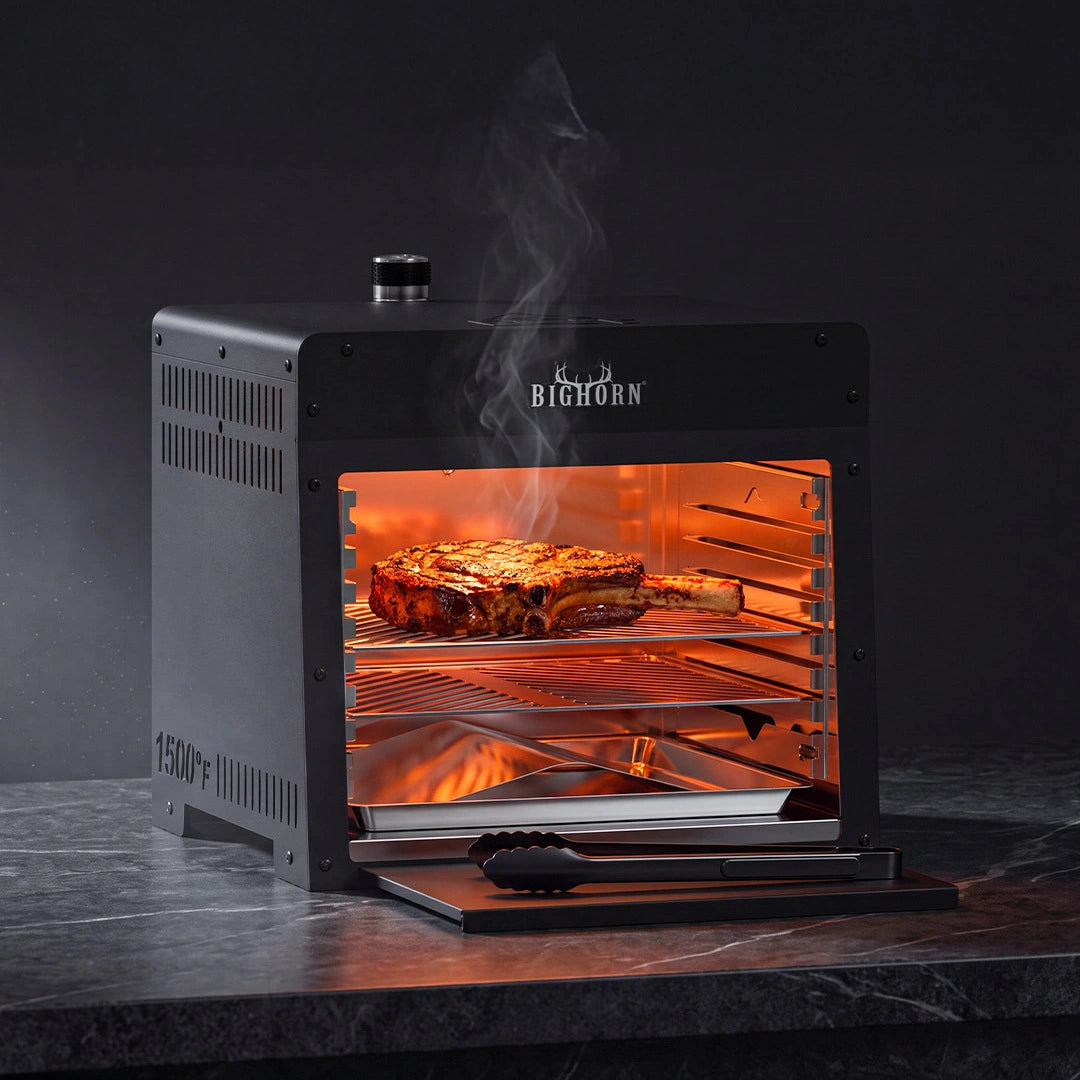
Whatever you choose, the infrared work happens on a cooker from the steak searing grill collection, and the sauce happens after. Confirm current product details on the listing you actually own, and keep the herbs off the emitter.
If you are searing on a compact infrared cooker and finishing on the board, confirm the current 16-inch 1500°F portable infrared steak grill with pizza stone listing and add the butter after the steak comes off the heat.
FAQ
What are common mistakes that ruin a grilled steak?
After a hard infrared sear, the usual finishing mistakes are putting butter or wet herbs on the steak while it is still over the emitter, using a cold, thick slab of butter that never melts, or flooding the board so the crust sits in a greasy puddle. The sear should already be done before the sauce starts.
Does Texas Roadhouse put butter on their steaks?
This article cannot verify a restaurant chain’s kitchen process or recipe. What you can copy at home is the general steakhouse habit of finishing with butter or a board sauce after the cook, not during a hard infrared sear. If you want a chain’s exact method, you would need that restaurant to publish it.
What is cowboy butter vs compound butter?
Compound butter is simply butter mixed with other ingredients, then usually chilled so you can slice it. Cowboy butter is a popular name for a garlicky, often spicy butter, sometimes melted as a dip and sometimes shaped as a compound butter. The names overlap; there is no single official recipe that separates them.
Should you add butter after cooking steak?
On an infrared grill, yes — after the sear, not during it. A slice of compound butter or a board sauce uses the residual heat of the steak. Adding dairy or fresh herbs while the meat is still under the emitter is how those ingredients scorch.