



Two steaks on one portable infrared grill do not cook like one steak with a twin. The grate is small, the heat is close, and the first piece steals recovery from the second. If you start both at the same instant and never pause, you often get one grey steak and one that ran too far. Stagger the start, leave a little space, and give the grate a moment to come back.
This is a throughput page for one compact cooker, not a first-steak lesson and not a size-comparison of grill models.
The short answer: stagger the start and give the grate a recovery moment
Stagger two steaks on a portable infrared grill instead of treating them as one cook. Start the first on a fully preheated grate, leave space if both must sit together, and let the grate recover before the second steak's hardest sear. Hold the first steak off the direct face while the second finishes.
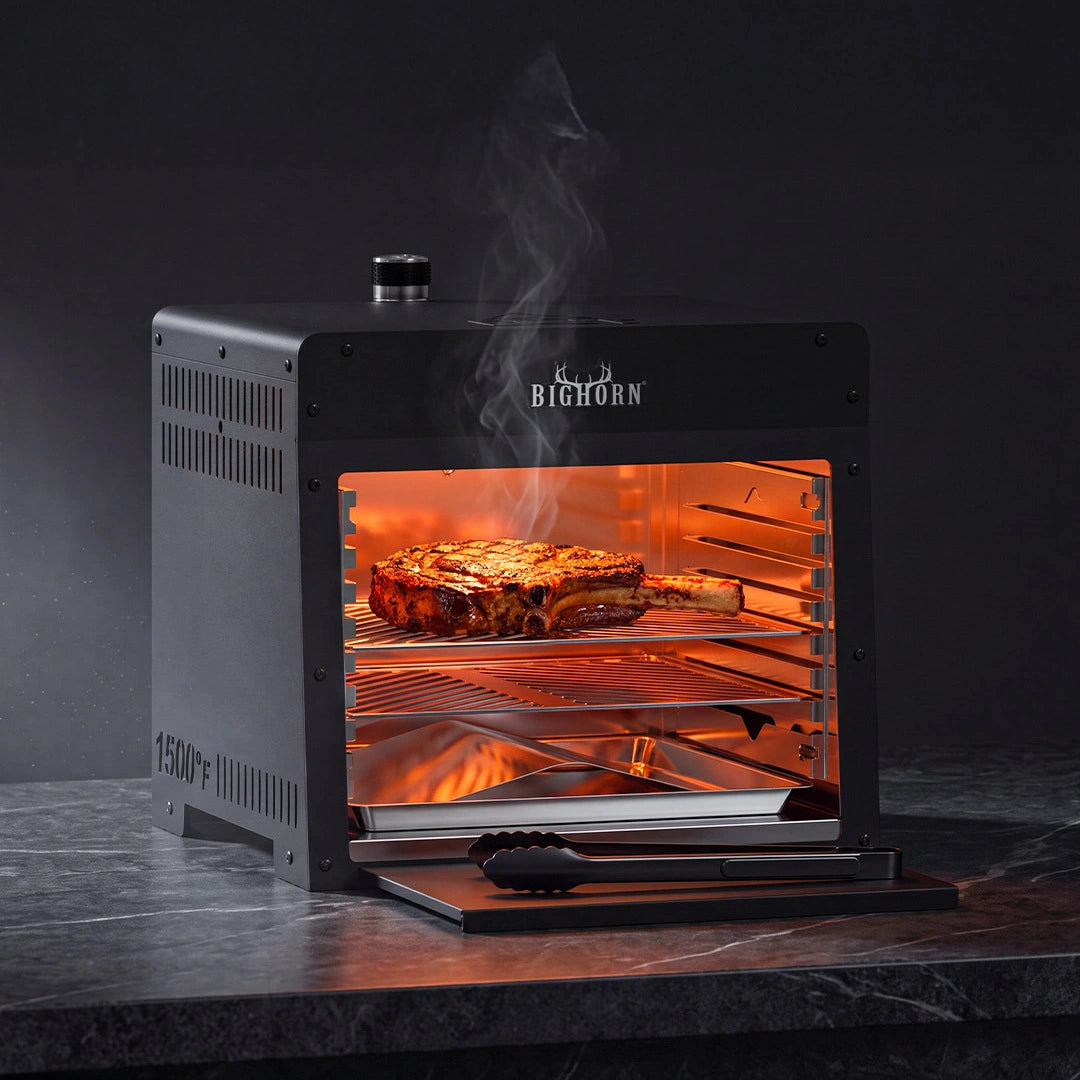
The product listing for a 16-inch 1500°F portable infrared steak grill with a pizza stone says it can cook up to three steaks or four burgers at a time. That is a capacity claim on the live page, not a test of two large ribeyes crowded edge to edge. If the steaks barely fit, cook in a stagger or do them in two short rounds.
Why two steaks on a compact infrared grill do not cook like one steak
One steak sees a fully preheated grate and a clear path for drips. Two steaks add cold mass, block some of the radiant face, and can sit in each other’s steam if they touch. The second steak often starts on a slightly cooler grate than the first one did, especially if you opened the cooker, flipped, or spent a minute probing.
That is a different problem from cooking several roasts in a large, stable smoker with air gaps. On this class of cooker, recovery is measured in moments, not in a long return to a set chamber temperature. A model from the infrared steak grill collection is still the right tool — if you cook like it is a small searing station, not a buffet line.
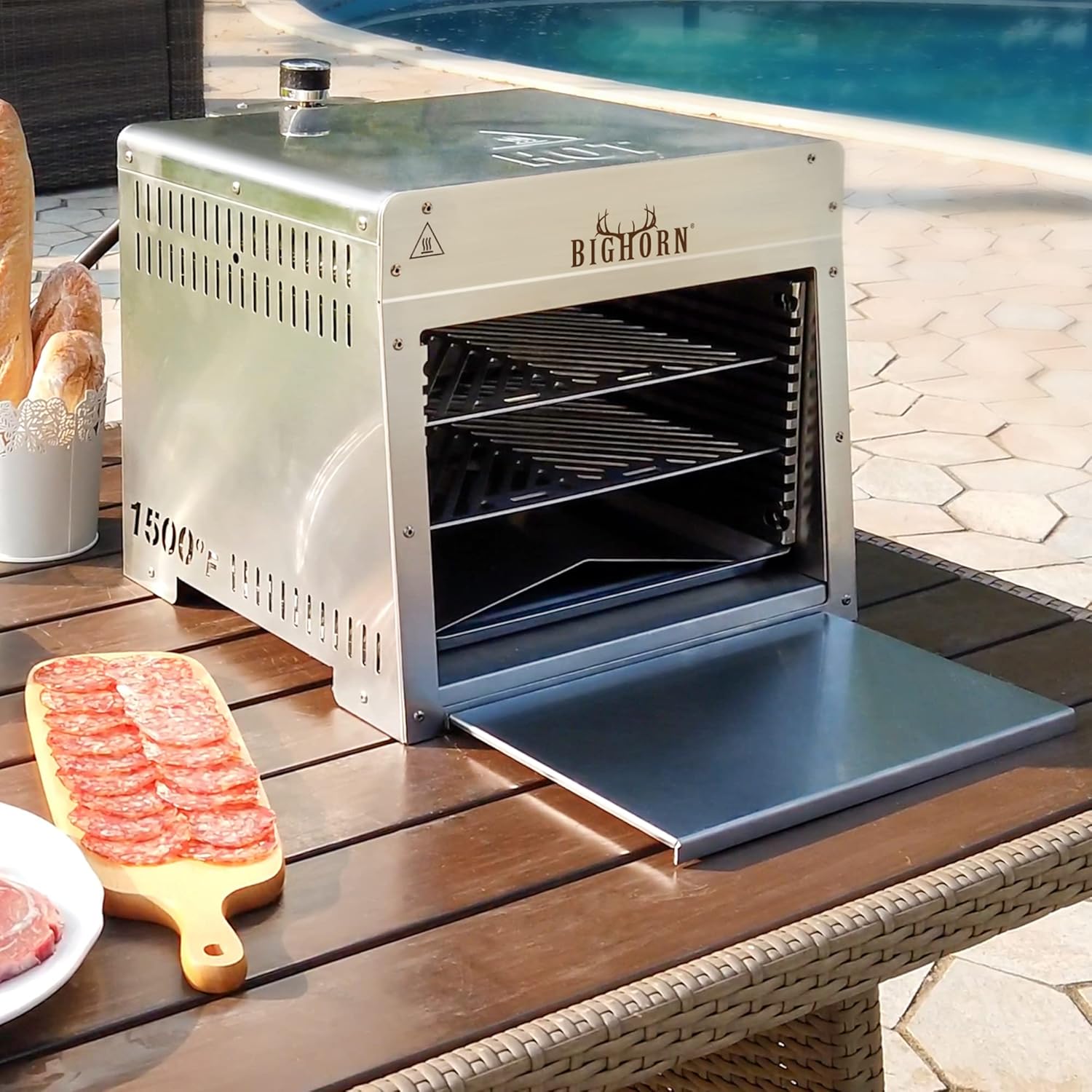
A rotation pattern that keeps both faces honest
If both steaks will fit with a gap, place them on a slight stagger so one is not hiding the other from the emitter. Sear the first faces, then rotate or swap positions when you flip so the steak that had the slightly cooler spot gets the hotter one. Do not flip every few seconds; let each face set, then move with a purpose.
If they will not fit with a gap, do not force them. Cook one through the hard sear, hold it, recover the grate, and sear the second. You will still plate them together if the hold is honest.
How to read recovery: the second steak should not start on a cooled grate
Recovery is visible. The grate should feel and look ready again — hot, dry, and not covered in a wet film of juices — before the second steak’s main sear. If the first crust formed in a hurry and the second side just sits there pale, the grate has dropped, or the steaks are steaming each other.
A brief empty moment with the cooker still on is useful. So is wiping loose bits so they do not burn onto the next face. Do not flood the grate with oil to “help” the second steak; a thin film on the meat is enough, and drips onto an infrared emitter make smoke, not recovery.
A small table: steak size versus a one-at-a-time or staggered plan
| What you are cooking | Starting plan on one compact infrared grate | Hold the first steak? |
|---|---|---|
| Two thinner steaks that fit with a gap | Stagger the start by a short margin, leave space, swap the hotter spot when you flip | A brief hold is enough if they finish close together |
| Two thicker ribeyes or similar | Sear one, recover, sear the second, or sear both only if a real gap remains | Yes — off the direct face so the first does not keep climbing hard |
| Two large steaks that barely fit | One at a time for the hard sear; do not crowd | Yes, then plate together after the second rest |
Holding the first steak without overcooking it while the second finishes
Hold the first steak on a warm plate or board, loosely tented if the air is cold, not under a tight foil seal that steams the crust, and not back on the infrared face “to keep it going.” A thick steak can wait a few minutes while the second one sears. A thin steak cannot wait as long; start the thinner one second, or give it the shorter hold.
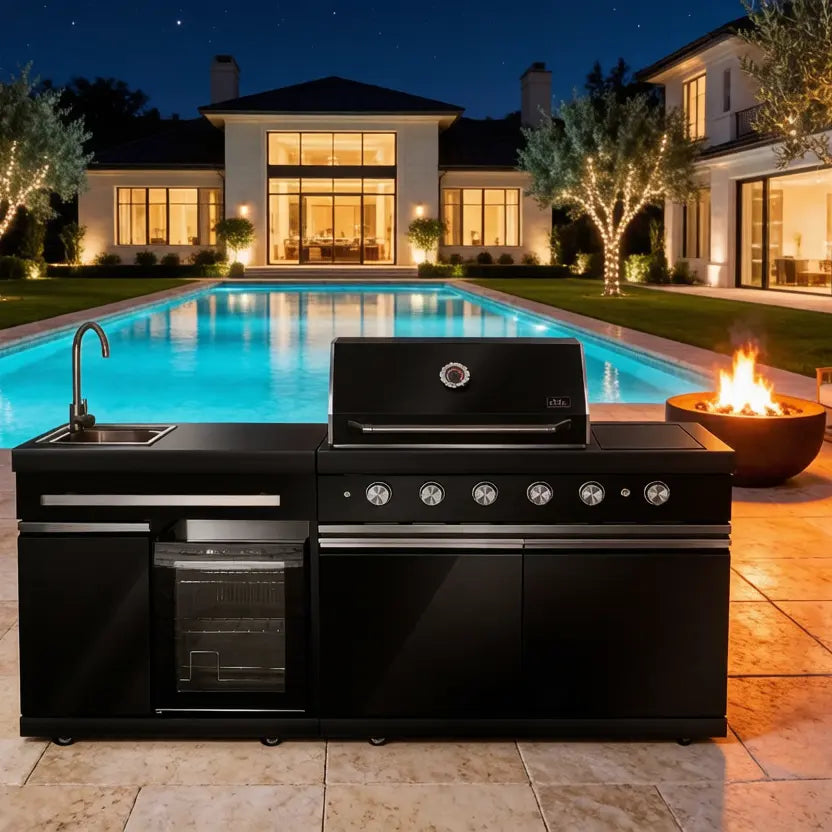
A stainless-steel outdoor grill cart is useful here as a landing place — a stable surface for the board, the thermometer, and the first steak — as long as the cart sits outdoors, level, and away from the hose line. It is not a warming oven, and it is not a reason to leave the cooker unattended.
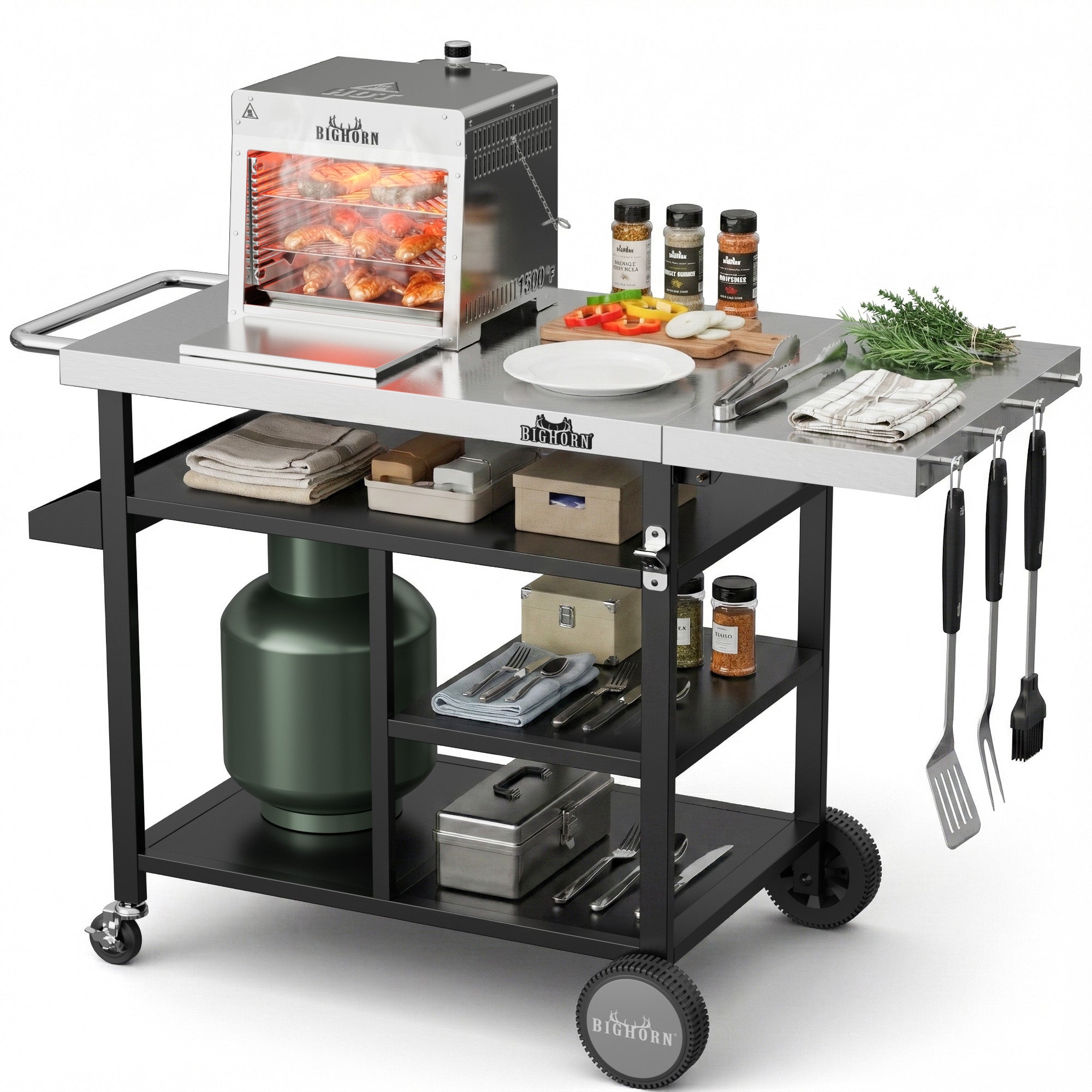
Common failures: one grey steak and one burnt steak on the same cook
The grey steak is usually the second one, started on a cooled or crowded grate. The burnt steak is usually the first one, left over the emitter while you tried to catch up. If doneness targets differ — one person wants a longer cook — start the more-done steak first, then add the other, the same way you would stagger on a larger grill.
Use a thermometer on both. FoodSafety.gov's chart lists 145°F with a three-minute rest for beef steaks. That is the safety minimum, not a timing trick. NFPA grilling guidance still applies: keep the grill away from the house and stay with it. CPSC gas-grill advice says not to use a gas grill in a garage, breezeway, carport, or porch.
When a second zone (cart, gas grill or oven) is worth using
A second zone is worth using when the steaks are thick, when you need two different finishes at the same time, or when the compact grate cannot recover fast enough. Sear on infrared and finish in a low oven or on the cool side of a gas grill. The cart holds tools and the first steak; it does not replace that second heat if you need one.
If you are cooking for a small table and the steaks are a reasonable size, stay on one cooker and do the stagger well. Adding a second fire “just in case” is extra work when a recovery moment would have been enough.
A weeknight sequence you can finish in one sitting
Preheat fully. Dry and season both steaks. Sear the first, start the second on a recovered grate, and hold the first off the heat. Rest both, then slice or serve. While the cooker preheats, you can finish a simple side. FDA safe food handling and USDA leftover guidance still apply if anything comes off early: refrigerate within two hours — one hour if it is over 90°F — and reheat leftovers to 165°F.
For a broader two-stage sear on a single steak, use the existing two-stage infrared sear and finish rather than turning this throughput page into a doneness class. The habit to take from tonight is simple: two steaks, one small grate, and a recovery moment in between.
If you are cooking two steaks on one compact cooker, confirm the current 16-inch 1500°F portable infrared steak grill with pizza stone listing, leave a real gap, and give the grate a moment to recover.
FAQ
How long to cook a steak on an infrared grill?
There is no single time that covers two steaks at once. Preheat fully, sear, and use a thermometer in each steak. The second steak may need a moment of grate recovery before it sees the same heat the first one did. FoodSafety.gov lists 145°F with a three-minute rest as the safe minimum for beef steaks.
How to cook a 2 in steak on the stove?
A two-inch steak is usually a two-stage cook: a hard sear, then a finish at a lower heat, or a reverse sear. That is true on a stove and on a compact infrared grill. This page is about cooking two ordinary steaks on one small grate, not about a single extra-thick steak. If your steaks are that thick, finish them one at a time or give them an off-heat stage.
What are common mistakes that ruin a grilled steak?
On a small infrared grill, the usual two-steak mistakes are crowding so neither face sears, starting the second steak on a cooled grate, and leaving the first steak in a place where it keeps cooking hard while you finish the second. A stagger and a short recovery beat trying to treat both steaks as one.
Is infrared better for grilling?
Infrared is better at a hard, close sear on a small number of steaks. It is not automatically better for a crowd, for a long render, or for two large steaks jammed onto one grate. “Better” depends on whether you can give each steak a hot grate and a way to finish without overcooking the first one.