A Practical Guide to Choosing and Using an Infrared Steak Grill
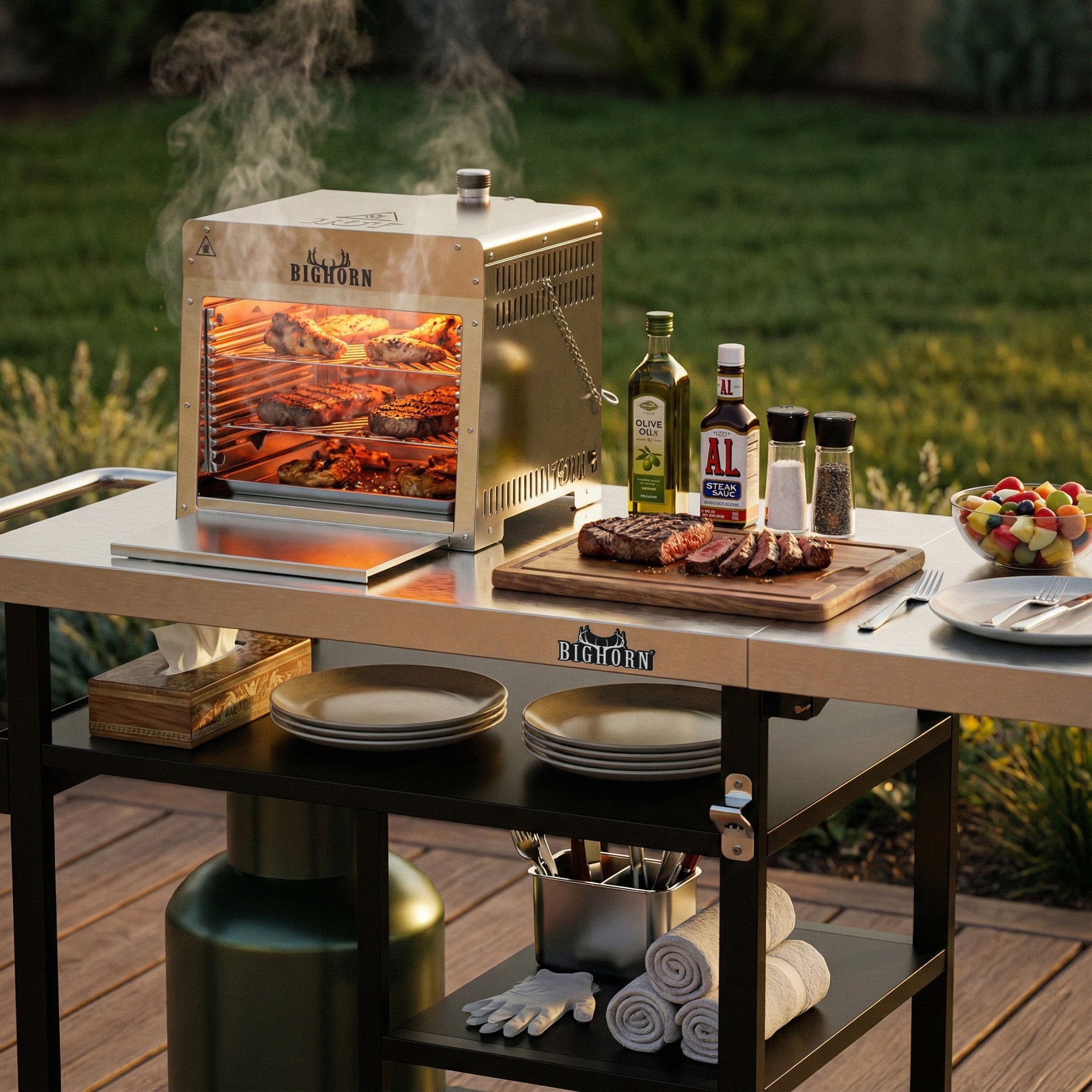
An infrared steak grill is most useful when you want rapid surface browning, an adjustable
distance between the food and the heat, and a compact outdoor alternative to a full-size gas
grill. The right model is not simply the one with the largest chamber. It is the grill that
matches your normal portion count, available outdoor work surface, storage space, and preferred
cooking routine.
Cooking-Volume Check
Count the steaks, burgers, or other portions you normally cook in one round. A compact
9-inch grill is easier to transport and store, while 16-inch and 21.2-inch models provide
more room for family meals or entertaining.
Outdoor-Placement Check
Measure the stable, heat-resistant surface where the grill will operate. Allow the clearance
required by the product instructions and keep the propane appliance in a well-ventilated
outdoor area away from walls, low coverings, and combustible materials.
Fuel and Connection Check
Confirm that you have a compatible propane tank, hose, and regulator for the selected model.
Inspect connections before cooking and follow the supplied leak-check and lighting
procedures. Do not assume that a propane model can be converted to natural gas.
Cleaning and Storage Check
Plan where the grill will cool and where clean components will be stored. Removable grates
and drip trays make routine cleanup easier, but grease should not be allowed to accumulate
between cooking sessions.
Match Rack Height to the Cooking Goal
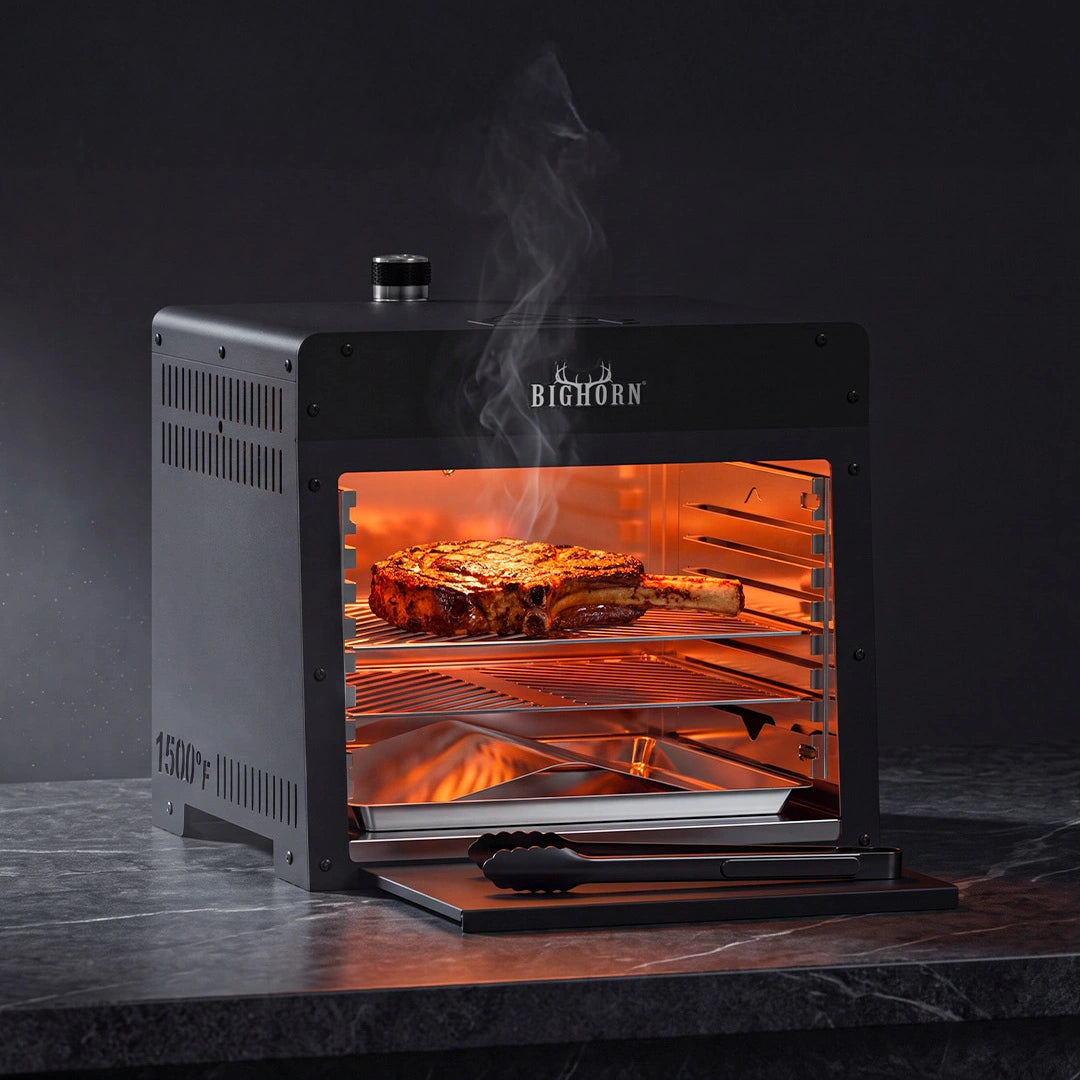
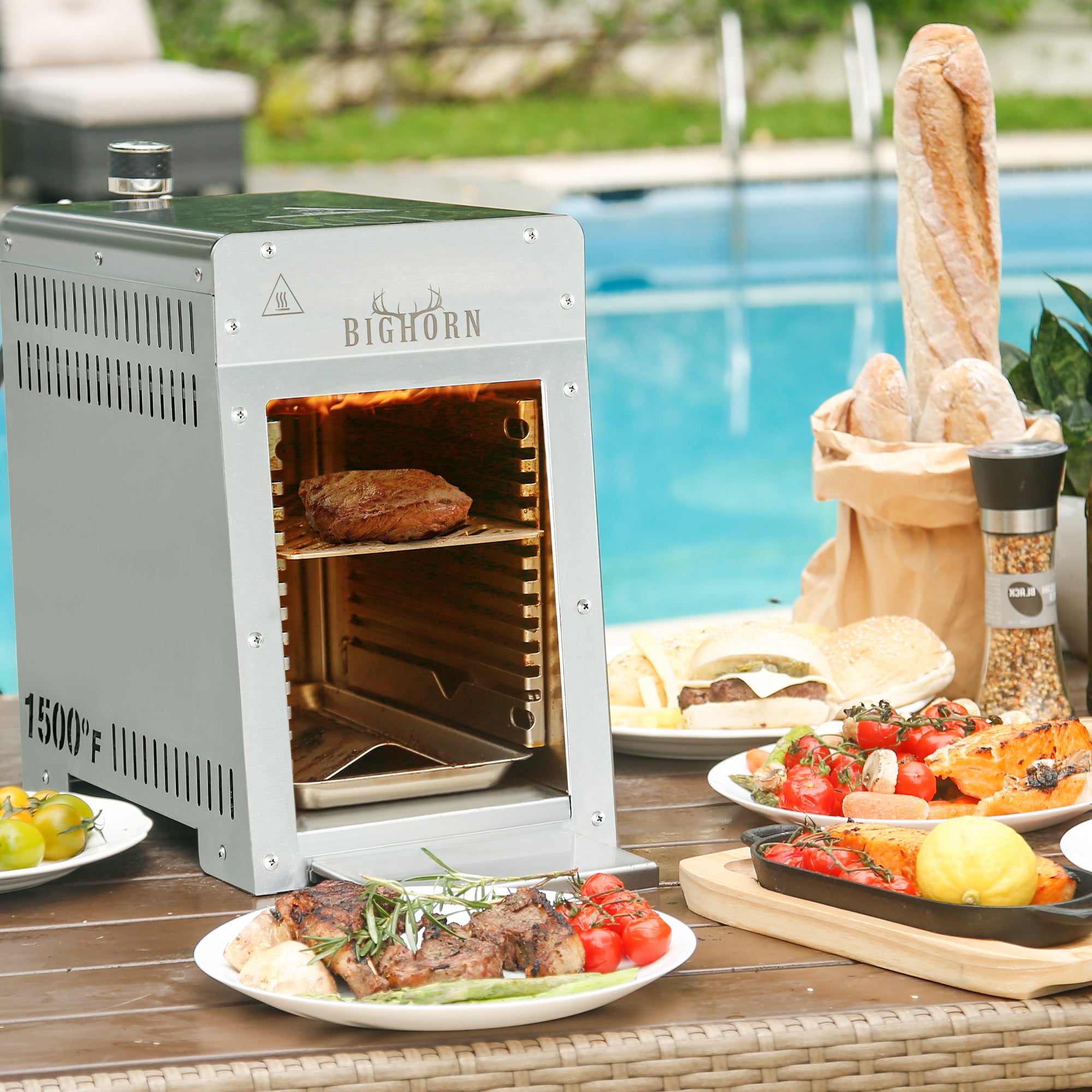
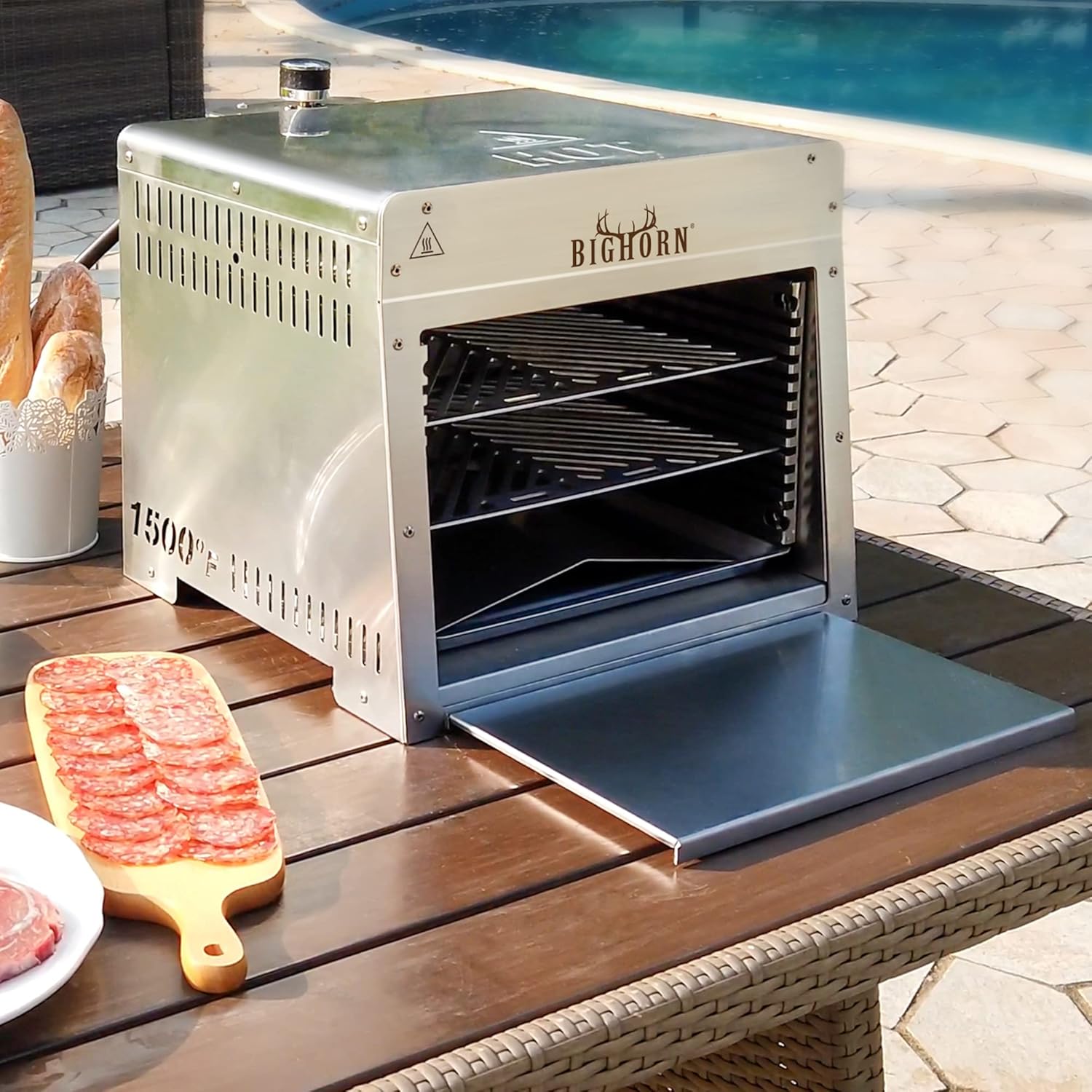
Rack position is one of the most important controls on a top-down infrared grill. Moving food
closer to the burner increases surface heat and browning speed; lowering it reduces intensity
and allows more time for the center to cook. Use the rack as an active control rather than
leaving every food at the same level.
- Preheat the grill according to the instructions for the selected model.
- Place a dry, seasoned steak near the upper heat zone to begin the sear.
- Watch the surface closely because infrared browning develops quickly.
- Turn the steak and sear the second side with suitable high-heat tools.
- Lower the rack if the crust is ready before the center reaches the desired temperature.
- Confirm internal temperature with a meat thermometer, then rest the steak before slicing.
Plan the Cook Around Food Thickness
Thin steaks can move from browned to overcooked quickly, so they usually need shorter exposure
near the burner. Thick cuts benefit from a two-stage approach: create the crust at a higher rack
position, then move the food farther from the burner to finish more gradually. Bone-in cuts,
uneven shapes, marinades, sugar-rich sauces, and very cold food can also change cooking time and
browning behavior.
Avoid Common High-Heat Grilling Mistakes
- Do not use a propane infrared steak grill indoors or in an enclosed area.
- Do not walk away during searing; cooking changes can happen within seconds.
- Do not rely on time alone to judge doneness; verify the center with a thermometer.
- Do not crowd the grate so tightly that food becomes difficult to turn or monitor.
- Do not apply sugary sauces too early because intense heat can burn them rapidly.
- Do not remove or wash hot parts; shut down the grill and let all components cool first.
Decide Whether a Larger Grill Is Worth the Space
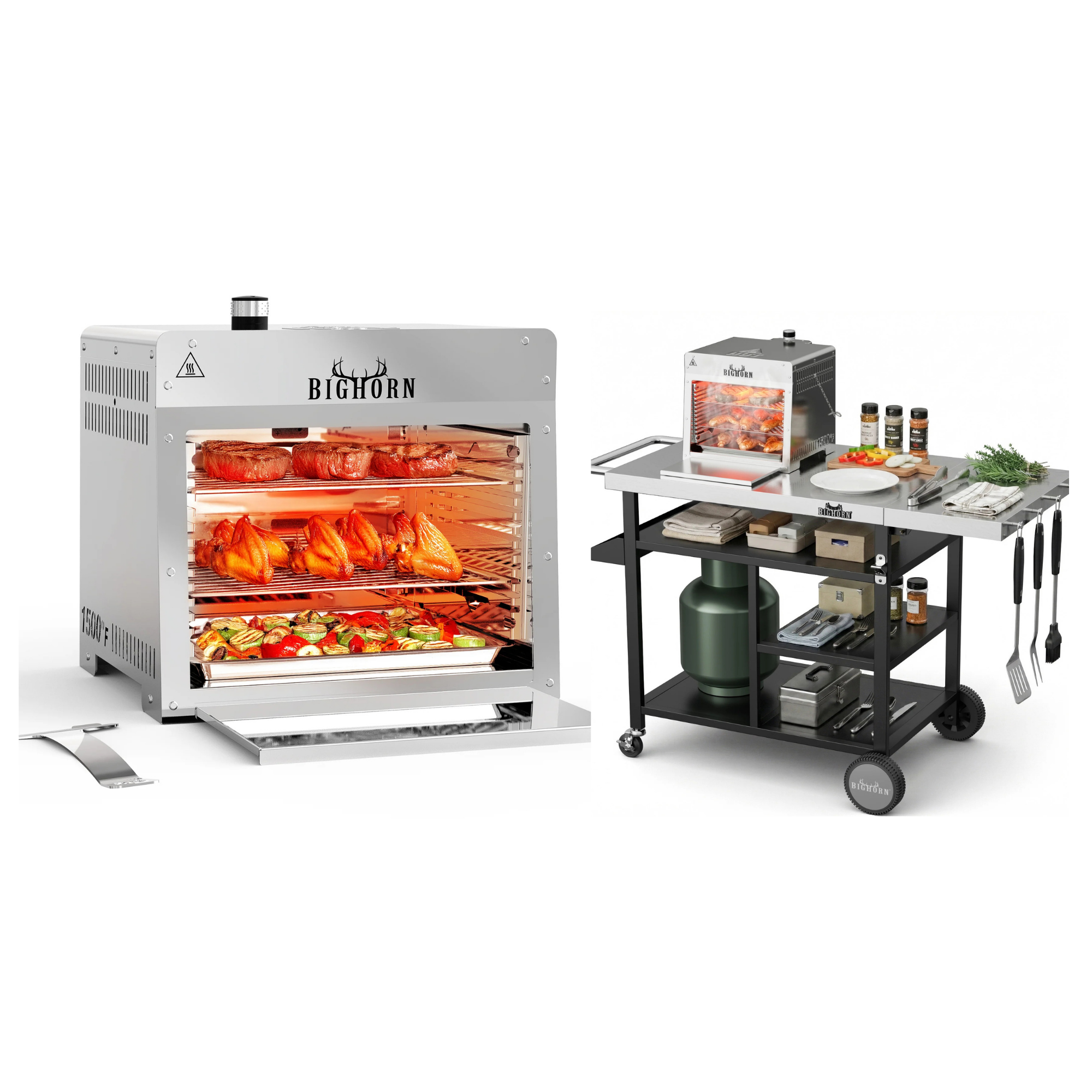
A larger infrared grill makes sense when you regularly prepare several portions, want fewer
cooking rounds, or need separate heat control. The 21.2-inch dual-burner model is especially
useful when different foods or preferred doneness levels need to be managed at the same time.
If most meals contain only one or two portions, the smaller footprint and easier storage of a
9-inch or 16-inch model may deliver more everyday value.
Review the Exact Model Before Ordering
Product titles can look similar even when burner count, dimensions, rack layout, weight, and
included accessories differ. Open the exact product page and verify the selected size, propane
connection, included parts, available accessories, current stock, and final checkout details.
Use the following links to continue with the model that best fits your cooking routine.
9-Inch Infrared Grill
Explore the compact model for smaller portions, camping, patios, and easier storage.
View the 9-inch grill
16-Inch Infrared Grill
Review the balanced everyday option for backyard meals and small gatherings.
View the 16-inch grill
21.2-Inch Dual-Burner Grill
Compare the larger model with two independently controlled infrared burners.
View the dual-burner grill
How Infrared Grills Work
Learn how radiant heat and a top-mounted burner change searing and heat control.
Read the infrared grill guide
Grills & Griddles
Compare infrared steak grills with other outdoor grilling formats.
Explore grills and griddles
Infrared Grill Collection
Return to the complete collection to compare current models and availability.
Shop infrared steak grills
Use Heat Distance, Not Heat Alone
The advantage of an infrared steak grill is not only its maximum temperature. Better results
come from combining a short high-position sear with a lower finishing position when needed.
Choose a grill that fits your normal batch size, stay close during cooking, and use internal
temperature—not appearance or time alone—to confirm doneness.