Choose an electric pizza oven for indoor cooking only when that model is approved for indoor use; choose gas for adjustable outdoor heat; choose pellets if you want to manage a wood fire. Fuel affects installation and maintenance, but it does not establish a universal ranking for temperature, preheat speed or pizza quality.
What changes when you change the fuel?
| Decision | Electric | Gas | Pellet |
|---|---|---|---|
| Where it belongs | Indoors or outdoors as specifically rated | Outdoors, with required clearances | Outdoors, where solid-fuel cooking is permitted |
| Heat adjustment | Controls and heating elements; settings vary | Burner adjustment; stone temperature still responds gradually | Fuel additions and combustion management |
| Before cooking | Check outlet, circuit and operating clearance | Check approved fuel connection and cylinder placement | Prepare dry cooking pellets and an approved ignition method |
| After cooking | Cool and clean as directed | Shut down fuel supply as directed; cool and clean | Allow full cooling and deal with ash safely |
A gas knob changes burner output; it does not necessarily maintain a thermostatically controlled stone temperature. Likewise, an electric preset is a starting program, not a guarantee that every dough thickness will finish at the same time.
Which fuel reaches the highest temperature?
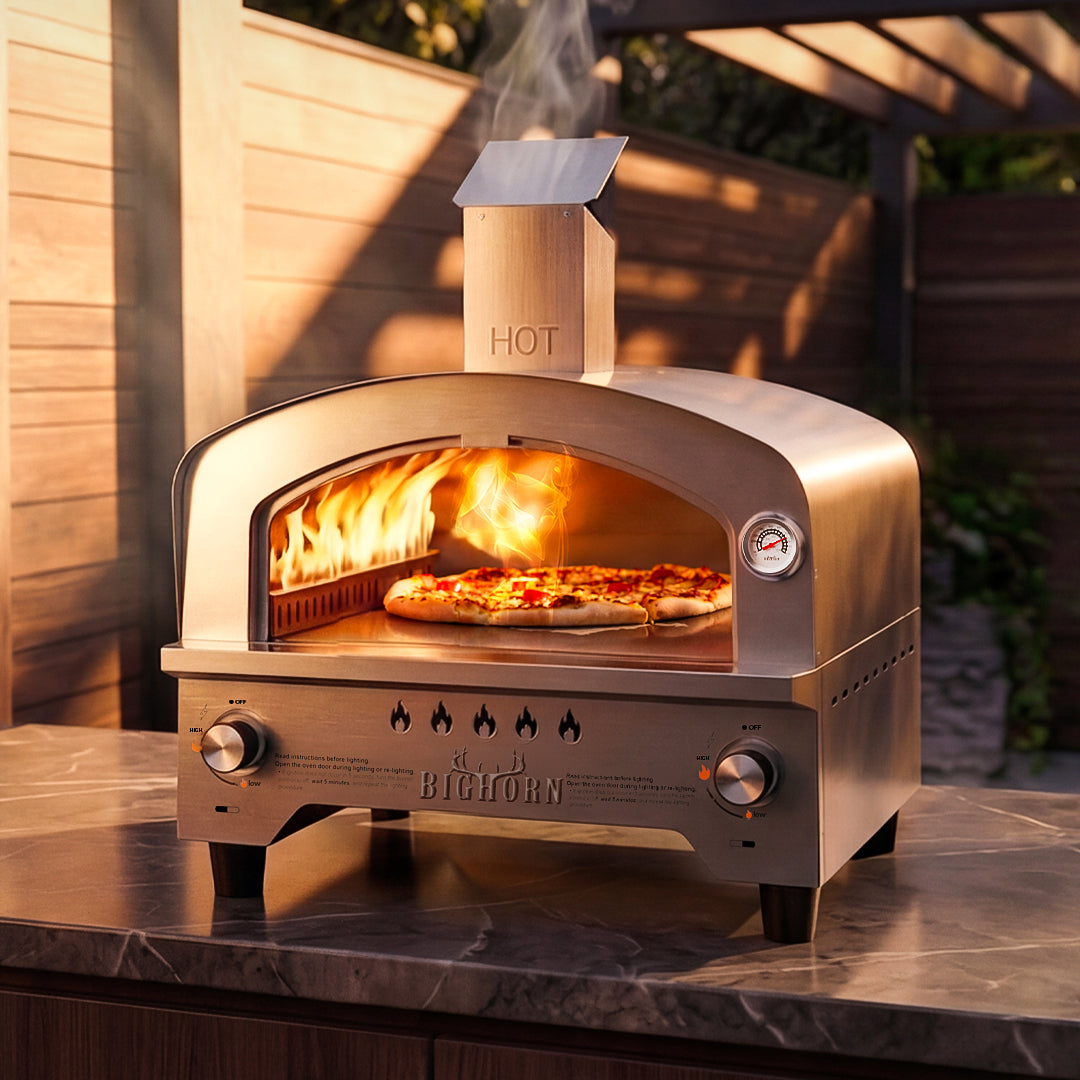
Compare named ovens rather than fuel categories. The Big Horn 15-inch dual-burner gas model lists 750°F in 10 minutes and a maximum of 1070°F. The 14-inch indoor electric model lists a 220–850°F range. These manufacturer claims illustrate why 750°F should not be treated as the ceiling for all gas ovens.
For any shortlist, ask what was measured: chamber air, a built-in sensor or the stone surface. A hot chamber can coexist with a stone that is still warming. Preheat and recovery also depend on insulation, stone thickness, burner or element output, weather and the pizzas being baked.
Will pellets make the pizza taste different?
Wood combustion can add smoke-derived aromas, but their intensity depends on combustion quality and exposure. A brief pizza bake does not automatically acquire a strong smoky flavor. Dough fermentation, toppings and browning can dominate the result.
Gas and electric ovens can also brown and char a crust. Choose pellets because you enjoy the fuel and cooking process, rather than assuming the fuel guarantees a superior or more authentic pizza.
How should you compare running costs?
Use the same session size, including preheat, when comparing costs. For electricity, multiply measured kilowatt-hours by your tariff; rated kilowatts multiplied by hours is only an estimate because elements may cycle. For propane or pellets, multiply the amount consumed by the unit price. Add accessory costs separately.
A cheaper session is not necessarily a cheaper purchase. A cover, suitable stand, fuel container or approved outdoor electrical arrangement can change the total. Avoid declaring a cheapest fuel without local prices and consumption data.
Which option fits your routine?
- Apartment kitchen: start with an indoor-rated electric model and verify its operating footprint and electrical requirements.
- Regular patio cooking: consider gas if direct burner adjustment matters more than tending a fire.
- Weekend wood-fire sessions: consider pellets if dry storage, ash disposal and local rules fit your plans.
Once the fuel is settled, use the outdoor pizza oven size and performance guide to compare actual cooking space and recovery.
Fuel comparison FAQs
Does electric mean smokeless?
No. Flour, oil and food can smoke at high temperatures. Follow the indoor model's ventilation and clearance instructions.
Can an outdoor oven move indoors with a different fuel?
Only if the manufacturer expressly approves that exact configuration for indoor operation. An accessory or weather cover does not establish indoor approval.
Is gas always faster than pellets?
No. Compare the actual models at a comparable stone temperature; fuel alone does not determine preheat time.