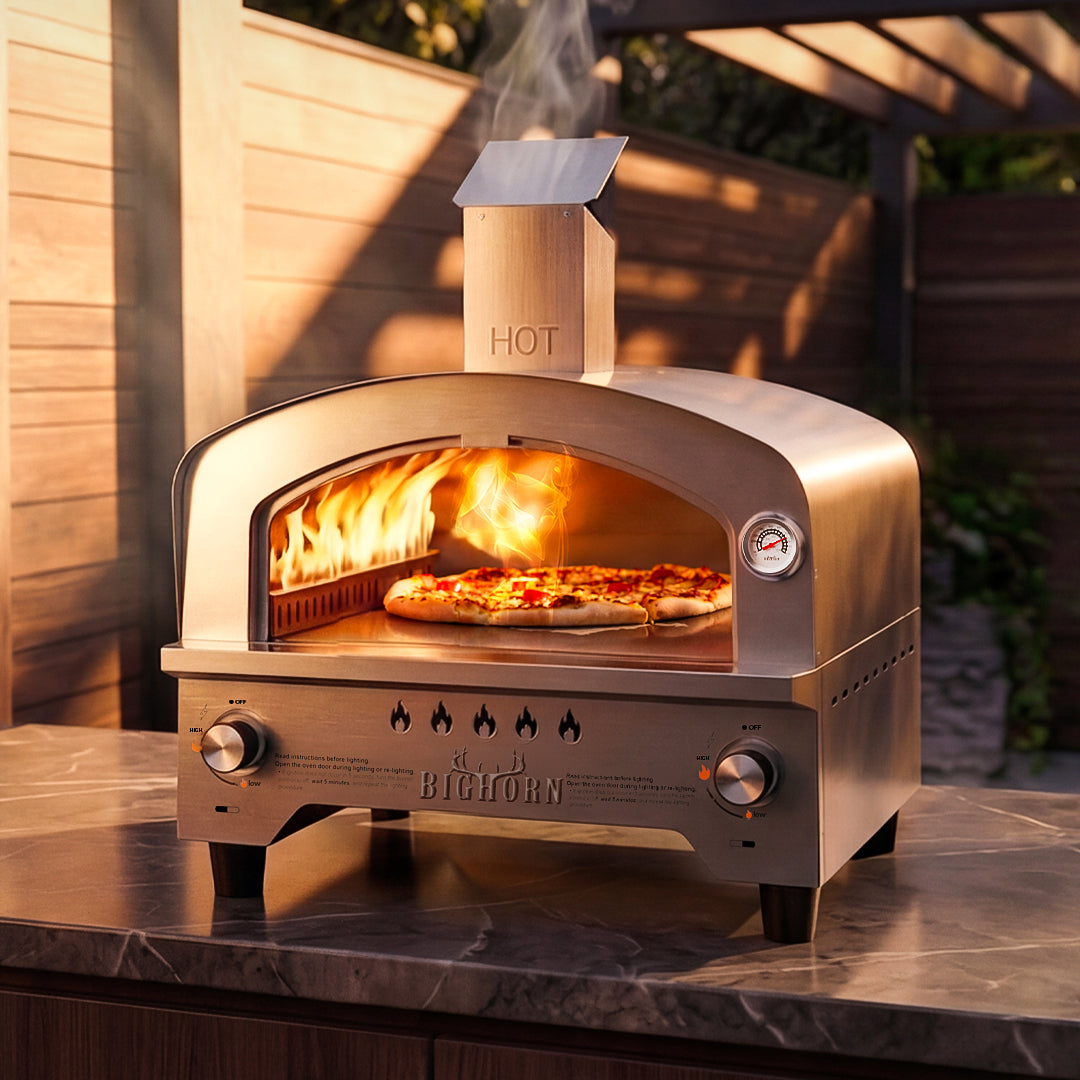
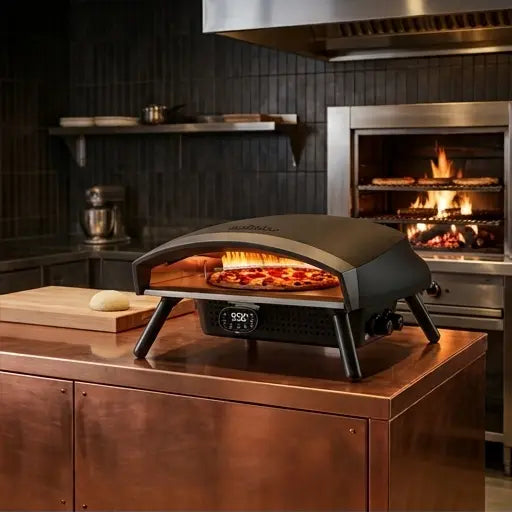
The short answer: choose a pellet pizza oven when wood-fired flavor is the point and you are happy to manage a fire; choose a gas pizza oven when convenience, speed, and consistency matter more. Both bake real pizza at high heat — Big Horn’s 12-inch pellet oven reaches about 887°F (475°C) in an 18–20 minute preheat, while its 15-inch dual-burner gas oven reaches about 750°F in about 10 minutes — but the fuel changes the flavor, the effort, and the cleanup. This comparison covers heat and flavor, ease of use, cost and portability, and the questions to answer before you buy.
This is a brand-owned comparison; Big Horn specifications are traceable to the official product listings, and current prices belong at checkout.
The real differences that matter
Four differences decide the comparison more than any spec sheet: flavor, ease of use, heat-up and recovery, and cleanup. Pellet ovens burn food-grade hardwood to add a smoky, wood-fired character that gas cannot; gas ovens light with a dial, preheat faster, and leave no ash. The trade is ritual and flavor against convenience and speed. Both formats make excellent pizza; the fuel decides the experience around the bake.
Understanding the fuel before you decide
Pellet ovens run on dry, food-grade hardwood pellets — dense, uniform, and packable — and the fire needs management: feed gradually, keep the vents right, and let the stone recover between pies. Gas ovens run on propane with a burner and dial control: connect and leak-test the tank, light the burner, and preheat. The practical difference shows up every session: a pellet oven asks for attention through the bake, while a gas oven lets you set the heat and cook.
Head-to-head: heat, flavor, and convenience
| Factor | Pellet pizza oven | Gas pizza oven |
|---|---|---|
| Flavor | Wood-fired smoke character | Clean burn; no added smoke |
| Heat-up | 18–20 min (12-in model) | About 10 min (15-in dual-burner) |
| Peak heat | About 887°F / 475°C (12-in) | About 750°F |
| Effort | Feed and manage the fire | Dial control; set and cook |
| Cleanup | Ash and soot after a session | No ash; stone and body care |
| Portability | Carry pellets plus the oven | Carry the oven plus a propane tank |
Read the table as a trade-off, not a scoreboard: pellet buys flavor with effort, gas buys convenience with a cleaner burn. The format that suits you is the one that matches how you want each pizza session to feel.
What each option does best
- Pellet does wood-fired flavor. A smoky, wood-fired character plus the ritual of tending a fire — the reason many home bakers choose pellet in the first place.
- Gas does convenience and consistency. Fast preheat, dial-controlled heat, no ash, and repeatable bakes for weeknights and parties.
Where most comparisons go wrong
Most comparisons treat flavor and convenience as rankings instead of trade-offs. A pellet oven is not “better” than a gas oven because it adds smoke; it is better for the cook who wants that flavor and accepts the fire management. The second error is comparing across format classes — a 12-inch pellet against a 16-inch gas bakes in differences of size and fuel at once. Compare the same size class, then weigh flavor against convenience.
How to match the choice to your cooking style
- Wood-fired flavor is the point. Choose pellet and treat the fire management as part of the experience.
- Weeknight convenience. Choose gas: light the burner and preheat in about 10 minutes.
- Parties with back-to-back pies. Gas gives steady recovery; pellet rewards careful fire and stone management.
- Camping or tailgating. Both are portable; pellet packs pellets, gas packs a tank — choose by fuel logistics.
Cost and longevity perspective
Both formats sit in the portable oven range, and the price picture includes running fuel: pellets need a dry supply, gas needs a propane tank and occasional refills. Longevity depends on care in both cases: keep the pellet tray clean and dry, protect the gas burner and ports, cover the oven between seasons, and store the stone dry. The brand with the parts and accessories you can actually buy for the model you own is the one that serves you over time.
The decision rule in one paragraph
Choose a pellet pizza oven if wood-fired flavor is the reason you are buying and you enjoy (or accept) fire management; choose a gas pizza oven if convenience, fast preheat, and consistent dial-controlled bakes matter more. Big Horn’s lineup covers both — the 12-inch pellet oven for flavor and portability, the 15-inch dual-burner gas oven for speed and simplicity. Match the fuel to the way you cook, and the decision answers itself.
Compare the fuel formats and current prices. 12-inch pellet oven · 15-inch gas pizza oven
FAQ
What are the pros and cons of pellet pizza ovens?
Pros: wood-fired flavor, portability, and packable dry fuel. Cons: fire management, an 18–20 minute preheat on the 12-inch model, and ash/soot cleanup after sessions. A pellet oven suits cooks who want the flavor and accept the ritual.
Which type of pizza oven is best?
There is no single best type — pellet adds wood-fired flavor with more effort, gas adds convenience with a cleaner burn, and electric suits indoor use. Define your fuel preference, space, and how often you cook, then match the format. Big Horn covers pellet and gas in portable sizes.
What are the drawbacks of using pellet stove pellets?
Pellet-stove pellets and food-grade pizza-oven pellets are different products: stove pellets are not necessarily food-safe or sized for an oven feed. Use food-grade hardwood pellets made for a pizza oven, store them dry, and never substitute heating pellets. Damp or low-quality pellets stall the fire.
Which type of pizza oven is better for me, propane or wood pellet?
Choose propane (gas) if you want fast preheat, dial control, and no ash; choose wood pellet if you want wood-fired flavor and accept fire management and cleanup. If you cook mostly weeknights, gas is the easier fit; if pizza is a weekend ritual and flavor is the point, pellet wins.