Gas pizza oven yellow flame causes range from momentary airborne particles to persistent fuel-air or equipment problems. The important distinction is not simply “blue versus yellow.” It is whether the flame matches the exact model manual and whether yellow color appears with soot, odor, instability, unusual noise, slow heating, or flame outside its intended area.
This troubleshooting guide stays on the owner-safe side of the appliance. It does not authorize changes to the regulator, injector, burner, air shutter, valve, hose, fuel pressure, or gas type. Those parts control combustion and belong with the manufacturer or a qualified gas technician.

What should a normal flame look like?
The only reliable reference is the flame description for the exact oven and fuel configuration.
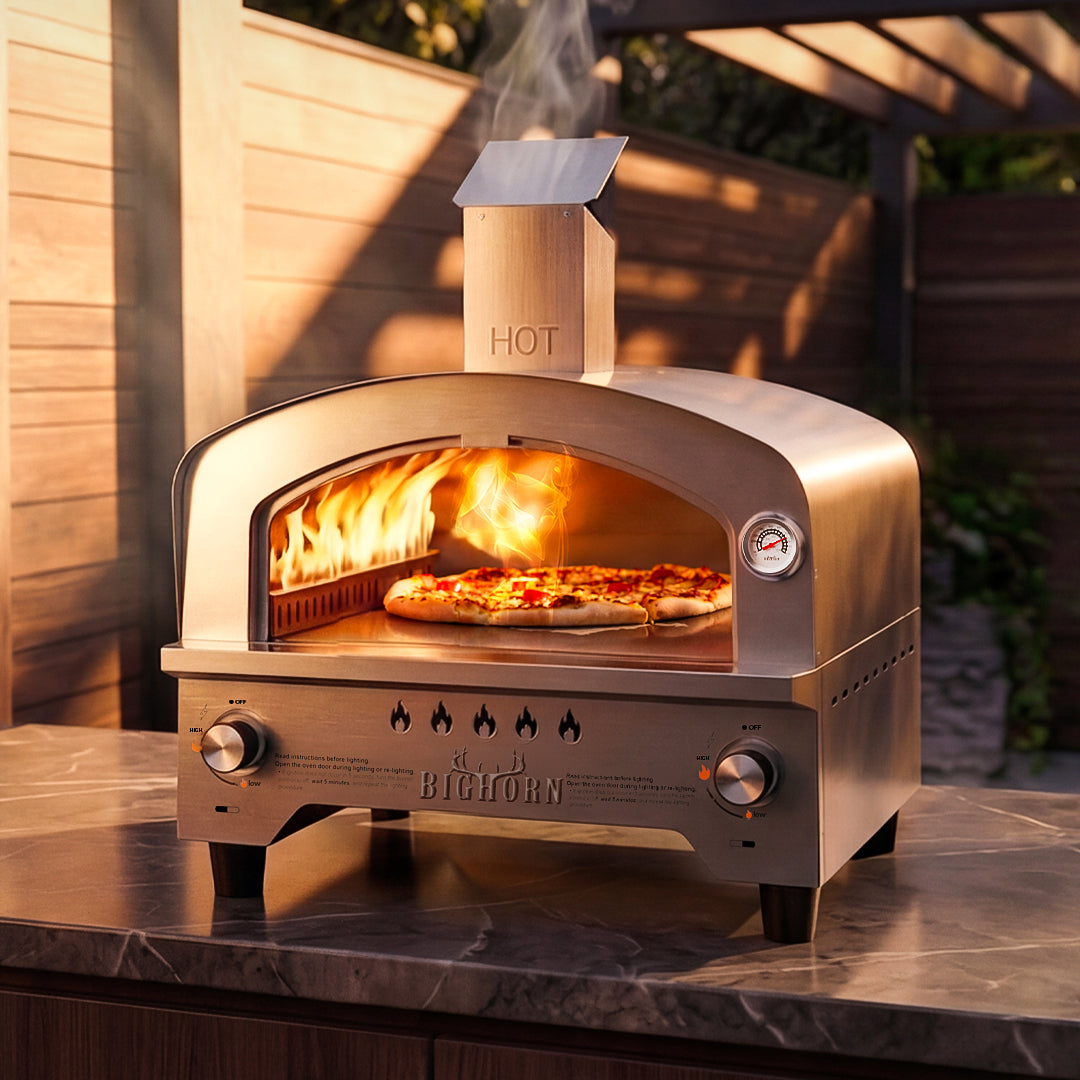
Many premixed propane burners produce a predominantly blue flame with defined inner cones. Some designs may show limited yellow tips or orange flickers without continuous soot. A powerful pizza-oven flame may also change shape as the control moves, the oven warms, or wind crosses the opening.
Do not judge by a photograph from a different appliance. Burner geometry, viewing angle, camera exposure, reflections from a glowing ceiling, and food particles can all change appearance. Record the model, fuel, control position, warm-up stage, and weather before comparing your observation with the manual.
The EPA’s technical guidance on atmospheric burners notes that too little primary air can produce yellow flame and soot, while too much can create lifting, noise, or flashback. See its gas burner adjustment guidance; adjustment itself should be left to authorized personnel for your oven.
Why does a gas flame turn yellow?
Persistent yellow luminosity can result when fuel and air are not mixing or burning as the burner was designed.
Possible causes include restricted combustion-air openings, debris or grease near the burner, an improperly seated approved component, incorrect fuel or conversion parts, unsuitable pressure, damaged gas equipment, or an internal burner fault. Wind may also distort the flame and change how surrounding air reaches it.
Short orange sparks or flickers can come from flour, semolina, dust, salt, grease droplets, or other particles passing through the flame. That explanation becomes less convincing when the flame stays yellow after the airborne material clears, returns every session, deposits black soot, or comes with poor heat.
Do not use flour in the flame as a test. Reduce loose launch material with the pizza-peel flour guide and keep ingredients out of the burner area.
Which warning signs require immediate shutdown?
Gas odor, soot, flame escape, flashback, repeated flameout, or an abnormal persistent flame means stop.
- Smell of propane or the sound of escaping gas.
- Black soot on the oven, cookware, food, or nearby surfaces.
- Flame burning inside the burner, outside its intended zone, or near the control area.
- Popping, roaring, lifting, delayed ignition, or repeated extinction not described as normal.
- A hose, regulator, valve, connector, or burner that is damaged, loose, overheated, or contaminated.
- Headache, dizziness, weakness, nausea, chest pain, confusion, or suspected carbon monoxide exposure.
If safe to do so, follow the manual’s shutdown sequence, move people away, avoid flames and electrical switches near suspected gas, and contact emergency services or the fuel supplier when circumstances require. For possible carbon monoxide poisoning, get to fresh air and seek emergency medical help.
CDC explains that carbon monoxide is a colorless, odorless poison gas produced when fossil fuel burns and can cause sudden illness or death; review its carbon monoxide guidance. An outdoor appliance must never be used in a home, garage, tent, shed, vehicle, or other enclosure.
How should you document the flame safely?
Observe from the normal operating position without reaching over, leaning into, or removing guards from a lit oven.
- Keep the manual open to the expected-flame section.
- Record ambient light, wind, control setting, fuel type, and time since ignition.
- Note whether the color is continuous, occasional, localized, or carried with particles.
- Note flame stability, sound, location, soot, odor, and heating performance.
- If safe and permitted, take a short video from the approved viewing position for manufacturer support.
- Stop immediately when any warning sign appears; documentation is never worth continued unsafe operation.
A flame picture by itself cannot measure carbon monoxide or prove complete combustion. CPSC notes that any fuel-burning appliance can produce CO and that the gas has no smell, color, or taste; see its carbon monoxide information.
What is the safe step-by-step troubleshooting method?
Check the environment and owner-serviceable conditions, then stop before any gas-system adjustment.
- Compare with the manual. Confirm the expected fuel, regulator, cylinder, flame appearance, clearances, and operating weather.
- Shut down and cool fully. Do this before cleaning, touching, relocating, disconnecting, or inspecting components.
- Verify the fuel setup. Read labels; do not assume propane and natural-gas parts are interchangeable.
- Inspect externally. Look for visible damage, kinked hose, contamination, blocked exterior air openings, insects, grease, or loose food only where the manual permits inspection.
- Clean only approved areas. Use the tools and method stated by the manufacturer. Do not push wire, drills, needles, or compressed air into an injector or burner port unless explicitly instructed.
- Choose an approved site. Operate outdoors with required clearances and no improvised wind enclosure.
- Reconnect and leak-check as directed. Never test with a flame.
- Relight once using the specified sequence. Observe from the normal position. If abnormal flame persists or any warning sign returns, shut down and request service.
CPSC’s gas grill safety guidance advises checking hoses and connections and keeping gas cooking equipment outdoors. Apply the exact leak-check and component rules from the pizza oven manual.

How can debris or launch flour affect flame color?
Fine particles can glow briefly in the flame, but they should not excuse a persistent abnormal pattern.
Excess flour, semolina, cornmeal, cheese, oil, and carbonized crumbs can become airborne during launching or turning. Passing particles may create short yellow-orange streaks or sparks. Accumulated debris can also smoke, burn, or obstruct areas that the manual says must remain clear.
Let the oven cool, then remove debris only by the approved cleaning method. Avoid overloading the peel with release material; compare semolina and flour for launching. Keep toppings controlled with the 12-inch topping-weight guide.
If yellow flame appears before food enters, remains after cleaning, or produces soot, the debris explanation is weak. Stop and escalate rather than repeating tests.
Can wind or cold weather change the flame?
Yes, but weather is a condition to document—not a reason to bypass safety systems.
Wind across the opening or intake can bend, lift, pulse, or extinguish a flame. It can also pull heat from the chamber and mimic low output. Reorient or relocate the fully cooled oven only as the manufacturer permits; never create a box, tent, wall, or screen that violates clearances or restricts combustion and exhaust.
Cold weather may reduce propane vaporization capacity and slow warm-up. Use the cold-weather pressure guide to separate fuel-supply behavior from heat loss. Never heat a cylinder or move it closer to the oven.
Could the wrong fuel or gas parts cause yellow flame?
Yes; gas type, pressure, orifice, regulator, and burner design must be a matched approved system.
Propane and natural gas have different supply conditions and normally require model-specific components. A hose or regulator that physically connects is not automatically correct. Using an unapproved adapter, adjustable regulator, substitute injector, or unofficial conversion can create an unsafe mixture and invalidate product certification or warranty.
Read every rating label and purchase record. If the model, gas type, country version, regulator, or conversion history is uncertain, do not light the oven. Send clear label photographs and the serial information to the manufacturer or qualified service provider.
Do not “tune by eye.” Even an apparently blue flame does not prove correct input, pressure, exhaust, or emissions.
Why should you not adjust the air shutter yourself?
Both too little and too much primary air can create hazards, and appearance alone cannot establish a safe setting.
Reducing air can encourage yellow flame, soot, and incomplete combustion. Increasing it too far can create a hard, noisy, lifted flame or flashback. Adjusting one symptom may hide the real fault, such as incorrect pressure, a damaged burner, or the wrong gas component.
Only perform an air-shutter procedure if the exact current manual clearly assigns it to the owner and gives the complete verification method. Otherwise, leave settings untouched. The manufacturer or qualified technician can verify pressure, input, combustion, component identity, and safe flame behavior with appropriate instruments.
How do you tell whether the issue is resolved?
Resolution means the oven repeatedly matches the manual without soot, odor, instability, or abnormal sound.
One moment of blue flame after cleaning is weak evidence. A controlled verification includes the specified lighting sequence, warm-up, permitted control range, normal flame location, stable operation, and shutdown. The oven should reach expected cooking readiness without a new pattern of hot spots or delayed recovery.
Use the gas oven heat-map guide only after flame behavior is confirmed safe. A cooking workaround must never replace correction of a combustion fault.
| Observation | Meaning | Next step |
|---|---|---|
| Brief orange flicker as flour enters | May be airborne particles | Reduce debris; continue only if manual-normal flame returns immediately |
| Persistent yellow flame without clear trigger | Combustion or component fault possible | Shut down and contact support |
| Yellow flame plus black soot | Abnormal combustion evidence | Stop use; qualified inspection |
| Flame lifts, pops, roars, or burns in wrong area | Airflow, pressure, ignition, or burner fault possible | Immediate shutdown; no adjustment |
| Gas odor at any time | Leak or unburned gas possible | Follow emergency procedure |
What should you clean, inspect, and record afterward?
After complete cooling, preserve evidence and clean only what the owner manual identifies.
Photograph soot or discoloration before wiping it away, note the exact control position and timing, and record fuel source, cylinder change, weather, recent transport, cleaning, or impact. Save component labels and purchase information. This gives support staff far more than “the flame looked yellow.”
Store the fully cooled oven and cylinder separately as directed. PERC’s portable propane cylinder guide covers valve closure, outdoor storage, and inspection basics. Do not store even an apparently empty cylinder inside a home, basement, garage, shed, or tent.
Frequently asked questions
Why does a gas flame burn yellow?
A persistent yellow flame in a burner designed for a blue flame can indicate an incorrect fuel-air mixture, restricted airflow, contamination, improper fuel or components, or another combustion fault. Brief orange or yellow flickers may come from airborne particles, but the exact model manual defines the expected flame. Soot, odor, instability, or persistent abnormal color requires shutdown and qualified service.
What color should the flame on a gas pizza oven be?
Use the flame description or illustration in the exact oven manual. Many propane burners are expected to show predominantly blue flames, while some designs may allow limited yellow tipping or a different pattern. Color alone is not a complete combustion test, so also watch for soot, odor, lifting, flashback, noise, and instability.
Is it normal to see flames in a gas pizza oven?
Yes, a gas pizza oven normally has a visible burner flame when operating, but its location, shape, and color must match the manufacturer’s description. Never reach into the oven, move the burner, or continue operating when flame appears outside its intended area or behaves abnormally.
How do I adjust a gas pizza oven for a blue flame?
Do not adjust the air shutter, injector, regulator, valve, burner, or fuel pressure unless the manufacturer explicitly assigns that exact procedure to the owner. Complete only the exterior cleaning and setup checks in the manual. Persistent abnormal flame should be evaluated by the manufacturer or a qualified gas technician.
Explore Big Horn Outdoors gas pizza ovens and retain the supplied model manual for setup, operation, and service decisions.