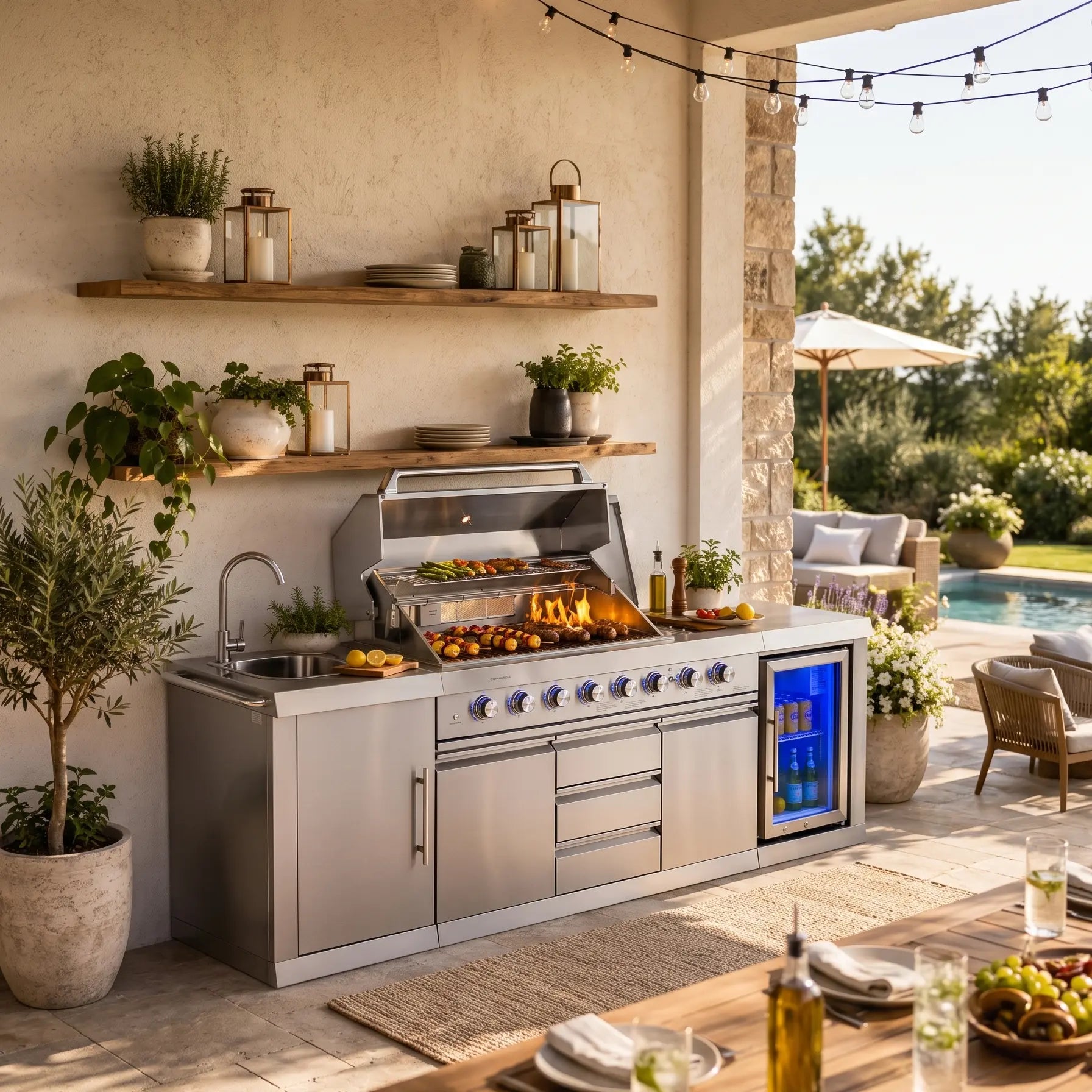
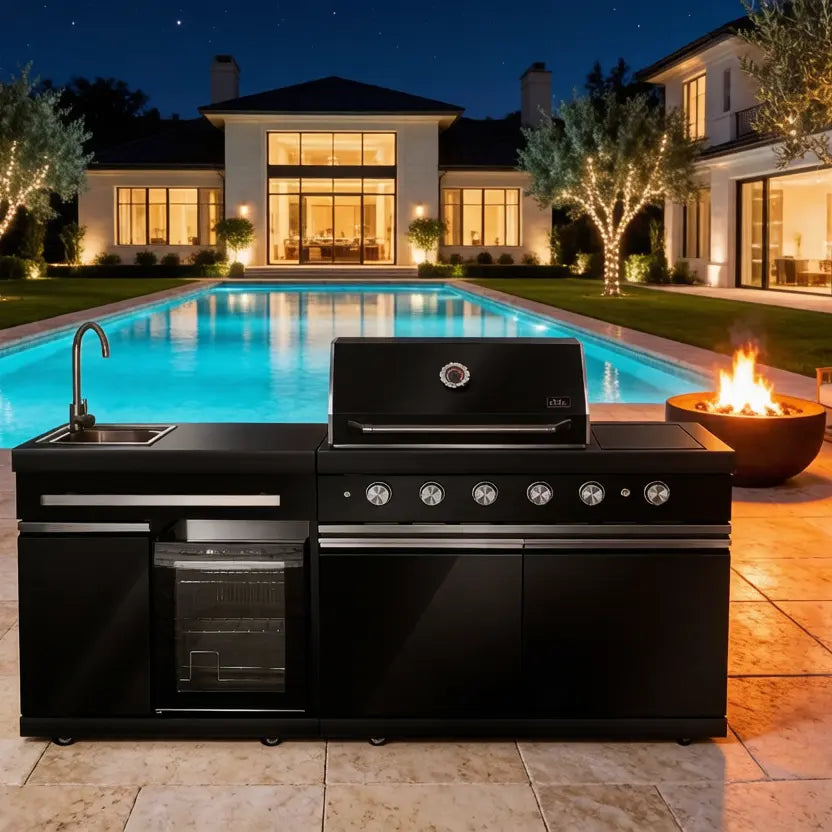
A grill cart is the mobile workhorse of an outdoor cooking setup: it holds a pizza oven or grill at working height, carries the fuel and tools, and rolls the whole station where the cooking is happening. The right cart is rated for the weight it carries, built from materials that survive the weather, and designed with enough stable surface and storage for the gear around it. This guide covers what a cart must hold, the material and construction details that matter, and how to set up a cart that serves both a grill and a pizza oven without overcrowding. It is written for the grill-plus-oven cart: for a pizza-only table or a cart-versus-table decision, the table guide and the setup-format guide cover those angles.
What a grill cart should hold
Before comparing carts, list what the cart must carry. The oven or grill is the obvious item, but the real load includes the stone, fuel, tools, covers and serving pieces that live with the cooker. A cart that fits the oven with room to spare but has no shelf for the propane tank or no rail for tools will force the extras onto the ground or a separate table. The useful way to spec a cart is to weigh the heaviest item, measure the largest footprint, and count the shelves and hooks you actually need — then find a cart that clears all three numbers.
A cart that serves a grill and a pizza oven has a harder job than a single-appliance cart. The two cookers may not sit on the cart at the same time — many owners roll the grill out for steaks and the pizza oven out for pizza night — which means the cart must be rated for whichever is heavier and sized for whichever is wider. If the goal is a permanent two-appliance station, a cart with a full-width top, a strong lower shelf and a side table is the practical answer; if the appliances alternate, a single strong cart with clear surface rules works just as well.

Stainless and weatherproofing basics
Material decides how the cart ages. Stainless steel is the standard for outdoor carts because it resists rust, handles heat and wipes clean; it is also the material most likely to be rated for the weight of a heavy oven or grill. Powder-coated steel costs less and can look as good, but a chip in the coating invites rust, so it suits covered or mild-climate storage more than year-round exposure. Aluminum is light and corrosion-resistant but dents easily and may not be built for the same loads. Whatever the material, check the cart's construction — welded or heavy-gauge frames hold up; thin panels and plastic fittings fail first.
Look for weatherproofing details in the small parts. The wheels should roll smoothly and lock firmly; the shelves should drain or shed water rather than pool it; the fasteners should be stainless or coated so they do not streak rust down the frame; and the top should tolerate the heat and spills of cooking. A cart that lives outdoors needs a fitted cover, and the cover is only as good as the cart's ability to shed water when covered. The cart that lasts is the one whose weakest part — usually a hinge, a wheel or a shelf bracket — was chosen for the outdoors too.
Weight, wheels and stability
Weight rating is the number to verify before anything else. Read the cart's published load rating and compare it against the oven or grill's listed weight plus everything stored on the shelves — a cart rated for a light pizza oven may be overloaded by a heavy gas grill with a tank. Never assume a cart is rated for the appliance because the marketing photo shows it; check the spec, and if the rating is not published, treat the cart as unverified for heavy loads.
Wheels and stability turn a rated cart into a usable one. Look for large wheels that roll over patio joints and grass without catching, and locking casters on at least two wheels so the cart does not roll when the peel pushes into the oven or the grill lid is opened. Test the stability mentally: a tall cart with a heavy oven on top needs a wide stance and a low center of gravity, especially on uneven ground. If the cart wobbles when you lean on it in the store, it will wobble worse with a hot oven on top — stability is not adjustable later.
Work surfaces and storage
The work surface is the part of the cart you touch every cook. A full-width top gives the cook a landing spot for the peel, the platter or the finished food, while a narrow top forces the cook to balance items on the appliance itself. Look for a surface that is heat-tolerant near the cooker, easy to clean, and large enough to stage the tools for one cook. If the cart doubles as a prep station, the top needs to be food-safe and smooth; if it only parks the cooker, a simpler surface is enough.
Storage turns the cart into a complete station. Shelves hold the fuel, the cover and the tools; a lower shelf is the natural home for a propane tank, keeping the cylinder out of the heat path and off the ground; side hooks or rails keep the peel, brush and tongs within reach without cluttering the top. Count the storage against your kit honestly — a cart with one small shelf will not hold a tank, a cover and a tool bag, and the overflow ends up leaning against the cart where it gets in the way. The cart that works is the one whose storage matches the gear you actually own.

Setting up a grill-and-oven cart
| Setup style | Cart layout | Key rule |
|---|---|---|
| One appliance at a time | Strong single top + lower shelf | Rate the cart for the heavier cooker |
| Two cookers parked together | Wide top + side table | Keep heat clearance between units |
| Oven + prep + serving | Full counter top + storage | Stage tools and fuel below the surface |
| Grill + tank | Shelf with tank space | Tank outdoors, out of the heat path |
Set the cart up with rules, not guesswork. The heavier appliance sits centered on the cart's strongest point; the fuel shelf stays below and away from the burner; the peel, brush and tools live on hooks or a rail so the top stays clear for food. If two cookers share the cart, leave clearance between them and never run both at full heat side by side on a narrow top — the radiant heat can damage the other unit and crowd the cook. A cart set up once with clear zones is easier and safer than rearranging it every cook.
Care and maintenance
A grill cart needs the same seasonal care as the cooker it carries. Wipe spills promptly, especially sugary sauces that bake onto the surface; keep the wheels clear of debris so they roll freely; and check the casters, hinges and shelf brackets before each season for rust or looseness. Cover the cart when the cooker is not in use, and store the cover dry — a wet cover traps moisture against the cart all week. At season's end, clean the cart, dry it completely and tighten any hardware that heat and use have loosened.
Pay attention to what the cart tells you. Rust that starts at a scratch, a wheel that stops locking or a top that begins to bow under the cooker are early signs the cart is aging or overloaded — fix or replace the part before it fails mid-cook. A good cart lasts as long as the grill or oven it carries, and the maintenance is the same discipline: keep it clean, keep it dry, keep it rated for the load. Big Horn's stainless steel grill cart and pizza oven table covers the single-cart station, and the bundle collection plus the accessories collection show how the cart, cooker and tools fit together.
Choose the cart by the heaviest load and the largest footprint it will carry, verify the published rating, and set it up with clear zones for cooker, fuel and tools. Done that way, the cart stops being a piece of furniture and becomes the reason the grill and the pizza oven both get used — because the hard part of outdoor cooking is never the cooking, it is having a stable place to do it.
Product details and prices in this guide were verified against official Big Horn Outdoors listings during the September 5, 2026 review; re-check prices and availability at checkout.