







Gas Pizza Oven Ownership
Eight guests walk in while the first dough ball is still cold in the center. That is the hosting failure mode: not a 15-versus-16 debate, but a dough schedule and oven queue that never got written down. A gas pizza oven can feed a backyard table only if the host treats service like a short restaurant shift.
This page is a hosting operations plan for eight guests. It is not a size-comparison article. For broader gas-oven reading, start from the gas pizza oven guides hub and keep this page focused on the night-of schedule.
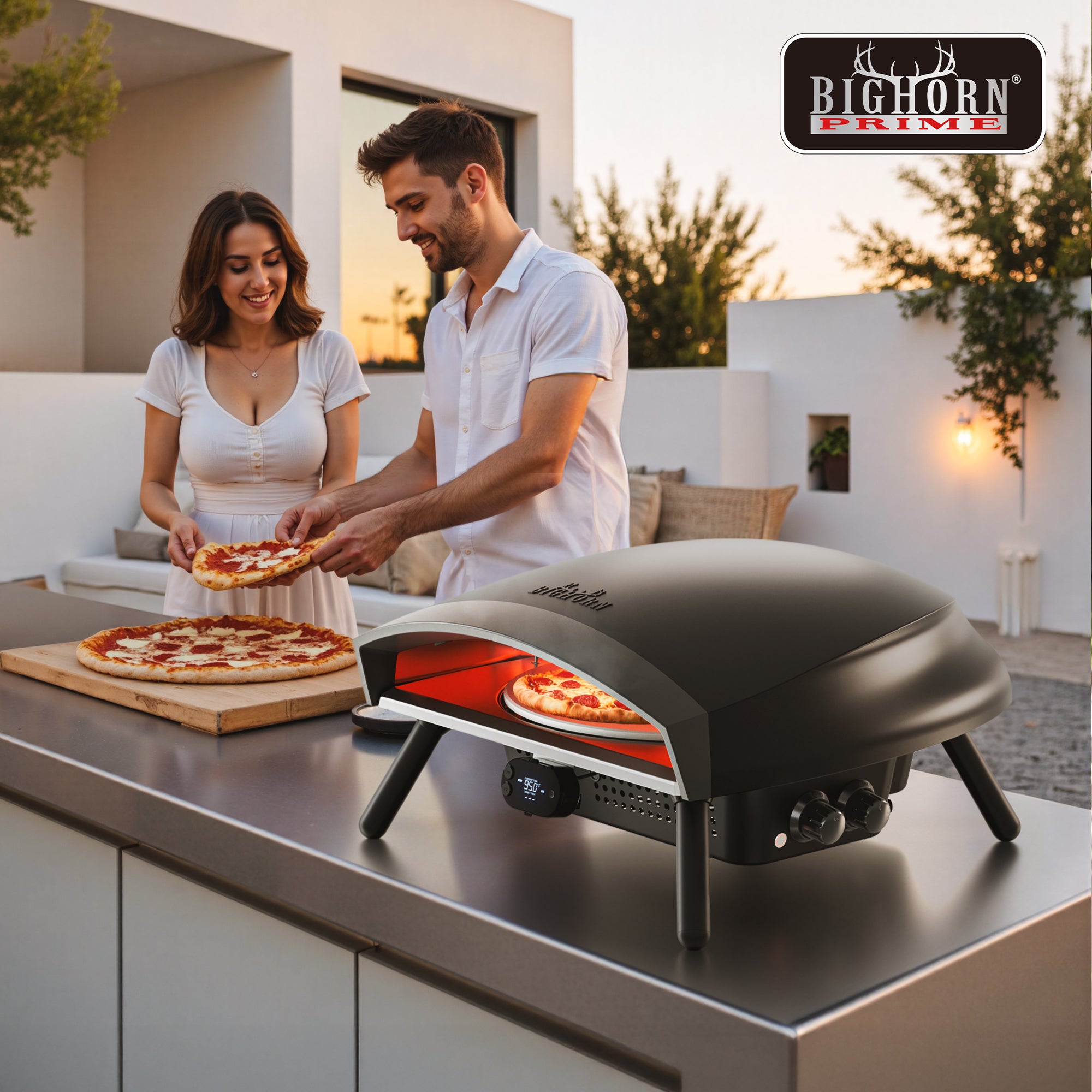
How many dough balls for eight guests?
Start from plates, not from oven marketing.
For a pizza-focused meal, plan about one personal pie per adult and add a small buffer for second helpings, then convert that count into dough weight with a calculator or batch plan.
Eight adults who are also eating salad and a dessert need fewer ounces of dough than eight hungry teenagers after a game. Write the number down. The pizza calculator helps turn guest count into dough math, and a dedicated dough ball storage plan for parties owns the make-ahead and refrigeration details so this page does not re-teach fermentation.
Stage dough in labeled containers so you know which balls are for early pies and which are still cold. Cold dough that meets a screaming stone is how the first guest pie gums. Warm-up is part of the schedule, not an afterthought beside the drinks.
Heat-up and the oven queue
The oven queue is a short ordered list: which pie launches next, who is topping it, and how long the stone rests empty after the previous landing. Without that list, everyone tops at once, three peels collide, and the stone never recovers.
Heat the chamber while dough is tempering. A rotating model such as the 16-inch auto-rotating gas pizza oven can reduce mid-bake spinning, while a 15-inch dual-burner gas pizza oven can help even recovery; pick based on the oven you already own, not on a same-day upgrade fantasy. Confirm preheat claims on the live product page, then trust the stone more than the clock.
Keep the queue visible: a notepad or a simple order of guest pies and a house pie. Launch only when the previous pizza is out and the deck has had its short soak. That empty minute is service, not downtime.

Topping station layout
Build a one-way line: dough, sauce, cheese, toppings, peel, oven. Guests who want to customize still move in that direction so the host is not reaching across a cluttered board into the flame. Deeper station layouts already live on mise and topping-station articles; here the rule is shorter: nothing wet sits for a long time, and nothing blocks the peel path.
Pre-portion messy toppings. Keep raw meats separate from ready-to-eat toppings. Use ordinary outdoor food-safety judgment from Clemson HGIC foodborne-illness prevention and NCHFP storage guidance, especially if the party starts late and the board sits in sun.
Turn and recovery during service
Even with a helper, assign one person as the oven lead. That person watches the rim, turns or trusts rotation, lands the pie, and calls for the next peel only after recovery starts. Everyone else can stretch and top. Two oven leads usually means two peels in the doorway.
If you are using a dual-burner map, ease a knob after the soak rather than leaving both sides on full blast under an empty deck. If you are using a rotating stone, still stay with the oven; the motor equalizes exposure, it does not watch the queue. Style temperatures stay on the temperature zone guide.
Drinks and sides timing
Serve something that does not depend on the stone during the first heat-up: a salad, olives, or a tray that can sit safely. Drinks should be ready before the first launch so the host is not opening bottles with a peel in the other hand. Sides that need the oven should be scheduled as a deliberate pause in the pizza queue, not as a surprise between guest pies.
If weather turns, protect people first. Outdoor gas cooking stays outdoors with air movement; EPA indoor-air carbon monoxide guidance and NFPA grilling safety are non-negotiable when someone suggests pulling the oven under a closed canopy.
Cleanup plan before the first guest arrives
Write the end of the night at the beginning. Stage a metal can for scraps, towels for the board, and a cooled-down plan for the stone and the burners. Shut the tank when service ends. Do not leave a greasy board overnight for raccoons and insects to finish.
Leftovers go into shallow containers and into the fridge within standard time limits from Ready.gov food and similar food-safety charts. Reheat later on purpose. The table below is the eight-guest schedule card.
| Time block | Dough | Oven | Host focus |
|---|---|---|---|
| Before guests | Temper first balls; keep later balls cooler | Leak-check and begin preheat | Topping station set in one direction |
| First 20 minutes of service | Stretch only the next one or two | Probe pie, then guest pies with recovery gaps | Oven lead stays at the mouth |
| Mid party | Bring next balls up as needed | Hold the queue; schedule any side bake | Drinks and sides, not a second oven lead |
| Wind-down | Stop stretching | Finish last pie; shut tank when done | Leftovers cooled and stored |
Key takeaways
Eight guests are a scheduling problem. Convert people into dough balls, heat while dough tempers, run a visible oven queue with recovery gaps, and keep one oven lead at the mouth. Use the calculator and storage guides for dough math, and keep this page for the night-of clock. Confirm any oven preheat or peak claims on the live product page for the model you will actually fire.
When you are ready to turn an eight-guest plan into a real fire, pick the gas oven you already trust in the gas pizza oven collection, then run the schedule above before anyone rings the doorbell.
FAQ
How many dough balls do I need for eight guests?
Plan from appetite, not from a single magic number. A common backyard starting point is about one personal-sized pie per adult for a pizza-focused meal, plus a couple of extras if teenagers or second helpings are likely. Use a calculator or a batch plan to turn guest count into dough weight, then adjust for sides and how late people arrive.
Should I preheat the gas oven before guests arrive?
Yes, at least far enough that the stone is entering the style band you want when the first dough balls are ready to stretch. Guests can arrive to a finishing preheat, but they should not arrive to a cold chamber and a host who is still leak-checking a tank. Build the heat-up into the schedule next to the dough warm-up.
How do I keep from serving a bottleneck of pizzas?
Create an oven queue: only a few dough balls at room-ready at a time, a clear launch order, and a recovery gap after each pie. Stretch and top while the previous pizza finishes, not while the stone is empty and waiting. A mise plan beats a pile of topped pies dying on the counter.
What should I do with leftovers after a pizza party?
Cool leftovers promptly and refrigerate within the usual two-hour window, or sooner in hot weather, following standard food-safety timing. Do not leave a stack of pies on a warm table for the whole evening. Reheat later on a moderated stone or in a kitchen oven rather than guessing with a still-roaring flame.
More to Read
Leftover Holiday Turkey on the Grill or in the Pizza Oven: Sandwiches, Tostadas and a White Pie
Give leftover turkey a second heat, not another roast: grill sandwiches or tostadas, or bake a white pie, after a safe leftover inventory the night...
Parrilla Taco Night: Carne, Salsas and Grate Space for a Crowd
Run taco night on a parrilla as a grate-space plan: carne, a second protein, a salsa station, and tortillas held soft, without one crowded fire.
Bone-In Lamb Leg or Shoulder on a Santa Maria or Gas Grill
Grill a bone-in lamb leg or shoulder as a roast: Santa Maria height or a gas two-zone fire, a USDA safety floor, and a probe that does not touch bone.
