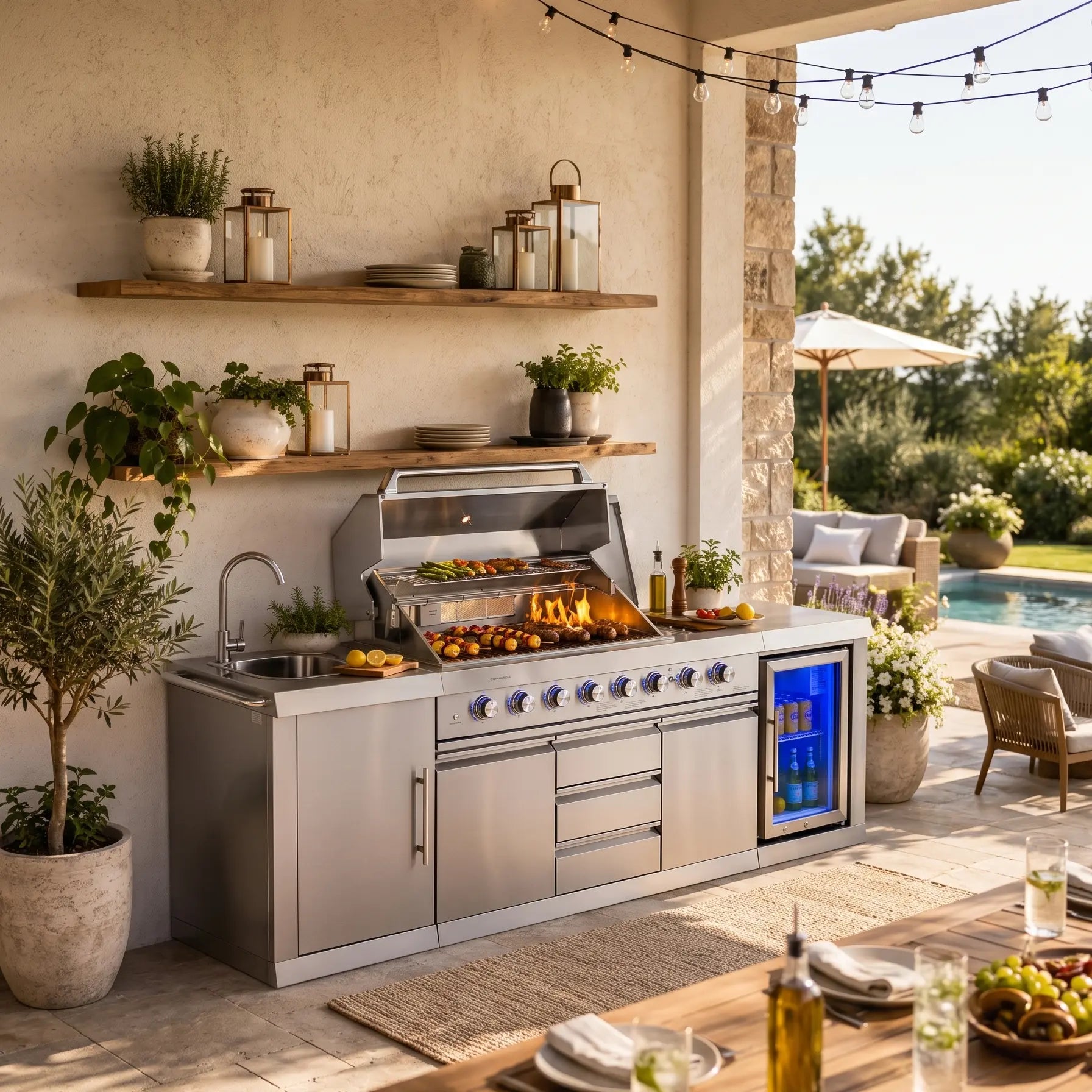
Grill vegetables on a Santa Maria grill by raising or lowering the adjustable grate to match the vegetable’s density: a raised grate gives gentle, even medium heat, while a quick lower catches char when you want it. Cut the vegetables into even pieces, toss them lightly in oil, season with salt, and use the hand wheel to fine-tune the heat as they cook. The result is browned, tender vegetables that pair naturally with the live-fire meat it cooks.
Which vegetables grill well
Peppers, zucchini, asparagus, onions, and corn all grill well, along with sturdier options like mushrooms and eggplant. Vegetables with some structure hold their shape, brown, and soften without falling apart. Softer vegetables cook quickly and need a higher grate; denser ones take longer and can sit a little lower. Choose vegetables that can hold up on the grate.
Preparing the vegetables
Cut everything into even pieces so it cooks uniformly — the same thickness means everything finishes at the same time. Toss with a light coat of oil to prevent sticking and help browning, then season with salt. Keep the oil light; too much turns grilled vegetables greasy instead of charred.
Using the adjustable grate for vegetables
The Santa Maria grill’s oversized hand wheel and steel-cable system raise and lower the grate smoothly, even under a full load. For most vegetables, a raised grate is the right starting point because medium heat cooks them through without scorching. Lower the grate briefly at the end if you want a charred edge, then raise it again so they hold without overcooking.

Seasoning beyond salt
Start with salt, pepper, and a little oil, then add herbs or a squeeze of lemon at the end rather than during the cook — delicate flavors burn less on a live fire. A simple chimichurri finish also works well with grilled vegetables and ties them to the rest of a Santa Maria meal.
How to know they are done
Vegetables are done when they are browned and tender, with a little char on the edges. Watch for the edges to soften and color, and test by piercing with a fork or tasting a piece. Most vegetables are ready when they are browned on the outside and tender inside — color and tenderness, not a hard timer.
What to serve them with
Serve grilled vegetables as a side for the steak, chicken, or fish the Santa Maria grill cooks, or toss them into salads and grain bowls. They are versatile, and they round out a live-fire meal without competing with the meat.
How do you avoid burning the outsides?
Burning usually comes from leaving vegetables too low for too long. Start on a raised grate for even cooking, then lower only for a final char and pull quickly. Move denser vegetables around the cooler edges of the fire while delicate ones stay high. If the outside keeps charring before the inside softens, raise the grate and cook longer at medium heat.
What tools do you need to grill vegetables?
You need little beyond the grill itself: a long-handled tongs or fork to turn pieces safely over live fire, a light coat of oil and a brush, and a platter to pull finished vegetables off as they color. A perforated tray or basket helps with small or delicate pieces that might fall through the grate. Everything else — salt, herbs, a squeeze of lemon — is optional garnish.
How do you pair grilled vegetables with the rest of a Santa Maria meal?
Grilled vegetables are the natural counterpart to a live-fire meat meal: they add color, texture, and acidity that balance rich, smoky protein. Serve them as a platter with chimichurri, fold them into salads, or keep a few warm in a cast iron pan on the cooler side of the grate while the meat finishes. Because they are forgiving and quick, they are also the ideal next step after you master the fire.
What vegetables should you avoid?
Very soft, moisture-heavy items like leafy greens and thin tomato slices are hard to grill directly and usually fall through or char before they cook. If you want them, use a tray or basket. Stick with structured vegetables — peppers, zucchini, mushrooms, onions, corn, eggplant — for the most reliable results.
How do you control heat for different vegetable densities?
Density decides the heat setting more than anything else. Watery vegetables like zucchini and asparagus cook quickly and prefer a raised, moderate grate; dense ones like potatoes, squash, and corn need more time and can sit a little lower. The adjustable grate is the tool that makes this easy: start high for a safe baseline, lower only to push color onto sturdy pieces, and raise again to hold finished vegetables warm without overcooking.
What oil and seasoning shine on a live fire?
Use an oil with a higher smoke point, like canola or vegetable, so it seasons rather than burns, and keep the coat light. Salt and pepper are the base; add herbs after cooking so they do not blacken, or finish with a squeeze of lemon or a spoon of chimichurri. These light finishes let the fire’s char carry the flavor instead of competing with it.
Can you grill vegetables as a main course?
Yes — with enough volume and variety, a vegetable platter is a satisfying main on its own. Include a starchy vegetable like corn or potato, a protein-forward option like grilled halloumi or tofu, and a sauce for depth. The Santa Maria grate handles the volume when you cook in batches and pull each piece as it finishes.
How do you clean the grate after a vegetable cook?
Vegetable sugars can stick and turn sticky on a grate, so clean while the grate is still warm: scrape it with a grill brush, then wipe with a light oil on a cloth to season the surface. On the V-shaped grate, grease runs to the front drip tray, so empty and wash that tray after the cook. A warm scrape takes minutes and keeps the next sear clean.
Vegetables are also the easiest way to practice the Santa Maria height control: they tolerate a range of heat, so you can experiment with the grate positions and learn how each setting behaves without risking an expensive cut of meat.
Vegetable grilling FAQs
Do vegetables stick to the V-shaped grate?
Not if you oil them lightly and let the grate heat first. The V-shaped design channels grease to the front drip tray, which keeps flare and sticking low.
Should I grill vegetables before or after meat?
After, when the fire has settled to medium heat, is easiest for control. If you want them ready first, use a raised grate while the fire is still hot.
Can I grill delicate vegetables like asparagus?
Yes — use a raised grate and watch closely; asparagus takes a short cook and quick pull once it colors.
For the current specs and control details, review the Argentine Santa Maria grill product page before you cook.