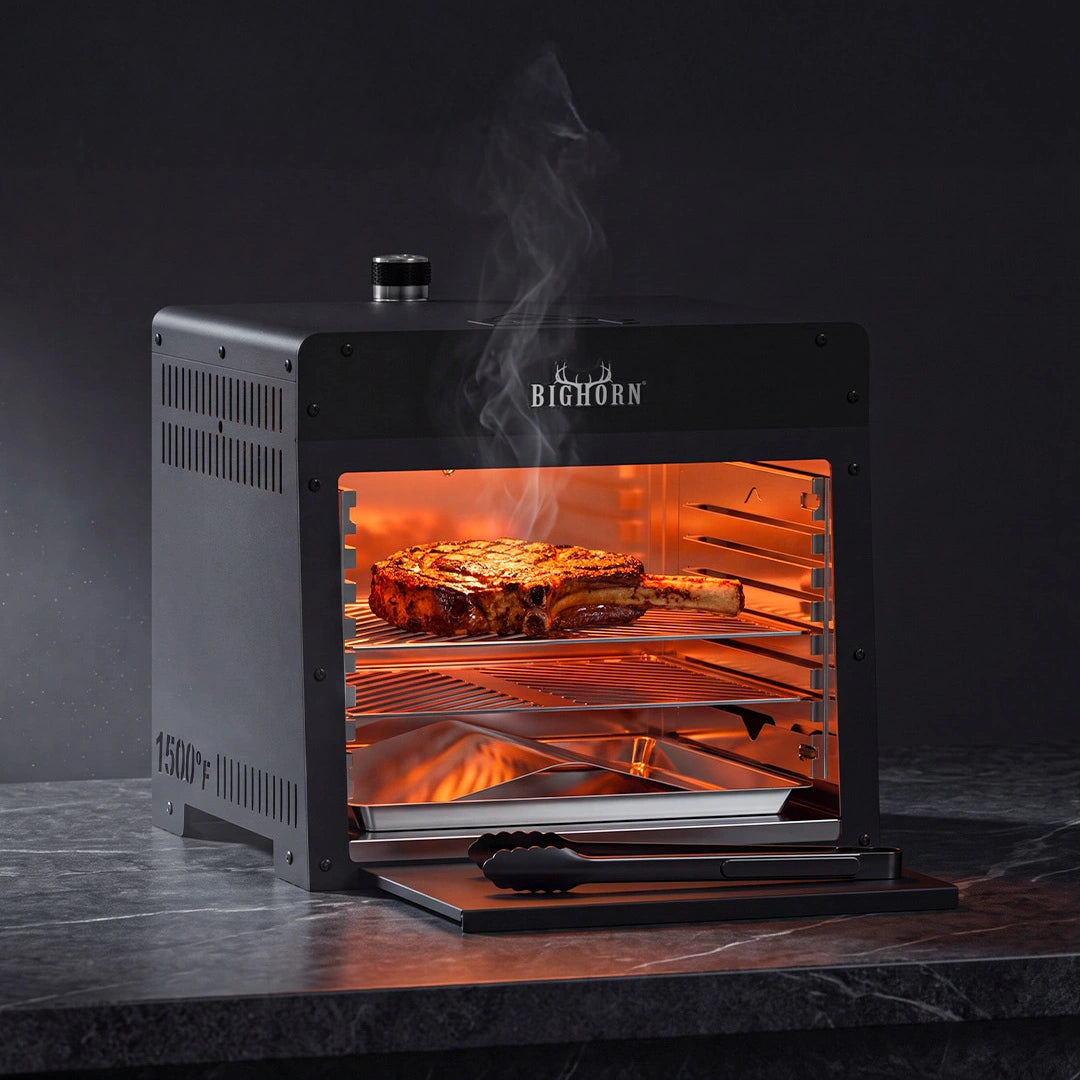
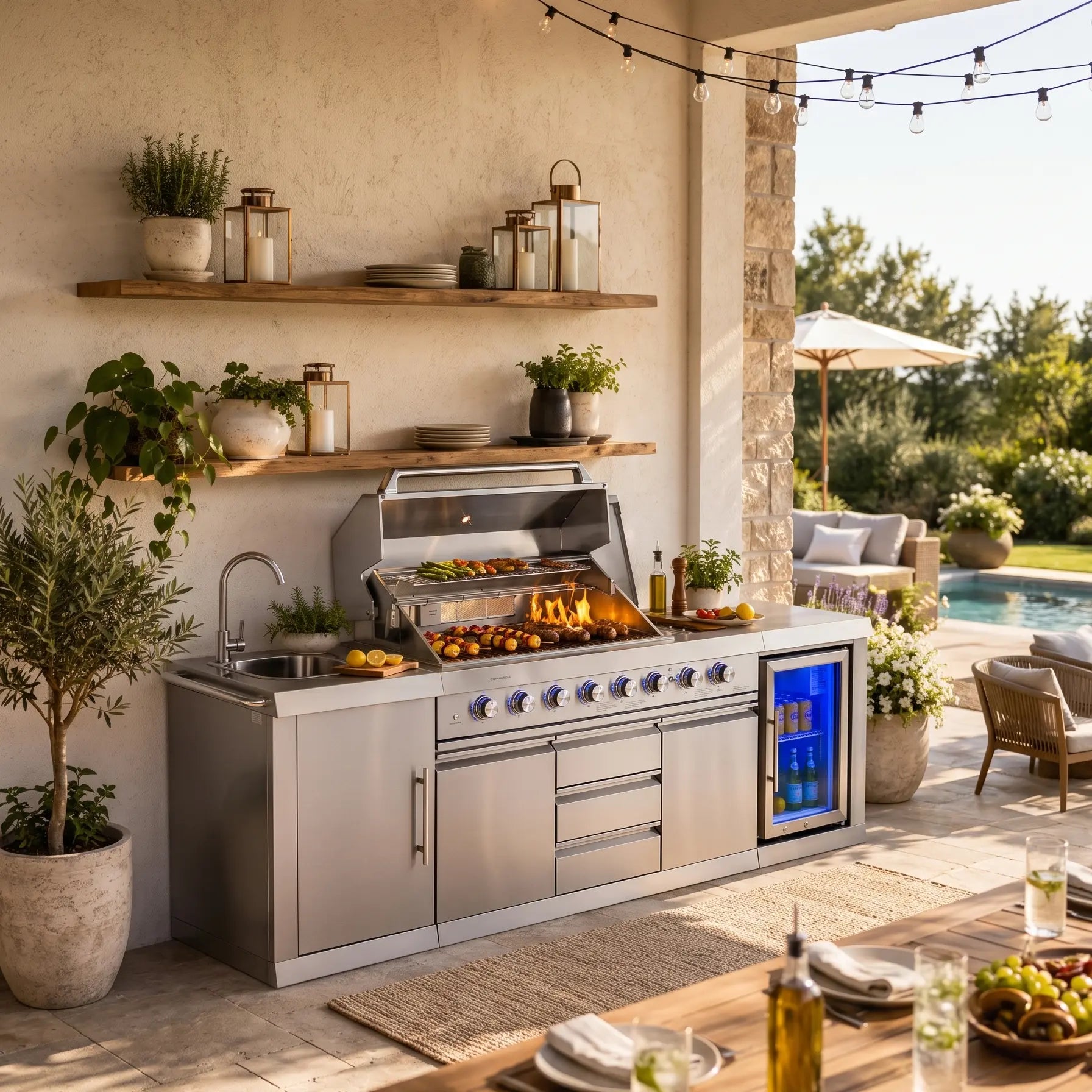
These seven recipes build a steakhouse-style holiday meal with one tool: an infrared grill. The difference from a conventional grill is that infrared heat sears from above at up to 1500 °F in 3–5 minutes, so you get the deep crust and tender center that define a steakhouse dish. Each recipe follows the same principle — dry the surface, sear hot, finish simply — which is what makes a menu of proteins and sides practical for a big meal.
The infrared method that makes these recipes work
Every dish here relies on the same mechanics. Infrared radiation transfers heat directly to the food surface without heating the air, so a crust forms in under two minutes while the interior stays rare. That means you dry everything before it goes near the heat, you cook in small batches so the emitter stays hot, and you finish with a simple butter, herb, or sauce rather than piling on more cooking.
These seven turnarounds scale to a crowd because each one cooks fast. The limiting factor is capacity — a 16-inch grate fits a few servings at a time — so plan to work in rounds and hold finished items.
Garlic butter ribeye
Sear a ribeye close to the heat until a deep crust forms, then finish with melted garlic butter. Ribeye’s fat handles the intense heat well; cook to medium-rare, about 130–135 °F, and rest it before slicing. The garlic butter does the finishing, so the surface stays relatively simple.
Herb-crusted New York strip
Coat a strip in chopped rosemary and thyme, then sear it hot. The herbs toast onto the crust as it forms, adding fragrance without a marinade. Cook to medium-rare, roughly 130–135 °F, and slice against the grain.
Smoked paprika filet mignon
Season a filet with smoked paprika and salt, then give it a quick, hot sear. Filet is lean, so it dries fast — watch the center and pull it at about 125–130 °F, accounting for carryover, rather than chasing a longer cook.
Rosemary lamb chops
Season lamb chops with garlic and rosemary, then sear them fast over high heat. Serve them medium-rare, around 135 °F, and rest briefly so the juices set. The high heat gives the fat a crisp edge without drying the meat.
Blackened prime rib
Season thick prime rib slices with a blackening spice blend, then sear them briefly on each side. You are finishing already-cooked meat, so a short blast builds the crust without overcooking the center. Watch closely — a minute too long can push a medium slice over.
Seared scallops
Pat scallops completely dry, season them, and sear them quickly so the outside browns while the center stays tender. Dryness is the whole game with seafood; moisture steams instead of searing. Work in one layer and pull them the moment they release from the grate.
Charred Brussels sprouts
Toss halved sprouts in oil and salt, then cook them over high heat until the edges char and the centers soften. A pan or tray keeps them from falling through a wide grate. The high heat gives the charred, caramelized edges that make the side taste roasted rather than boiled.

How to sequence a seven-dish holiday menu
Because a 16-inch grate fits only a few servings at a time, the menu is best cooked in a deliberate order rather than all at once. Start with the longest-holding items — the charred Brussels sprouts can sit warm while you sear proteins — then work through steaks and chops, finishing with the quickest, most temperature-sensitive items like scallops and filet last so they do not rest into overcooking.
Hold finished proteins loosely covered while the next round sears, and use the lower rack position to keep them warm without continuing to cook. A simple timeline: side dishes first, then thicker cuts, then the delicate items right before serving.
Prep that protects the sear
The single highest-leverage step for every recipe here is drying the surface. Pat steaks, chops, scallops, and even the sprouts dry before they hit the heat; moisture is what turns a sear into a steam. Season with a coarse salt and let thick steaks sit at room temperature briefly so the surface is not cold-wet, then place them on the hot grate without crowding.
Use a digital thermometer rather than time for proteins. Pull steaks about 5 °F below target to account for carryover, rest them, and check scallops the moment they release from the grate. Dry surface, hot grate, batch cooking, and a thermometer cover the majority of holiday cooking mistakes.
Holiday grilling mistakes to avoid
Three mistakes weaken most holiday attempts: searing a wet surface, overcrowding the grate, and overcooking lean cuts. Wet food steams instead of browning, overcrowding drops the heat, and lean cuts like filet or scallops go dry fast. Dry everything, cook in batches, and pull proteins by temperature, not color.
Doneness temperatures for the proteins
| Item | Pull temperature | Note |
|---|---|---|
| Ribeye / strip | 130–135°F (medium-rare) | Rest 5 min before slicing |
| Filet mignon | 125–130°F | Lean; watch carryover |
| Lamb chops | 135°F | Allow juices to set |
| Scallops | 145°F (or 10 s white sheen) | Cook briefly by feel |
These targets assume a rest after pulling, so remove items slightly before the final number and let carryover finish the cook. A thermometer removes the guesswork that the intense heat otherwise encourages.
Building the rest of the meal around the grill
These seven dishes work as a core, but a full holiday spread benefits from foods that do not tie up grill space. Start with something you can serve cold or make ahead — a plated salad, a cheese board, or roasted root vegetables done earlier — so guests eat while the grill works through the proteins. Keep any vegetable side simple; the charred sprouts already cover the high-heat side, so a quiet salad balances the richness.
Because the grill cooks fast, the rhythm is to serve in rounds rather than all at once: a first steak round, then chops, then the delicate seafood and sides. That keeps every plate coming off the heat at its best instead of resting in the kitchen.
Recipe FAQs
How hot should the infrared grill be?
Very hot — the Big Horn broiler reaches 1500 °F in 3–5 minutes. Preheat fully before the first sear, then use rack position, not peak heat, to moderate.
What is the key to a good sear?
A dry surface and high heat. Pat the food dry, then let the emitter do the work; moisture is what prevents browning.
Can it cook seafood and sides too?
What temperature should I pull each steak to?
Pull ribeye and strip at about 130–135 °F for medium-rare and filet at 125–130 °F, both accounting for carryover. Lamb chops are done around 135 °F. Always confirm with a thermometer rather than relying on time.
Why does my steak smoke a lot?
A little smoke from rendered fat is normal at 1500 °F. Heavy smoke usually means there was moisture or a sugary marinade burning on the surface — pat the meat dry and avoid high-sugar seasonings before the sear.
Yes. Scallops and vegetables cook quickly, so the same unit handles proteins and sides in rounds.
For the current setup, review the 16-inch Big Horn infrared grill product page and check food-safety temperatures against the USDA’s safe minimums before serving proteins.