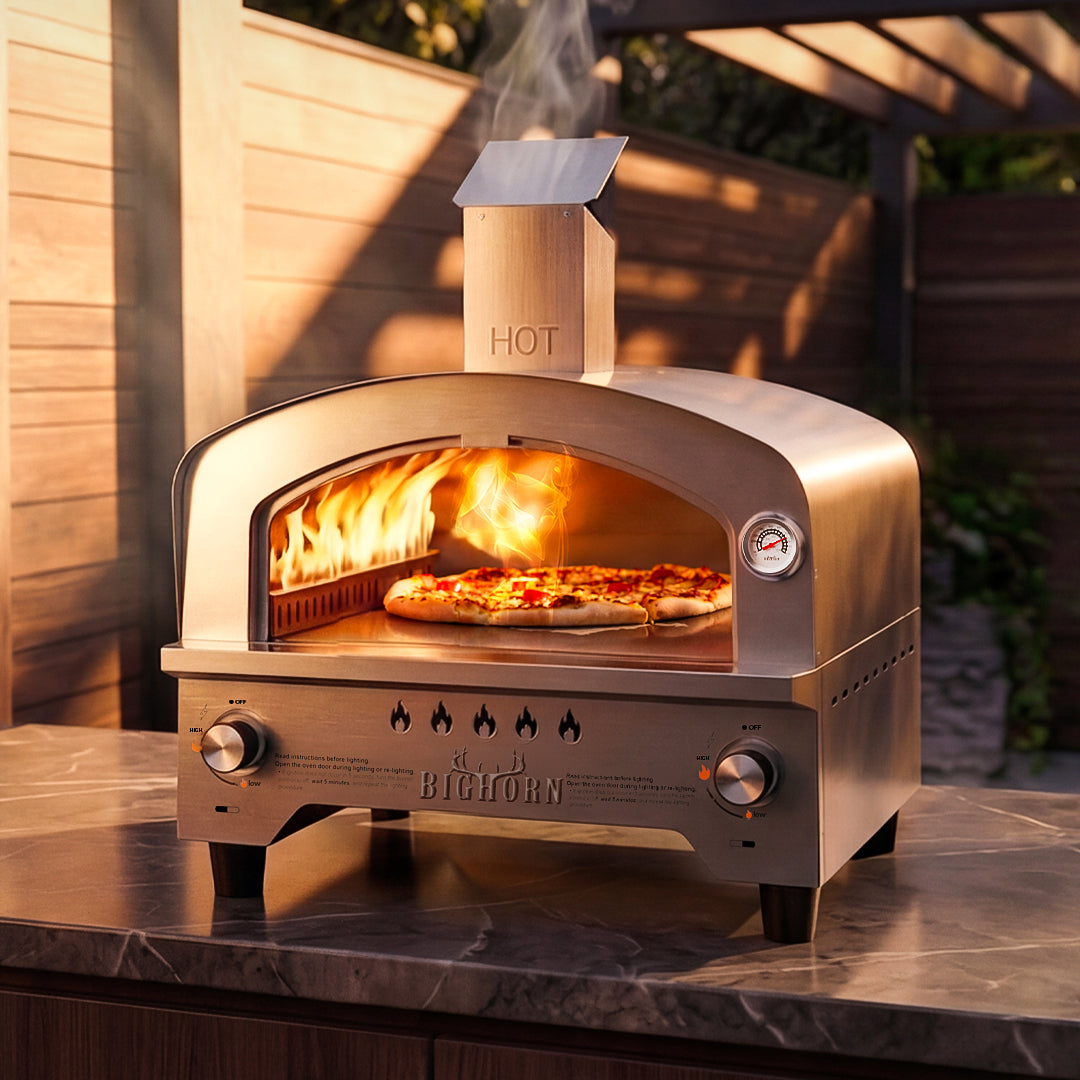
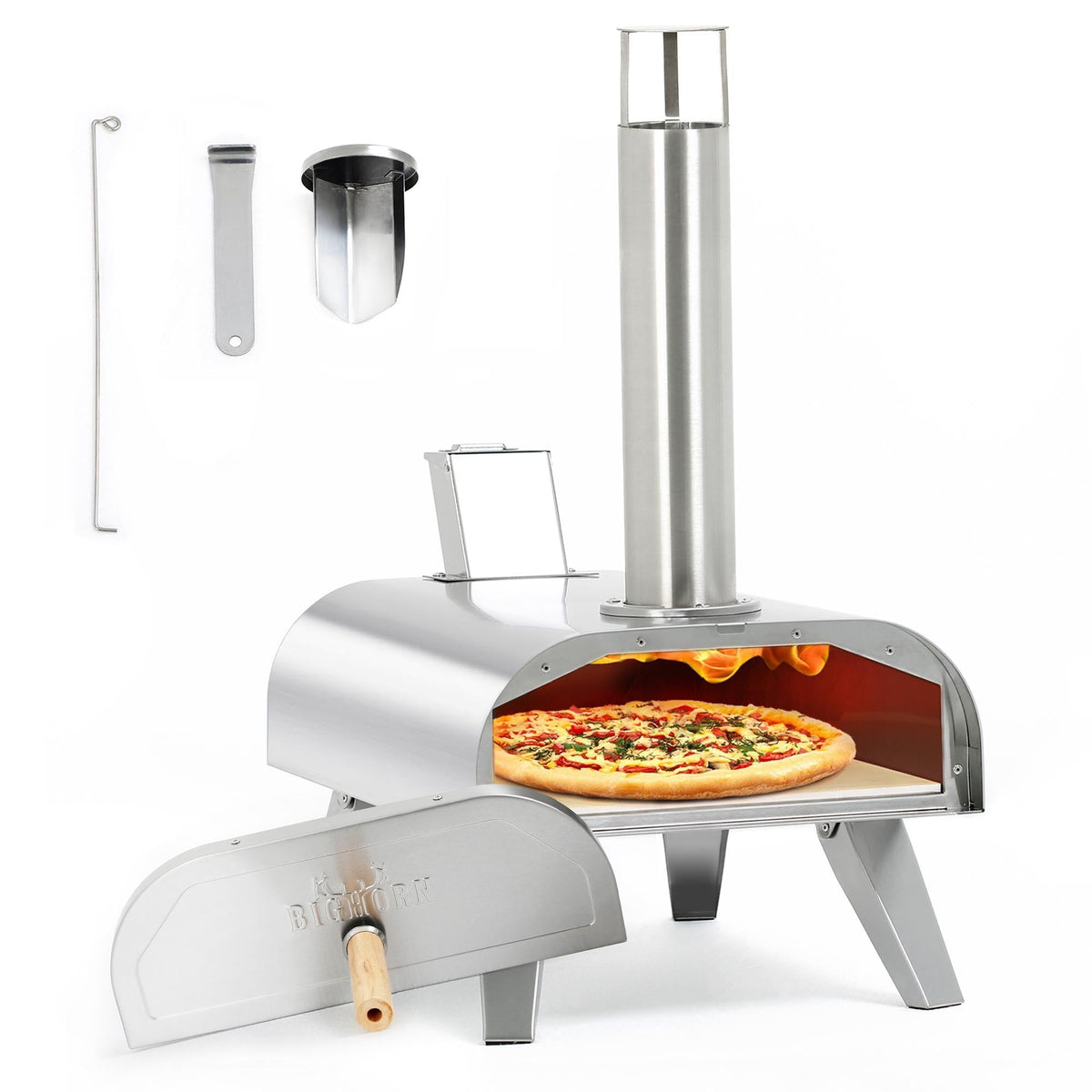
You make wood-fired pizza at home with a pellet or wood-fired oven, a simple fermented dough, and a short, hot bake: preheat the oven 18–20 minutes, launch a lightly topped pizza onto a fully heated stone, and pull it in 60–90 seconds when the rim puffs and blisters. The Big Horn 12-inch pellet oven reaches about 887 °F (475 °C), which is the heat that turns good dough into the puffy, spotted crust the style is known for.
What you need to start
The essentials are a wood-fired or pellet oven, a pizza peel, and simple dough and sauce ingredients. The oven does the heavy lifting; a peel helps you launch and turn the pizza; and a thermometer or the oven’s heat indicator confirms the stone is ready. Begin with those basics before adding turning peels, bakers’ tools, or toppings beyond a short list.
Making the dough
Mix flour, water, salt, and a small amount of yeast, then let the dough ferment for several hours or overnight. A typical home dough uses 60–65 percent hydration, a couple of percent salt, and a little yeast; a slow, cool rise builds flavor and an airy crumb. Stretch it by hand into a thin center with a puffy rim, keeping the toppings light so nothing steams the center. A rolling pin flattens the rim, so hand-stretching is the technique that matters.

Preheating the oven
Light the pellets and preheat for 18–20 minutes until the stone is hot — the stone, not just the air, must reach baking temperature. A cold stone is the most common cause of a pale, doughy base, so do not launch early. Confirm the stone with a thermometer if your oven lacks a reliable indicator.
Shaping, topping, and building on the peel
Hand-stretch the dough to a thin center with a puffy rim, add a light sauce and a short topping list, and build the pizza on a floured peel. Shake the peel before launching to confirm it slides; a stuck pizza is the fastest way to lose a bake. Keep toppings light and build quickly so the dough does not absorb moisture.
Baking and finishing
Launch the pizza onto the stone and bake for 60–90 seconds, rotating partway through for even browning. Pull it when the rim is puffed and spotted with char rather than relying on a timer. The fast bake creates the contrast of a soft center and a crisp, blistered edge that defines wood-fired pizza.
What should you cook first?
A simple margherita is the ideal first wood-fired bake: light sauce, fresh mozzarella, a little basil, and thin dough. It teaches you the stone, the flame, and the timing without the distraction of heavy toppings. Keep the first few pizzas simple, note how the oven behaves at each stage, and you will build a mental model of the heat that transfers to every later recipe.
How do you control heat for different results?
Heat control is about fire management and stone temperature. For a fast, blistered Neapolitan-style bake, keep the fire steady and the stone hot; for a slightly gentler finish, let the fire settle and the stone come to a lower equilibrium. Watch the rim rather than the clock, and use a turning peel to rotate for even browning. Each session teaches you the fine adjustments your specific oven needs.
How do you clean and store the oven?
After the last bake, let the oven, stone, and ash cool completely. Empty the ash into a metal container, brush the stone without soap, and wipe the stainless shell. Store the oven dry and covered, and keep pellets in a sealed container. Never pack or move a warm oven or a hot ash container — cooling is a requirement, not a convenience.
What equipment do you need beyond the oven?
Beyond the oven, the essentials are a peel for launching and turning, a floured work surface for building, and a thermometer to confirm the stone. A turning peel helps with even browning, and a heat-resistant glove or brush aids cleanup. You do not need a full kit to start — a peel, a work surface, and a thermometer cover the basics.
How do you know when the pizza is done?
The crust is the signal, not the timer. Pull the pizza when the rim is puffed and spotted with char and the base is set, usually within 60–90 seconds at high heat. Rotate once partway through so browning stays even, and let the pizza rest on a rack for a minute so the base stays crisp before slicing.
How does a pellet oven compare with a brick wood oven?
A brick wood oven holds massive thermal mass and reaches very high heat, but it is permanent, slow to preheat, and requires log management. A pellet oven reaches the same 887 °F window on a portable, folding-leg footprint with far less fire-tending. For most home cooks, the pellet oven delivers the wood-fired flavor and blistered crust the style demands without the brick oven’s cost and space — the practical trade between authentic results and home convenience.
How do you judge the dough is ready to shape?
After the bulk ferment, the dough should be roughly doubled, feel airy and slightly springy, and hold a light fingerprint that springs back partway. Over-proofed dough is slack and hard to handle; under-proofed dough is dense and tears. Learning this feel with consistent timing, then adjusting for temperature, is the fastest way to repeatable dough.
Why do some pizzas come out burnt on the rim but pale underneath?
That pattern usually means the fire was very hot but the stone was not fully saturated, so the overhead heat scorched the rim while the base never set. Preheat longer so the stone reaches baking temperature, and rotate earlier to balance the two. A fully heated stone is the fix for the pale-base side of the problem.
How do you adapt the recipe for different ovens?
The same dough and bake logic transfer across pellet and gas ovens, but each unit has its own heat timing. A pellet oven warms in 18–20 minutes and rewards a settled stone; a gas oven climbs faster and holds by dial. Learn your oven’s preheat signature — where the hot spots sit, how fast the stone recovers — by running a few test bakes and noting the behavior. That calibration is what makes the technique repeatable on any machine.
What role does the peel play in a successful bake?
The peel decides whether the pizza arrives on the stone intact. Use a well-floured peel, build the pizza quickly, and shake it before launching so you know it slides. A turning peel then rotates the pie partway through the bake for even browning. Both are simple tools, but they prevent the two most common failures: a stuck launch and an unevenly cooked rim.
How do you push flavor beyond the base recipe?
Once the basics are solid, flavor improves through dough and toppings rather than equipment. A 24-hour cold ferment deepens the crust’s taste; quality San Marzano-style tomatoes and fresh mozzarella lift the topping; and a little finishing olive oil or basil after the bake adds freshness. Keep the base approach simple and let these small upgrades shine.
Wood-fired pizza FAQs
Do I need a special oven for wood-fired pizza?
Yes — the high heat is the point. A pellet oven like the Big Horn 12-inch reaches 887 °F, which a standard kitchen oven cannot approach.
Why is my base pale and doughy?
The stone was not hot enough. Preheat fully for 18–20 minutes and confirm the stone temperature before launching.
What is the best first pizza to make?
A simple margherita with light sauce and fresh mozzarella. It teaches you the heat without complicated toppings and is the most forgiving first bake.
To confirm the current specs and accessories, review the 12-inch Big Horn pellet pizza oven product page before your first bake.