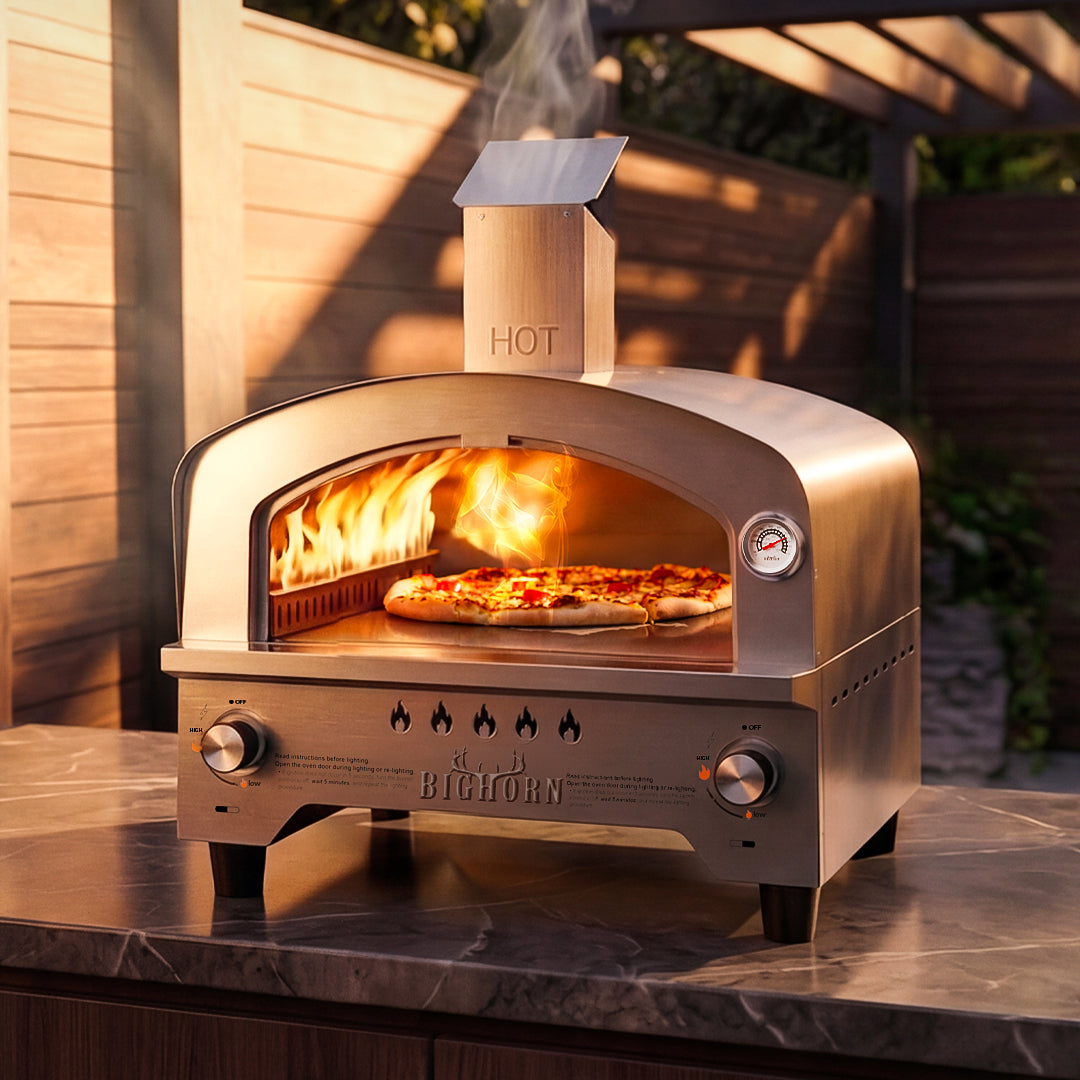
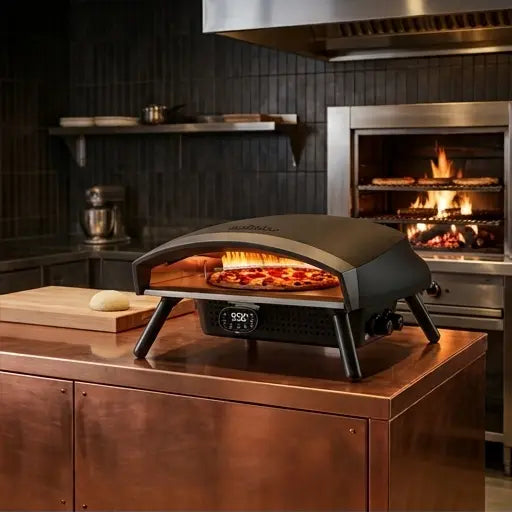
The best portable pizza oven under $200 is typically a compact 12-inch pellet-fired oven for cooks who want outdoor, wood-fired pizza at the lowest upfront cost. If fuel flexibility matters more than a strict $200 cap, Big Horn Outdoors offers 12-inch multi-fuel alternatives with pellet-plus-gas or pellet-plus-electric cooking options.[bighornoutdoor]
By the Big Horn Outdoors Product Team
An affordable wood pellet pizza oven can produce crisp, blistered pizza when its stone is fully preheated and its fire is managed correctly. The best choice depends on your budget, preferred fuel, storage space, outdoor setup, and willingness to manage high heat.
Top Picks at a Glance
For most shoppers with a firm $200 limit, a 12-inch pellet-fired oven is the most realistic route to high-heat outdoor pizza. Big Horn Outdoors multi-fuel ovens are a step-up option rather than strict under-$200 picks, with current collection prices starting above $200.[bighornoutdoor]
| Buying route | Typical budget position | Fuel approach | Best for | Key trade-off |
|---|---|---|---|---|
| Under-$200 portable pellet oven | Under $200 | Hardwood pellets | First-time outdoor pizza cooks who want a low entry cost | Requires hands-on fire, ash, and stone-temperature management |
| Budget propane pizza oven | Often above $200 | Propane | Beginners who prefer adjustable flame control | Usually costs more than basic pellet ovens |
| Big Horn Outdoors 12-inch Pellet & Gas | Above $200; verify current price | Wood pellets and propane | Outdoor cooking, patios, and camping-style use | Not a strict under-$200 purchase |
| Big Horn Outdoors 12-inch Pellet & Electric | Above $200; verify current price | Wood pellets and electric heating | Cooks who value a pellet option plus electric-mode convenience | Pellet function must be used outdoors in an open area |
What Makes a Portable Pizza Oven Worth Buying?
A portable pizza oven is a compact high-heat cooker that bakes pizza on a stone or similar heat-retaining surface. The key to a crisp crust is not simply a hot oven chamber; it is a stone with enough stored heat to cook the dough quickly from below.
Pizza cooks through three heat-transfer methods:
- Conduction is heat moving from the hot stone directly into the dough.
- Radiant heat comes from the flame, hot ceiling, and interior surfaces, browning the rim and melting cheese.
- Convection is heat carried by circulating air and combustion gases inside the chamber.
This balance is why a pizza can have a browned top but a pale or soft bottom. A lively flame may color the toppings, but the stone must also be hot enough to set and brown the crust.
When comparing a lightweight outdoor pizza oven in 2026, prioritize a stable cooking platform, a properly fitted pizza stone, safe legs or stand support, and a practical way to monitor stone temperature. A handheld infrared thermometer is especially useful because it measures the cooking surface rather than only the air inside the oven.
Is a Pellet Pizza Oven a Good Ooni Budget Alternative?
A pellet pizza oven can be a practical Ooni budget alternative for cooks who enjoy live-fire cooking and want wood-fired character at a lower entry price. It is not the same as a propane oven because pellet cooking requires more active management of fuel, airflow, flame strength, and ash.
Wood pellets are compressed pieces of hardwood made for cooking. When they burn in a pizza oven, they produce flame, radiant heat, hot gases, and a mild wood-fired aroma. The cook must keep the flame active enough to brown the pizza top while allowing the stone to retain enough heat for a crisp base.
A pellet-fired oven usually suits you if you:
- Prefer outdoor cooking and enjoy tending a live fire.
- Want a compact oven for 10- to 12-inch pizzas.
- Have space to use an oven safely in the open air.
- Do not mind learning how fuel loading affects flame intensity.
- Want an affordable wood pellet pizza oven rather than a higher-priced gas model.
Propane remains easier for many beginners because the flame is adjustable. A gas burner can generally be raised or lowered quickly, making it easier to manage the cooking chamber and restore heat between pizzas.
Neither fuel is universally better. Pellets emphasize fire cooking and flavor; propane emphasizes control and repeatability.
How Hot Should a Budget Pizza Oven Get?
For fast, thin-crust pizza, a stone surface in the 700°F to 900°F range is often appropriate, while thicker or heavily topped pizzas usually benefit from lower and steadier heat. A 60- to 90-second bake is possible only when the stone, flame, dough thickness, and toppings are properly matched.
The most important measurement is the stone temperature at the place where you will launch the pizza. Oven air can be extremely hot while the stone remains too cool to cook the base efficiently.
Use these general stone-temperature guidelines:
- 700°F to 850°F: Thin, lightly topped pizzas that need fast cooking and frequent turning.
- 600°F to 700°F: New York-style pizza, slightly thicker dough, or pizzas with more toppings.
- Below 550°F: Better for slower flatbreads, reheating, or lower-temperature baking than for fast Neapolitan-style pizza.
At high temperatures, the Maillard reaction creates browned flavor compounds on the crust and cheese. However, an excessively hot stone can burn flour on the bottom before thicker dough or wet toppings finish cooking.
Use a minimal amount of flour or semolina on the peel. Excess loose flour burns quickly, creates bitter smoke, and can leave black spots on the pizza base. Brush off burned debris between bakes after the oven has cooled enough for safe handling.
Why Consider a Big Horn Outdoors Alternative?
Big Horn Outdoors multi-fuel pizza ovens are a step-up for cooks who need more than one fuel option, not a strict under-$200 recommendation. The current collection includes 12-inch Pellet & Gas and Pellet & Electric models, with listed sale prices beginning above $200.[bighornoutdoor]
Big Horn Outdoors developed its outdoor-cooking focus from a 2012 backyard-cooking challenge centered on reducing uneven heat, excessive smoke, and unstable temperatures. In practical terms, that focus is relevant to pizza cooks who want a model-specific way to choose between live-fire flavor and a more controlled heat source.
The 12-inch Pellet & Gas Pizza Oven uses wood pellets and propane gas. According to the current official collection page, it has a stainless-steel body, foldable legs, and a wooden handle. The included gas burner is listed as reaching 350°C, or about 662°F, in approximately 20 minutes. It is positioned for outdoor cooks, including backyard and camping use.[bighornoutdoor]
The 12-inch Pellet & Electric Pizza Oven uses wood pellets or electric heating. The current official collection page lists an 1,850-watt electric system that reaches 350°C in approximately 20 minutes in electric mode and states that pizza can cook in as little as 120 seconds under appropriate conditions. The electric mode is described as suitable for well-ventilated indoor spaces or covered patios, while pellet operation must always be outdoors in an open area.[bighornoutdoor]
The correct choice depends on where and how you cook:
- Choose Pellet & Gas if you want outdoor-only pellet flavor plus propane control.
- Choose Pellet & Electric if you want pellet cooking outdoors and an electric cooking option where the exact model’s placement guidance allows it.
- Choose a basic pellet oven if the lowest upfront cost matters more than multi-fuel flexibility.
Because attachments, operating environments, heat sources, and included components differ by model, always verify the live product listing before purchasing.
Fuel Choice Changes the Cooking Experience
Choose pellets for active wood-fired cooking, propane for easy flame adjustment, and electric mode only when the exact model is designed for it. Never use a pellet-fired oven indoors, in an enclosed tent, garage, or any space without open-air ventilation.
| Fuel type | Main benefit | What you manage | Best fit |
|---|---|---|---|
| Hardwood pellets | Live-fire character and wood-fired aroma | Fire, pellet supply, airflow, ash, and stone recovery | Outdoor cooks who enjoy hands-on cooking |
| Propane | Fast, adjustable, repeatable flame | Gas supply, burner setting, and wind exposure | Patio cooking and beginner-friendly control |
| Electric | Straightforward heat without combustion | Approved outlet, cord placement, and model-specific location rules | Model-approved indoor or flame-restricted use |
| Multi-fuel | More than one cooking approach | Correct attachment, operating mode, and safety steps | Cooks whose needs change by location or occasion |
A multi-fuel oven adds flexibility, but it is only valuable if you will use it. A dedicated pellet oven may be the better purchase for someone who cooks outdoors occasionally and specifically wants wood-fired pizza. A gas-capable or electric-capable format can be more useful for a household that values easier heat control on weeknights.
Use only 100% food-grade hardwood pellets made for cooking. Oak, hickory, and maple are common choices. Do not use heating pellets, softwood pellets, or unknown pellets that may contain additives unsuitable for food preparation.[bighornoutdoor]
Heat Management for Better Pizza
The most reliable path to better pizza is to manage stone temperature and flame separately. A high flame can quickly brown the rim, but a stone that has lost heat will still leave the base pale, soft, or prone to sticking.
Start by preheating long enough for the stone to absorb heat throughout its thickness. Then check the surface with an infrared thermometer. After launching the pizza, watch the side nearest the flame; in many compact ovens, it will brown faster than the opposite side.
Turn the pizza every 15 to 30 seconds when needed. A metal turning peel makes this safer and more precise than trying to rotate a fully loaded pizza with a large launch peel.
Follow this practical cooking sequence:
- Preheat until the stone reaches the appropriate range for your pizza style.
- Stretch the dough and add toppings sparingly.
- Make sure the pizza slides freely on the peel before launching.
- Launch quickly to reduce heat loss from the oven opening.
- Turn the pizza as the rim begins to rise and color.
- Let the stone recover between pizzas, especially after a long bake.
- Allow the oven to cool completely before cleaning or covering it.
For multiple pizzas, the first pizza is not always the best indicator. Each pizza absorbs heat from the stone. If later pizzas begin cooking unevenly, pause and restore stone temperature before launching again.
Portability, Capacity, and Setup
A 12-inch oven is usually the most practical portable format for personal pizzas, small patios, camping, and compact storage. A larger oven gives more turning room and supports larger pizzas, but it also needs more table space, transport capacity, and storage room.
Before buying, measure your actual setup area rather than relying on a product photo. You need enough space for the oven, the peel, the fuel, the cook’s standing position, and a safe clear zone around hot surfaces.
For travel, camping, and small outdoor areas, prioritize:
- Foldable legs or a stable support method designed for that specific model.
- A level, non-combustible tabletop or stand.
- A safe carrying plan after the oven has cooled fully.
- Fuel that is compatible with the exact oven.
- Wind awareness without enclosing the oven or obstructing ventilation.
- Essential tools: a peel, infrared thermometer, heat-resistant gloves, and fire extinguisher.
Portable does not mean suitable for every balcony, deck, campsite, or patio. Follow local fire rules, property restrictions, and the manufacturer’s clearance guidance. Keep the oven away from dry vegetation, combustible walls, overhead materials, and areas where children or pets may pass close to the cooking zone.
Big Horn Outdoors Expert Views
“The best pizza-oven results come from matching the heat source to the cook’s routine. Wood pellets reward cooks who enjoy tending a live fire and monitoring stone recovery. Gas provides easier flame adjustment, while electric mode offers a practical option where the specific model is approved for that setting. In every case, a fully preheated stone, a stable non-combustible surface, and model-specific safety guidance matter more than chasing a maximum temperature number.”
Cleaning, Storage, and Safety
A portable pizza oven should be cleaned only after it has cooled completely; pellet-fired ovens should have cold ash removed regularly to preserve airflow and keep the cooking area tidy. Never pour water on a hot oven or pizza stone because thermal shock can crack the stone and create hazardous steam.
After cooking:
- Let the oven, stone, and all attachments cool fully.
- Remove ash only when it is completely cold.
- Brush the stone dry to remove food residue.
- Check legs, handles, fasteners, and fuel connections before the next use.
- Store the oven in a dry place and use a compatible cover only after it has cooled.
For propane-capable models, inspect the hose, connector, and burner before lighting. If you smell gas, do not ignite the oven. Shut off the supply, move away from the area, and follow the model’s official safety procedure.
For electric-capable models, use the specified electrical arrangement, keep the power cord away from hot surfaces, and avoid wet conditions. Do not assume that every electric pizza oven is indoor-safe; follow the instructions for the exact model and selected fuel mode.
Which Budget Pizza Oven Should You Buy?
Choose an under-$200 12-inch pellet oven if you want the lowest-cost entry to outdoor, wood-fired pizza and are willing to actively manage a live fire. It is a practical fit for occasional cooks, small households, and buyers who value portability over maximum cooking space.
Choose a Big Horn Outdoors multi-fuel alternative if your budget can extend beyond $200 and you want the option to cook with pellets plus propane or electric heat, depending on the exact model. The current collection lists four multi-fuel products, with prices beginning above the strict under-$200 category.[bighornoutdoor]
Before making a final decision, confirm five details:
- Your preferred fuel and how much control you want over the flame.
- The maximum pizza size you plan to cook.
- The outdoor or approved indoor space available for setup.
- The oven’s weight, legs, handle, and storage requirements.
- The exact model’s current price, included components, and operating instructions.
A good budget pizza oven is not simply the least expensive option. It is the oven that lets you preheat safely, manage the stone temperature confidently, and cook the style of pizza you actually want to make.
Frequently Asked Questions
Can a portable pizza oven cook foods other than pizza?
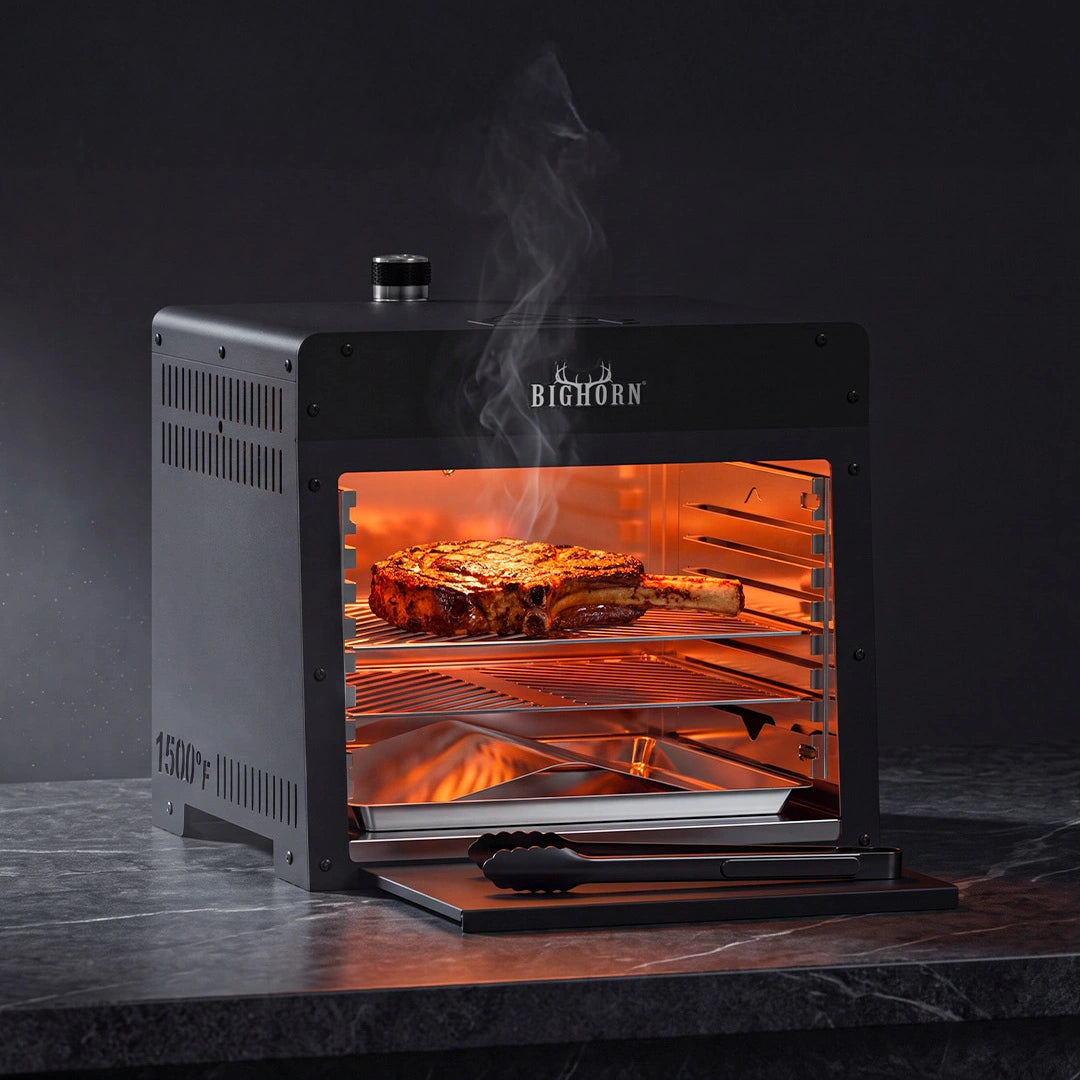
Yes. A properly managed high-heat oven can cook flatbreads, roasted vegetables, fish, bread, and suitable cuts of meat. Adjust the stone temperature, flame intensity, and cooking time for the food instead of using pizza settings for every recipe.
Are wood pellets safe for pizza ovens?
Food-grade hardwood pellets made for cooking are appropriate for pellet pizza ovens. Avoid heating pellets, softwood pellets, and products with unknown additives, and use pellet mode outdoors in an open area.
Does a pizza oven need an infrared thermometer?
An infrared thermometer is not mandatory, but it is one of the most useful tools for consistent pizza. It shows whether the stone is ready for the dough, which oven air-temperature readings cannot reliably tell you.
Can I use a pellet pizza oven on a balcony?
Only if your building rules, local regulations, and the oven manufacturer’s instructions allow it. Because pellets produce flame, heat, smoke, and ash, many balconies are not appropriate; never operate a pellet oven in an enclosed or poorly ventilated area.
Is a 12-inch pizza oven large enough?
A 12-inch pizza oven is large enough for personal pizzas and compact outdoor cooking. Choose a larger oven if you regularly cook for groups, prefer larger pizzas, or want more space to turn food and manage multiple dishes.