


Seasoning depends on the material: a pizza stone cures naturally with use and should never be oiled, a cast iron grate benefits from a light coat of high-smoke-point oil, and stainless steel grates simply stay clean. Get this wrong and you cause smoke, sticking, or a ruined nonstick surface. The Big Horn Outdoors range spans these materials — its ovens include a cordierite pizza stone, and the infrared broiler uses stainless steel grates — so the right method is dictated by what you are seasoning.
What does “seasoning” actually do?
Seasoning builds up a layer that makes food release more easily. On cast iron, repeated thin coats of oil polymerize into a nonstick finish. On porous stone, oils bake in to darken and condition the surface over repeated use. On stainless steel, neither happens in a useful way — the metal is already smooth, so seasoning adds nothing and just creates residue.
That is why the advice is material-specific. Treating every cooking surface the same way is the most common cause of the smoke, sticking, and buildup people blame on the surface itself.
Should you oil a pizza stone?
No. Pizza stones are porous, and oil seeps into the pores, smokes, and leaves a sticky residue that transfers to later pizza bases. The correct “seasoning” for a stone is simply use: it darkens and develops a natural, food-release surface as oils from the food bake in.
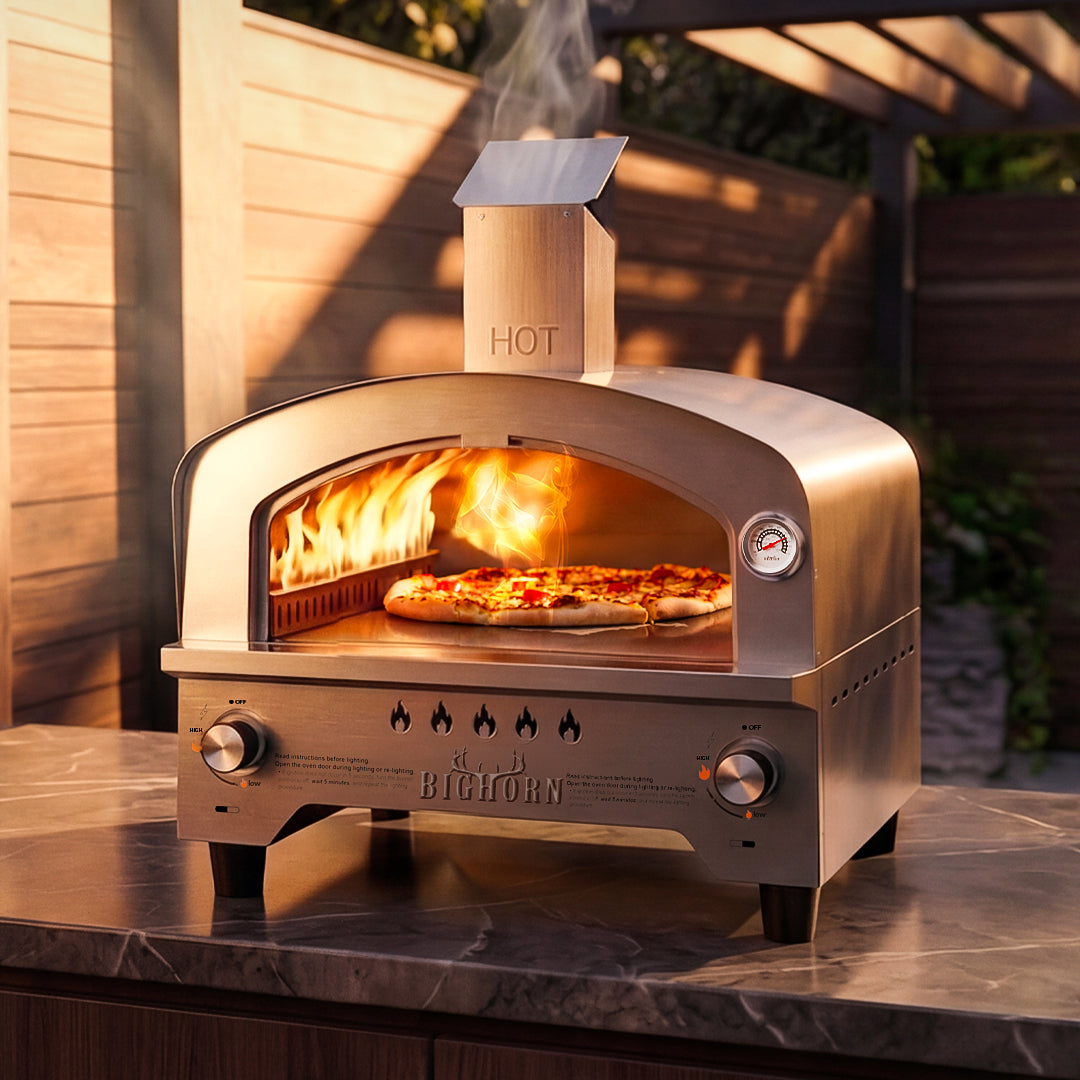
With a cordierite stone like the one in the Big Horn ovens, heat retention is high and the surface needs no oil to release pizza. Wipe or brush debris off when the stone is cool, keep it dry, and let it darken with use.
How do you season a cast iron grill grate?
For cast iron, wipe on a very thin layer of an oil with a high smoke point — canola or vegetable oil work well — and heat it past the oil’s smoke point so it polymerizes into a nonstick layer. Repeat after cleaning to keep the seasoning intact. The goal is a thin, even coat, not a pool of oil; excess oil becomes sticky, gummy residue.
After each cook, scrape the grate, re-oil lightly, and heat it once more. Avoid soap-and-scrub on the seasoned surface unless the seasoning has degraded; gentle cleaning preserves the layer you built.
Do stainless steel grates need seasoning?
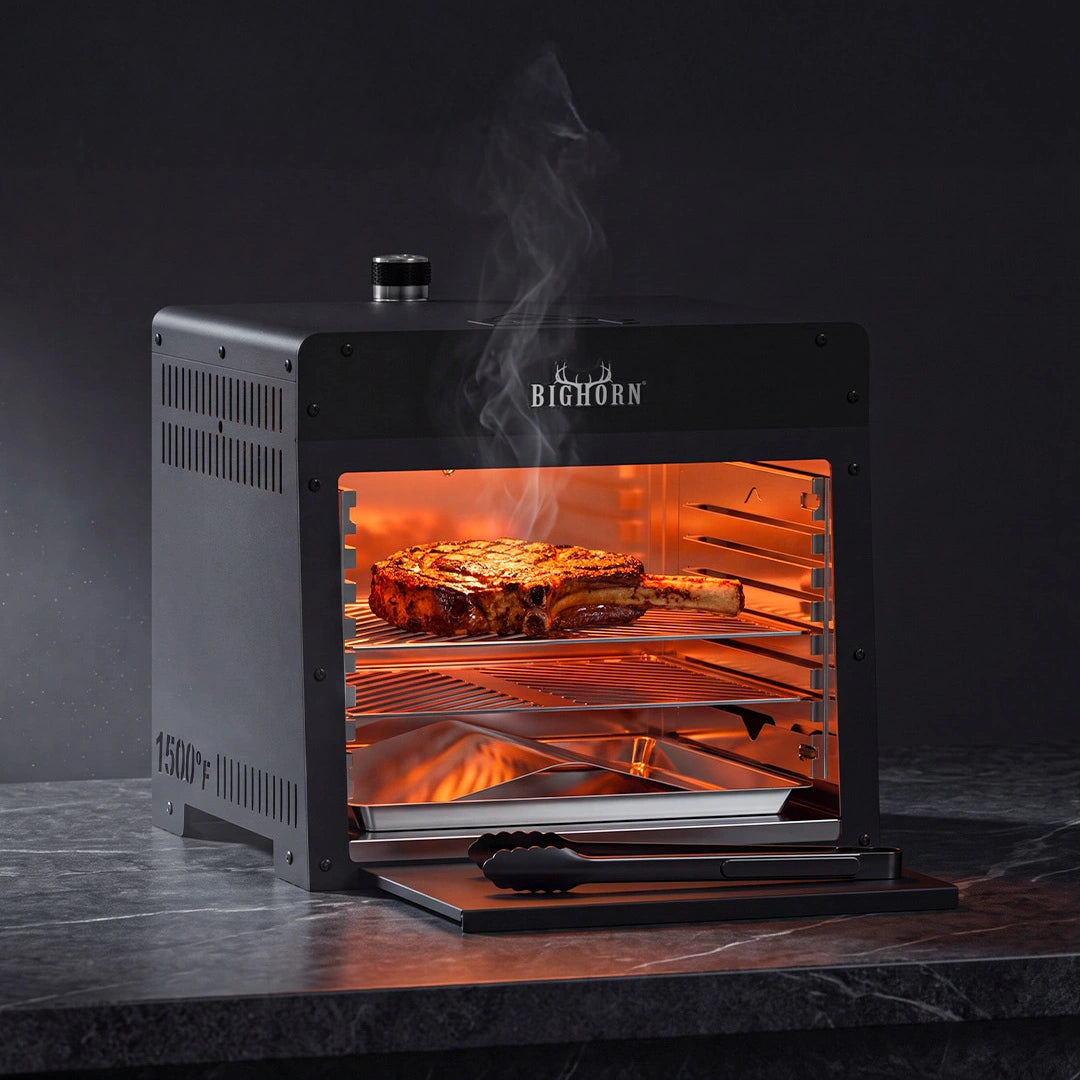
No. Stainless steel grates, like those on the Big Horn infrared broiler, do not need oil seasoning — the metal is non-porous and smooth. They simply need to stay clean: scrape residue, wash with warm soapy water or in the dishwasher if the manual allows, and dry before storing.
Oiling stainless steel does not build a useful nonstick layer; it only collects carbon and smoke. Keep it clean instead, and it will perform for years.

What oil should you use on a cast iron grate?
Use an oil with a smoke point above your searing temperature so it polymerizes cleanly instead of burning. Canola and vegetable oil are reliable choices for high-heat seasoning; butter or low-smoke-point oils will burn and leave sticky residue. Apply the thinnest coat that covers the surface, then heat it fully.
If the seasoning flakes or the grate rusts, strip it down and start over rather than trying to patch the surface.
Why the material decides the method
Every cooking surface responds differently to oil and heat, and the difference comes down to porosity and roughness. A pizza stone is porous: oil soaks in, never polymerizes properly, and then smokes and turns sticky the next time the stone heats. Cast iron is dense and porous at a microscopic level, so a thin oil layer can polymerize into a durable nonstick finish. Stainless steel is smooth and non-porous, so oil has nothing to bond to — it just carbonizes and gums up.
That single distinction explains the whole rule set. Match the treatment to the surface and you build a useful layer; apply the wrong treatment and you create smoke, residue, and a worse cooking surface than you started with.
How often to care for each surface
How often care happens depends on the surface.
- Pizza stone: brush after each use once cool; deep-clean only when residue builds, about every few months, using the method your manual allows.
- Cast iron grate: scrape after each cook and re-oil lightly before storage; re-season fully two to three times a season or when the surface looks patchy.
- Stainless steel grate: wash after each heavy cook; a wipe-down between sessions is enough for light use.
Frequency matters less than consistency. A routine you actually do beats an aggressive one you skip.
Choosing care by surface
| Surface | Seasoning method | Care |
|---|---|---|
| Pizza stone (cordierite) | None — seasons with use | Dry brush, no soap |
| Cast iron grate | Thin high-smoke-point oil, heat to polymerize | Scrape, lightly re-oil |
| Stainless steel grate | None | Wash, rinse, dry |
What natural seasoning looks like in practice
A pizza stone darkens from use and releases food more easily over time — that is the natural seasoning working. Early bakes may still stick and leave light residue; after a dozen or more cooks the surface becomes more forgiving, which is why experienced bakers recommend simply using the stone rather than treating it. The same is true of cast iron: a freshly seasoned grate starts nonstick but gets better as oil layers build and heat cycles reinforce them.
Do not confuse discoloration with damage. A dark stone or a matte grate is seasoning, not dirt. The problems to watch for are physical: a cracked stone, rust that pitting, or seasoning flaking in sheets. Those signal it is time to restore or replace, not to scrub harder.
When to start over instead of patching
Some damage is not worth repairing mid-season. If a cast iron grate has heavy rust or the seasoning is flaking in large patches, strip it down and season from scratch — patching a failing layer leaves weak spots where food will stick. If a pizza stone has cracked or soaked up so much oil that it smokes every cook, replace it; a damaged stone is not something seasoning fixes.
The cost of starting over is small next to years of better cooking. A clean, correctly seasoned surface outperforms a damaged one that has been repeatedly patched.
Common seasoning mistakes
The three most common errors are oiling the pizza stone, using too much oil on cast iron, and scrubbing away the seasoning with soap. Oil on the stone produces smoke and sticky residue; excess oil on iron becomes gummy; and aggressive washing strips the layer you are trying to build. Matching the care to the material avoids all three.
Seasoning FAQs
Should I season a new pizza stone before first use?
No. Rinse it if the manufacturer suggests, let it dry fully, then preheat it as directed. Do not oil it before the first bake.
Can I season stainless steel grill grates?
There is no benefit. Stainless steel is non-porous and smooth; keep it clean instead of oiling it.
What happens if I accidentally oiled my pizza stone?
How do I know my cast iron grate is properly seasoned?
A properly seasoned grate looks dry and slightly shiny, feels smooth, and releases food without sticking. If food sticks or the surface looks dull and patchy, it is time to re-season with a thin coat of high-smoke-point oil heated to polymerize.
Can I put a pizza stone in the dishwasher?
No. Dishwasher soap and water degrade the stone’s surface and can leave flavor behind. Brush it dry and spot-clean only as the manual allows.
Wipe off as much as you can, then heat the empty oven to burn off a light amount, checking the manual first. Repeated oiling will keep smoking, so avoid it going forward.
To see which cooking surfaces come with each product, review the Big Horn pizza stone product page and the grills and griddles collection before confirming the care routine for your setup.