
Chicken breast dries out on a gas grill for one reason: it is cooked over high heat until the outside is done while the center is still raw, then cooked longer to finish the center. The fix is a two-zone cook — sear over direct heat, finish over indirect heat with the lid closed — plus even thickness, a little brine or marinade, and a thermometer that pulls the meat at 165°F instead of guessing. This guide covers the method, the timing ranges and the small habits that keep grilled chicken breast juicy.
Start with even thickness
Uneven thickness is the hidden cause of dry chicken. A breast that is thick at one end and thin at the other cooks unevenly — the thin end is done and drying while the thick end is still raw. Fix it before the grill is lit: pound the breast to an even thickness of about three-quarters of an inch, or buy cutlets already flattened. Even thickness means the whole breast reaches temperature at roughly the same time, which is the foundation of every other step in this method.
Brine or marinate for moisture
A short brine or marinade adds moisture and flavor insurance. A simple saltwater brine — about a quarter cup of salt per quart of water — for thirty minutes to an hour helps the meat hold moisture through the cook. A marinade with oil, acid and seasonings does the same while adding flavor; thirty minutes is enough for thin breasts, and two hours is plenty for thicker ones. Do not overdo the acid, which can turn the surface mushy, and pat the chicken dry before it hits the grill so it sears instead of steaming.
Set up two zones and preheat
The two-zone setup is what saves chicken breast. Preheat the grill with all burners high and the lid closed, then turn one side down or off to create a cooler zone. Sear the chicken over the hot zone for a couple of minutes per side to build color and flavor, then move it to the cool zone, close the lid, and finish gently until the center reaches temperature. The sear gives the crust; the indirect finish cooks the middle without drying the outside. Without the cool zone, you are either burning the outside or cooking the breast so long it dries out.

Cook to 165°F, not to a timer
Chicken is safely cooked when the thickest part reaches 165°F, per USDA guidance, and a thermometer is the only reliable way to know. Insert the probe into the thickest part of the breast, away from the bone if there is one, and pull the chicken when it reads 165°F — or a few degrees early if you will rest it, since carryover can add a little more. Timing ranges depend on thickness and grill heat, so treat any minutes as estimates: a three-quarter-inch breast might take roughly eight to twelve minutes total in a two-zone cook, but the thermometer is the finish line, not the clock.
| Breast thickness | Approx. total cook (two-zone) | Target |
|---|---|---|
| ½ inch | 6–9 minutes | 165°F |
| ¾ inch | 8–12 minutes | 165°F |
| 1 inch | 12–16 minutes | 165°F |
The table is a starting point for planning; your grill, the weather and the chicken all shift the numbers, and the probe is the authority.
Rest and slice
Let the chicken rest for about five minutes after it comes off the grill, loosely covered, so the juices redistribute instead of running onto the board. Slice against the grain for tenderness, or serve the breasts whole if they are evenly cooked. If you are cooking several breasts, pull each one at its own temperature rather than waiting for the slowest, and hold finished pieces on a warm plate while the rest finish. The rest matters as much as the cook for a juicy result.
Flavor ideas
The method works with almost any seasoning. A simple oil, salt, pepper and garlic rub is a reliable baseline; lemon-herb, smoky paprika, or a light barbecue glaze applied in the last few minutes all build on the same technique. If you glaze, add it late so the sugar does not burn over the direct heat. For meal prep, grilled chicken breast sliced over salads or grain bowls keeps well for days when it is cooked to temperature and stored promptly. Master the two-zone method once, and dry chicken breast stops being a risk on any gas grill.
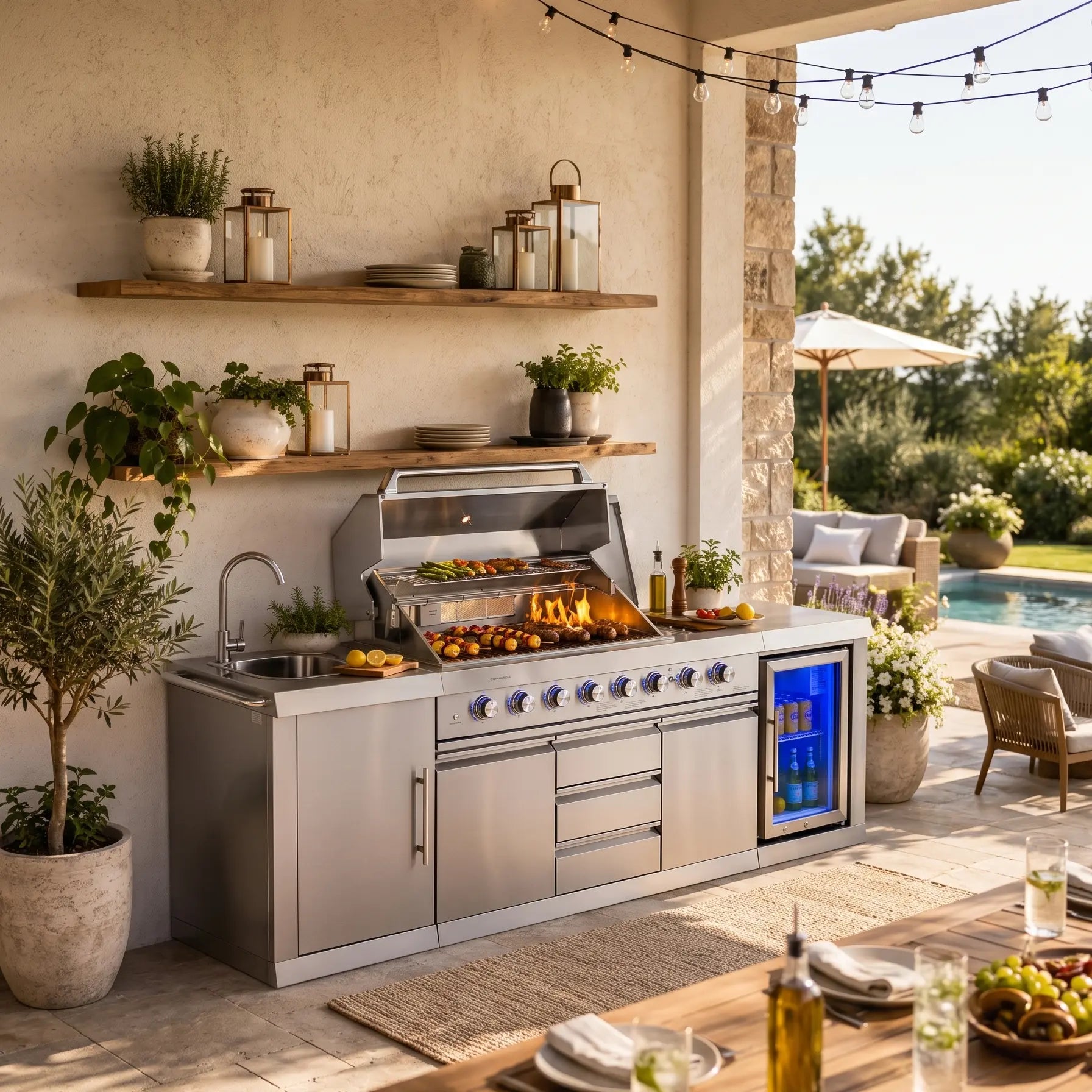
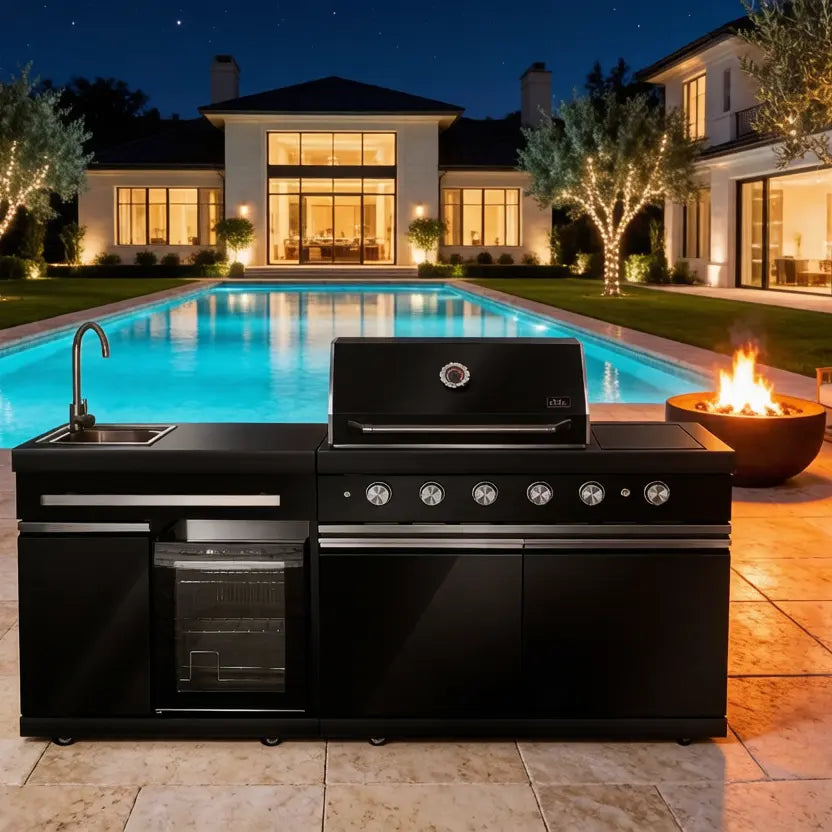
Big Horn's multi-burner gas grills, including the stainless steel island gas grill, make the two-zone setup easy, and the grills and griddles collection shows the range. Preheat, sear, finish indirect, and pull at 165°F — the short version fits on a sticky note, and the juicy results speak for themselves.
Chicken breast mistakes that dry it out
Most dry chicken breast comes from five avoidable mistakes. Skipping the even-thickness step means the thin end overcooks before the thick end finishes. Starting over direct heat and leaving it there burns the outside while the center lags. Flipping constantly prevents the crust and extends the cook. Trusting a timer instead of a thermometer pulls the chicken late or early depending on the day. And skipping the rest lets the juices run onto the board instead of settling into the meat. Each mistake is easy to fix once you name it, and together they are the whole difference between dry and juicy grilled chicken.
Grilling several breasts at once
When you are grilling several breasts, the method scales with planning. Pound all the breasts to the same thickness so they cook at the same rate, and brine or marinate them together in one container. Sear them in batches over the hot zone, moving each to the cool zone as it builds color, then finish them together with the lid closed. Pull each breast at 165°F rather than waiting for the slowest, and hold finished pieces on a warm platter under foil while the rest finish. With even thickness and a two-zone setup, a full grill of chicken comes off juicy instead of a race between the first and last pieces.
Glazes and finishing sauces
If you like a glaze, the timing is everything: apply it in the last few minutes over the cool zone, where the sugar can caramelize without burning, then pull the chicken at 165°F. A barbecue glaze applied early will char and turn bitter over direct heat; a thin oil-and-herb finish can go on at the end without cooking. Serve extra sauce on the side so diners control the sweetness, and keep the seasoning on the meat simple when the sauce is bold. The two-zone method gives you the window for a proper glaze, which is one more reason it beats a single-zone cook.
Master the method once and grilled chicken breast becomes one of the easiest proteins on the grill. Even thickness, a quick brine, a hot sear, an indirect finish and a 165°F pull are the whole system; everything else is flavor. Write the five steps somewhere you will see them, cook a test batch, and adjust the timing to your grill — after that, juicy chicken is the norm, not the goal.
For weeknight speed, cook the chicken while the grill is already hot from another dish, or grill extra breasts and refrigerate the leftovers for salads and sandwiches. Cooked properly to 165°F and stored promptly, grilled chicken breast keeps well for days, which makes the two-zone method a meal-prep tool as much as a dinner technique. Between the even-thickness step and the thermometer, the method is repeatable enough to become a habit — and habits are what keep chicken breast juicy instead of a project.
Product details and prices in this guide were verified against official Big Horn Outdoors listings during the September 5, 2026 review; re-check prices and availability at checkout.