A 14-inch electric pizza oven is a strong fit for cooks who want high-heat homemade pizza indoors without handling gas, pellets, or charcoal. It works best when you have adequate countertop space, a suitable grounded outlet, and a preference for repeatable temperature control. Before buying, confirm the exact model’s capacity, controls, clearances, and approved cooking environment.
What Is a 14-Inch Electric Pizza Oven?
A 14-inch electric pizza oven is a countertop appliance built to cook pizzas up to approximately 14 inches wide with electric heating elements and a heat-retaining cooking surface. It offers a fuel-free alternative to outdoor pizza ovens while supporting high-temperature pizza baking in an approved indoor setting.
Its main advantage is concentrated heat. A conventional kitchen oven is designed for many cooking tasks, while a dedicated pizza oven focuses heat within a compact chamber. This can help cook the base, toppings, and crust edge more efficiently when the oven and stone are properly preheated.
Most electric countertop pizza ovens use upper and lower heating elements. The lower element heats the stone and helps crisp the crust, while the upper element browns cheese, cooks toppings, and colors the rim. The balance between these heat sources matters more than a maximum-temperature figure alone.
A 14-inch format is suitable for a large personal pizza, a shareable pizza for two to four people, or a typical homemade pie with a moderate crust. It also gives more shaping room than a compact 12-inch oven, particularly for New York-style, thin-crust, frozen, and larger hand-stretched pizzas.
Which Features Matter Most Before Buying?
The most important features are usable pizza capacity, temperature range, heat-control options, stone design, electrical requirements, countertop footprint, and approved placement. A high maximum temperature is useful, but the oven must also fit your space and support the pizza styles you actually plan to cook.
Check the full appliance dimensions rather than focusing only on pizza diameter. The oven needs room for ventilation, door movement, safe peel access, and heat clearance from cabinets or walls. A 14-inch stone may accommodate a 14-inch pizza, but the oven opening and interior shape can make a slightly smaller dough easier to launch and turn.
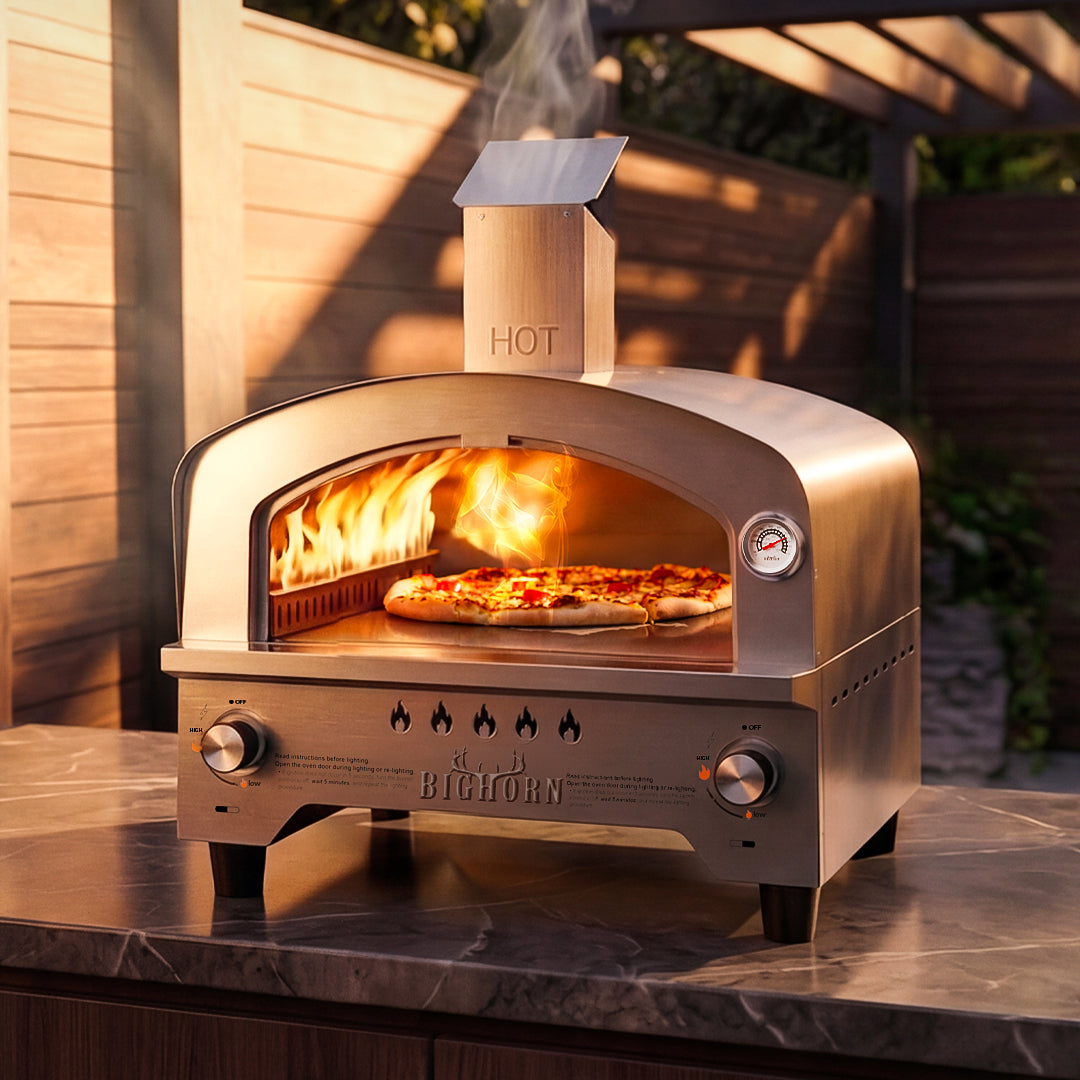
The Big Horn Outdoors 14-inch indoor electric countertop pizza oven is listed with a 14-inch heat-conducting stone, insulated oven door, and lightweight pizza peel. Its official product information also identifies different exterior versions with different control arrangements, so buyers should review the product listing for the exact finish and version before assuming a particular interface or operating method.
How Does an Electric Pizza Oven Make a Crisp Crust?
An electric pizza oven makes a crisp crust by heating its stone thoroughly, then transferring stored heat directly into the dough while upper heat cooks the toppings. The stone must be fully preheated; selecting a high temperature without enough preheat time often produces a pale or soft pizza base.
The stone is central to pizza performance. When dough lands on a hot stone, moisture escapes quickly and the structure of the crust begins to set. If the stone is not hot enough, the cheese and toppings may finish before the center and underside of the dough cook properly.
Use these heat-management habits for more consistent results:
-
Preheat for the full time stated in the exact model’s instructions.
-
Let the stone recover between pizzas, especially after longer bakes.
-
Start with lightly topped pizzas while learning the oven’s heat behavior.
-
Reduce sauce and cheese volume for very hot, fast-baking styles.
-
Turn the pizza carefully if one side browns faster than the other.
-
Adjust the temperature or selected cooking program based on the first pizza.
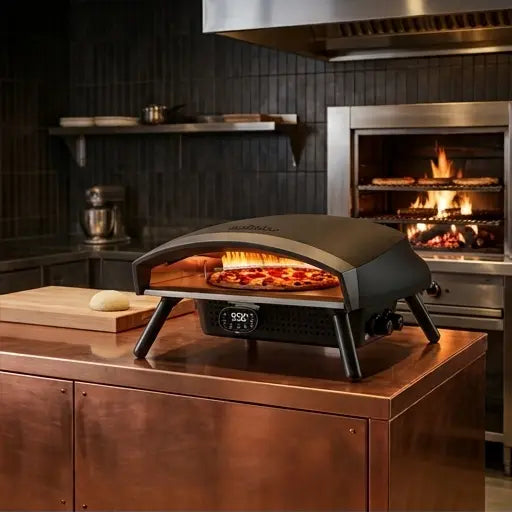
The current Big Horn Outdoors 14-inch indoor electric countertop oven listing describes 1800W heating with upper and lower heating tubes and PID temperature control. It lists a temperature range of 220°F to 850°F, a 15-minute preheat, and a stated three-minute bake for a 14-inch pizza under appropriate conditions. Actual cooking time depends on the dough, stone temperature, pizza thickness, topping load, and chosen setting.
What Can You Cook Besides Pizza?
A 14-inch electric pizza oven can cook flatbreads, breads, small baked goods, and selected shallow foods when the manufacturer lists them as suitable. Use lower or moderate settings for foods that require a longer bake, and use oven-safe cookware when direct contact with the stone is not appropriate.
A pizza oven is designed around intense radiant heat and a hot baking surface. It works best for foods that are relatively shallow and benefit from fast top heat plus firm bottom heat. Tall roasts, deep casseroles, and dishes requiring gentle low-temperature cooking are generally better suited to a conventional oven.
The Big Horn Outdoors 14-inch indoor electric countertop oven is listed for bread, cakes, pies, baguettes, and chicken wings in addition to pizza. Its six stated cooking programs are Manual, Wood Fired, Frozen, New York, Thin Crispy, and Deep Dish. Treat these programs as starting points, not guarantees: ingredient temperature, pan material, dough thickness, and food placement still affect the final result.
Foods that need extra care
Foods with loose cheese, sweet glazes, excess oil, or heavy sauces can create smoke and residue at high temperatures. Use an approved pan, screen, or dish where appropriate instead of placing messy ingredients directly on the stone.
Avoid using cookware that exceeds the oven’s internal clearance or is not rated for the selected temperature. Do not assume accessories made for another Big Horn Outdoors product will fit this electric countertop model. Pizza stones, peels, and covers vary by oven format and size.
How Should You Set Up and Launch a Pizza?
Set up the oven on a stable, heat-resistant countertop with the required clearance from combustible materials, then preheat the stone fully before launching the pizza from a lightly floured peel. A smooth launch depends on well-prepared dough, a dry peel, and a pizza that moves freely before it enters the oven.
Before cooking, confirm that the stone, door, and other removable components are installed as directed in the product manual. Keep packaging material, loose flour, food debris, and nearby clutter away from the oven before turning it on.
A reliable pizza-launch process is simple:
-
Stretch the dough slightly smaller than the usable stone area.
-
Dust the peel lightly with flour, semolina, or another suitable launching aid.
-
Build the pizza efficiently so moisture does not soak through the dough.
-
Shake the peel gently to confirm that the pizza slides.
-
Open the oven only when ready to launch.
-
Slide the pizza onto the center of the hot stone in one controlled motion.
Too much flour can burn on a hot stone and create smoke. If the dough sticks, use less sauce, work more quickly after topping, or add a small amount of semolina to the peel. Avoid repeatedly adding flour without correcting the underlying cause.
The included peel on the listed Big Horn Outdoors 14-inch oven is intended to help transfer pizzas, but it should be used according to the product instructions. Use dry, heat-resistant gloves or mitts when handling the door, cookware, or accessories near a hot cooking chamber.
Where Can You Use an Electric Countertop Pizza Oven Safely?
Use an electric countertop pizza oven only in the location approved by the manufacturer, on a stable surface with proper ventilation, required heat clearance, and a compatible grounded outlet. An indoor-rated electric oven should not be treated as an outdoor appliance unless its exact product instructions specifically permit outdoor operation.
High-temperature cooking equipment needs clear space around it. Keep paper products, curtains, plastic containers, aerosol cans, and other flammable materials away from the oven. Do not place it beneath cabinets or against walls unless the manufacturer’s clearance instructions allow that position.
Electrical safety is equally important. Use an outlet that matches the appliance’s plug and electrical requirements. Do not use a power strip, overloaded circuit, damaged extension cord, or loose outlet connection. If the manual permits an extension cord, use only the specified type and rating.
Follow these basic operating practices:
-
Never leave the oven unattended while it is on.
-
Keep children and pets away during preheating, cooking, and cooldown.
-
Do not touch hot surfaces without appropriate protection.
-
Keep the cord away from hot oven surfaces and water.
-
Allow the stone and oven to cool completely before moving or cleaning them.
-
Stop using the oven if the cord, plug, door, controls, or heating system appears damaged.
Big Horn Outdoors offers multiple pizza oven formats, including electric countertop, pellet, gas, and multi-fuel products. Each format has different placement and fuel requirements, so the indoor-use guidance for this 14-inch electric model should not be transferred to another Big Horn Outdoors oven.
Why Must Temperature Match the Pizza Style?
Temperature must match the pizza style because dough thickness, hydration, sugar content, sauce volume, and toppings determine how quickly the crust and surface cook. High heat suits thin, lightly topped pizzas, while thicker, wetter, or heavily topped pizzas generally need more time at a more controlled temperature.
A thin pizza with a minimal layer of sauce and cheese can cook quickly because the heat reaches the center efficiently. A thicker New York-style pizza needs more time for the interior crumb to set. Deep-dish and pan pizza typically need more sustained baking because the dough is deeper and the toppings are heavier.
Use the first pizza as a reference point. If the underside is pale, the stone may need more preheat time. If the cheese browns too fast, lower the temperature, reduce upper heat where the model allows it, or choose a more suitable program. If the center remains soft, reduce the topping load or bake at a lower temperature for longer.
The listed Big Horn Outdoors preset programs can help organize these choices. Frozen pizza and deep-dish pizza require different heat management from thin-crust or wood-fired-style dough. Start with the program closest to your recipe, then adjust based on the color of the crust, the firmness of the base, and the doneness of the toppings.
What Are Big Horn Outdoors Expert Views?
Big Horn Outdoors’ practical guidance is to use heat deliberately rather than treating the maximum temperature as the correct setting for every pizza. Fully preheat the stone, match the mode or temperature to the dough style, and change one variable at a time when adjusting results.
Big Horn Outdoors Expert Views
A balanced pizza begins with matching the dough, toppings, and selected heat level. Start with a simple, lightly topped pizza and preheat the stone fully. If the crust needs more color, give the stone additional recovery time. If toppings darken before the base is ready, reduce the heat or select a more suitable program. Keep the oven clean, allow it to cool naturally, and follow the instructions for the exact model and finish.
This approach is useful for new owners because it separates oven performance from recipe variables. A pizza that browns too quickly may need less top heat or fewer toppings; a pizza with a soft base may need a longer stone preheat. Making one adjustment at a time gives clearer results than changing dough, temperature, and bake time all at once.
How Do You Clean and Maintain the Oven?
Clean a 14-inch electric pizza oven only after it has fully cooled, removing loose flour and crumbs from the stone and wiping approved exterior surfaces with a soft cloth. Follow the exact model’s care instructions before washing removable parts, and never cool a hot stone with water.
High-heat baking naturally leaves flour, cornmeal, cheese residue, and dark marks on a pizza stone. Once cold, use a dry brush or a scraper intended for pizza stones to remove loose debris. Darkening alone is common and does not necessarily affect baking performance.
Do not soak the stone or apply soap unless the manufacturer specifically permits it. Moisture can be absorbed into some stone materials and may contribute to cracking when reheated. Avoid harsh abrasives, metal tools that can gouge coated surfaces, and cleaners not approved for food-contact appliances.
The Big Horn Outdoors 14-inch indoor electric countertop oven is listed with a removable pizza stone and a wrinkle-black finish designed to resist oil stains and fingerprints. These features may simplify routine cleanup, but they do not replace regular care. Keep the cooking chamber clear of residue, inspect the cord and plug periodically, and store the oven in a dry location after it has cooled.
Which Buyer Should Choose a 14-Inch Electric Pizza Oven?
A 14-inch electric pizza oven suits cooks who want indoor, fuel-free pizza making with a larger countertop capacity than compact personal ovens. It is especially practical for beginners, apartment households with suitable kitchen space, and pizza enthusiasts who value controlled settings over live-fire cooking.
Choose electric when you prefer not to manage propane tanks, wood pellets, charcoal, ash, or open flames. The format also makes sense when your cooking space is primarily indoors and you want a dedicated appliance for pizza, flatbreads, and other approved foods.
Choose another oven type if portability, outdoor cooking, smoke flavor, or off-grid use is your priority. A gas, pellet, charcoal, or multi-fuel oven may better match a backyard, campsite, RV trip, or tailgating setup, provided you can manage its fuel and safety requirements.
Big Horn Outdoors is useful to compare across fuel preferences because the brand’s product range includes electric countertop, pellet, gas, and multi-fuel pizza oven formats. Select the exact model based on its approved environment, size, accessories, heat controls, storage needs, and intended cooking style rather than assuming that one product’s capabilities apply to another.
Frequently Asked Questions
Can a 14-inch electric pizza oven cook frozen pizza?
Yes, if the frozen pizza fits the stone and the exact model supports that use. Frozen pizza often benefits from a setting that gives the center enough time to heat through before the crust or cheese becomes too dark.
Does the pizza stone need to be preheated?
Yes. A fully preheated stone stores the heat needed to set and crisp the dough from below. Launching onto a cool or partially heated stone often produces a soft, pale crust.
Can parchment paper be used at high temperatures?
Use parchment only when the oven instructions allow it and the paper’s stated heat rating is suitable for the selected temperature. Standard parchment can scorch at high heat, so it is generally more appropriate for lower-temperature baking.
How large should the pizza dough be?
Keep the dough slightly smaller than the usable stone and oven opening. This provides room for the crust to expand and makes launching, turning, and removing the pizza easier.
When should a pizza stone be replaced?
Replace the stone if it has major cracks, broken pieces, or damage that makes it unstable. Surface discoloration and minor baked-on marks are usually normal signs of use.
A 14-inch electric pizza oven is a practical choice when you want controlled indoor pizza baking without fuel storage or flame management. Measure your counter space, confirm electrical and clearance requirements, and select a model that matches your preferred pizza styles. Preheat thoroughly, begin with lightly topped pizzas, and adjust temperature or programs gradually as you learn the oven.