
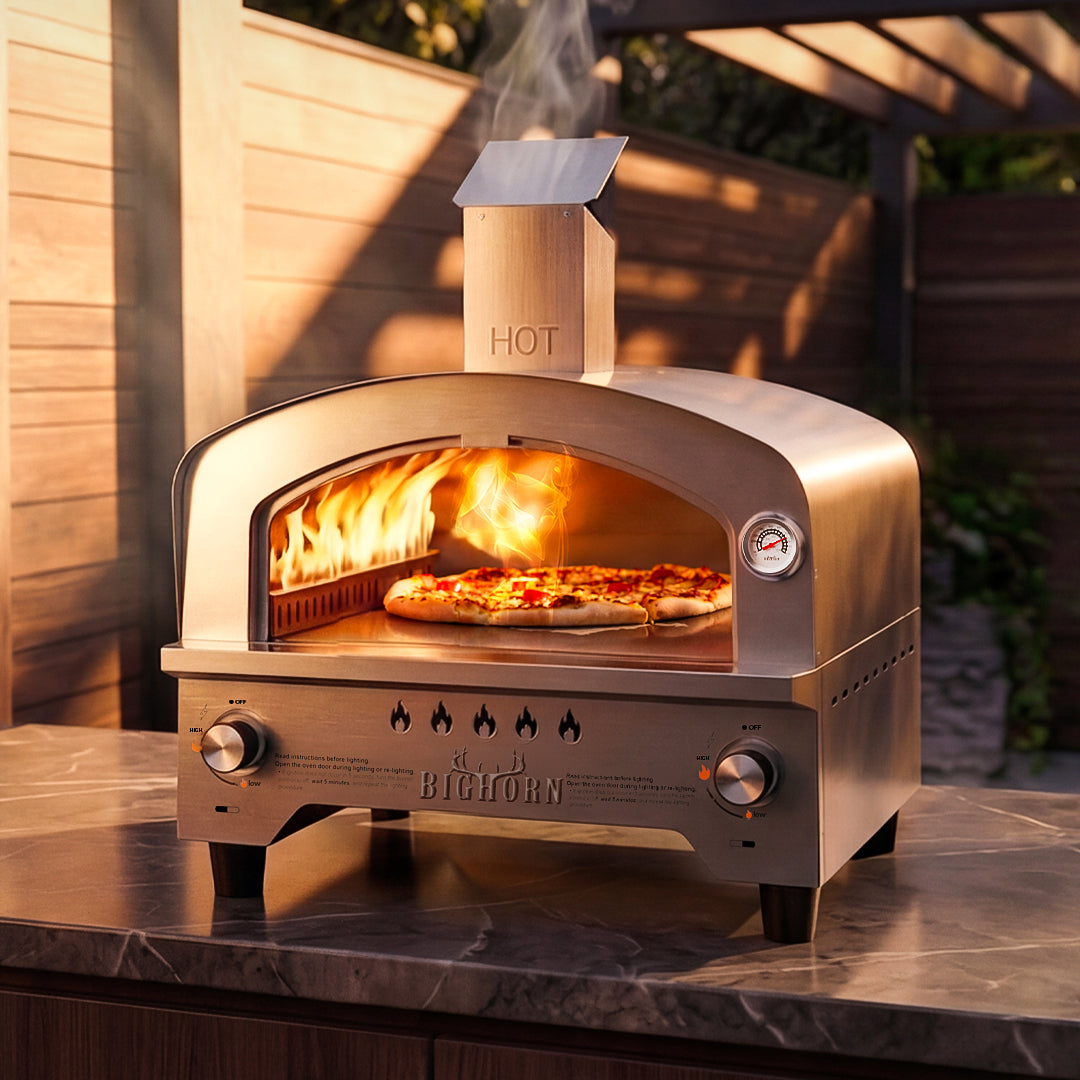
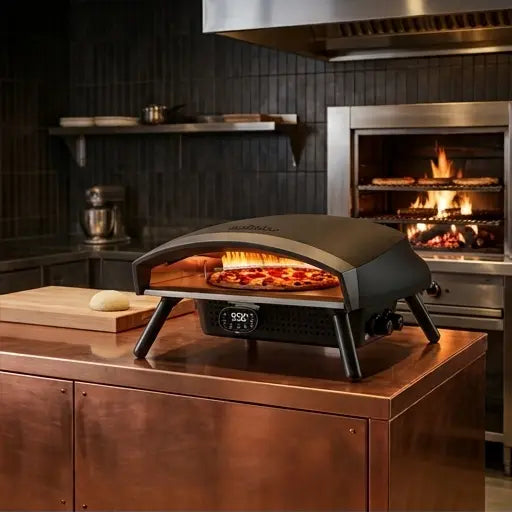
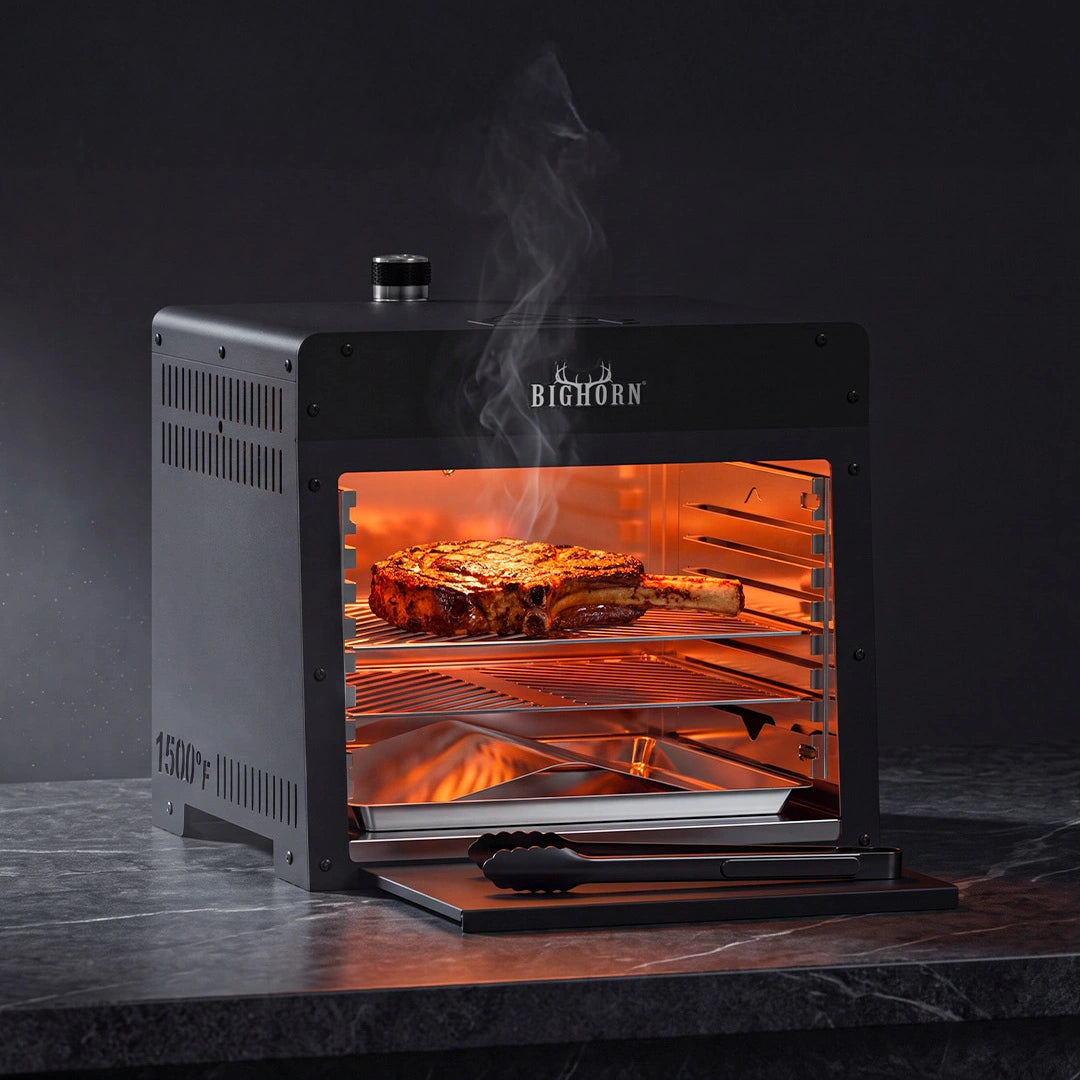
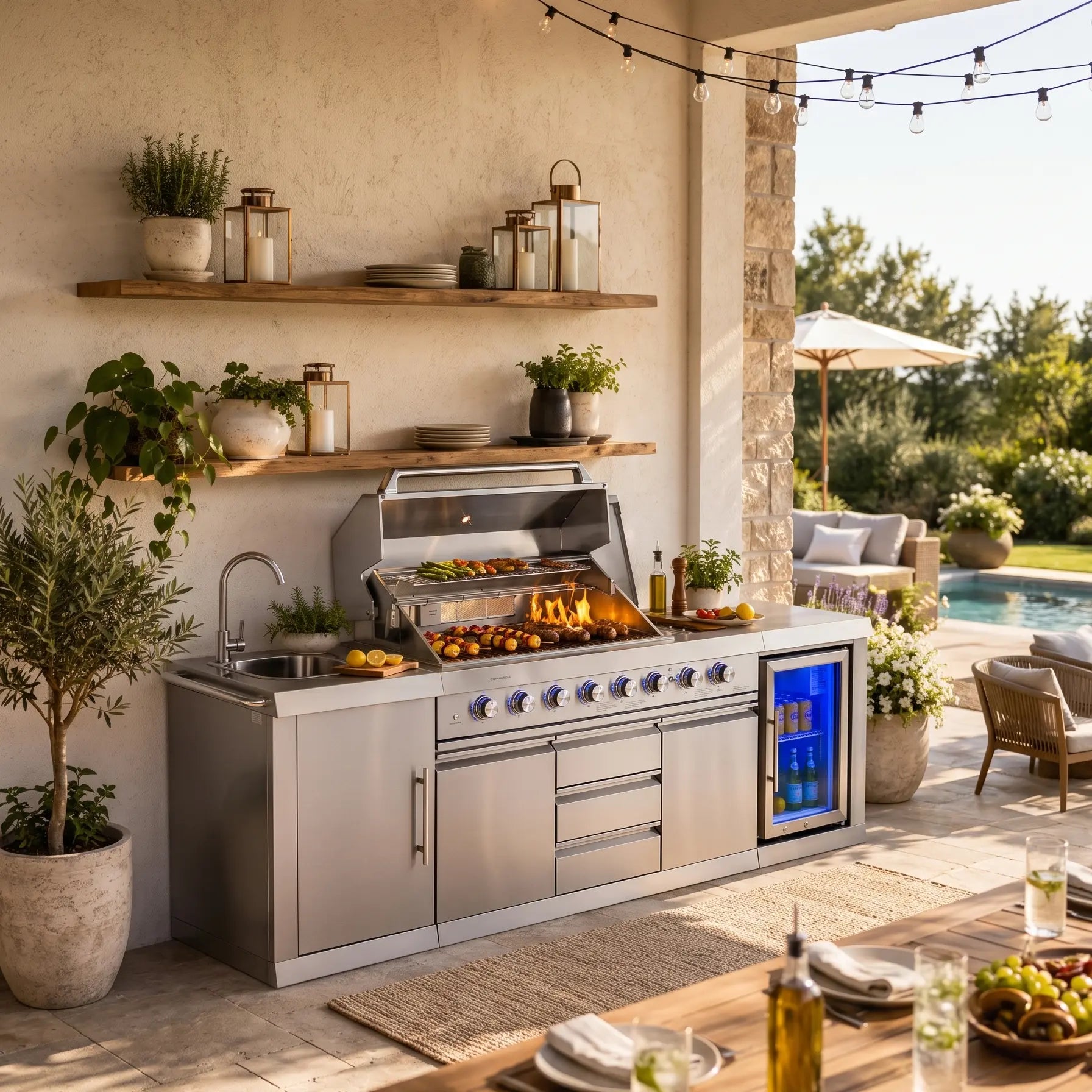
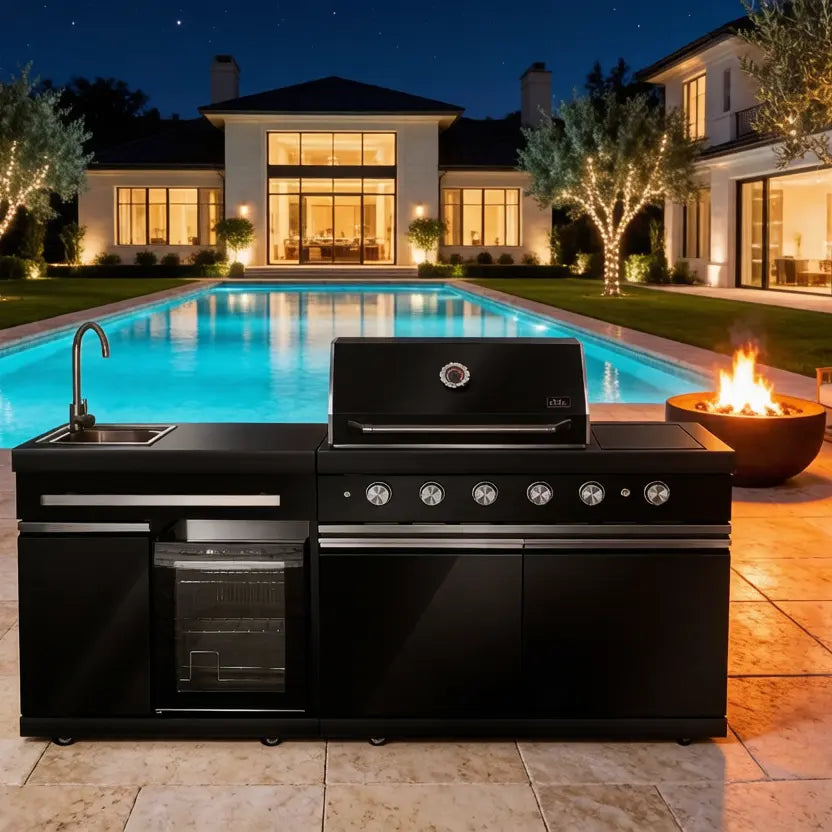
An outdoor pizza oven needs more than an empty patch of patio. Its operating site has to support the oven’s full footprint, the manufacturer’s clearances, exhaust, fuel or power supply, the cook’s movements, and a safe response when wind or rain arrives. A location that looks convenient while the oven is cold can become awkward once a peel, prep table, hot landing tray, and guests occupy the same space.
The right order is site first, exact oven second. Measure the candidate location, reject layouts that require improvising around combustible surfaces or ventilation, and only then compare capacity and fuel. This page supplies a site worksheet rather than a universal clearance number because the model manual and local rules control the final installation.
Measure the Operating Envelope, Not Just the Oven
Product dimensions usually describe the appliance body. They may not include an open door, extended handle, chimney cap, gas hose, power cord, side shelf, or the space needed to insert and turn a peel. Draw a plan view and an elevation view so horizontal and overhead conflicts are visible.
| Measurement | What to include | Your result |
|---|---|---|
| Oven footprint | Feet, wheels, handles and attached controls | |
| Front working depth | Full peel length plus the cook’s stance | |
| Side working width | Turning tool, landing tray and control access | |
| Rear hot zone | Exhaust, burner area, hose or ash access | |
| Overhead zone | Chimney, lid or door movement and required clearance | |
| Route to the station | Gates, stairs, doors and surface changes | |
| Shutdown holding area | Safe location for hot tools and removable parts |
Make the drawing to scale. One square can represent six inches, for example. Add every wall, railing, roof edge, window, door, vent, plant, storage box, play area, and normal walking route. Then overlay the exact clearances stated in the owner’s manual. If the required area crosses a combustible wall, overhang, property boundary, or busy route, move the station; do not “solve” the conflict with an unapproved shield.
General grill guidance can be a conservative screening tool but does not replace the oven manual. The U.S. Consumer Product Safety Commission advises never using a grill indoors, keeping it at least 10 feet from a building, and avoiding garages, carports, porches, and combustible overhead surfaces. An oven’s approved distance may differ, so apply whichever requirement is more restrictive for the exact situation.
Choose the Surface and Check the Load Path
The support must be stable, level, noncombustible where required, and large enough that no foot or wheel sits near an edge. “Stone patio” is not a complete answer: pavers can settle, a table can flex, and a wheeled cart can roll when a peel pushes against a pizza.
Test the cold station in four steps:
- Assemble the oven with every operating part installed.
- Press downward at each corner of the stand and move the peel through a normal launch-and-turn motion.
- Load the prep surface with the expected dough, tools and landing tray.
- Walk the guest route while another person works at the oven.
Reject the setup if the stand rocks, controls are blocked, a hose or cord becomes a trip line, or the cook must step backward into traffic. Lock rated casters before lighting. Do not use cardboard, scrap wood or a folded towel to level a hot appliance. If a purpose-built cart is planned, confirm both its load rating and the oven manufacturer’s requirements for the supporting surface.
Decks need special attention. A wooden deck is not automatically approved or prohibited by the word “outdoor.” The manual, local fire code, surface protection requirements and clearances decide. Also consider what lies below and beside the appliance: hot debris, grease, ash or a dropped tool can reach gaps in deck boards even when the oven’s feet remain stable.
Map Wind, Exhaust and Openings Into the House
Wind can push flame, sparks, hot exhaust or smoke toward people and structures; it can also disturb combustion and cool the baking surface. Record the prevailing breeze at the time of day you normally cook, then note how buildings and fences create eddies. A wind direction that is harmless at noon may reverse during an evening sea breeze.
Use this observation card during three cold or low-risk site visits:
| Check | Visit 1 | Visit 2 | Visit 3 |
|---|---|---|---|
| Date and time | |||
| Wind direction | |||
| Gusts or swirling near wall | |||
| Nearest open window/door/vent | |||
| Guest route downwind | |||
| Decision: operate, relocate or cancel |
Never build a tight screen around a live-fire or gas oven merely to stabilize temperature. A screen may trap heat, redirect exhaust or violate clearances. Use only wind-control accessories and arrangements approved for the model. If gusts make the flame unstable or send hot exhaust toward an opening, stop according to the manual.
Keep combustion products out of the home. CPSC warns that outdoor heaters, grills and generators used indoors can create deadly carbon monoxide rapidly. A garage with its door open is still not an approved outdoor location for an outdoor combustion appliance. Position the station away from doors, windows, vents and other openings as required by the model instructions and applicable rules.
Plan Fuel, Electricity and the Cook’s Work Zone
Fuel should not share the hot landing area. For propane equipment, keep the cylinder upright in its approved position, protect the hose from heat and foot traffic, and never keep a spare cylinder under or near a hot appliance. Inspect and leak-check connections by the manufacturer’s method after reconnecting. For pellet or wood models, store dry fuel away from sparks and keep only the working quantity near the station. Cold ash needs an approved disposal route that does not cross children’s play space or enter combustible trash prematurely.
Electric outdoor equipment requires an appliance approved for that environment and a suitable supply. Rain, wet connectors and damaged cords create shock risk. Do not assume an extension cord is acceptable; follow the appliance instructions, use the required receptacle protection, and keep connections out of water and traffic. OSHA notes that flexible cords are vulnerable to abrasion, strain and wet-connector leakage; these are useful hazards to include in a household inspection even though residential requirements come from the applicable electrical code and product instructions.
Divide the station into three zones:
- Hot zone: oven, exhaust, controls and hot tools. Only the operator enters.
- Production zone: dough, toppings, peel preparation and finished-pizza landing. Raw ingredients remain separated as needed.
- Guest zone: seating and the route to food, positioned so nobody queues behind the cook.
Mark the boundaries with furniture placement rather than loose rugs or temporary cords. Give the operator an unobstructed step to the side in case a pizza spills or a flame changes unexpectedly.
Write a Weather Stop Plan Before Preheating
An outdoor rating does not mean the oven should remain operating through rain, lightning or extreme wind. The stop plan must explain what happens while the appliance is still hot; “carry it under cover” is not acceptable.
| Event | Immediate action | Hot equipment remains where? | Restart condition |
|---|---|---|---|
| Light rain begins | Follow model shutdown instructions | Approved operating site | Oven dry and weather acceptable |
| Gusts disturb flame/exhaust | Stop fuel or power as directed | Stable noncombustible support | Wind within manual limits |
| Lightning approaches | End session early; do not handle exposed electrical equipment unsafely | Protected exclusion zone | Storm has passed and equipment inspected |
| Guest enters hot zone | Pause loading and clear route | Oven remains attended | Boundary restored |
| Fuel, cord or hose damage found | Do not ignite or restart | Supply isolated safely | Damaged part replaced or serviced |
Decide who calls the stop and who keeps guests away. Keep a dry landing location for uncooked dough and hot tools so the cook does not rush. Covers are for a completely cool, dry oven unless the manufacturer expressly provides another procedure; covering retained heat can damage materials and trap moisture.
Outdoor Pizza Oven FAQs
Can an outdoor pizza oven sit under a pergola?
Only when the exact manual permits that overhead condition and every stated clearance can be maintained. Measure to beams, roofing, fabric shades and hanging plants with the chimney and doors in operating position. If approval or clearance is uncertain, place the oven in open air rather than adding an improvised heat shield.
Is a wooden deck automatically unsuitable?
No, but it is not automatically suitable either. Confirm the model’s surface requirements, local rules, load stability, edge distance and any approved deck protection. Account for gaps where hot debris could fall. If the required controls cannot be documented, choose a noncombustible ground-level location.
Which way should the oven opening face?
Face it toward a clear working area where the peel can move without crossing guest traffic. Then check wind and exhaust behavior; the opening should not send heat or smoke toward a door, window or occupied path. The manual’s orientation and wind instructions take priority.
Can I leave the oven outside all year?
Only if the manufacturer allows outdoor storage. A fitted cover helps with precipitation but does not replace cooling, drying, cleaning and periodic ventilation. Remove ash or grease as directed, inspect hoses and cords, and check for trapped moisture or corrosion before the next use.
Short Safety Note
Use an outdoor pizza oven only in the location and configuration approved for the exact model. Maintain the manufacturer’s clearances and local fire requirements; never defeat ventilation or modify a burner, regulator, cord, chimney or guard. Keep the appliance attended, isolate children and guests from hot surfaces, and stop for unsafe wind, rain, damaged components or abnormal combustion. Allow the oven, stone, ash and accessories to complete the prescribed shutdown and cooling process before moving, cleaning or covering them.
Final Site Decision
Approve the site only when the scaled drawing, cold movement test and weather plan all pass. A beautiful built-in station is a poor choice if it blocks a window, traps exhaust, leaves no peel space or requires moving a hot oven when rain begins. Select the exact oven after the site establishes the allowable footprint, fuel, utility route and operating envelope.
The most useful outdoor setup feels uneventful: the stand stays still, the cook’s route remains clear, guests never enter the hot zone, and a weather stop can occur without lifting or enclosing the appliance. That reliability contributes more to frequent pizza nights than an extra feature that the location cannot safely support.